
Introduction: The Hidden Dangers of the Deep
Marine venom represents one of nature's most sophisticated chemical arsenals, refined through millions of years of evolution to serve predatory and defensive purposes in the ocean's most competitive environments. Unlike poison, which enters an organism passively through ingestion, inhalation, or skin absorption, venom is actively injected or delivered through specialized anatomical structures—fangs, spines, stingers, or harpoon-like teeth. This fundamental difference is key to understanding how these remarkable creatures interact with their environment and, occasionally, with us.
The ocean hosts an extraordinary diversity of venomous creatures, showcasing an incredible range of evolutionary adaptations. From microscopic jellyfish with nematocysts capable of causing cardiac arrest to octopuses whose neurotoxins can paralyze prey in seconds, the variety is astounding. These organisms have evolved highly specialized venoms, each a complex cocktail of proteins, enzymes, and neurotoxins, perfectly tailored for their specific ecological roles.
Understanding these adaptations reveals not only the remarkable evolutionary pressures of marine ecosystems but also the biochemical complexity underlying some of Earth's most potent natural toxins. For divers and ocean enthusiasts, recognizing these creatures and their defensive mechanisms is crucial for both personal safety and appreciating the intricate balance of marine life. It’s a testament to nature's ingenuity that such potent weapons can be found in even the most unassuming of ocean dwellers.
This guide aims to demystify the world of marine venom, exploring the biological mechanisms behind its production and delivery, highlighting some of the ocean's most dangerous inhabitants, and providing essential safety considerations. By understanding these creatures better, we can foster a deeper respect for the marine environment and ensure safer, more informed interactions with the hidden dangers of the deep.
What Makes a Creature Venomous?
Venom production and delivery represent pinnacles of evolutionary specialization in marine animals. Unlike toxins that function defensively through passive exposure, venoms are weaponized compounds designed for rapid, targeted delivery to immobilize or kill prey or deter predators. The distinction between venom and poison hinges entirely on delivery mechanism: venom is injected through active means such as bites, stings, or puncture wounds, while poison is ingested or absorbed through contact. Marine animals employ venom primarily for two purposes—predation and defense—though the chemical composition and potency vary dramatically across species.
Venomous marine creatures possess specialized anatomical structures evolved specifically for toxin delivery. Jellyfish utilize nematocysts, harpoon-like stinging cells that fire with explosive force to penetrate prey exoskeletons and inject venom in milliseconds. Cone snails deploy a modified radula tooth that functions as a biological hypodermic needle, capable of piercing through protective barriers including wetsuits. Octopuses deliver venom through their beak, a parrot-like structure hidden within their arms, while fish such as scorpionfish and stonefish possess venomous spines along their dorsal fins equipped with venom sacs at their base. Sea snakes, fully adapted to aquatic life, retain the fangs characteristic of their terrestrial relatives, using them to inject neurotoxic venom into fish and other prey.
The chemical composition of marine venoms reflects their specific ecological roles. Venoms targeting prey typically contain neurotoxins that disrupt nervous system function, causing paralysis or convulsions that prevent escape and reduce predator injury. Some venoms include enzymes that digest soft tissue or dissolve blood vessel walls, causing internal hemorrhaging. Cone snail venoms represent extreme complexity, containing over 100 distinct toxins within a single injection, each targeting different ion channels or neurotransmitter systems in specific prey species. This biochemical sophistication allows cone snails to hunt diverse prey ranging from fish to worms, each requiring different toxin combinations for effective immobilization.
The functional distinction between venom and poison reflects broader ecological strategies. Venomous animals employ venom offensively to secure food or defensively to deter predators, requiring rapid action and precise delivery. Poisonous animals, by contrast, rely on passive defense—their toxins deter consumption through taste, touch, or ingestion. Some marine organisms employ both strategies; the Asian Tiger snake, though primarily terrestrial, accumulates toxins from its diet of poisonous toads and stores these compounds in neck glands for defense while also delivering venom through rear fangs for predation. This dual-toxin strategy provides comprehensive protection and hunting capability, though such versatility remains rare in nature.
Masters of Disguise: Venomous Fish
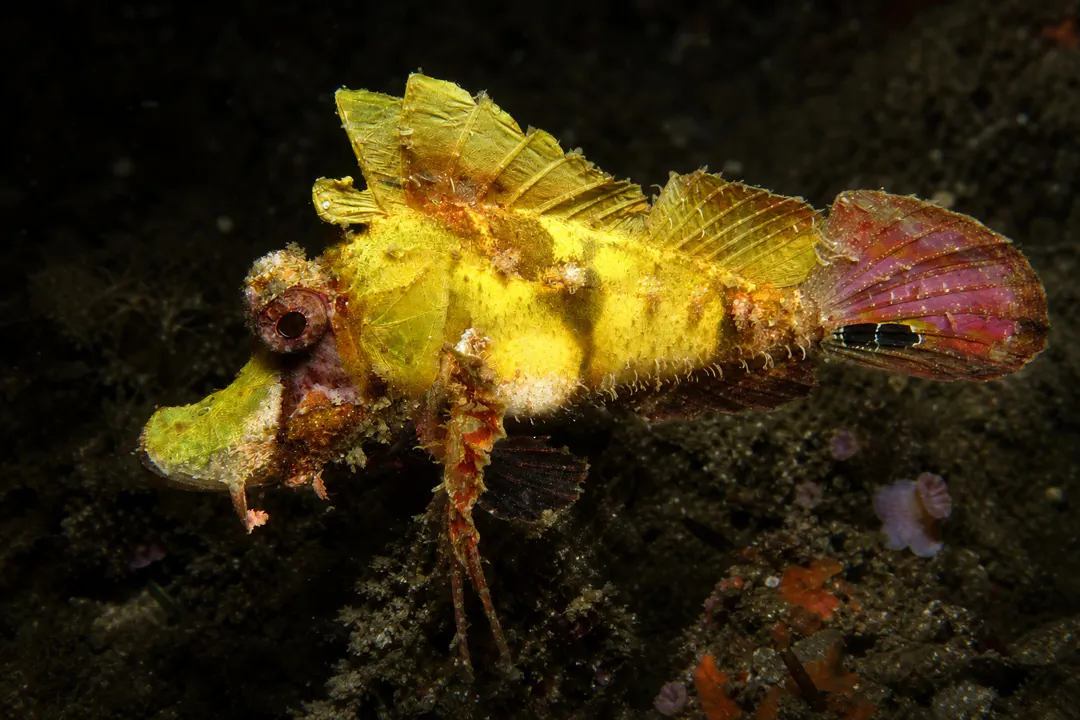
Scorpionfish represent a diverse family of venomous predators distributed across tropical and temperate oceans worldwide, with approximately 300 species exhibiting varying degrees of venom potency. These cryptic ambush predators possess venomous spines along their dorsal, anal, and pelvic fins, with venom glands located at the base of each spine. The venom delivery system functions through grooved spines that channel toxin into puncture wounds when prey or threats make contact. Scorpionfish typically inhabit rocky reefs, sandy bottoms, and kelp forests at depths ranging from the intertidal zone to over 2,000 meters, where they remain motionless for extended periods, relying on camouflage to ambush passing fish and crustaceans.
The venom composition of scorpionfish varies by species but typically contains protein-based neurotoxins and enzymes that cause intense localized pain, swelling, and tissue damage. Human envenomation, while rarely fatal, produces severe pain that can persist for days, accompanied by swelling, discoloration, and potential systemic symptoms including nausea, fever, and cardiac irregularities in severe cases. The immediate effect of a sting is often a sharp, throbbing pain that can quickly spread and become debilitating, sometimes leading to fainting or shock.
Among the most recognizable venomous fish are the Lionfish, a particularly ornate scorpionfish genus. While beautiful, species like Pterois volitans and Pterois miles have become invasive in the Atlantic and Mediterranean, where their lack of natural predators and efficient venom delivery system have allowed populations to expand dramatically. Their long, showy dorsal spines, while a warning display, are fully venomous and readily deployed if the fish feels threatened, making them a significant hazard in new ecosystems.
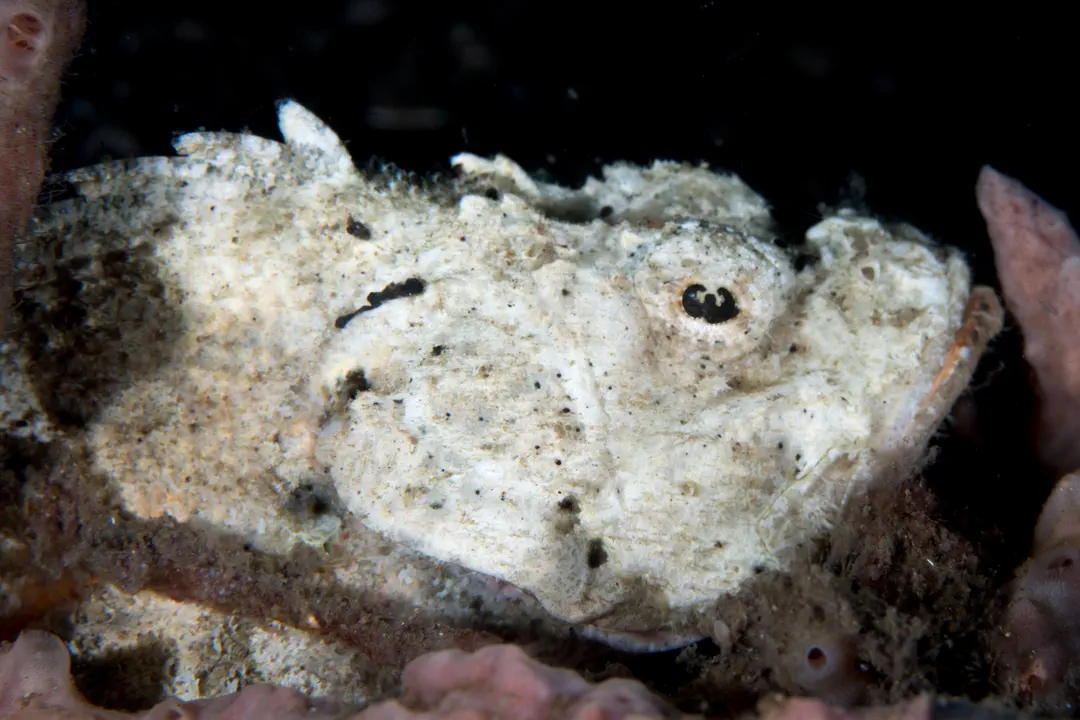
Stonefish, such as Synanceia verrucosa, another close relative within the scorpionfish family, rank among the most venomous fish species globally. Their incredible camouflage, mimicking rocks or coral, makes them almost impossible to spot, leading to accidental contact. Their dorsal spines are robust and capable of piercing dive boots, delivering a potent venom that can cause excruciating pain, tissue necrosis, and systemic effects that include cardiac arrest and death within hours if untreated. Immediate and aggressive medical intervention is critical for stonefish stings.
Divers and swimmers can minimize encounters with these camouflaged dangers through awareness and caution. These fish rely on their stillness and disguise, making them easy to avoid if divers watch their hand and foot placement carefully. Maintaining neutral buoyancy and avoiding contact with the seafloor, especially in rocky or sandy areas, significantly reduces envenomation risk. Always look before you place your hands or knees, and avoid disturbing any suspicious-looking rocks or debris.
Should a sting occur, immediate immersion of the affected area in hot water (as hot as can be tolerated, typically 40-45°C) for 20-45 minutes provides significant pain relief by denaturing the venom proteins. Any visible spine fragments should be carefully removed. However, given the potential severity, especially with stonefish, prompt medical attention should be sought, particularly for stings involving multiple spines or affecting sensitive areas such as the face or torso.
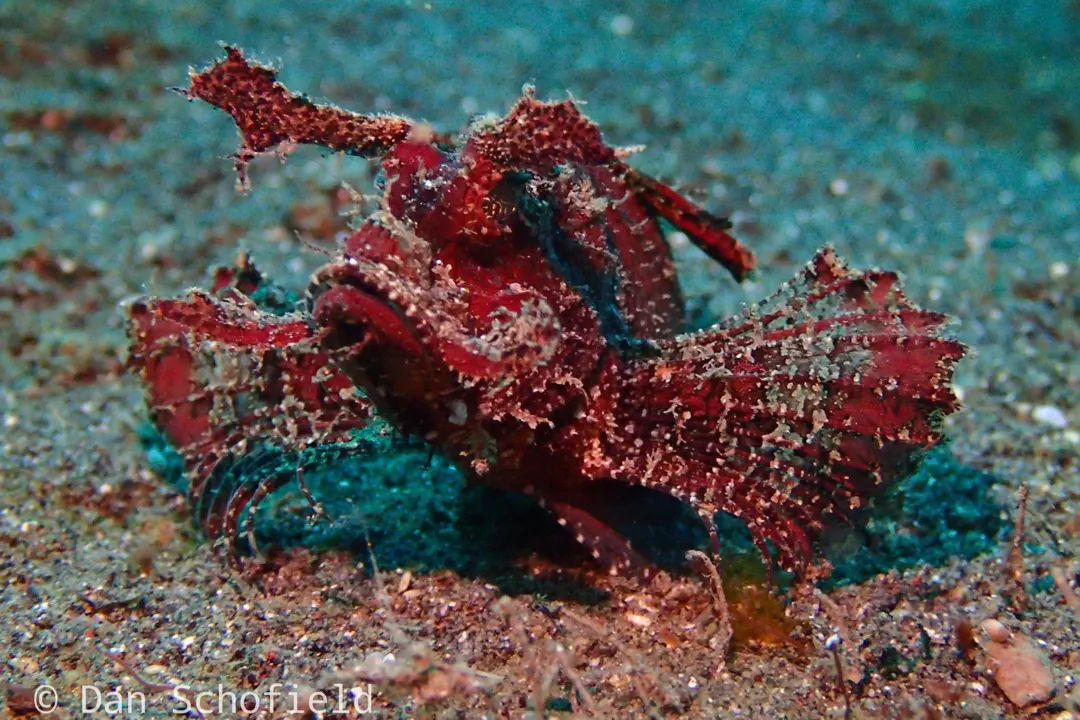 © Dan SchofieldCC BY 4.0 · iNaturalist
 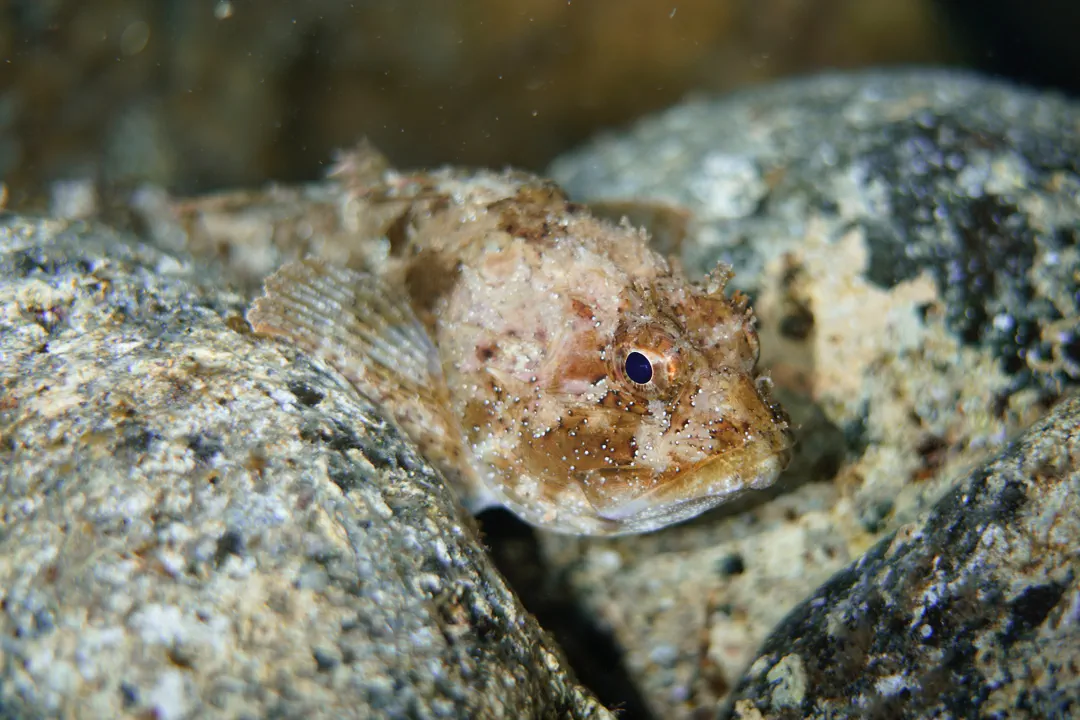 © Michael BommererCC BY 4.0 · iNaturalist
 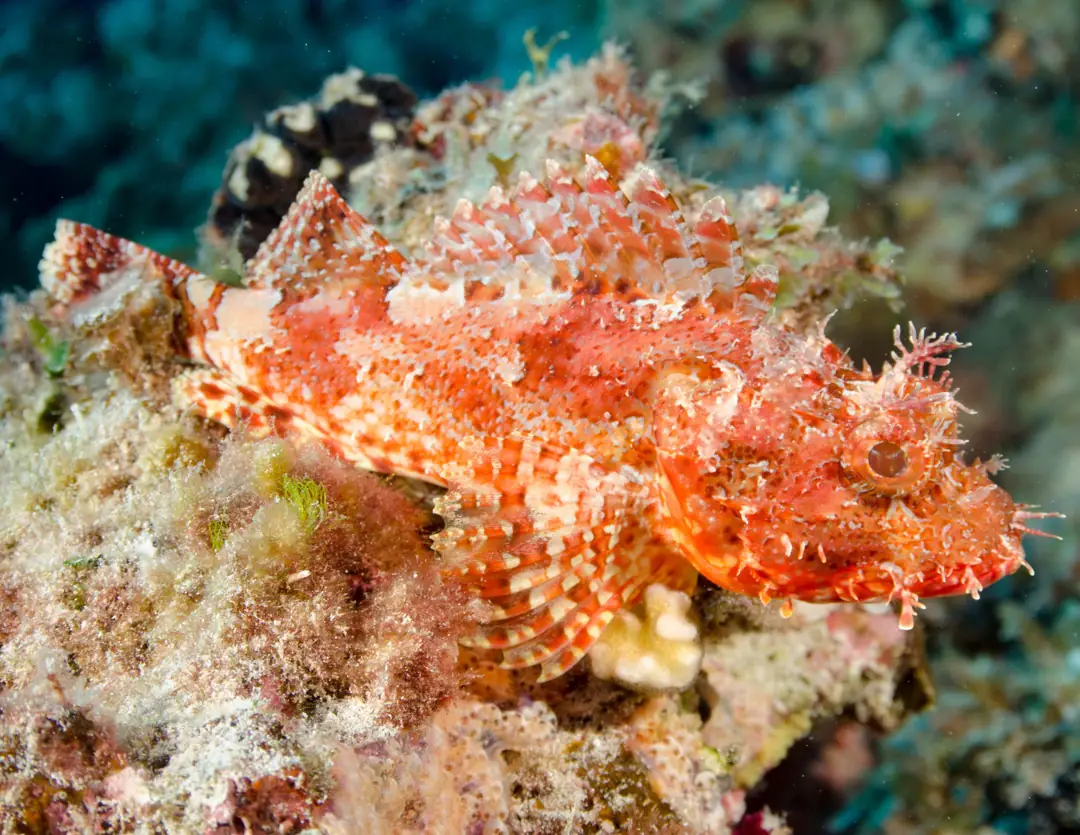 © Ian ShawAll rights reserved
 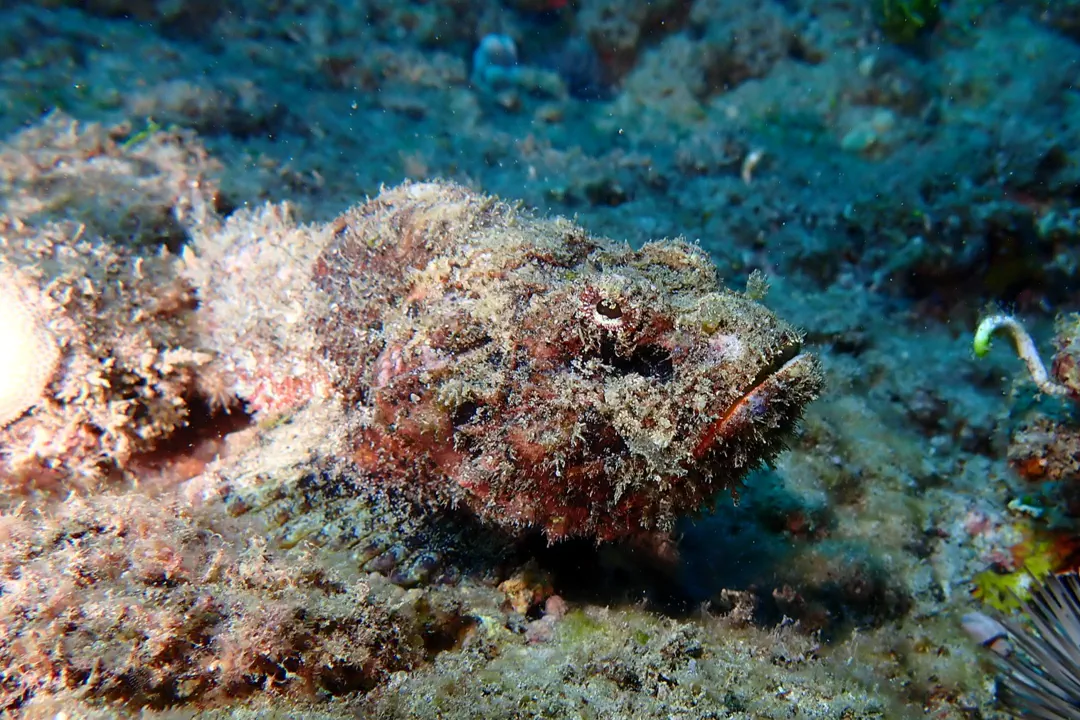 © Robin WhiteCC BY 4.0 · iNaturalist
  © seabook.appAll rights reserved
  © Rickard ZerpeCC BY 4.0 · iNaturalist
 Invertebrate Innovators: Mollusks and Cnidarians
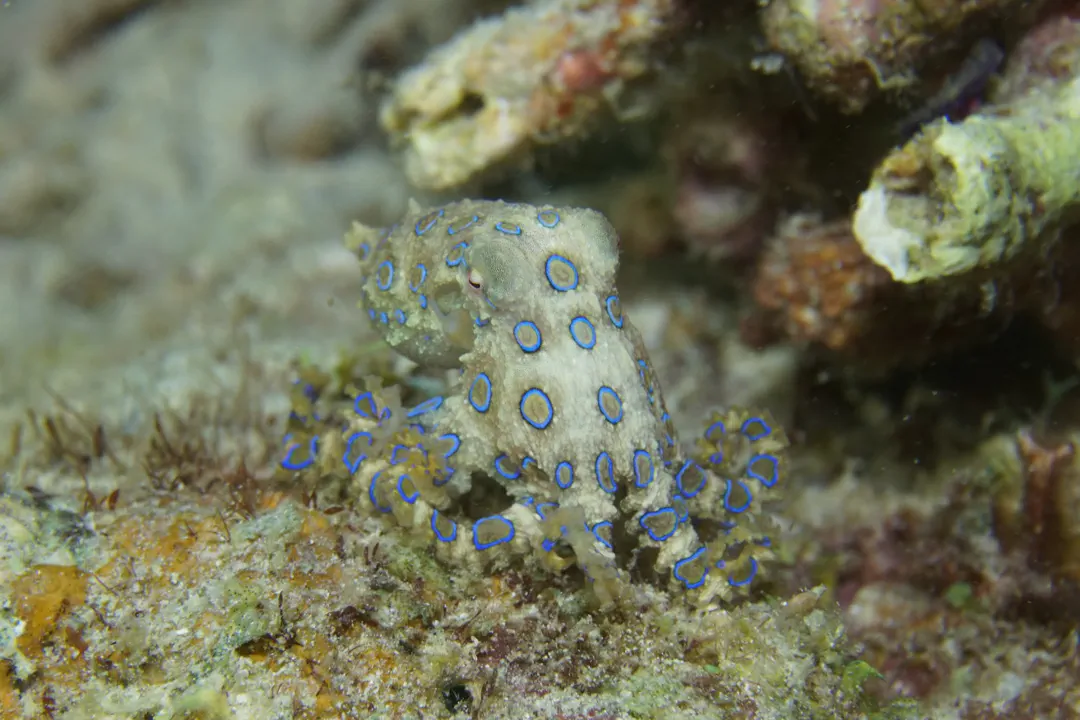
Mollusks and cnidarians represent the ocean's most biochemically sophisticated venomous invertebrates, employing venom chemistry of extraordinary complexity for predation and defense. The Blue-ringed Octopus (genus Hapalochlaena), despite its diminutive size of 12-20 centimeters, produces tetrodotoxin, a neurotoxin approximately 1,200 times more potent than cyanide. A single octopus carries enough venom to kill 26 adult humans within minutes, yet this remarkable creature poses no threat unless directly handled or threatened. The venom functions by blocking sodium channels in nerve and muscle cells, causing complete paralysis and respiratory failure. Blue-ringed octopuses inhabit shallow tropical and subtropical waters from the Indian Ocean to the Pacific, typically concealing themselves in rock crevices and coral rubble during daylight hours.
Cone snails (genus Conus) represent evolution's most elaborate venom delivery system among invertebrates, employing a modified radula tooth that functions as a biological hypodermic needle. These predatory gastropods hunt fish, worms, and other mollusks by extending their proboscis and injecting venom through a single tooth capable of penetrating wetsuits. Cone snail venoms contain 50 to over 1,000 distinct peptide toxins, each targeting specific ion channels or neurotransmitter receptors in prey nervous systems. The geographic cone snail (Conus geographus) produces venom potent enough to kill humans, with no known antidote; even small quantities can cause paralysis and death. Cone snails inhabit tropical and subtropical reefs, typically at depths between 5 and 500 meters, where they hunt nocturnally or during low-light conditions.
Box jellyfish, particularly the Australian species Chironex fleckeri, represent the ocean's most immediately dangerous cnidarians. These transparent, cube-shaped jellyfish possess tentacles lined with millions of nematocysts, each capable of firing in microseconds to inject venom into prey or threats. Box jellyfish venom contains multiple toxins affecting the heart, nervous system, and skin, causing cardiac arrest, paralysis, or death in humans within minutes of severe envenomation. The Irukandji jellyfish (e.g., Carukia barnesi), smaller than a grain of rice, delivers venom causing Irukandji syndrome—a potentially fatal condition characterized by severe pain, hypertension, and cardiac arrhythmias. Box jellyfish inhabit Indo-Pacific waters, with peak danger occurring during warm months (October to May in the Southern Hemisphere) when they move into shallow waters to reproduce.
Other venomous mollusks and cnidarians include various octopus species beyond the Blue-ringed variety, many of which employ venom for prey capture rather than defense. The Pacific Red Octopus can spit venom onto prey, stunning and killing fish while also separating snail flesh from shells through enzymatic venom action. Sea anemones, though less immediately dangerous than jellyfish, possess nematocysts capable of causing painful stings, with some species producing venom affecting human cardiac function. Portuguese man o' wars, despite being colonial organisms rather than true jellyfish, deliver potent stings through tentacles that can extend over 30 meters, causing welts, pain, and systemic symptoms in humans.
 © Stas KuryanAll rights reserved
 Reptiles of the Reef: Sea Snakes
Sea snakes represent the ocean's most venomous reptiles, with neurotoxic venom potency exceeding that of most terrestrial snakes, including cobras. Approximately 70 species of sea snakes inhabit tropical and subtropical oceans, with the highest diversity in Indo-Pacific waters. These fully aquatic reptiles possess unique adaptations for marine life, including flattened, paddle-like tails for efficient swimming and valved nostrils that close during dives, allowing them to remain submerged for extended periods without needing to surface for air.
Sea snakes primarily hunt fish, eels, and crustaceans, using their highly potent venom to immobilize prey rapidly before swallowing. Their venom contains powerful neurotoxins that block acetylcholine receptors at the neuromuscular junction, causing progressive paralysis that typically begins with the eyelids and gradually affects all voluntary muscles, including the critical respiratory muscles. This rapid onset of paralysis ensures their prey cannot escape once bitten.
The potency of sea snake venom varies dramatically by species, with some possessing venom 10 times more toxic than cobra venom on a per-milligram basis. Species like the yellow-lipped sea krait (Laticauda laticaudata) and the beaked sea snake (Enhydrina schistosa) rank among the most venomous, with lethal doses measured in fractions of a milligram. Despite their extreme venom potency, sea snakes remain generally docile and non-aggressive toward humans, biting only when provoked, threatened, or accidentally caught in fishing nets. Most sea snake bites occur to fishermen handling nets or divers who inadvertently corner or handle snakes.
Sea snakes inhabit coastal waters, coral reefs, and estuaries, typically at depths between 5 and 80 meters, though some species venture into deeper waters. They must surface regularly to breathe air, making them visible to divers and swimmers. Their presence is particularly notable in Southeast Asian waters, the Persian Gulf, and around Australia, where encounters are more frequent. While their non-aggressive nature is reassuring, their potent venom makes any direct interaction extremely risky.
Prevention involves avoiding handling sea snakes, maintaining a respectful distance if encountered, and wearing protective clothing in areas with high sea snake populations. Divers should never attempt to touch or provoke a sea snake, even if it appears calm or curious. Understanding their behavior and habitats is key to minimizing any potential for interaction.
Medical treatment for sea snake envenomation requires specific sea snake antivenom, which is crucial due to venom variation among species and geographic regions. Symptoms of envenomation may be delayed 30 minutes to several hours, with initial signs including ptosis (drooping eyelids), difficulty swallowing, and muscle weakness progressing to complete paralysis and respiratory failure if untreated. Without prompt and appropriate medical intervention, sea snake bites carry mortality rates exceeding 80%, making immediate medical evacuation critical for any confirmed or suspected envenomation.
Staying Safe: Prevention and First Aid
Preventing encounters with venomous marine life requires awareness, appropriate protective equipment, and understanding animal behavior. Most venomous marine creatures avoid humans and bite or sting only when threatened, cornered, or accidentally contacted. Divers should maintain neutral buoyancy and avoid touching the seafloor, rocks, or coral where venomous fish and invertebrates conceal themselves. Wearing protective footwear, gloves, and wetsuits reduces skin exposure and provides barriers against many venomous spines and stings. Awareness of seasonal patterns—such as box jellyfish abundance during warm months in Indo-Pacific waters—allows divers to plan dives during lower-risk periods or avoid affected areas entirely.
First aid for venomous marine creature stings and bites varies by species but follows general principles applicable to most envenomations. For fish spine injuries and most jellyfish stings, immediate immersion in hot water (40-45°C or as hot as can be tolerated) for 20-45 minutes provides pain relief by denaturing venom proteins and reducing toxin activity. Vinegar application, traditionally recommended for jellyfish stings, shows mixed effectiveness for some species and should not delay hot water immersion. Visible tentacles or spines should be removed carefully using tweezers or a card edge, avoiding bare-hand contact. Systemic symptoms including difficulty breathing, chest pain, severe swelling, or altered consciousness require immediate emergency medical attention and possible antivenom administration.
Specific protocols apply to severe envenomations from highly dangerous species. Box jellyfish stings require immediate vinegar application followed by hot water immersion, with emergency services contacted immediately for any sting covering a significant body area or causing systemic symptoms. The vinegar helps to inactivate unfired nematocysts, preventing further venom injection. Blue-ringed octopus bites, though often painless initially, require immediate immobilization of the bitten limb and emergency medical evacuation, as no specific antidote exists and treatment focuses on respiratory support until the venom is metabolized.
Sea snake bites require pressure immobilization—wrapping the bitten limb firmly with elastic bandages and immobilizing the limb—combined with immediate evacuation to a facility with sea snake antivenom. This technique helps to slow the spread of venom through the lymphatic system. Cone snail stings similarly require pressure immobilization and emergency care, as venom effects can progress rapidly to complete paralysis. Always remember that for any severe marine envenomation, time is critical, and professional medical help should be sought without delay.
Divers and swimmers should familiarize themselves with local marine hazards before entering unfamiliar waters. Consulting with local dive operators, reviewing regional hazard guides, and understanding seasonal variations in dangerous species distribution significantly reduces envenomation risk. Carrying a basic marine first aid kit including tweezers, vinegar, and a thermometer allows appropriate initial response to minor stings. Most importantly, respecting marine life by maintaining distance, avoiding handling, and recognizing that venomous creatures pose no threat when left undisturbed ensures safe and enjoyable ocean experiences for both humans and marine animals.
Questions
What is the difference between venomous and poisonous marine creatures?
Venomous creatures actively inject toxins (venom) through specialized structures such as fangs, spines, or stingers, typically for hunting prey or defending against predators. Poisonous creatures passively deliver toxins through ingestion, inhalation, or skin contact, using poison primarily as a defense mechanism to deter predators from eating them. The key distinction lies in delivery method: venom is injected, while poison is ingested or absorbed.
Are all scorpionfish venomous?
Yes, all approximately 300 species of scorpionfish possess venomous spines along their dorsal, anal, and pelvic fins, with venom glands located at the base of each spine. While their stings are rarely fatal to humans, they cause intense localized pain, swelling, and tissue damage that can persist for days, with potential systemic symptoms including nausea, fever, and cardiac irregularities in severe cases.
What should I do if I'm stung by a jellyfish?
For most jellyfish stings, immediately immerse the affected area in hot water (40-45°C or as hot as can be tolerated) for 20-45 minutes to denature venom proteins and reduce pain. Remove any visible tentacles carefully using tweezers or a card edge, avoiding bare-hand contact. Seek immediate medical attention for severe reactions, stings covering significant body area, or stings from highly venomous species such as box jellyfish, which require vinegar application before hot water immersion.
Can I touch a Blue-ringed Octopus if it looks small and harmless?
Absolutely not. The Blue-ringed Octopus is one of the ocean's most venomous creatures, carrying enough tetrodotoxin to kill 26 adult humans within minutes despite its diminutive 12-20 centimeter size. While these octopuses are not aggressive and bite only when directly handled or threatened, their bite is often painless but can be fatal, with no known antidote and treatment limited to respiratory support until venom is metabolized.