 © Susan PriorCC BY 4.0 · iNaturalist
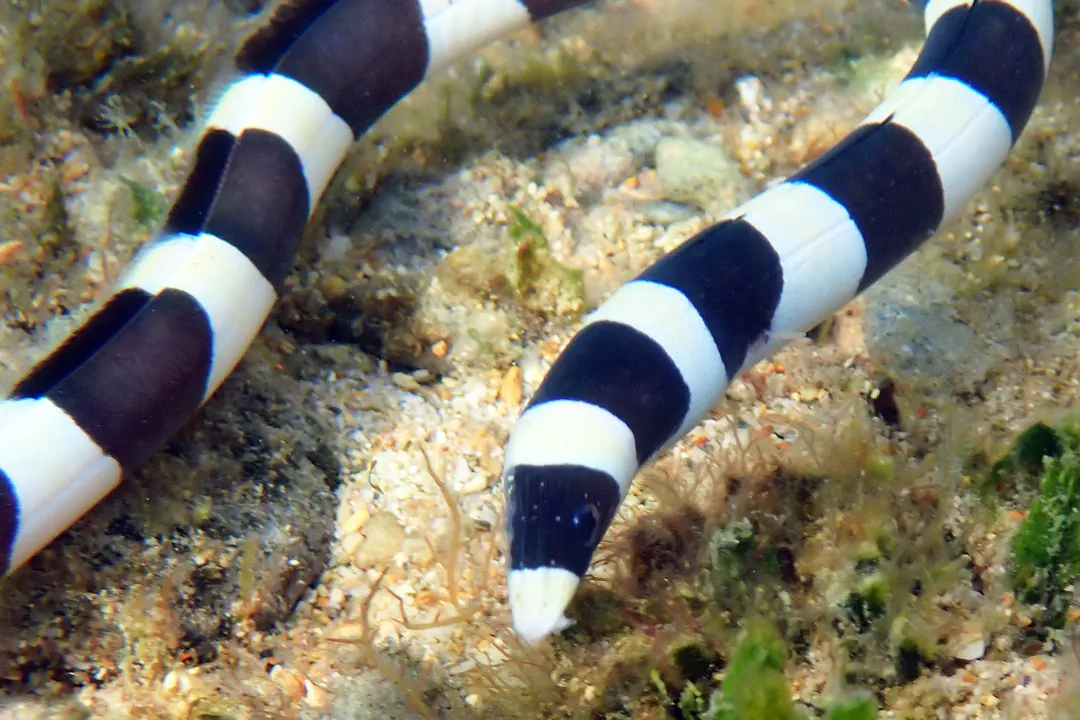
Banded Snake Eel
Leiuranus semicinctus
 © coenobitaCC BY 4.0 · iNaturalist
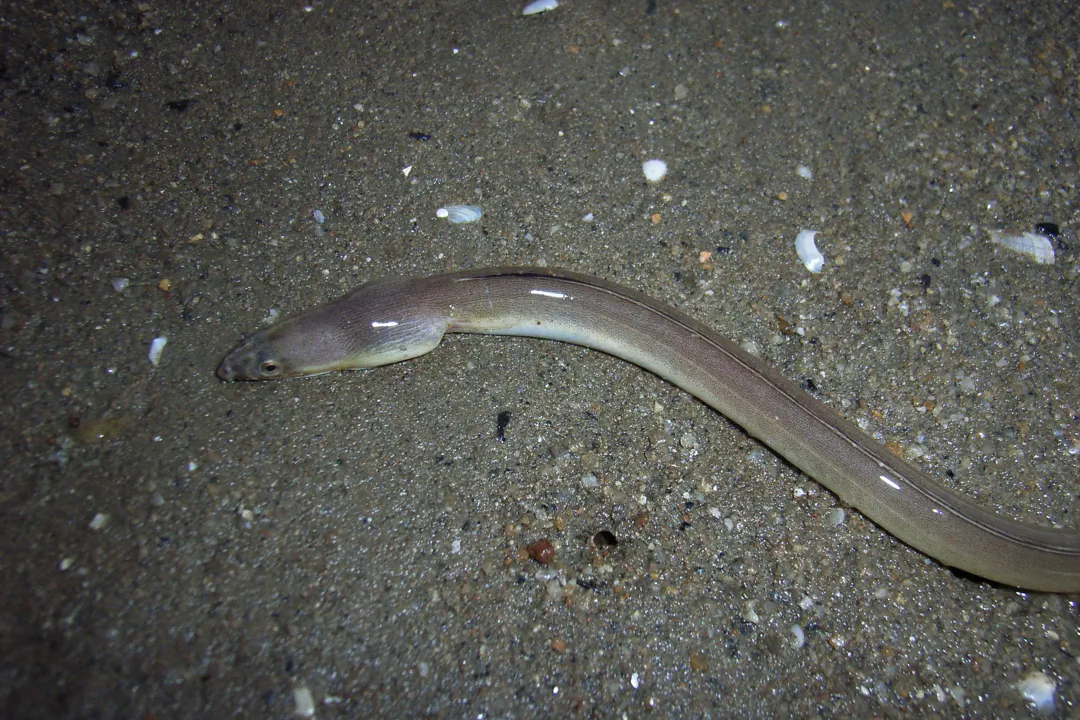
Pisodonophis cancrivorus
Pisodonophis cancrivorus is an eel in the family Ophichthidae (worm/snake eels). It was described by John Richardson in 1848.
Teeth are molariform, multiserial on jaws, intermaxillary and vomer. Dorsal fin is with broad dark edge. Dorsal fin beginning above pectoral fin. Body is snake-like, cylindrical, compressed only along extreme tail tip. Anterior nostril is tubular, posterior nostril along lower edge of lip. Median fins are not continuous posteriorly. Extreme tip of tail is stiff and finless. Dorsal fin is origin over front to middle portion of pectoral fins. Lateral line is inconspicuous. Variable from grey to black or brown. Large individuals have wrinkled skin. Vertebrae: 152 - 163.
Indo-Pacific: Red Sea and East Africa to French Polynesia, north to the Ogasawara Islands, south to Australia.
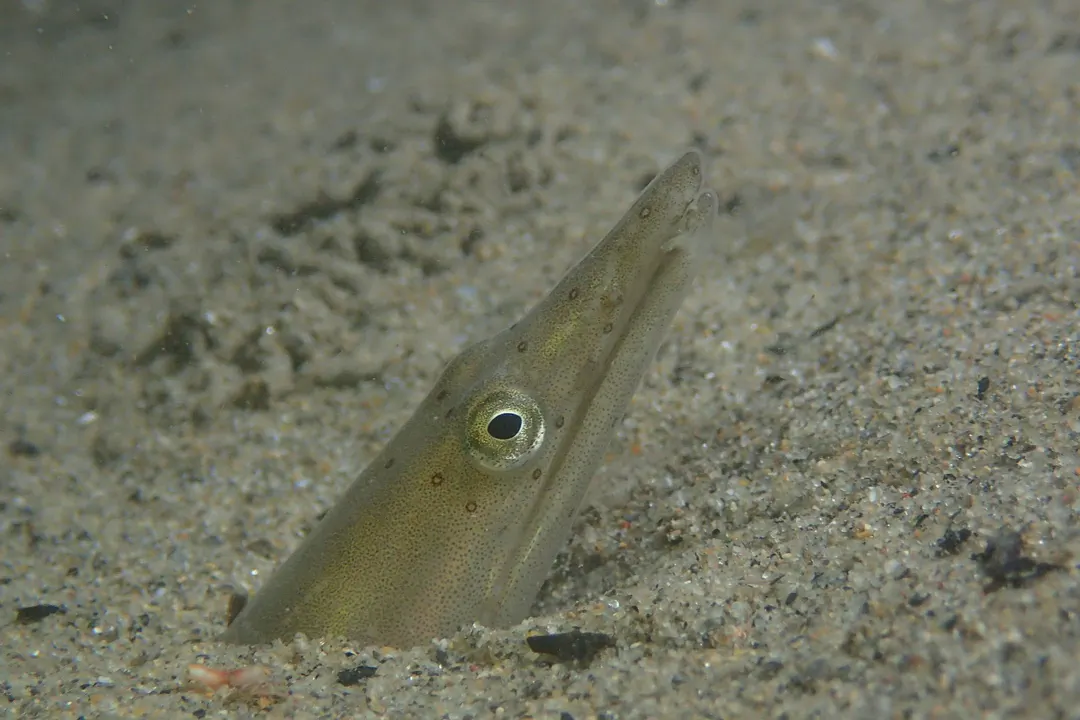
It occurs in lagoons and estuaries, entering freshwater. Often in tidal channels where loose groups congregate, and usually seen with just the head exposed.
© Susan PriorCC BY 4.0 · iNaturalist  © Dan SchofieldCC BY 4.0 · iNaturalist
  © Julien RenoultCC BY 4.0 · iNaturalist
 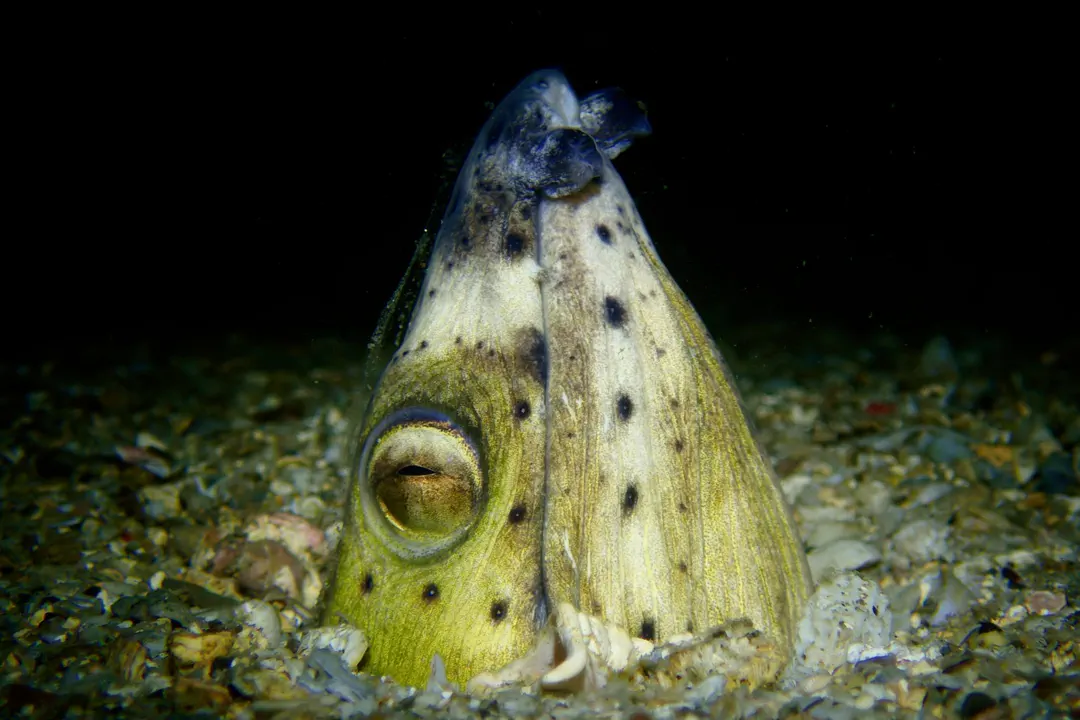 © Jay ParolineCC BY 4.0 · iNaturalist
 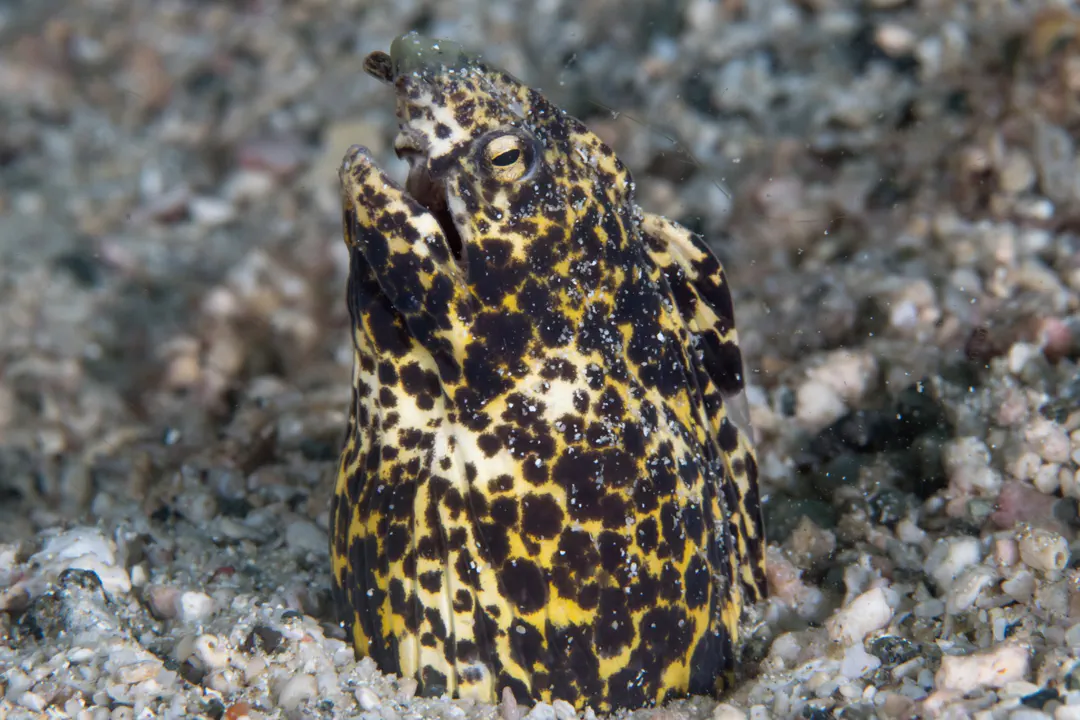 © Rickard ZerpeCC BY 4.0 · iNaturalist
 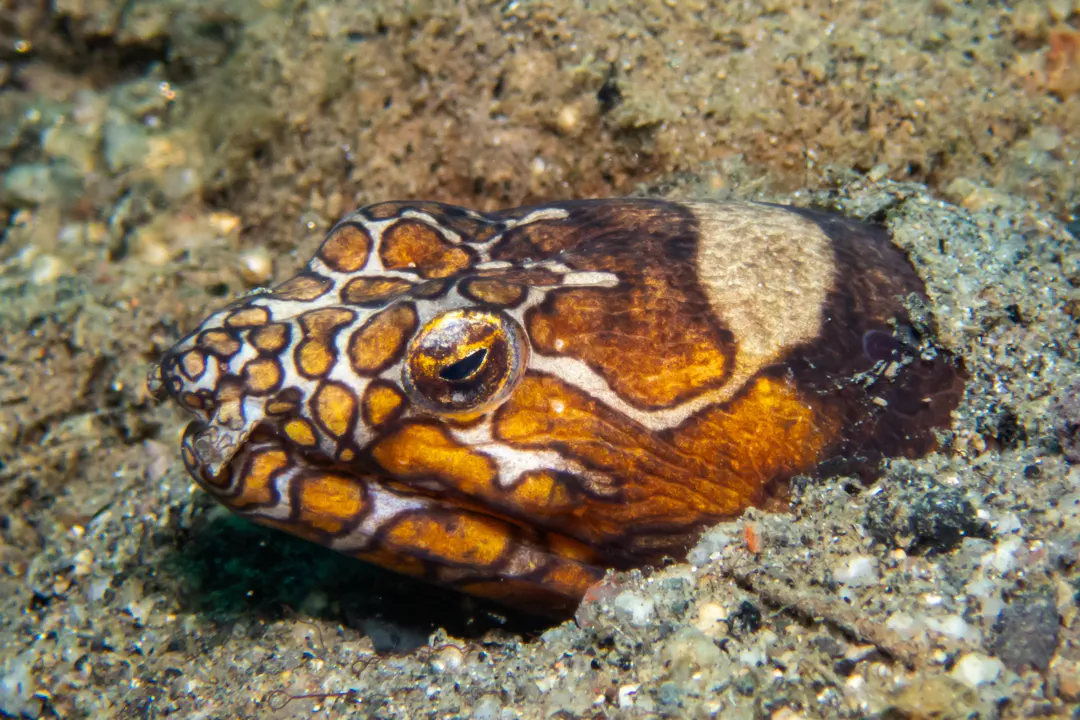 © portioidCC BY 4.0 · iNaturalist
 Longfin Snake Eel has no known danger to humans. However, always observe marine life responsibly.
Longfin Snake Eel can be found at depths of up to 20 meters.
Download Seabook free for iOS and Android.