 © Dan SchofieldCC BY 4.0 · iNaturalist
Devil Stinger (brown)
Inimicus didactylus
Inimicus didactylus
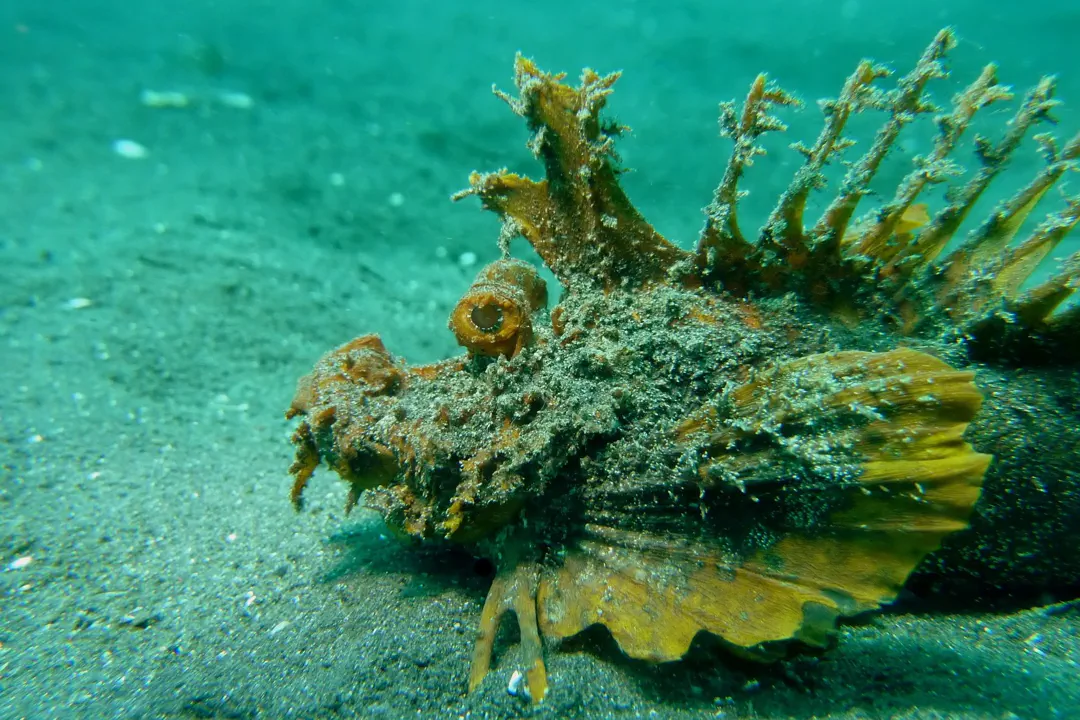
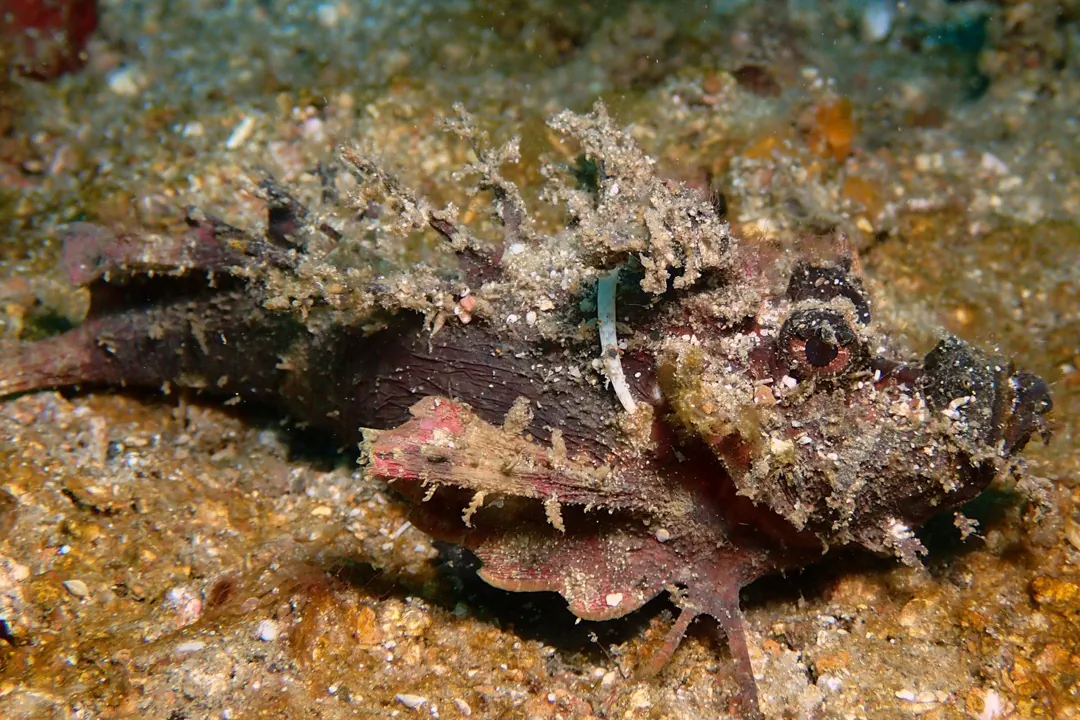
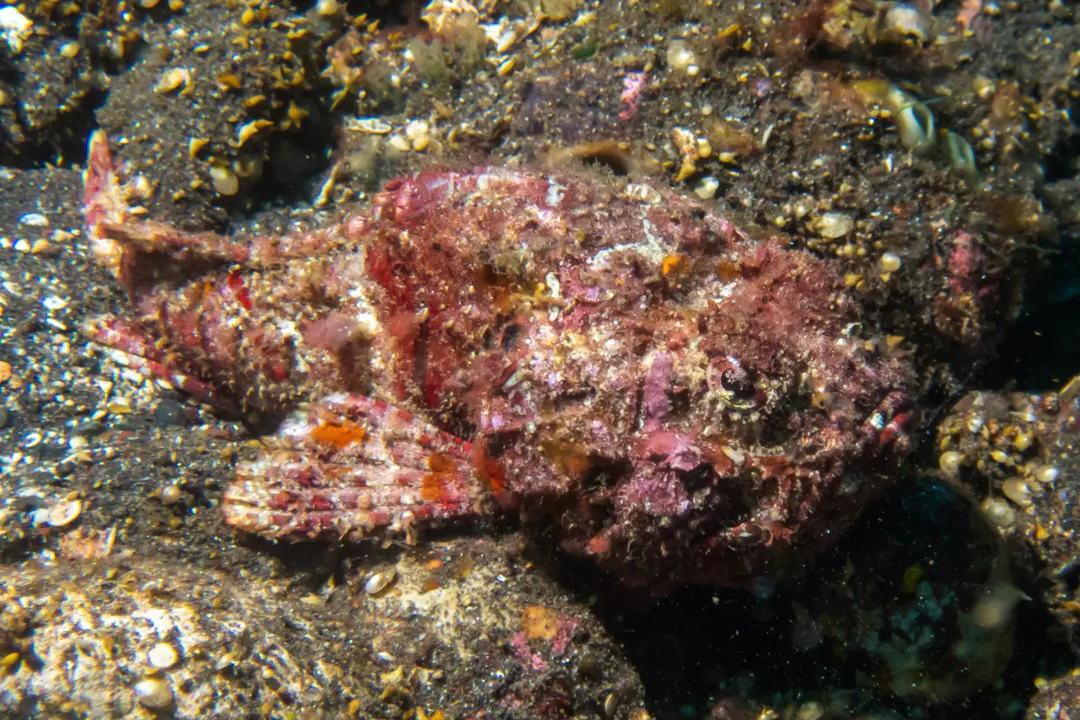
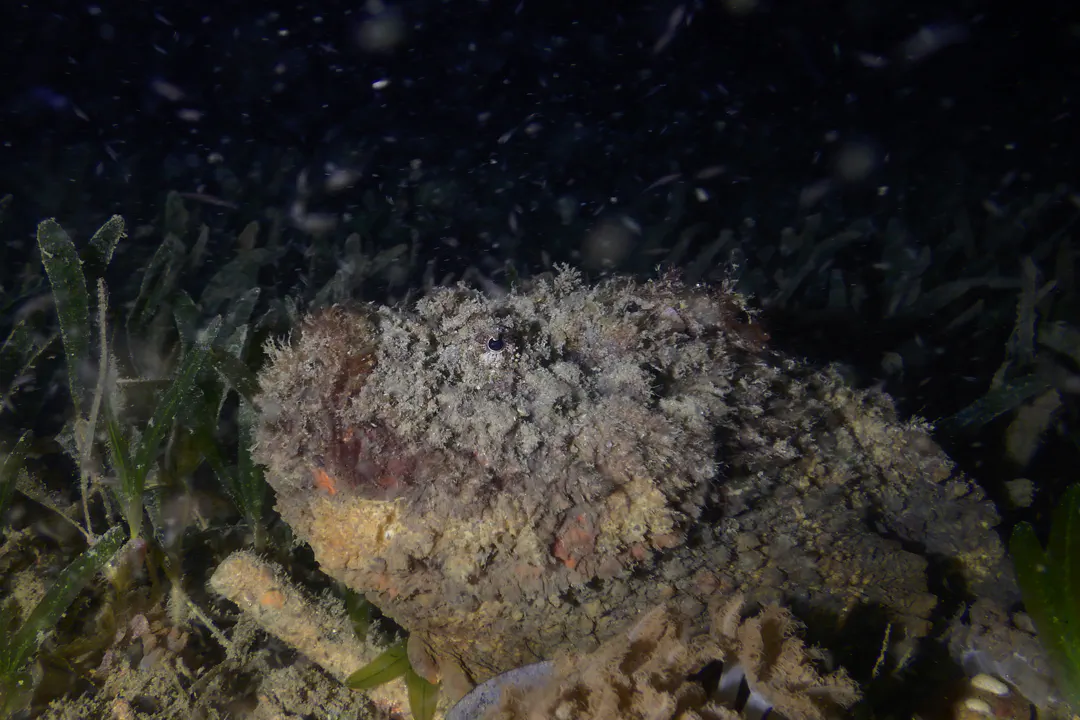
Inimicus didactylus is a member of the Inimicus genus of venomous fishes, closely related to the true stonefishes. It can reach a body length of 25 cm (10 in) and is irregularly surfaced with spines and a knobby appearance. The fish has venomous spines to ward off enemies. The fish are nocturnal, and often dig themselves partially into the sandy seabed during the day.
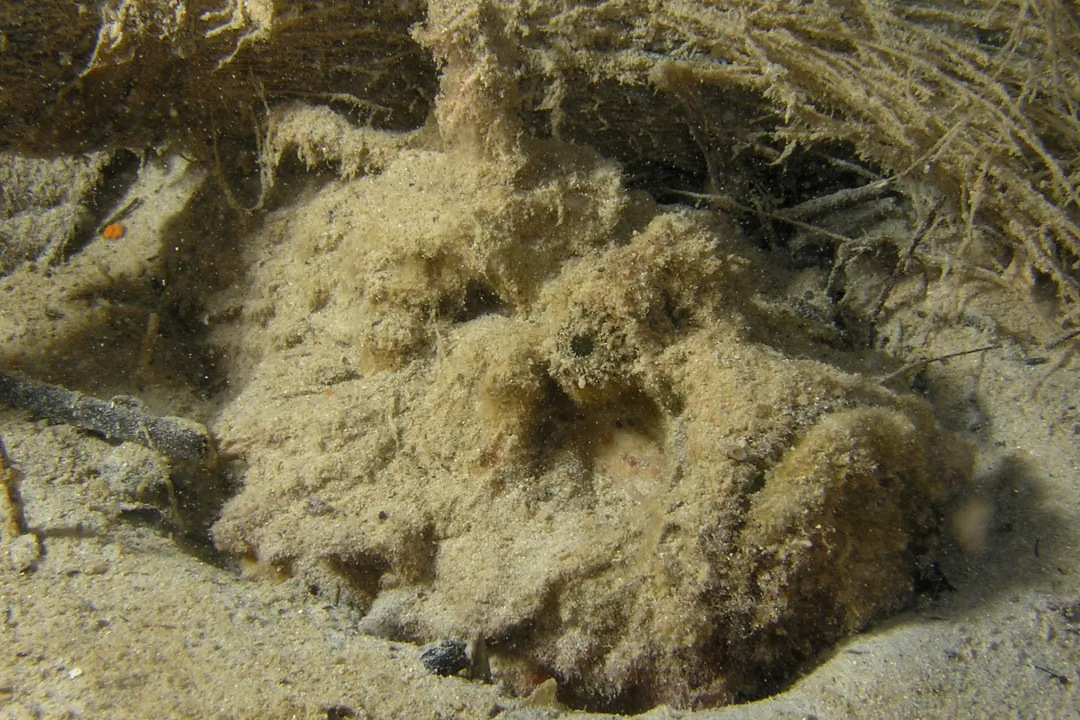
I. didactylus adults can attain a body length of up to 25 centimeters in length. The body color is red or sandy yellow with light blotches, and very similar to that of the surrounding sandy or coral seabed in which they are found. This coloration acts as a camouflage which renders them extremely difficult to detect in their natural habitat. The skin is without scales except along the lateral line, and is covered with venomous spines and wartlike glands which give it a knobby appearance. The head is flattened, depressed and concave. The eyes, mouth and nostrils project upwards and outwards from the dorsal aspect of the head. Sexual dimorphism is not believed to occur in this species.
Fin morphology:
Indo-West Pacific: Thailand to Vanuatu, north to the Ryukyu Islands and southeast China, south to Australia.
I. didactylus is a piscivorous ambush predator. It is nocturnal and typically lies partially buried on the sea floor or on a coral head during the day, covering itself with sand and other debris to further camouflage itself. It has no known natural predators. When disturbed by a scuba diver or a potential predator, it fans out its brilliantly colored pectoral and caudal fins as a warning. Once dug in, it is very reluctant to leave its hiding place. When it does move, it displays an unusual mechanism of subcarangiform locomotion — it crawls slowly along the seabed, employing the four lower rays (two on each side) of its pectoral fins as legs. The Bearded ghoul has poisonous dorsal fish spines that can cause a painful wound.
© Dan SchofieldCC BY 4.0 · iNaturalist 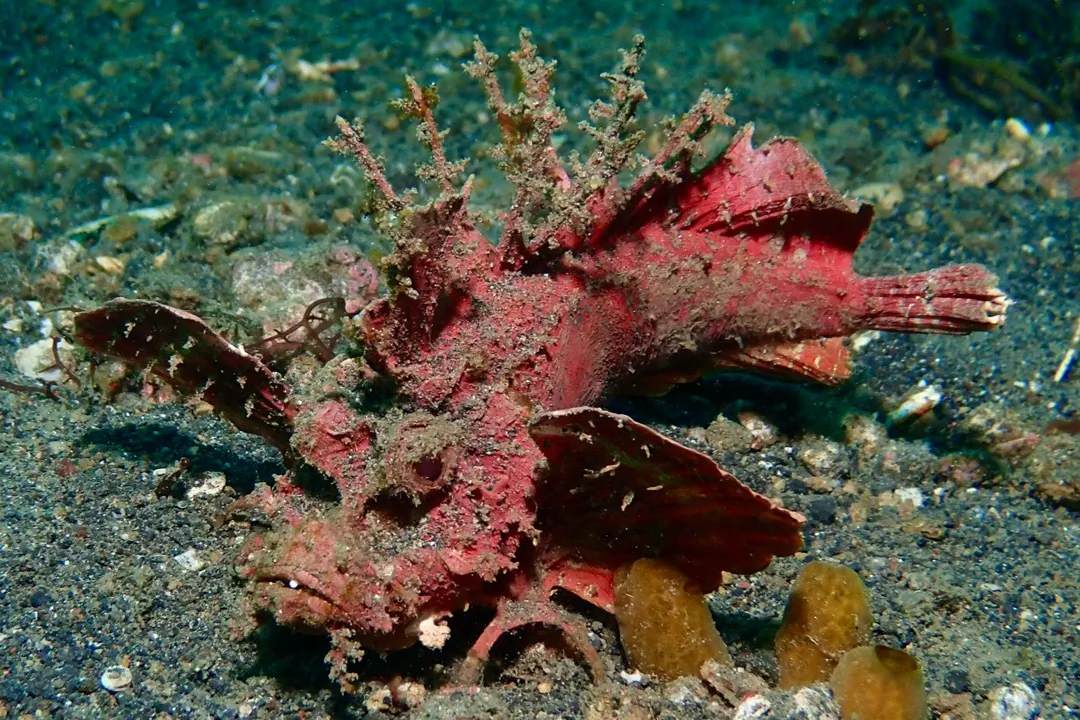 © desertnaturalistCC BY 4.0 · iNaturalist
  © Ditch TownsendCC BY-SA 4.0 · iNaturalist
  © portioidCC BY 4.0 · iNaturalist
  © Ewout KnoesterCC BY-SA 4.0
 Devil Stinger (sandy) is classified as venomous, dangerous to humans. Always exercise caution and keep a safe distance.
Devil Stinger (sandy) can be found at depths of up to 80 meters.
Download Seabook free for iOS and Android.