 © Julien RenoultCC BY 4.0 · iNaturalist
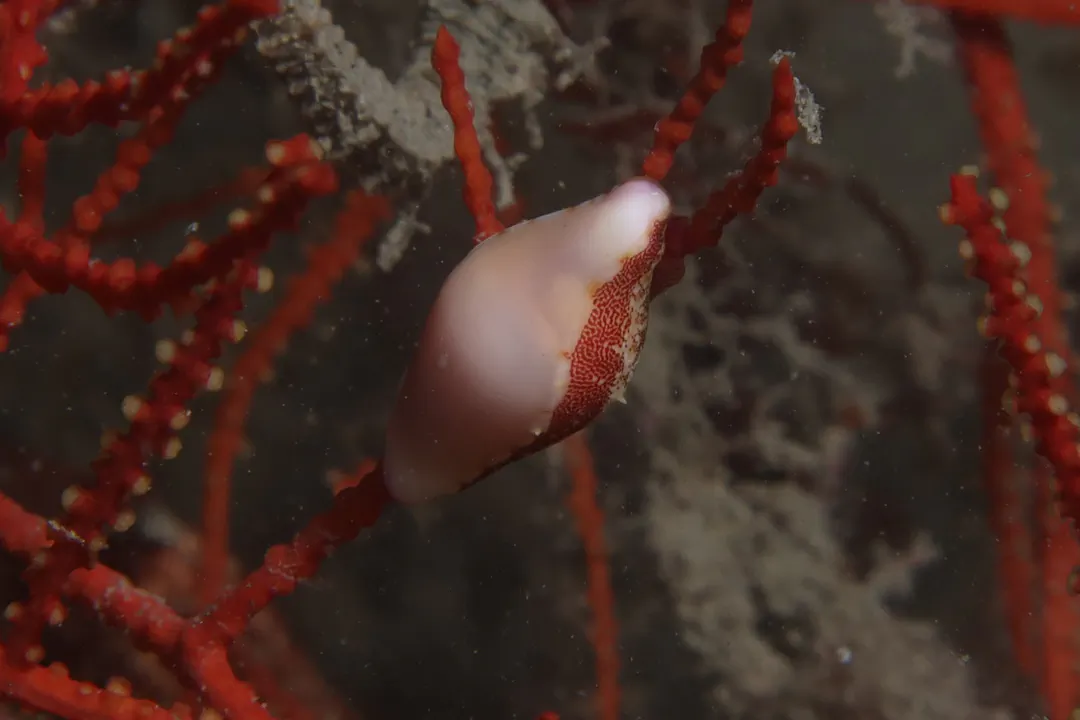
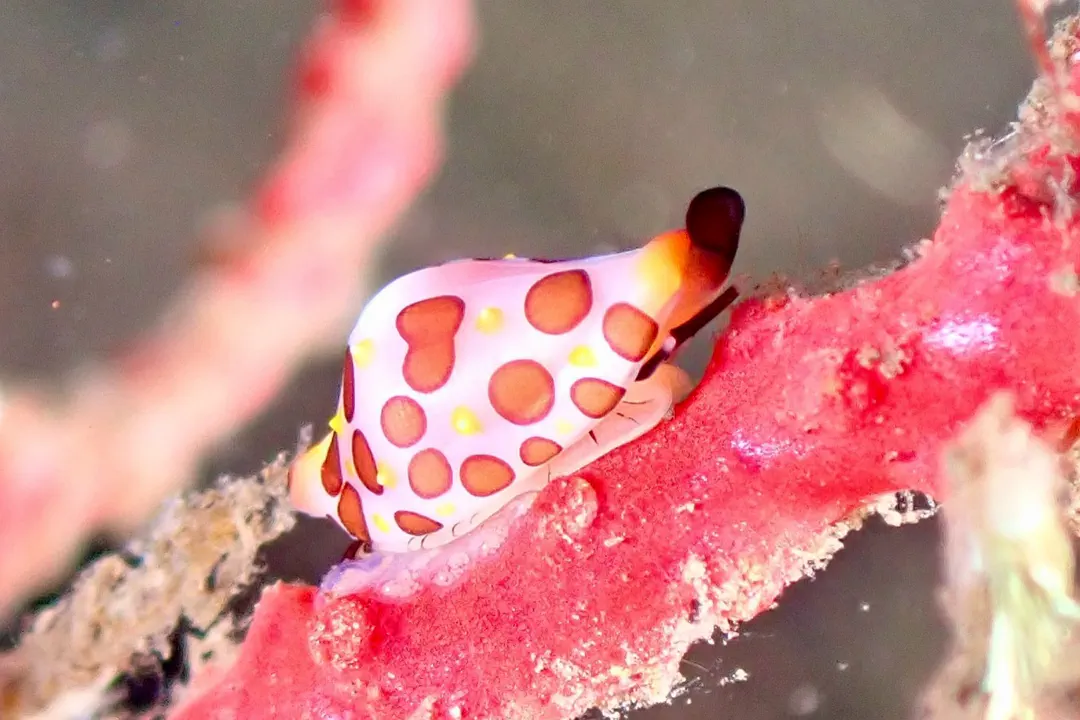
Keys Simnia
Simnia spelta
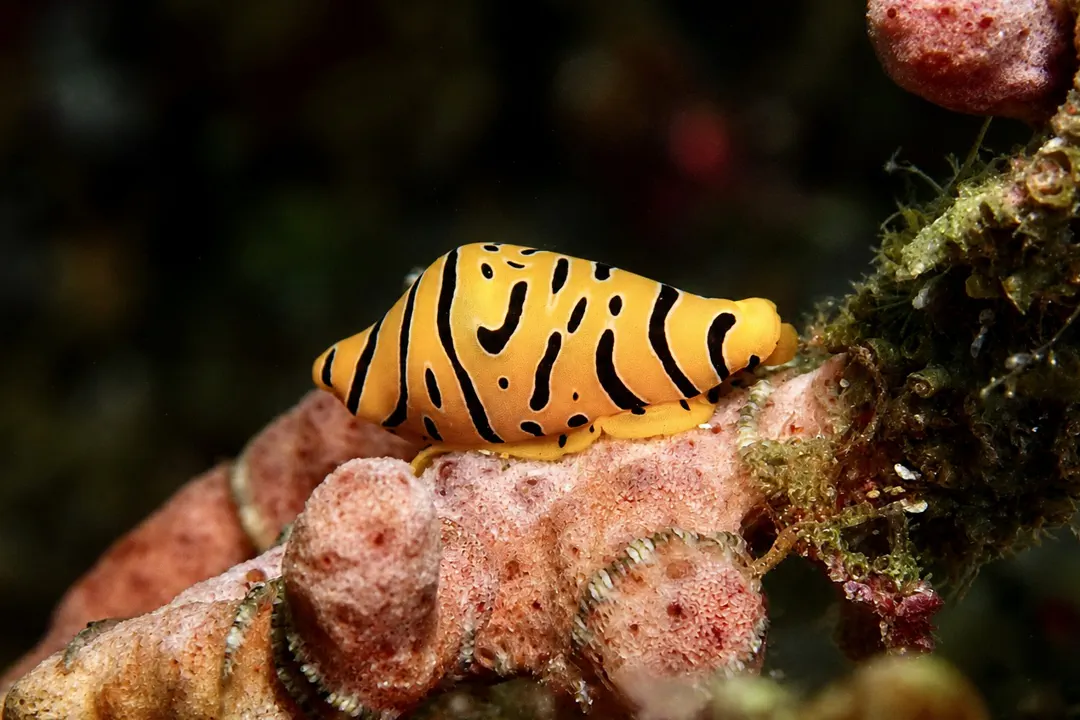
Cyphoma gibbosum
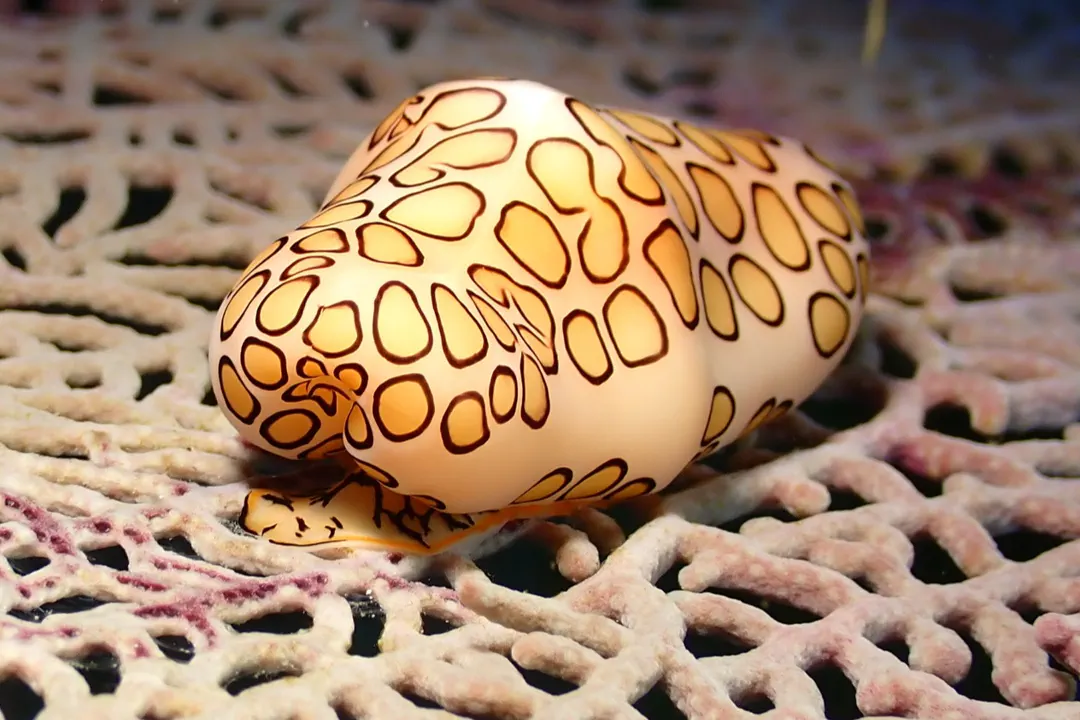
Cyphoma gibbosum is a species of small but brightly colored sea snail, a marine gastropod mollusk in the family Ovulidae, the cowry allies.
They look like living jewelry, bright, patterned, and unreal. But those colors aren't on the shell. They are the animal's skin.
Flamingo tongue snails feed on toxic soft corals, store the poison in their body, and somehow turn danger into beauty. They're an important part of the reef's balance, but collectors often take them for their shells, not realizing the color fades once the snail dies. Their beauty isn't decoration. It's survival.
Touching one won't kill you, but it can cause irritation or light burns. And if someone (for some reason) puts it in their mouth - the toxins may cause nausea, burning or temporary numbness.
When it is alive, the snail appears bright orange-yellow in color with black markings. However, these colors are not in the shell, but are only due to live mantle tissue which usually cover the shell. The mantle flaps can be retracted, exposing the shell, but this usually happens only when the animal is attacked.
The shells reach on average 25–35 millimetres (0.98–1.38 in) of length, with a minimum size of 18 millimetres (0.71 in) and a maximum shell length of 44 millimetres (1.7 in). The shape is usually elongated and the dorsum shows a thick transversal ridge. The dorsum surface is smooth and shiny and may be white or orange, with no markings at all except a longitudinal white or cream band. The base and the interior of Cyphoma gibbosum shell is white or pinkish, with a wide aperture.
This Cyphoma is the most common of several species in the genus which lives in the tropical waters of the western Atlantic Ocean from North Carolina to northern coast of Brazil, including the Bermuda, the Caribbean Sea, the Gulf of Mexico and the Lesser Antilles.
The minimum recorded depth is 0 m; the maximum recorded depth is 29 m.
The flamingo feeds by browsing on the living tissues of the soft corals on which it lives. Common prey include Briareum spp., Gorgonia spp., Plexaura spp., and Plexaurella spp. Adult female C. gibbosum attach eggs to coral which they have recently fed upon. After roughly a week and a half, the larvae hatch. They are planktonic and eventually settle onto other gorgonian corals. Juveniles tend to remain on the underside of coral branches while adults are far more visible and mobile. Adults scrape the polyps off the coral with their radula, leaving an easily visible feeding scar on the coral. However, the corals can regrow the polyps, and therefore predation by C. gibbosum is generally not lethal.
This species used to be common, but it has become rather uncommon in heavily visited areas because of over-collecting by snorkelers and scuba divers, who make the mistake of thinking that the bright colors are in the shell of the animal.
Ovulidae, common names the ovulids, cowry allies or false cowries, is a family of small to large predatory or parasitic sea snails, marine gastropod molluscs in the superfamily Cypraeoidea, the cowries and the cowry allies.
The ovulids are a widespread family, occurring mostly in tropical and subtropical waters, with most species in the Indo-West Pacific region. But a few species live in temperate waters.
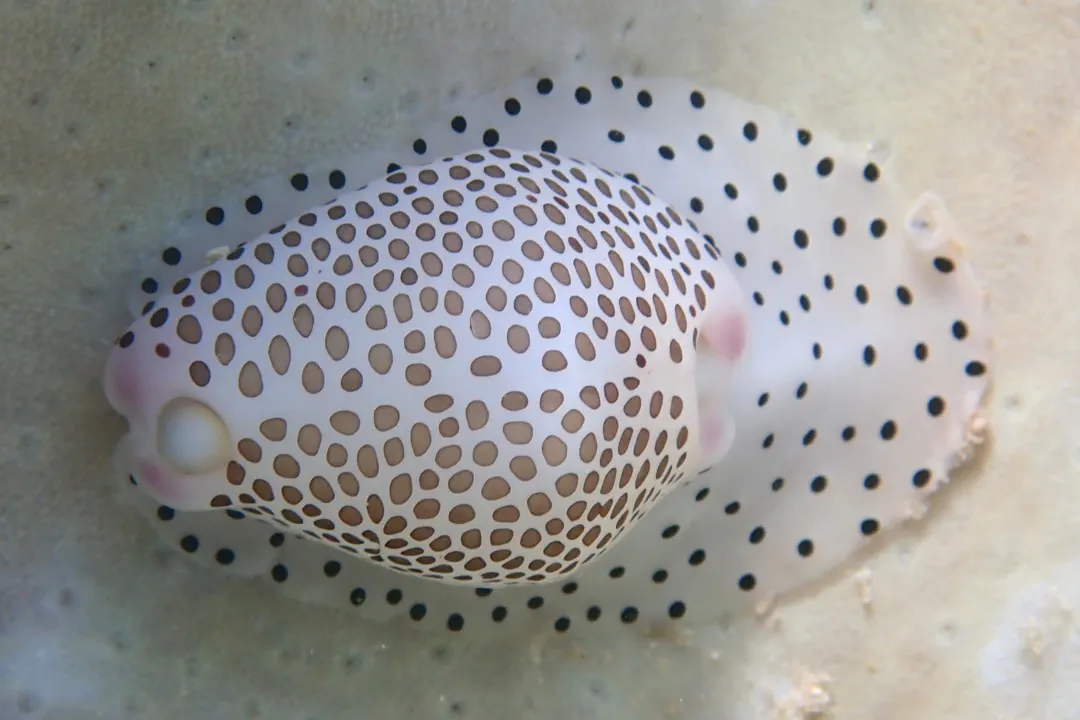
Ovulids are carnivorous molluscs that feed on polyps and tissues of Anthozoa (as do the genera Cyphoma and Pseudocyphoma). They live on, and eat, soft corals and sea fans, and they are usually regarded as ectoparasites of these sessile colonial organisms, to which they are anchored by a long and narrow foot. This extreme specialisation in their alimentary regime has caused important morphological modifications to their radula.
Ovulids mostly have smooth shiny shells with a very long aperture and a very low or invisible spire. The shell can be pyriform (shaped like a pear), ovate (egg-shaped) to sub-ovate, cylindrical or lanceolate (lance-shaped).
The shell is often monochromatic white, but in some species the shell is pink or reddish.
In a few species of ovulids, the shell quite closely resembles that of cowries. However in many other species, the shells are so elongate that they do not so much resemble the shells of that closely related family.
When these snails are alive, the mantle completely covers the shell almost all of the time. Pictures of living animals usually show the brightly colored and decorated mantle, which looks very different from the often rather plain, shiny surface of the shell.
The color patterns of the mantle closely resemble the color patterns of the host species. This is due to the phenomenon of "alimentary homochromy" (obtaining the same color as the host by feeding on the host). This phenomenon gives them a remarkable camouflage ability.
The following five subfamilies have been recognized in the taxonomy of Bouchet & Rocroi (2005):
See also Schiaparelli et al. (2005).
Fehse (2007) have elevated subfamily Pediculariinae to family Pediculariidae and tribe Eocypraeini to family Eocypraeidae both to family level based on morphological research of the radulae, shell and animal morphology and the and molecular phylogeny research of the 16S ribosomal RNA gene. Subsequently he has established new subfamilies Prionovolvinae and Aclyvolvinae.
family Ovulidae
Genera within the family Ovulidae include:
Subfamily Prionovolvinae Fehse, 2007
Subfamily Simniinae Schilder, 1925
Subfamily Ovulinae Fleming, 1828
Subfamily Aclyvolvinae
subfamily ?
© Julien RenoultCC BY 4.0 · iNaturalist 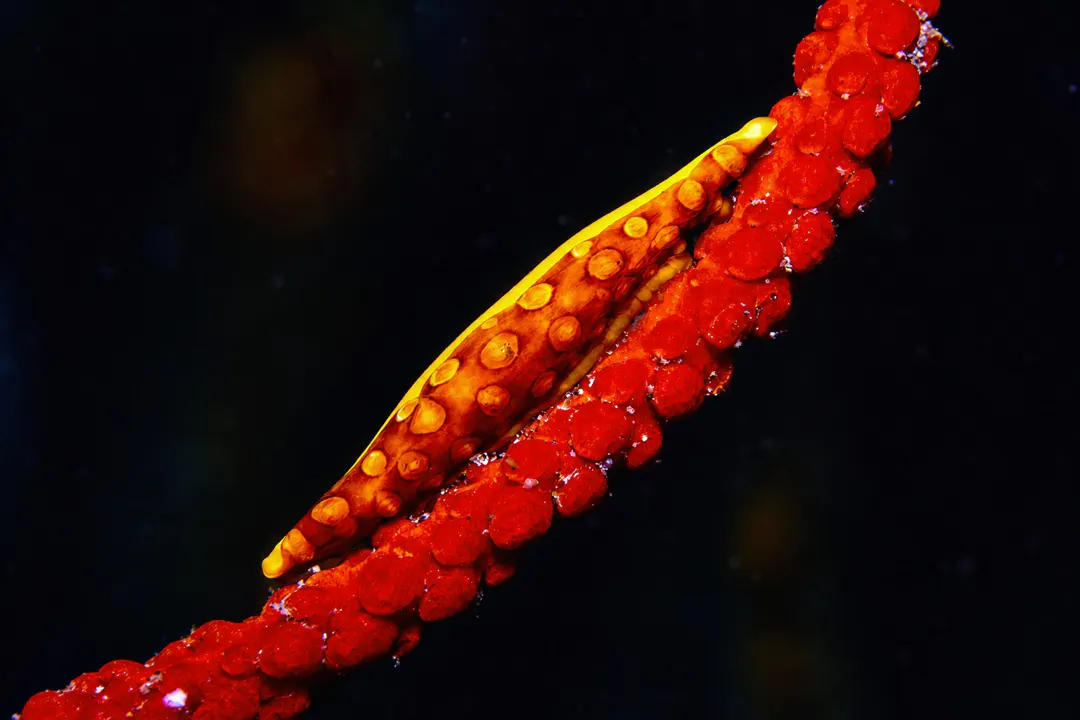 © seabook.appAll rights reserved
  Jean-Paul BoerekampsCC0 · iNaturalist
  Chris SpainCC0 · iNaturalist
  © seabook.appAll rights reserved
 Flamingo Tongue Snail is classified as venomous. Always exercise caution and keep a safe distance.
Flamingo Tongue Snail can be found at depths of up to 29 meters.
Download Seabook free for iOS and Android.