Sea Mat
Palythoa tuberculosa
- Max size
- View in app
- Found in
- 26 regions
How to recognise it
- Colours
- whitebrowngreyyellowgreenpink
Palythoa tuberculosa is a species of cnidarian in the family Sphenopidae. This species is commonly found in shallow tropical waters of the Indo-Pacific region, including Hawai'i, where it plays a role in reef ecosystems by forming encrusting colonies on rocky surfaces.
Description
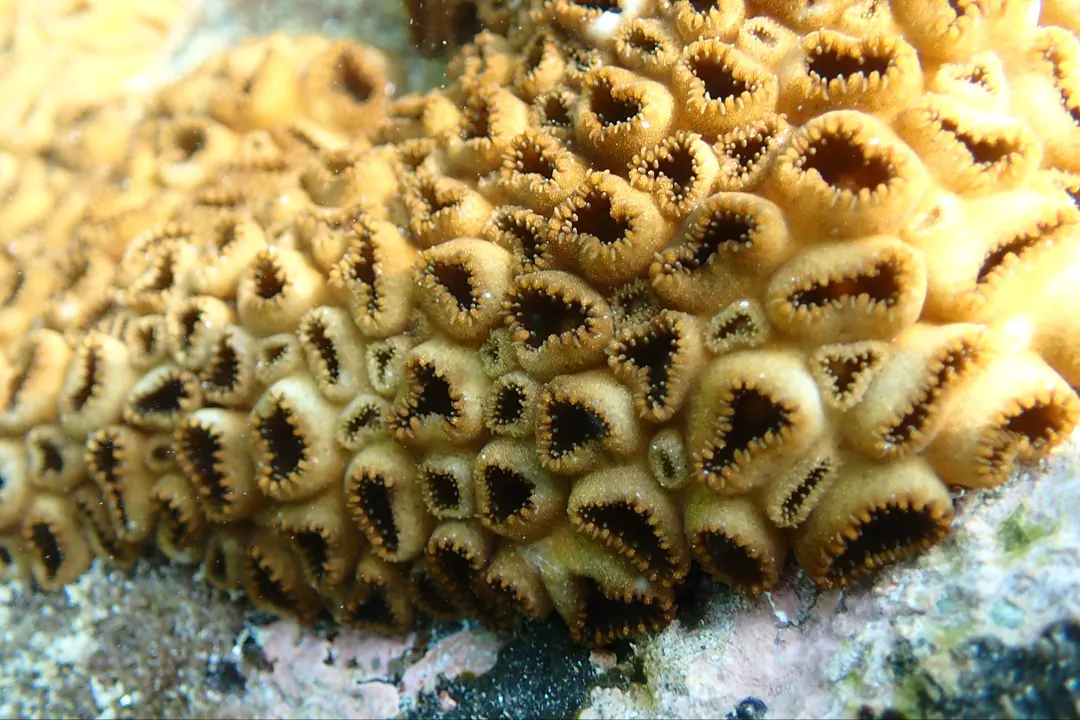
Like other zoanthids, Palythoa tuberculosa lacks a hard skeleton and consists of small polyps embedded in a thick, fleshy mat. The polyps are short and immersed in the surrounding tissue, with tentacles that are typically retracted during the day and extended at night. The colonies can vary in color, including shades of blue-gray, green, gray, brown, or pink.
Habitat
Palythoa tuberculosa is widely distributed across the Indo-Pacific, including regions such as Hawai'i, Japan, and the Great Barrier Reef. It inhabits a range of environments, from exposed rocky coastlines with heavy wave action to sandy reef flats where colonies become encrusted with sand. In areas with steep, sediment-free surfaces, colonies tend to grow larger and remain free of sand, while in more sheltered habitats, smaller colonies develop with sand covering their surface.
Ecology
As a member of the order Zoantharia, Palythoa tuberculosa is a colonial anemone-like organism that depends on both heterotrophic and autotrophic feeding strategies. It captures planktonic prey using its tentacles, which contain specialized stinging cells called nematocysts. This organism may contain palytoxin, thus it is important to avoid eye or skin contact when observing this cnidarian. Additionally, it harbors symbiotic zooxanthellae, photosynthetic algae that provide nutrients to the host through the process of photosynthesis.
Taxonomy and molecular studies
The species has been previously listed under the name Palythoa caesia. However, molecular and morphological studies have confirmed that Palythoa caesia and Palythoa tuberculosa are conspecific, meaning they belong to the same species.
Palytoxin
Palytoxin is a highly toxic fatty alcohol produced by many species of Palythoa, and is also found in other corals and certain marine invertebrates. The substance was first isolated from the seaweed-like "limu-make-o-Hana" ("Seaweed of Death from Hana") in 1971 in Hawaii. Scientific investigation of the seaweed found it to be a colonial cnidarian, which was classified as a zoanthid and named Palythoa toxica. Small quantities of palytoxin can be fatal should it be ingested or inhaled.
The presence of this toxin is of significance to aquarists who keep reef aquariums, as Palythoa and related zoanthids are commonly kept as decorative specimens in marine aquaria. Aquarists have reported symptoms consistent with palytoxin poisoning prior to having exposure to zoanthids suspected to contain the toxin. One report involved an aquarist being accidentally poisoned through skin injuries after handling zoanthids Another report involved an aquarium hobbyist in Virginia who experienced a severe respiratory reaction after trying to eradicate colonies of brown zoanthids (suspected to be Palythoa) from rocks in their aquarium. A 2010 study found that a single specimen of Palythoa from a sample of fifteen colonies purchased from three aquarium stores in the Washington D.C. area contained high levels of palytoxin, indicating that toxic individuals are present in the captive population.
While poisoning events have occurred, they are exceedingly rare, and many reef hobbyists have kept Palythoa without any adverse reactions. However, It is generally recommended to always wear appropriate protective gloves and goggles when reaching into aquaria and handling animals which are suspected to be toxic.
Questions
Is Sea Mat dangerous?
Sea Mat has no known danger to humans. However, always observe marine life responsibly.