 © Lesley ClementsAll rights reserved
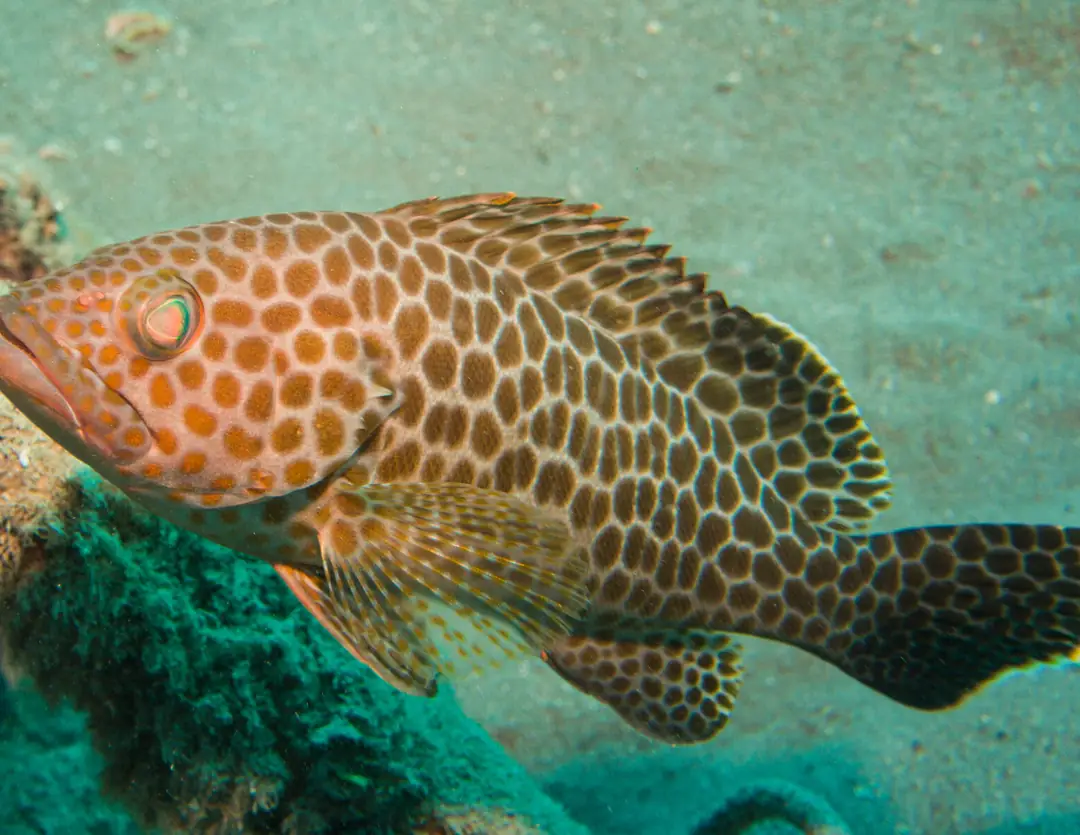
Areolate Rock Cod
Epinephelus areolatus
 © seabook.appAll rights reserved
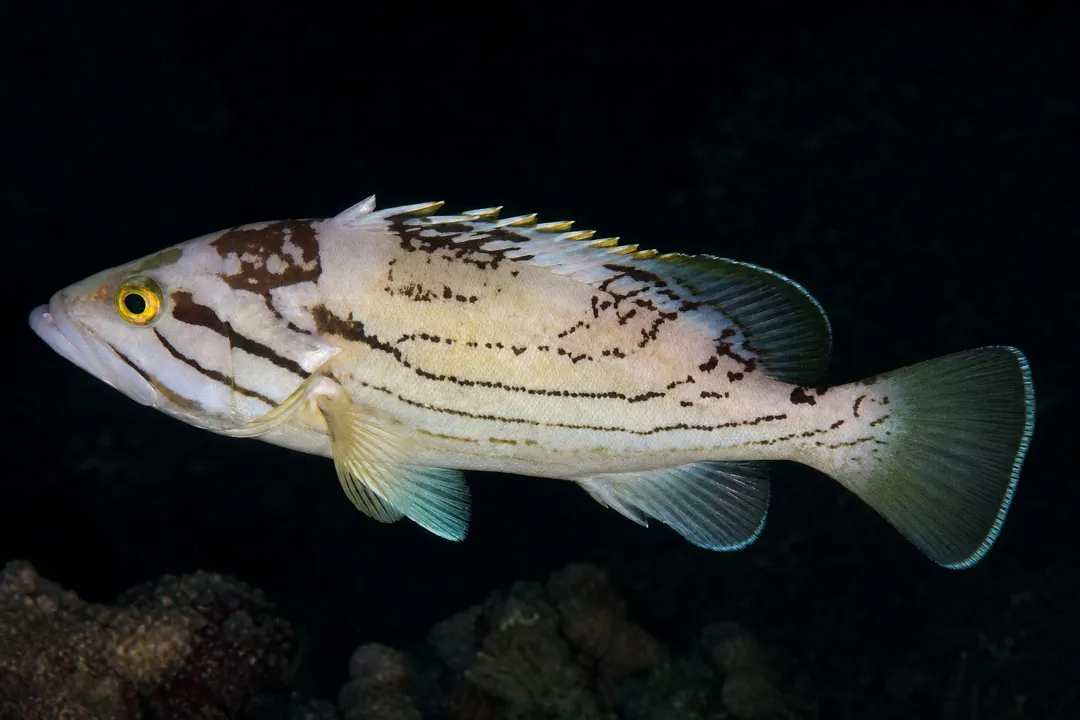
Epinephelus poecilonotus
Epinephelus poecilonotus, known as the dot-dash grouper, belongs to the family Epinephelidae and is found in the Indo-West Pacific region, from the east coast of Africa to Japan, Korea, the South China Sea, Vietnam, and Fiji.
The dot-dash grouper was first described by Temminck & Schlegel in 1842 under the original name Serranus poecilonotus from Nagasaki, Japan. The scientific name Epinephelus poecilonotus translates to "variegated back" or "many-colored back," with the genus name derived from the Greek word epinephelos, meaning "cloudy," and the species epithet formed from poikilos/poecilo- (variegated, spotted) and notos (back). The taxonomic history of the species includes a synonymous usage as Epinephelus poecilonatus, and it has sometimes been placed in the genus Mycteroperca or misidentified as Epinephelus morrhua.
Juvenile dot-dash groupers exhibit a pale yellowish-grey body with dark brown or black curved bands and a prominent oval black blotch at the base of the spinous dorsal fin. The most distinctive juvenile marking is the oval black blotch located between the 3rd and 9th dorsal spines, accompanied by a pale semicircular band below it and additional curved bands extending from the eye toward the body and caudal peduncle. As adults, dot-dash groupers typically transition to a brownish or tan body, with dark body spots or bands becoming faint or absent, while their fins turn yellowish-brown with dark distal edges and bluish white margins. Adults may retain some faint banding on the head, but this is usually much less pronounced than in juveniles. The dot-dash grouper can be distinguished from the comet grouper (Epinephelus morrhua) by its juvenile dot-dash pattern around the eye and body, along with the strong dorsal-base blotch, whereas juvenile comet groupers have more irregular brown bands radiating from the eye. In comparison to other deepwater groupers, the dot-dash grouper is identified by its large dark spot or group of spots at the base of the spinous dorsal fin and curved parallel rows of dark brown spots below it.
The dot-dash grouper is primarily associated with coral reefs and rocky reef habitats. It typically inhabits deep water, with reported depth ranges of 45 to 375 m. Some sources indicate a narrower adult depth range of 60 to 200 m or 80 to 160 m, with juveniles found in shallower water. The species is reported from coral reefs, rocky bottoms, and outer reef/reef-atoll systems.
The dot-dash grouper is a carnivorous fish that primarily feeds on fishes and crustaceans. It is a predatory, bottom-associated ambush feeder that takes prey from on or near the substrate. Groupers, including the dot-dash grouper, feed by suction, rapidly expanding the mouth and gill covers to engulf prey.
The dot-dash grouper is reported as used in subsistence fisheries and is caught with hook-and-line, vertical longline, and trawls in parts of its range. It is classified as harmless to humans. The conservation status of the dot-dash grouper is listed as Least Concern by the IUCN Red List.
© Lesley ClementsAll rights reserved  © seabook.appAll rights reserved
  © Lesley ClementsAll rights reserved
 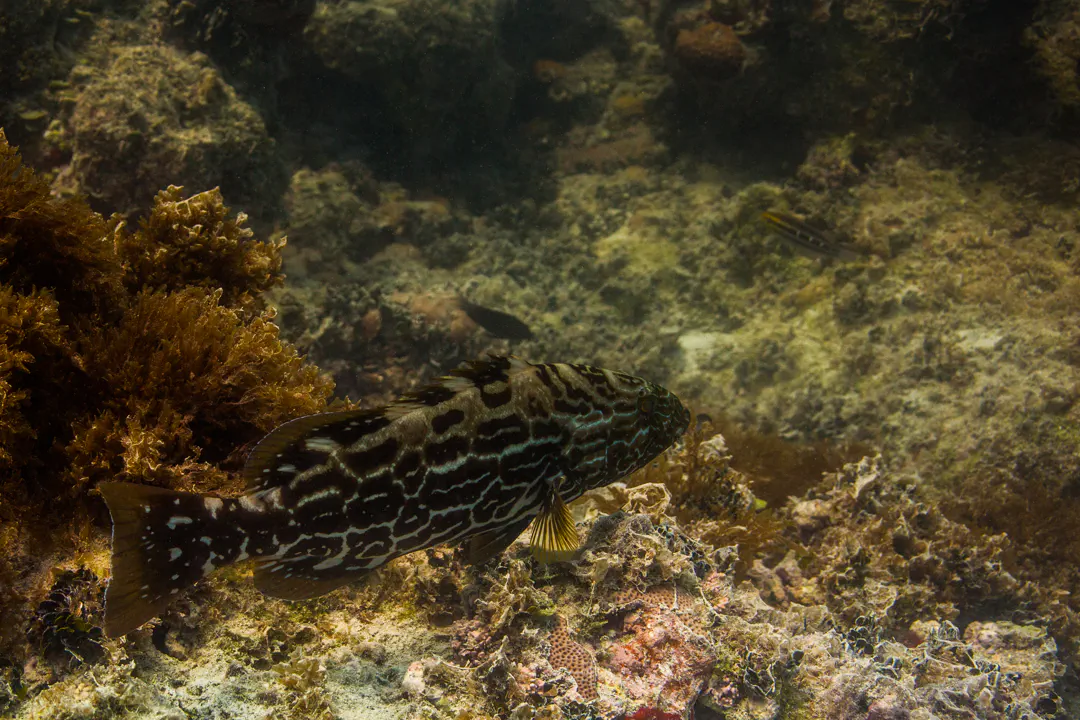 © João D'AndrettaCC BY 4.0 · iNaturalist
 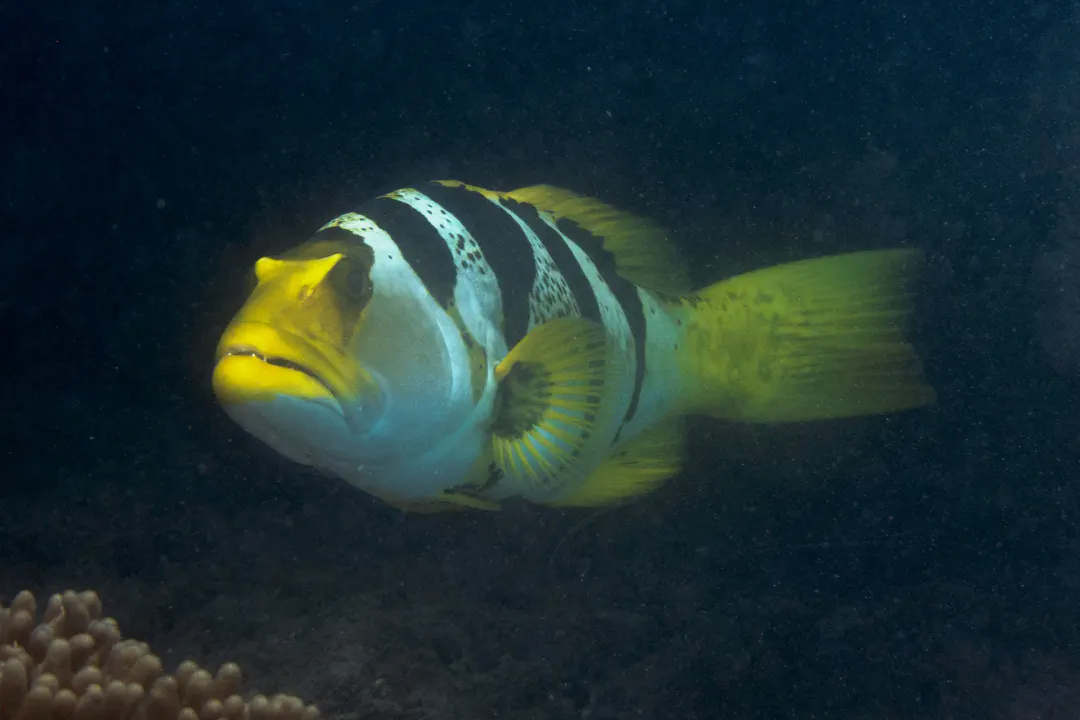 © Ewout KnoesterCC BY-SA 4.0 · iNaturalist
 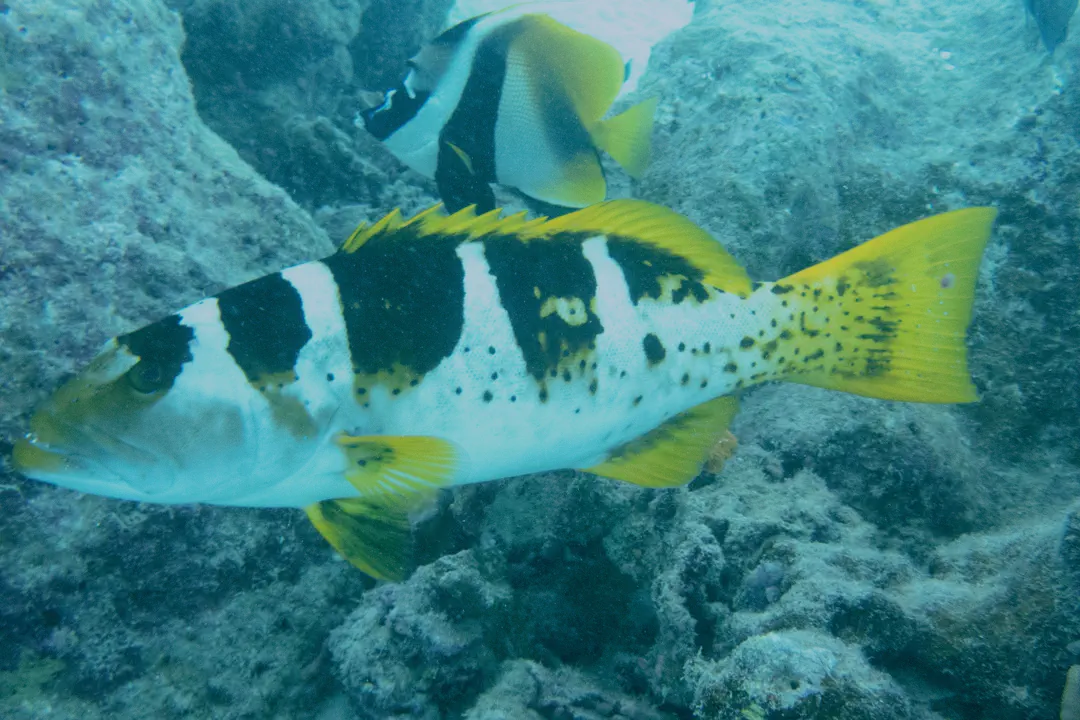 © Logan JonesCC BY 4.0 · iNaturalist
 Dotdash Grouper has no known danger to humans. However, always observe marine life responsibly.
Dotdash Grouper can be found at depths of up to 375 meters.
Download Seabook free for iOS and Android.