 © Robin WhiteCC BY 4.0 · iNaturalist
Yellow Stingray
Urobatis jamaicensis
Urobatis concentricus
Urobatis concentricus is a species of cartilaginous fish in the Urotrygonidae family.
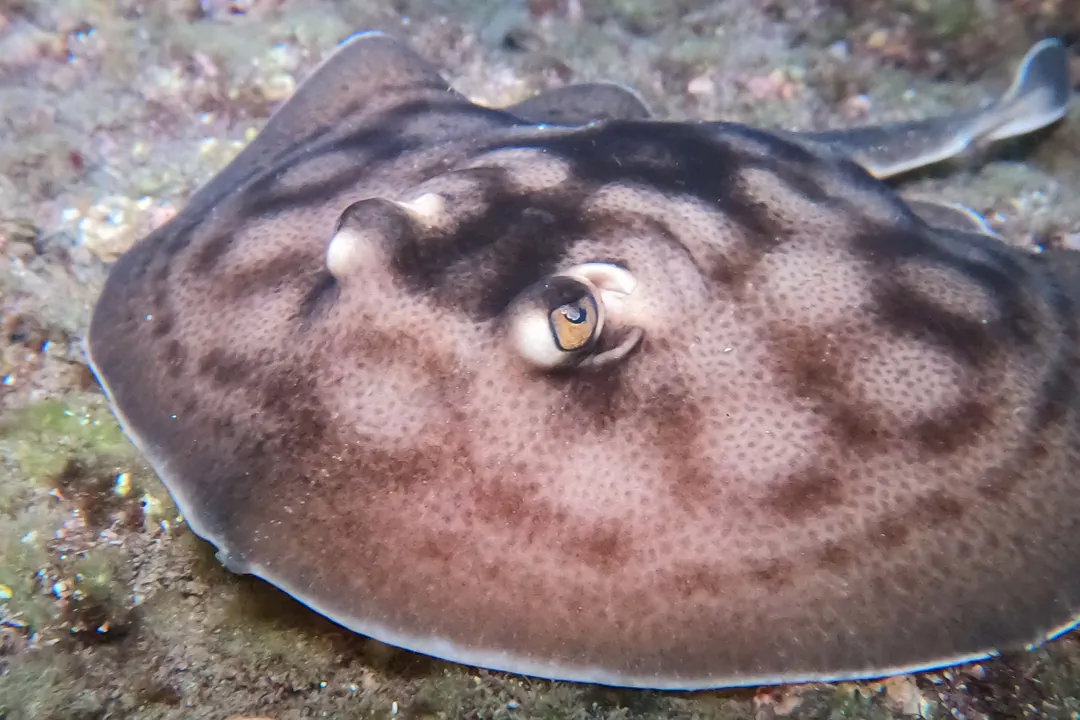
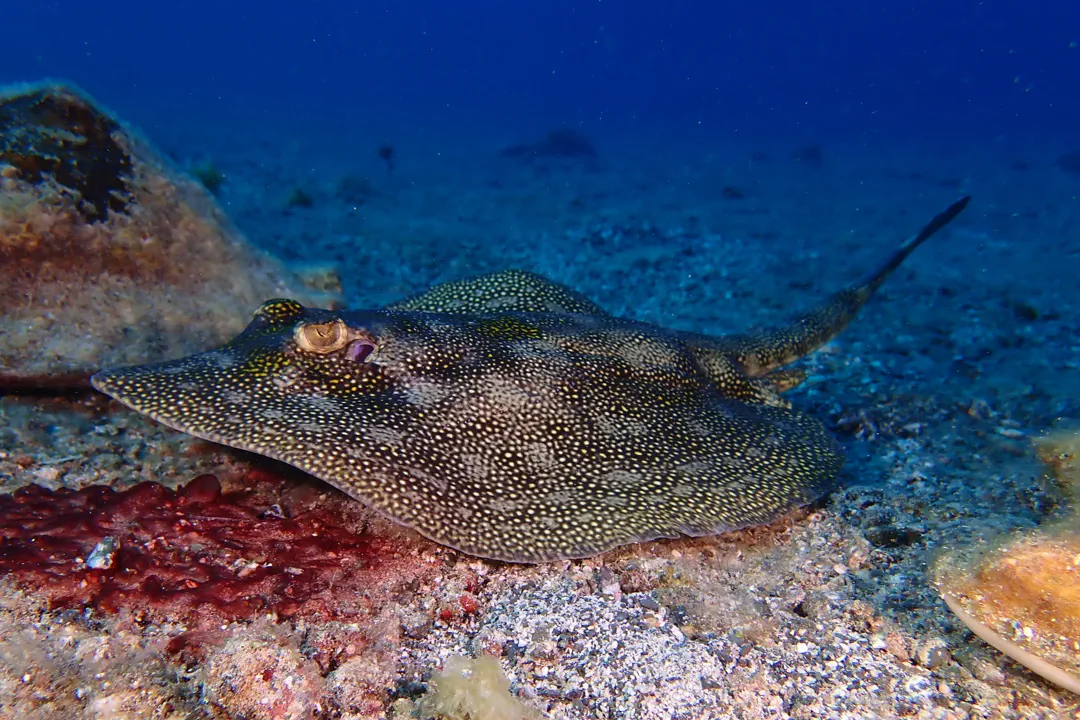
It has a rounded flat body and varies in color being various shades of light gray with blackish lines or blotches and dark spots arranged in concentric rows on their discs giving them a “chain-like bullseye” appearance when viewed from above. Sometimes has yellow spots. Their discs are longer than they are deep and have fairly straight front side margins. Their snouts are rounded and their tails have two notable appendages that are approximately half the disc length. Their stingers are impressive being 2.5 cm (1.0 inch) in length. They feature a rounded caudal fin with very smooth skin that is devoid of denticles or thorns.
It resides over and within rubble bottoms adjacent to reefs at depths up to 395 feet. They reach a maximum total length of 48 cm (19 inches) with the discs have a maximum width of 28 cm (11 inches).
It is endemic to Mexico. Its natural habitats are shallow seas, subtidal aquatic beds, coral reefs, estuarine waters, intertidal marshes, and coastal saline lagoons. It is threatened by habitat loss. They seek food by stirring the bottom sediment with their pectoral fins to dislodge small crustaceans, small fish, mussels, and worms on which they feed.
Reproduction occurs via internal fertilization with embryos developing via aplacental viviparity with a gestation period of 3 months. Their pups are born alive and resemble miniature adults that are independent at birth. The Reef Stingrays are a rare and poorly studied species and as such very limited information is available about their behavioral patterns.
© Robin WhiteCC BY 4.0 · iNaturalist Bullseye Round Stingray is classified as venomous, dangerous to humans. Always exercise caution and keep a safe distance.
Bullseye Round Stingray can be found at depths of up to 109 meters.
Download Seabook free for iOS and Android.