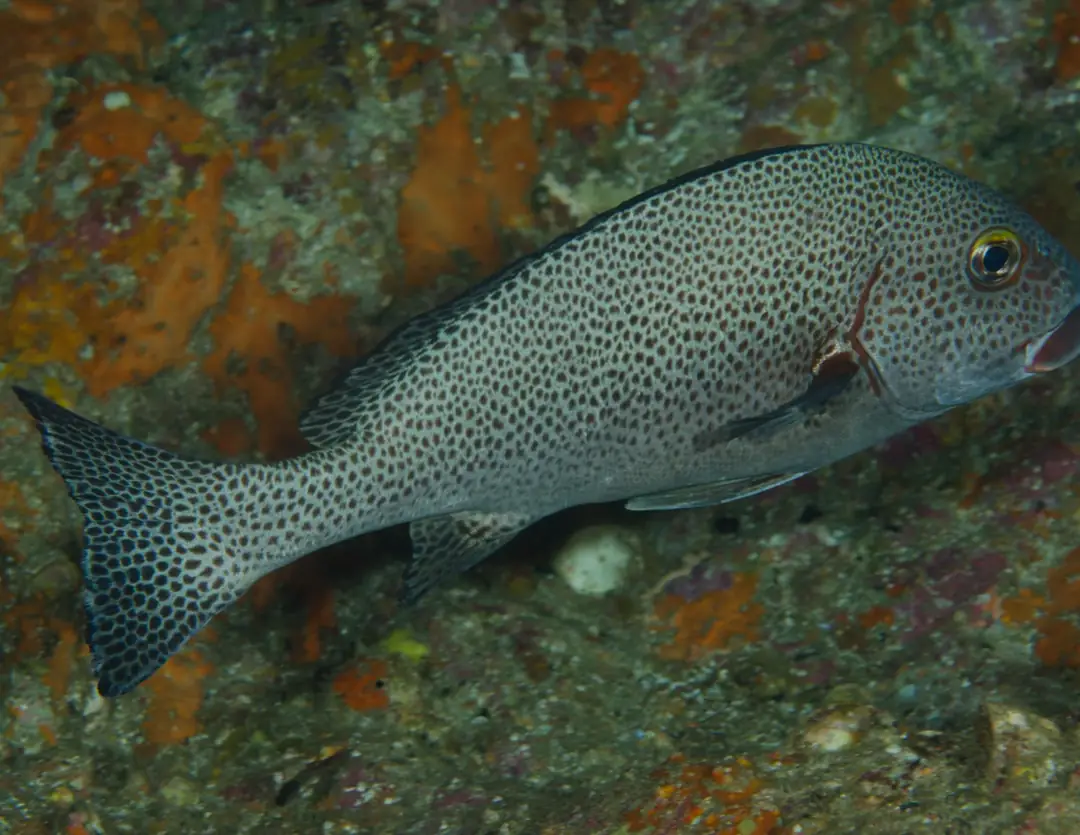
 © desertnaturalistCC BY 4.0
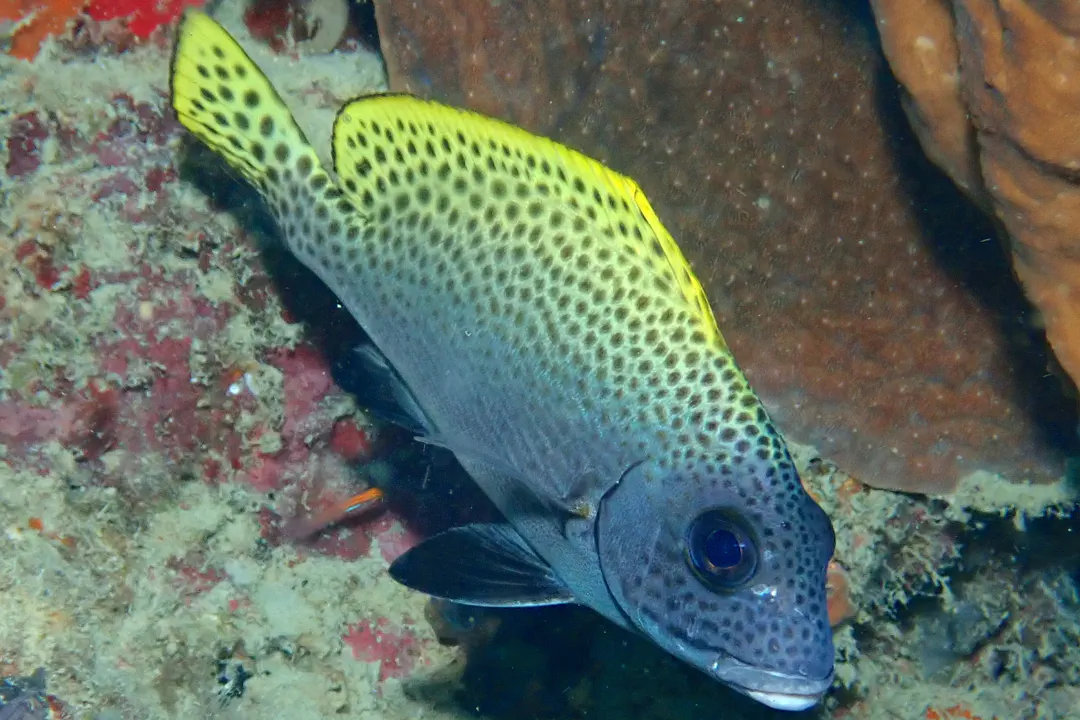
Blackfin Sweetlips
Diagramma melanacrum
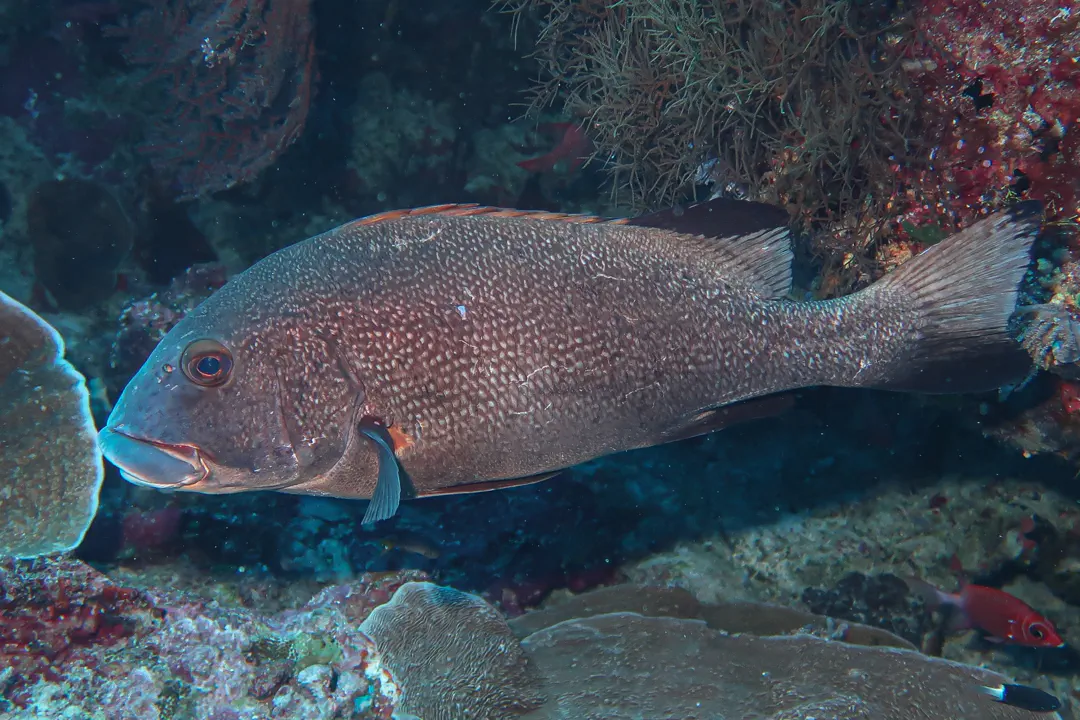
 © Ewout KnoesterCC BY-SA 4.0
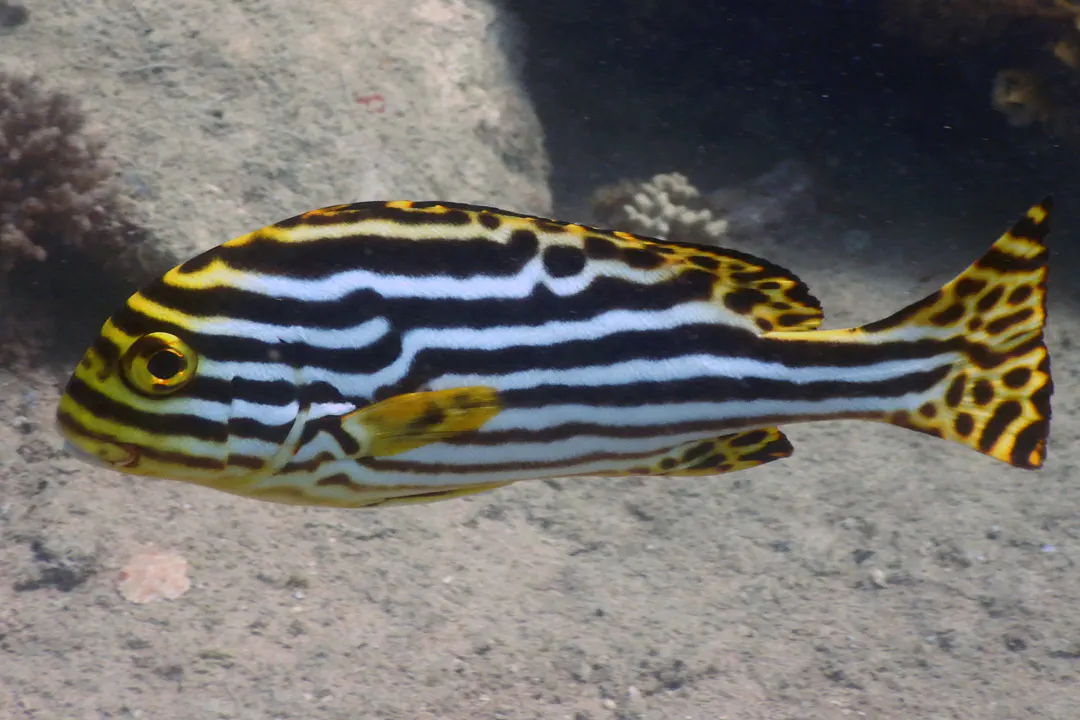
Plectorhinchus vittatus
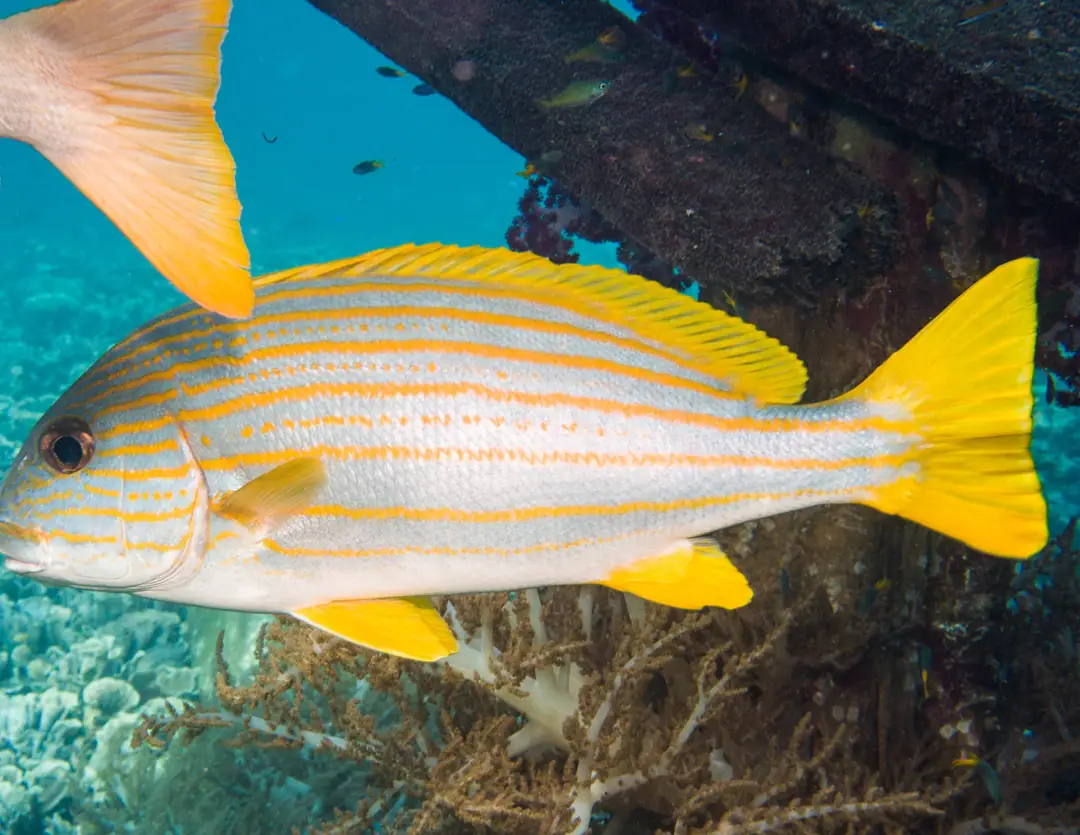
Plectorhinchus vittatus iis a species of marine ray-finned fish, a sweetlips belonging to the subfamily Plectorhinchinae, one of two subfamilies in the family Haemulidae, the grunts. It is native to the Indian Ocean and the western Pacific Ocean.
The Indian Ocean oriental sweetlips has fleshy lips which become greatly swollen as the fish ages.
The adults of this species have a basic light greyish colour of which fades to white on the abdomen. It has alternating black and white stripes. The black stripes normally broader on the upper body, the fins are yellow, as are the snout and forehead. The dorsal, anal and caudal fins are marked with blackish spots.
The subadults have wide stripes on their head, body and fins, while the juveniles have black blotches and spots that are joined but which slowly split into longitudinal stripes as they grow, the pectoral fins of juveniles are black.
There are 6 pores on its chin but there is no median pit. The dorsal fin contains 12–14 spines and 16–20 soft rays while the anal fin has 3 spines and 7–8 soft rays.
This species attains a maximum total length of 72 cm (28 in).
The Indian Ocean oriental sweetlips is found in the Indo-Pacific region. Its range extends from East Africa from Djibouti to South Africa, Madagascar, the Seychelles and Mascarene Islands, the Gulf of Mannar in India and the Andaman and Nicobar Islands east to Micronesia, Samoa, the Society Islands and Guam. It can alsdo be found from Western Australia to Papua New Guinea and New Caledonia.
The Indian Ocean oriental sweetlips inhabits shallow, coastal coral reefs, lagoons and seaward reefs at depths of 2 to 25 m (6 ft 7 in to 82 ft 0 in). It is found singly or in small aggregations and is tends to be nocturnal. The juveniles may be found in tidepools and in beds of sea grass. It forages at night feeding on small invertebrates such crustaceans, gastropods or annelids, as well as smaller fishes. It is an oviparous species which spawns as distinct pairs.
© desertnaturalistCC BY 4.0  © Jacky YuAll rights reserved
  © seabook.appAll rights reserved
  © Ian ShawAll rights reserved
  © Ioannis MagourasCC BY 4.0 · iNaturalist
  © Lesley ClementsAll rights reserved
 Indian Ocean Oriental Sweetlips (subadult) has no known danger to humans. However, always observe marine life responsibly.
Indian Ocean Oriental Sweetlips (subadult) can be found at depths of up to 25 meters.
Download Seabook free for iOS and Android.