 © Jay ParolineCC BY 4.0 · iNaturalist
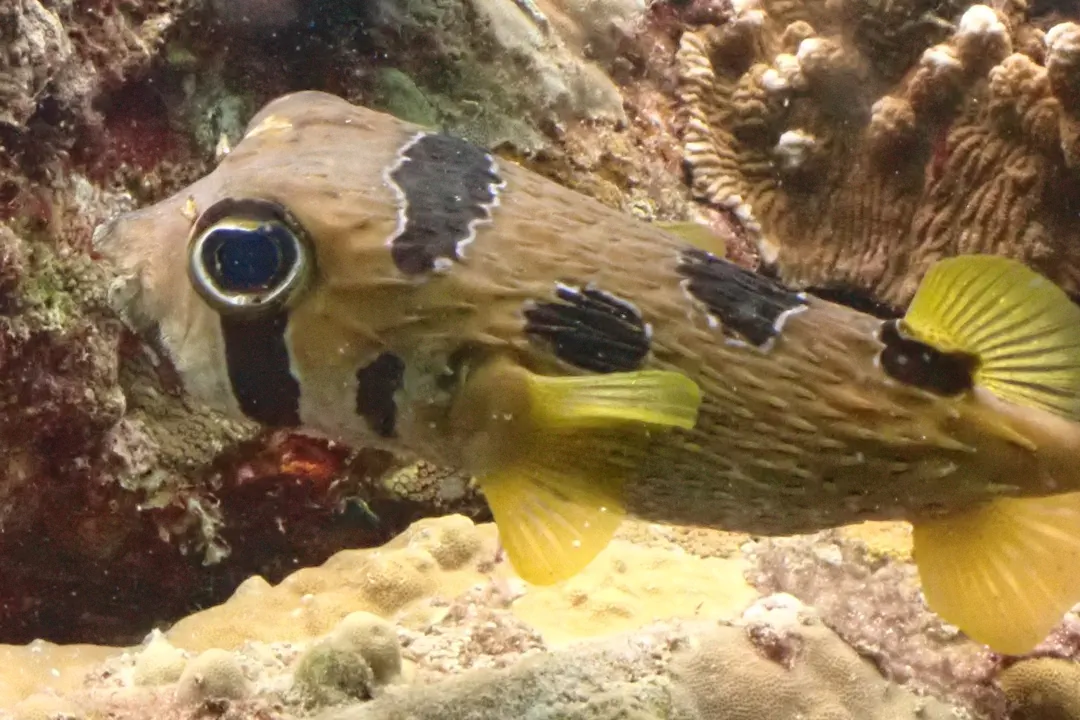
Blackblotched Porcupinefish
Diodon liturosus
Diodon holocanthus
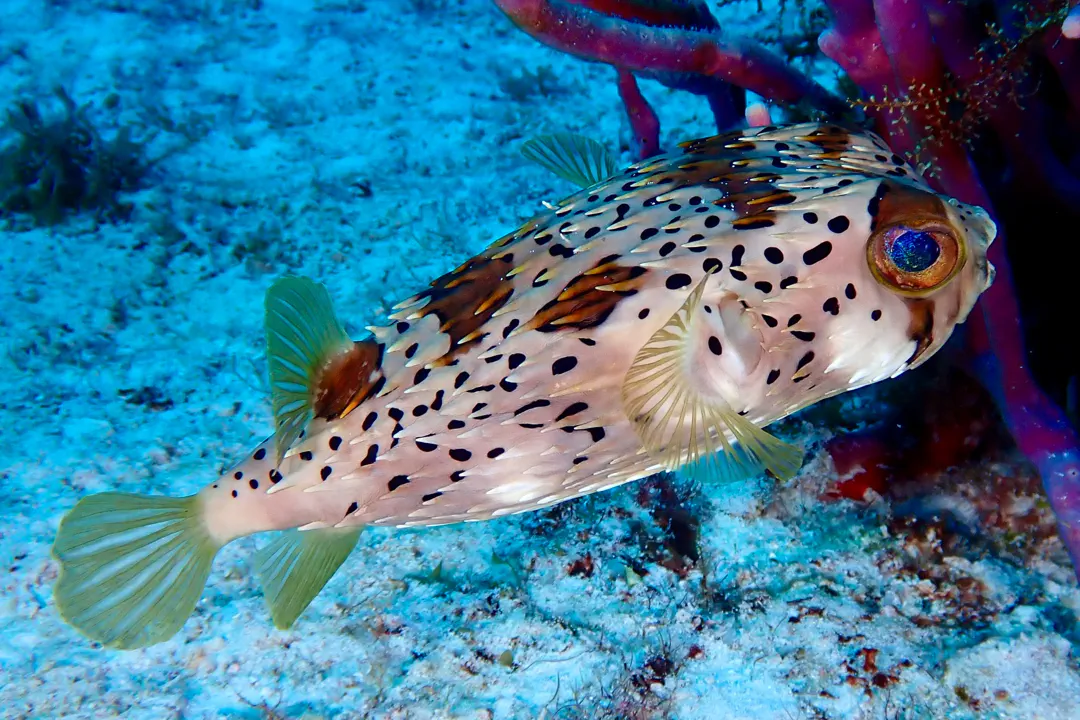
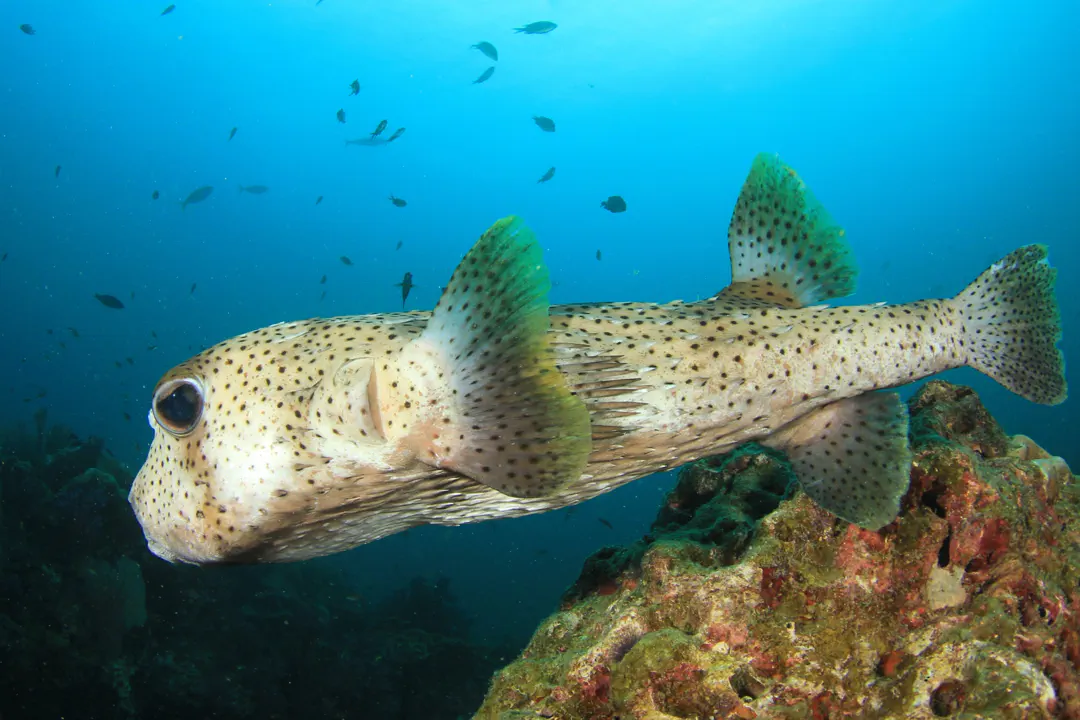
Diodon holocanthus is a species of marine fish in the family Diodontidae.
Pale in colour with large black blotches and smaller black spots, these spots becoming fewer in number with age. Has many long, two-rooted depressible spines particularly on its head. The teeth of the two jaws are fused into a parrot-like "beak". Adults may reach 50 cm (20 in) in length. The only other fish with which it might be confused is the black-blotched porcupinefish, (Diodon liturosus) but it has much longer spines than that species.
The Longspined porcupinefish has a circumtropical in distribution, being found in the tropical zones of major seas and oceans:
An Omnivore that Feeds on mollusks (molluscs), sea urchins, hermit crabs, snails, herbivor diet and crabs during its active phase at night. They use the beak combined with plates on the roof of the mouth to crush their prey such as molluscs and sea urchins that would otherwise be indigestible.
They are found over the muddy sea bottom, in estuaries, in lagoons or on coral and rocky reefs around the world in tropical and subtropical seas.
Spawns at the surface at dawn or at dusk in pairs or in groups of males with a single female; the juveniles remain pelagic until they are at least 7 cm (3 in) long. Young and sub-adult fish sometimes occur in groups.
The longspined porcupine fish has very few enemies because it has a highly effective defence system. But sometimes a longspined porcupine ends up in the jaws of a shark. When it feels threatened, it inflates itself by swallowing water to become a large ball with protruding needle-like spines that can pierce a predator. It does this to protect itself from its enemies.
It is used in Chinese medicine, and is captured at the surface with a hand net. It is poisonous if not prepared correctly.
© Jay ParolineCC BY 4.0 · iNaturalist 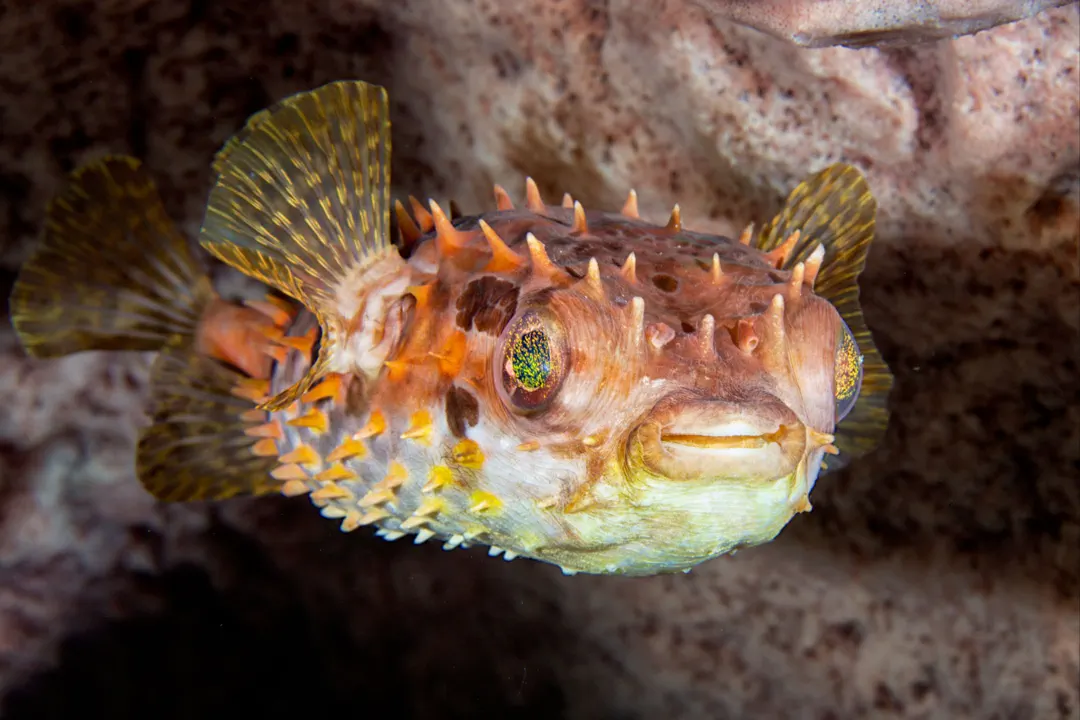 © seabook.appAll rights reserved
  © seabook.appAll rights reserved
 Longspined Porcupinefish is classified as poisonous. Always exercise caution and keep a safe distance.
Longspined Porcupinefish can be found at depths of up to 200 meters.
Download Seabook free for iOS and Android.