 © Heather Dawnstar SabinCC BY 4.0 · iNaturalist
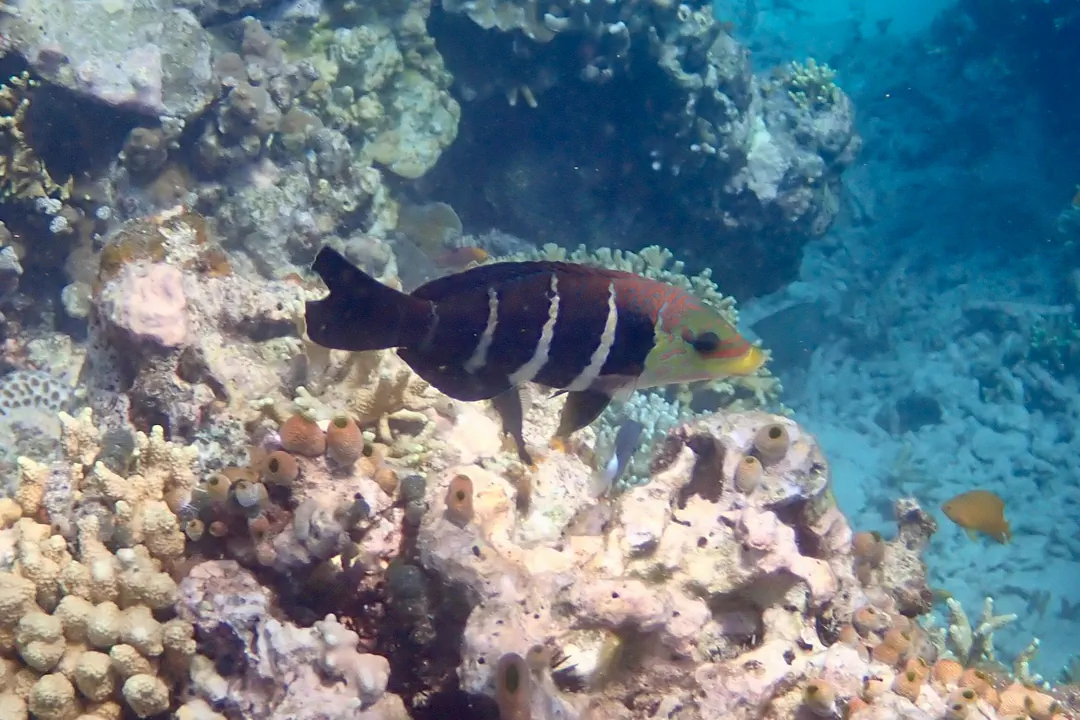
Barred Thicklip (female)
Hemigymnus fasciatus
Halichoeres scapularis
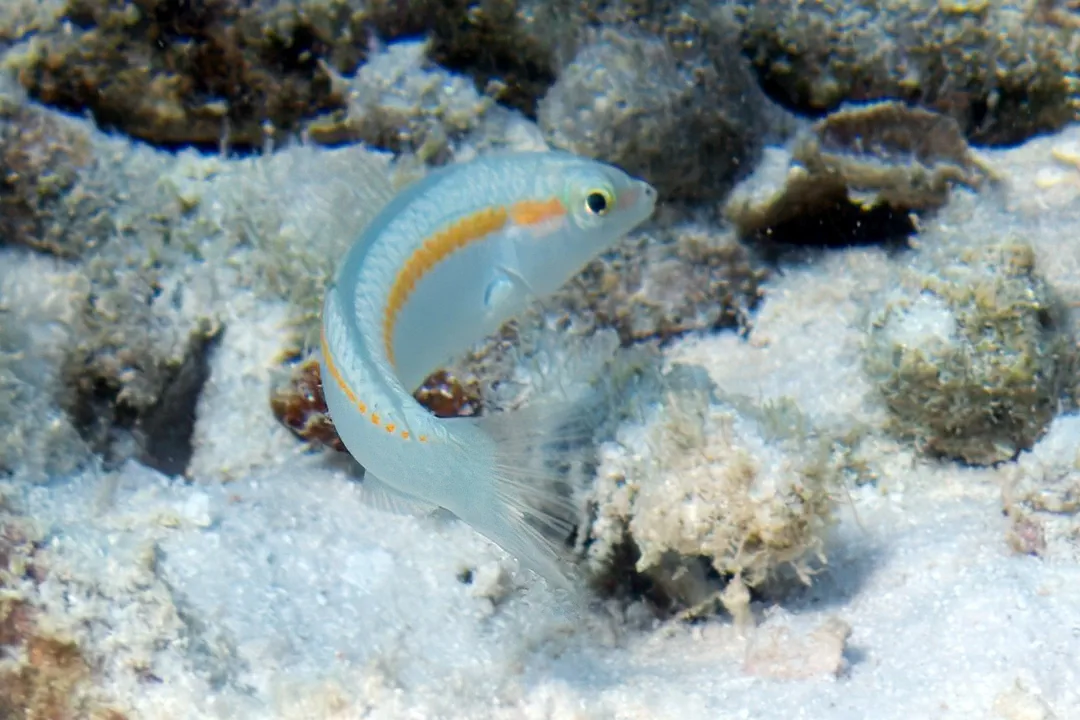
Halichoeres scapularis, commonly called the Zigzag wrasse , is a fish species in the wrasse family native from the Indo-West Pacific.
The zigzag wrasse is a small fish that can reach a maximum length of 20 cm.
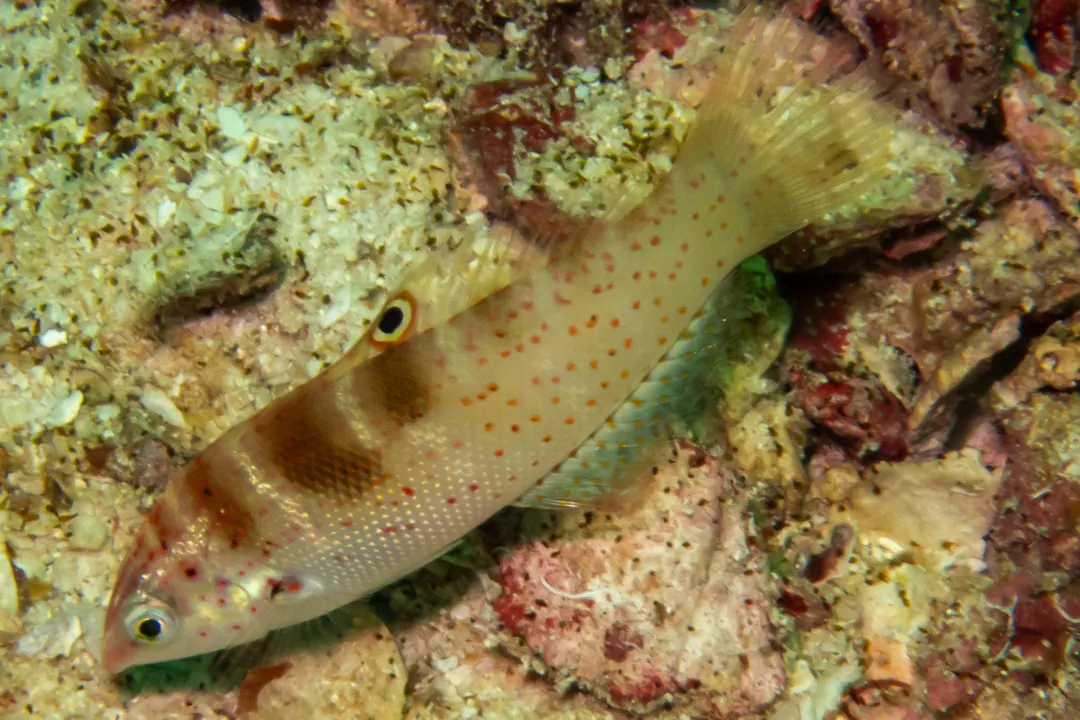
It has a thin, elongate body with a terminal mouth. Its coloration pattern varies depending on the maturity stages.
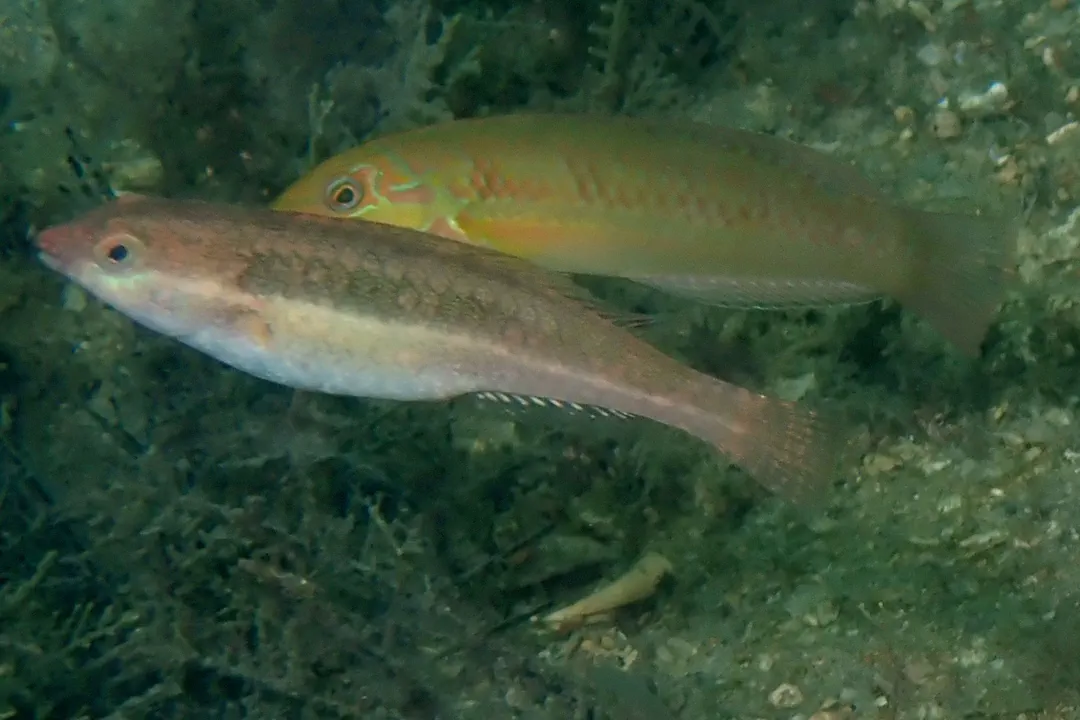
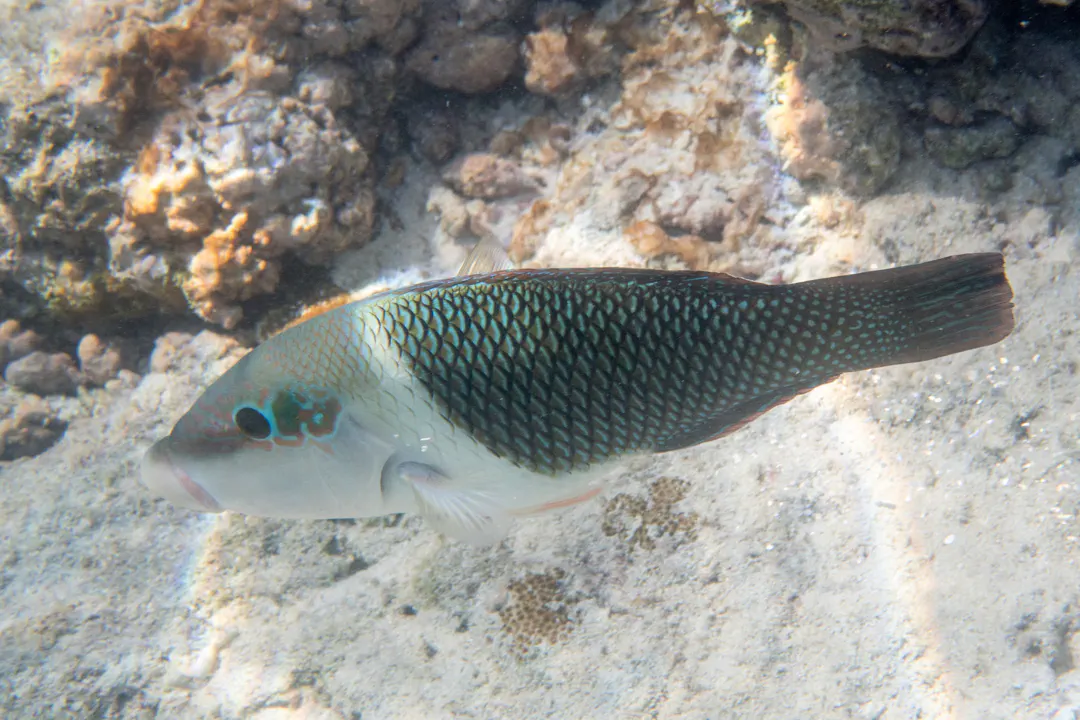
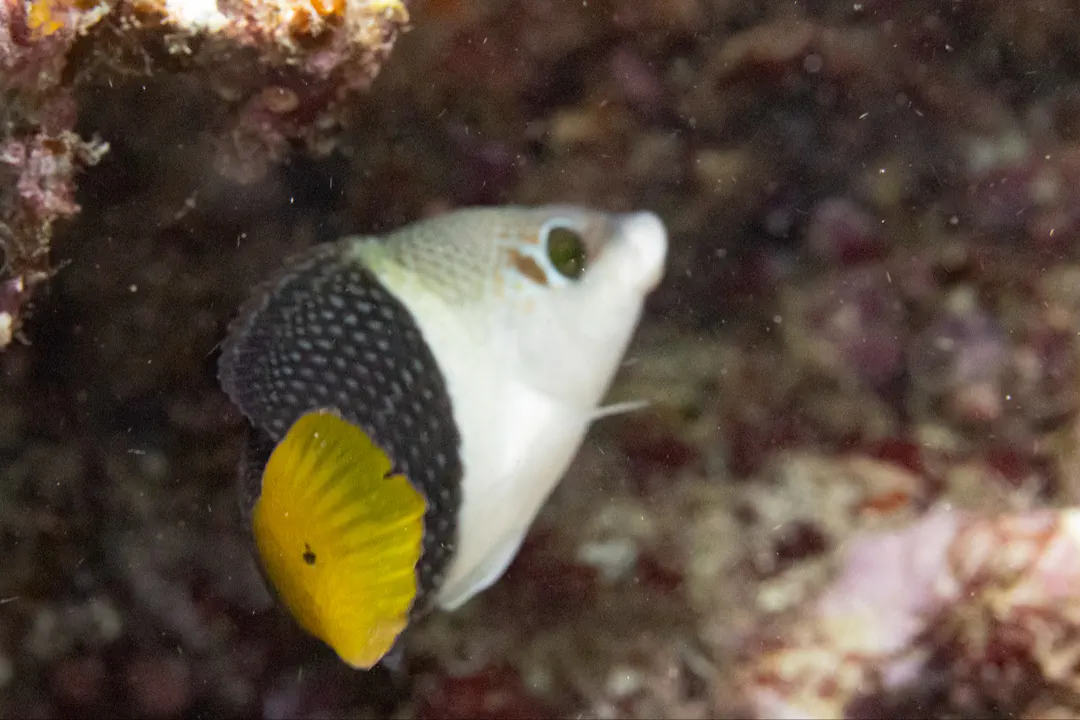
As a juvenile and a female, the zigzag wrasse has a pearly white background coloration with a black or yellow or also black and yellow stripe zigzagging along the lateral line.
As a mature male, the body coloration is very elaborated. The inferior side of the lateral line is pearly with pinkish reflection. The black or yellow line tend to disappear with age or it can be reduced to a short dash. The superior part is greenish with pink accents until the base of the dorsal fin. The base of the dorsal fin is highlighted by a bright yellow line. Then superimposed over this later yellow line a blue line, a yellow one, green one and finally a fin pinkish one. The iris of the eye is orange.
The zigzag wrasse is widespread throughout the tropical and subtropical waters of the Indo-West Pacific, from the eastern coast of Africa, Red Sea included, to the Philippines and from New Caledonia to south Japan.
The zigzag wrasse appreciates mixed areas of top reef (sand/rubble/corals) in shallow water down to 20 meters depth.
The zigzag wrasse can live in small group but is usually solitary and even aggressive towards members of its own species.
Like most wrasse, the chain-lined wrasse is a protogynous hermaphrodite, i.e. individuals start life as females with the capability of turning male later on.
The species is targeted but not thought to be threatened by the aquarium trade. It is listed as Least Concern (LC) on the UICN.
© Heather Dawnstar SabinCC BY 4.0 · iNaturalist 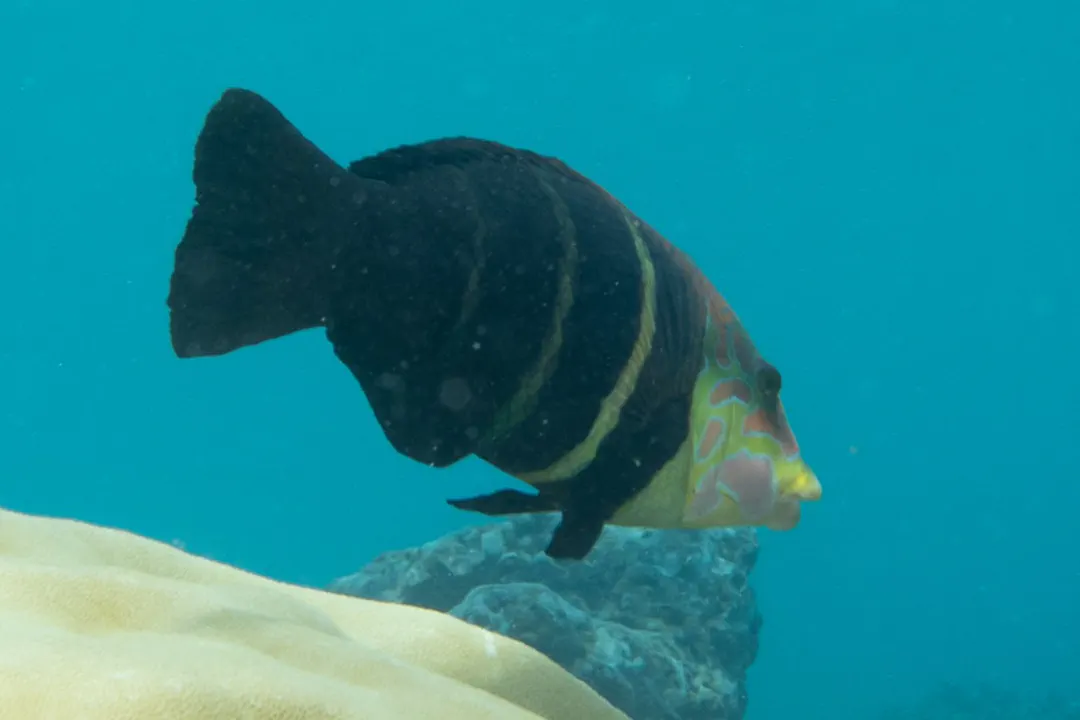 © Storm MartinCC BY 4.0 · iNaturalist
  © portioidCC BY 4.0 · iNaturalist
  © jeyreCC BY 4.0 · iNaturalist
  © Emanuele SantarelliCC BY-SA 4.0 · iNaturalist
  © cello caruso-turielloCC BY 4.0 · iNaturalist
 Zigzag Wrasse (juvenile) has no known danger to humans. However, always observe marine life responsibly.
Zigzag Wrasse (juvenile) can be found at depths of up to 20 meters.
Download Seabook free for iOS and Android.