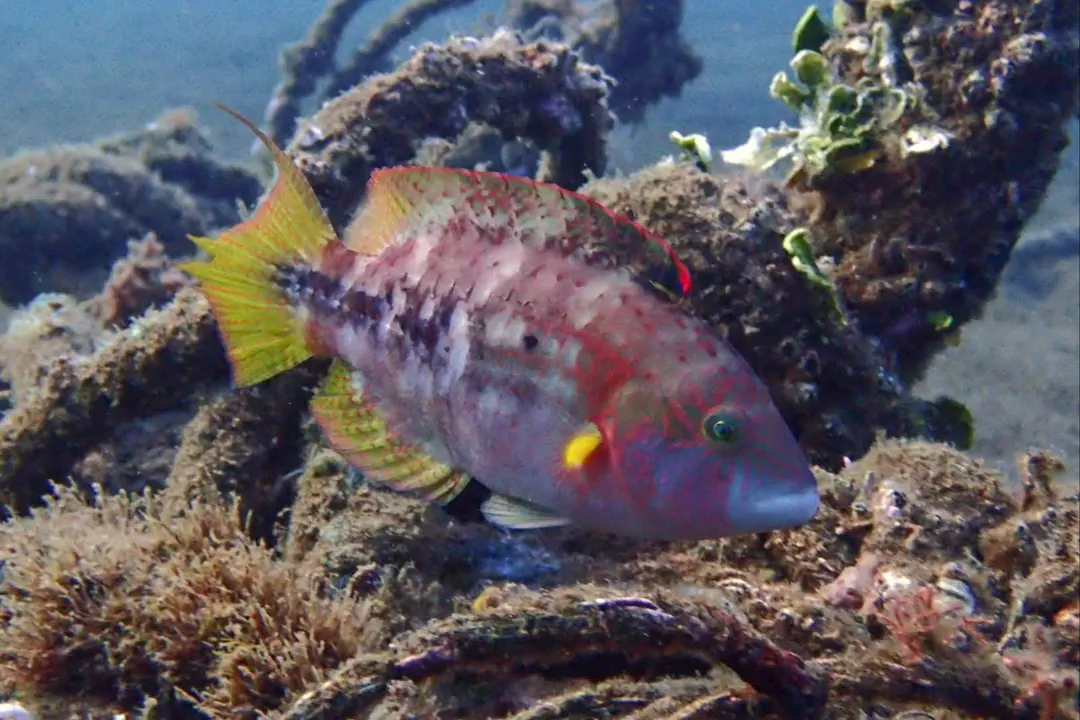
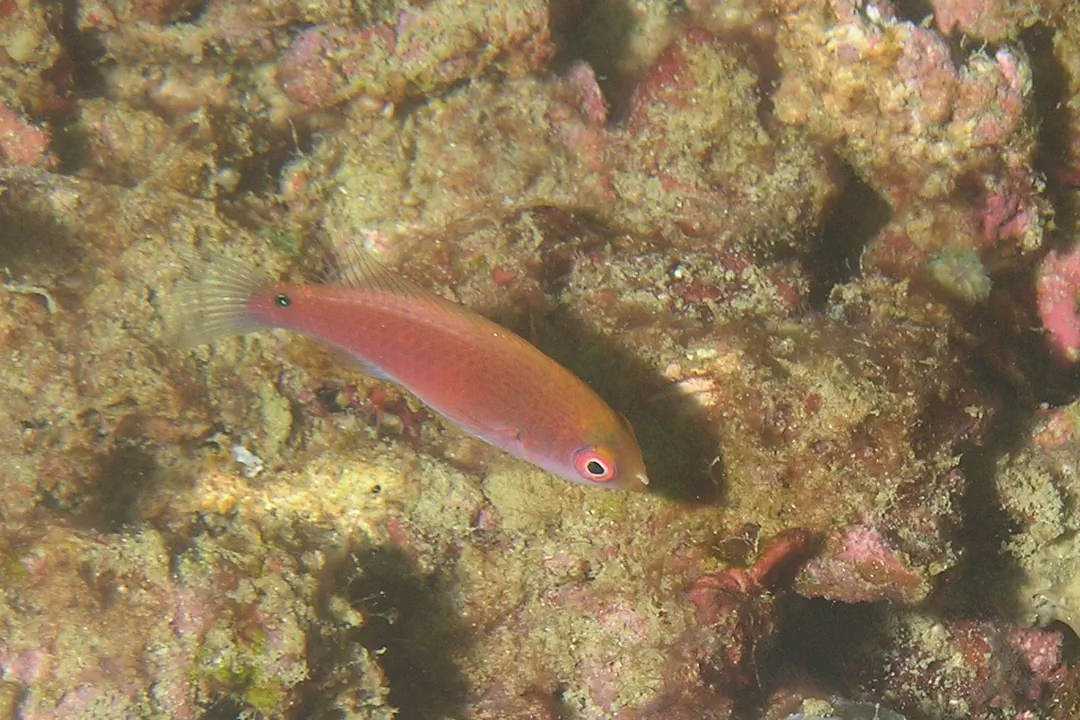
 © Ditch TownsendCC BY-SA 4.0 · iNaturalist
Blueside Wrasse (female)
Cirrhilabrus cyanopleura
Oxycheilinus bimaculatus
Body variable from brown to yellow or green mixed with various color shades or spots. Males develop long filaments on the caudal fin. Young with a broad, dark lateral stripe which breaks into dark blotches in adults, the largest above distal pectoral fins. A small dark spot behind eye. Mouth terminal or lower jaw slightly projecting. Caudal fin of terminal males rhomboid, with central rays longest, and dorsalmost caudal-fin ray elongated into a short filament. A small species (reaching about 15 cm).
Indo-Pacific: East Africa to the Hawaiian and Marquesan islands, north to southern Japan, south to Vanuatu.
Inhabits outer reef slopes or deep clear lagoons among rubble or clumps of algae; also in seagrass beds. Often in sheltered estuaries and harbors. Benthic and benthopelagic.
© Ditch TownsendCC BY-SA 4.0 · iNaturalist 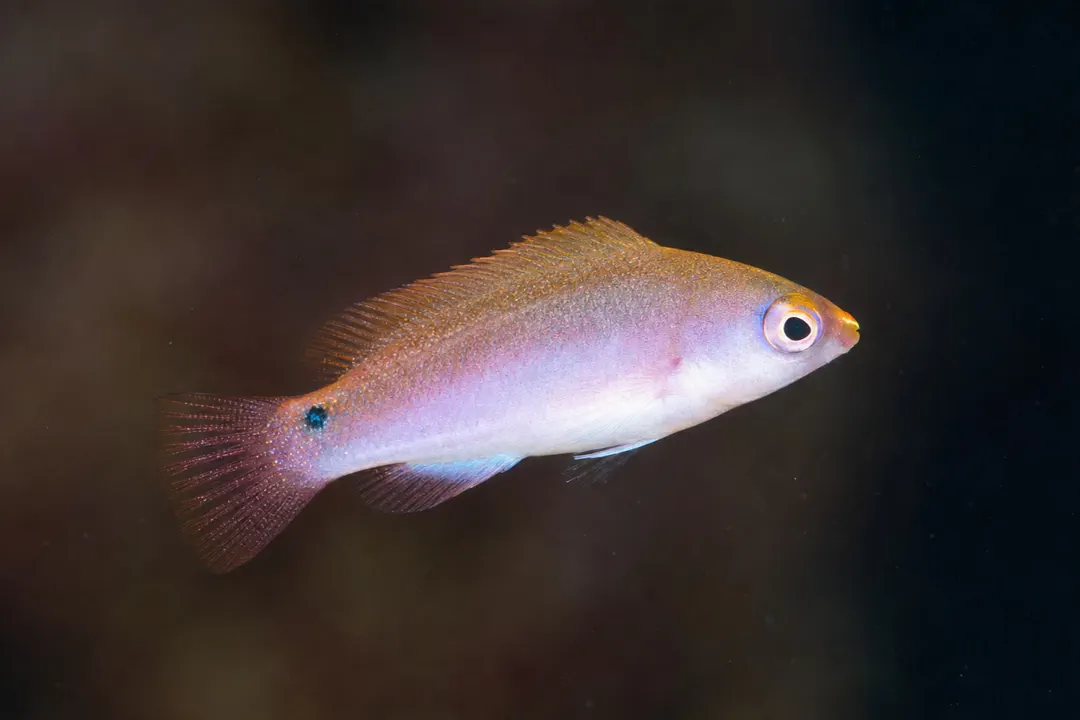 © seabook.appAll rights reserved
 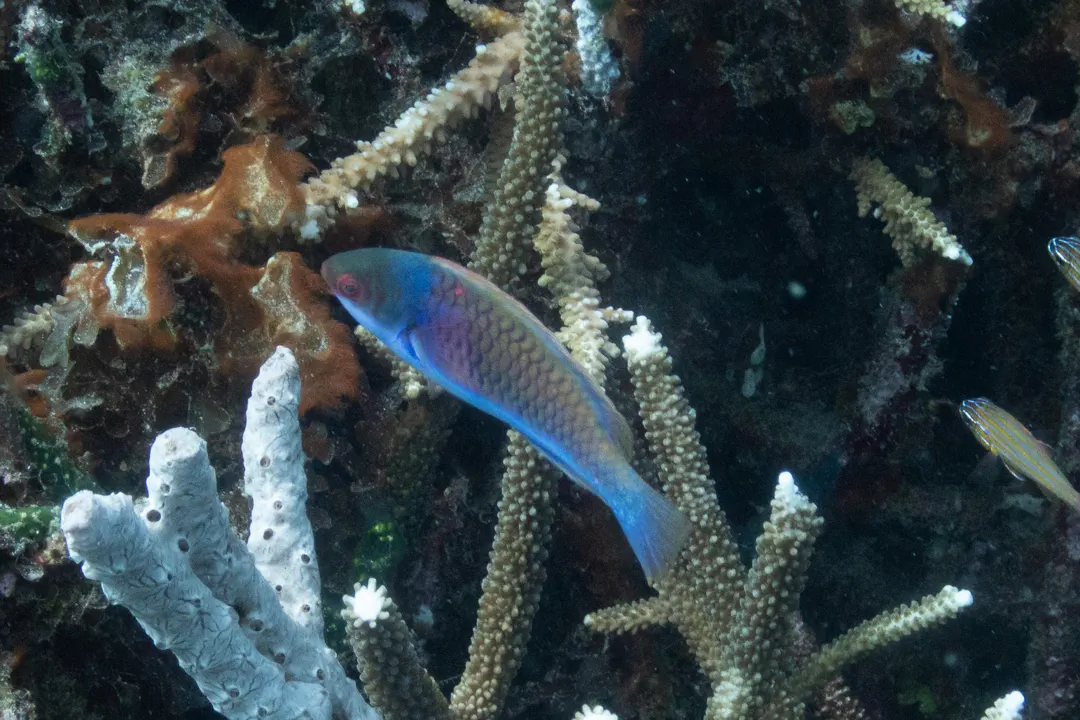 Justin PhilboisCC0 · iNaturalist
 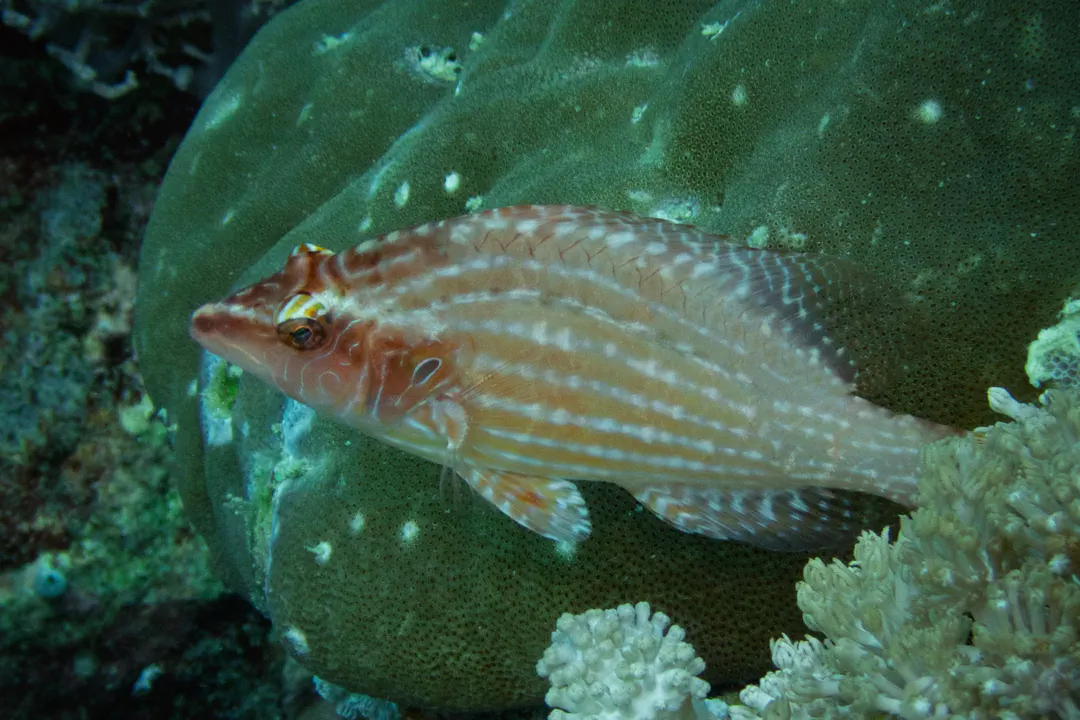 © Pierre PericardCC BY 4.0 · iNaturalist
 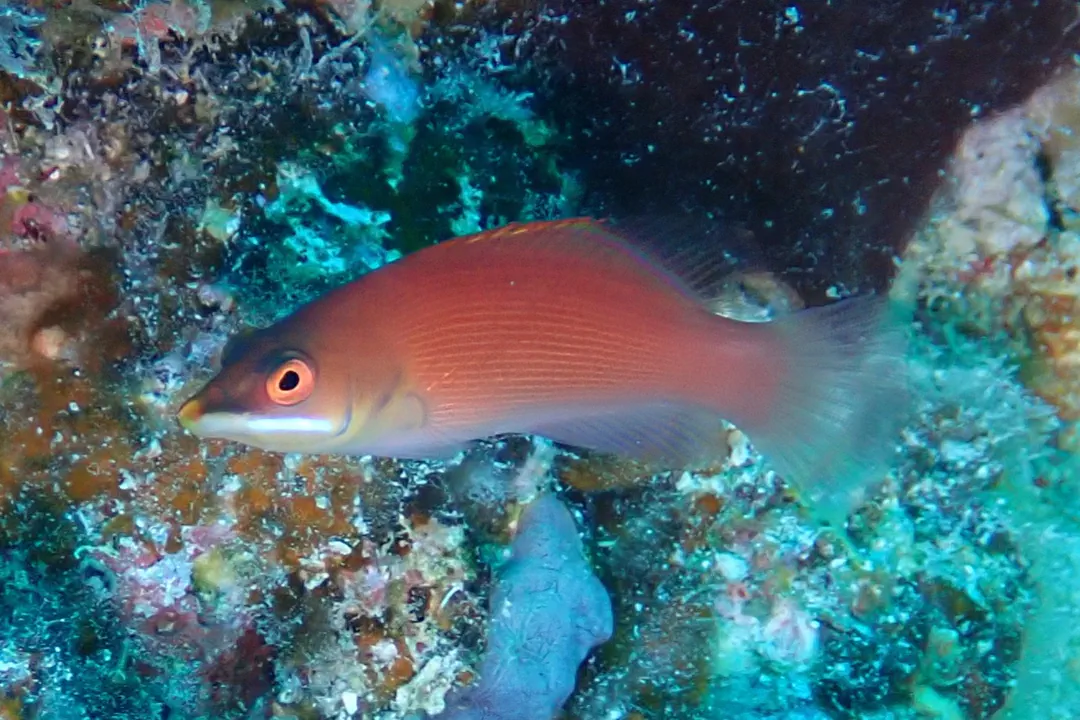 © Debra BakerCC BY 4.0 · iNaturalist
 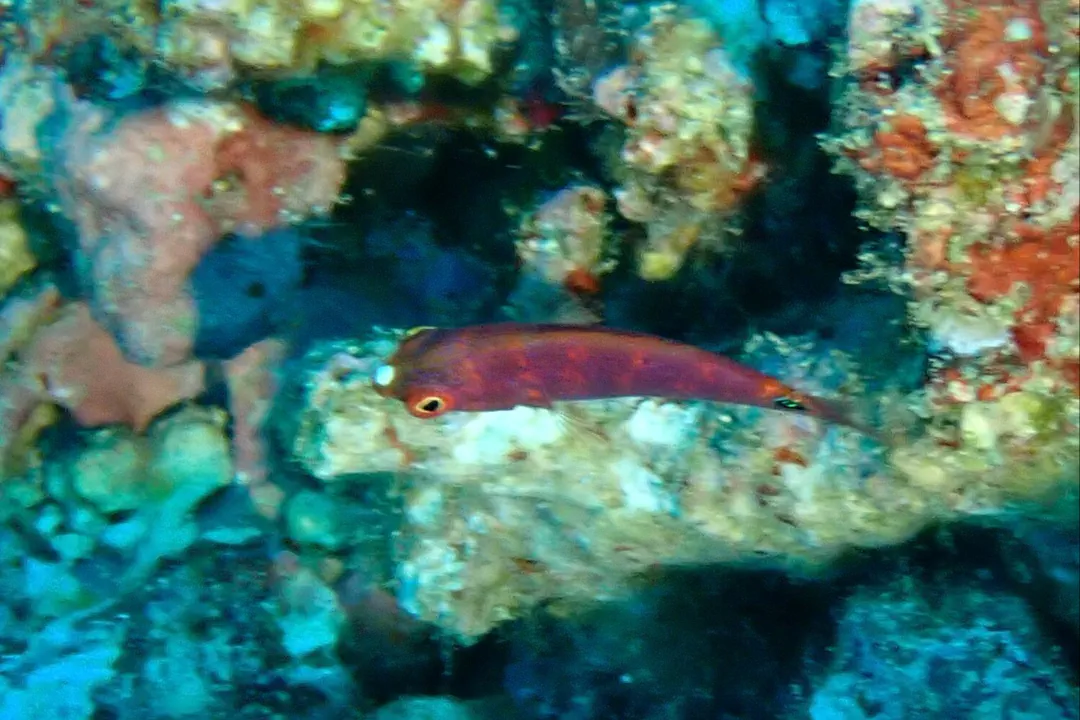 © Debra BakerCC BY 4.0 · iNaturalist
 Twospot Wrasse has no known danger to humans. However, always observe marine life responsibly.
Twospot Wrasse can be found at depths of up to 120 meters.
Download Seabook free for iOS and Android.