 © Michael, Antoni and Nihat HinczewskiCC BY 4.0 · iNaturalist
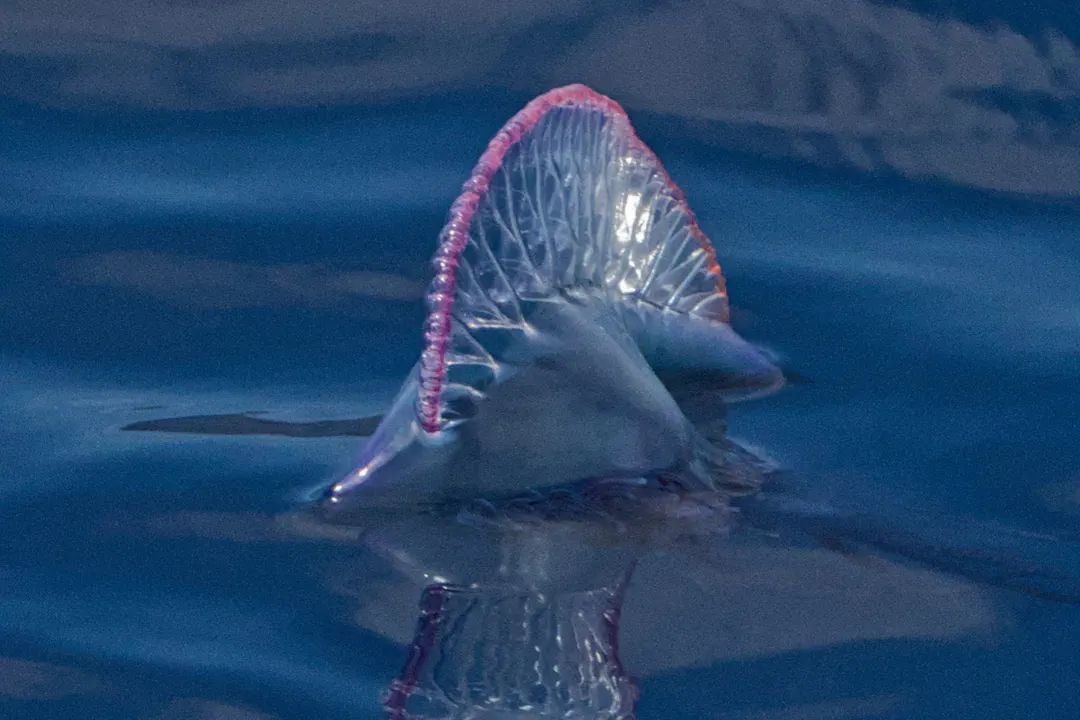
Portuguese Man o' War
Physalia physalis
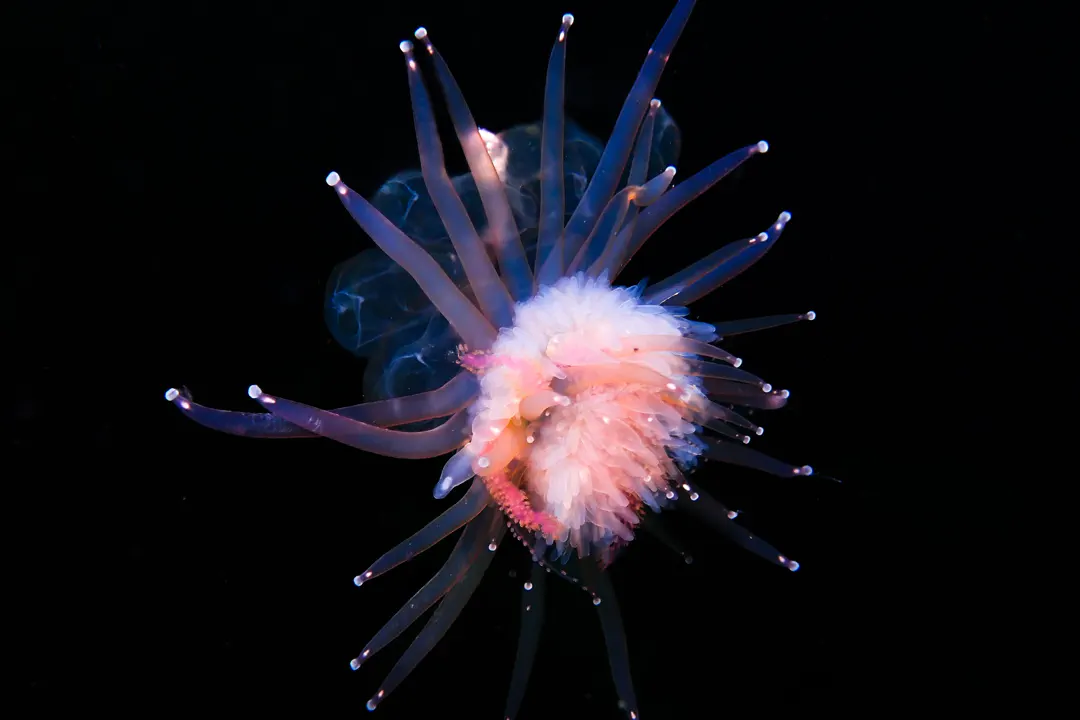
Physophora hydrostatica
Physophora hydrostatica, commonly known as the hula skirt siphonophore, is a species of siphonophore in the family Physophoridae, found broadly circumtropical and cosmopolitan in the world’s oceans, except polar seas. The species is reported from the Atlantic, Pacific, and Indian oceans, inhabiting mainly open-ocean and epipelagic/bathyplanctonic waters.
The species was first described by Peter Forsskål in 1775 as Physophora hydrostatica in Descriptiones animalium. The spelling Physsophora hydrostatica is an unaccepted historical variant. The type locality is not sufficiently specified, as Forsskål’s work resulted from his Eastern expedition without establishing a formal type locality. The name Physophora derives from Greek physos meaning 'bellows' or 'gas-filled structure' and phoros meaning 'bearing', referring to the conspicuous gas-filled float. Hydrostatica is a Latinized Greek/Latin term meaning 'related to hydrostatics', referring to balance or pressure in fluids. WoRMS records several junior subjective synonyms or historical names for the species, including Physophora tetrasticha, Physophora philippii, and Discolabe quadrigata. WoRMS currently treats Discolabe quadrigata as a synonym of Physophora hydrostatica, although it may represent a distinct species based on morphological differences. The current higher classification of the species is Cnidaria → Hydrozoa → Hydroidolina → Siphonophorae → Physonectae → Physophoridae → Physophora.
The hula skirt siphonophore is best recognized as a small, free-floating siphonophore colony with a conspicuous float above a short, skirt-like body. It features an apical, gas-filled pneumatophore followed by a relatively short nectosome of translucent swimming bells. Beneath the swimming bells is a compact, swollen siphosome surrounded by a ring of enlarged palpons, rather than a long stem carrying zooids throughout its length. The float has a conspicuous deep-red pigmented cap, while the swimming bells are delicate and translucent, often with a slight blue tinge. The nectophores are arranged in two rows and lack obvious longitudinal ridges. Conspicuous finger- or banana-shaped orange to violet zooids or tentacles form the characteristic 'hula skirt', which can sting. The visible colony, excluding tentacles, is generally about 8–12 cm long, with individual swimming bells reaching about 20 mm. The hula skirt siphonophore can be distinguished from Forskalia by its reduced, compact siphosome and the ring of enlarged palpons. It can be told apart from Nanomia by its un-ridged, flimsy nectophores and the distinctive ring of enlarged palpons. Unlike Cordagalma, which has colourless zooids and heart-shaped nectophores, Physophora hydrostatica is identified by its red-capped float and compact skirt-like body. For reliable identification, the red-capped float, two-row un-ridged nectophores, and compact ring of enlarged palpons should be prioritized over colour alone.
The hula skirt siphonophore is a free-floating, holoplanktonic organism that lives in the open water column, not associated with reefs. It does not attach to the seafloor, reef, or other substrate, drifting and swimming between the surface and deeper pelagic waters. The species has been reported from the surface to approximately 1,000 m, with a usual range described as roughly 700–1,000 m. It is classified as an open-ocean, deep-pelagic/bathyplanktonic organism, rather than a reef or benthic species.
The hula skirt siphonophore is a pelagic siphonophore composed of specialized zooids, functioning as a colony rather than a solitary animal. It is a slow swimmer that can perform vertical migration, but there is no established day–night activity pattern for this species. No evidence indicates social groups or coordinated interaction between separate colonies of the hula skirt siphonophore. The colony is hermaphroditic, with specialized reproductive zooids releasing male and female gametes into the water. No verified species-specific behavioural response to divers has been found, although individuals have been observed during scuba dives. The colony can retract some trailing structures during hunting, but this behaviour is not documented as a response to divers. The tentacles of the hula skirt siphonophore contain nematocysts that may produce a painful sting, prompting divers to avoid contact with them.
The hula skirt siphonophore is a carnivorous siphonophore that primarily eats small zooplankton and may also capture fish larvae. It feeds by extending trailing fishing filaments equipped with nematocysts that immobilize prey on contact. Captured prey is then transported to specialized feeding zooids, called gastrozooids, where it is ingested and digested. The white tentilla of the species may also function as moving lures that attract prey.
© Michael, Antoni and Nihat HinczewskiCC BY 4.0 · iNaturalist 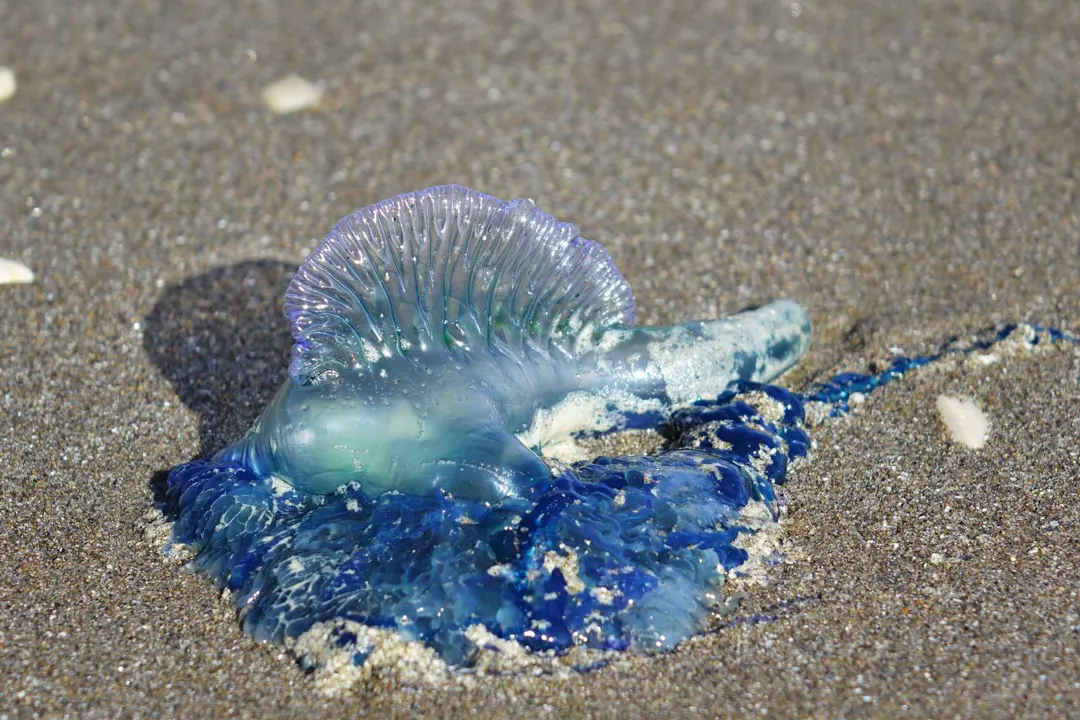 © Jacqui GeuxCC BY 4.0 · iNaturalist
Hula Skirt Siphonophore has no known danger to humans. However, always observe marine life responsibly.
Hula Skirt Siphonophore can be found at depths of up to 1000 meters.
Download Seabook free for iOS and Android.