 © Gregor BailarCC BY 4.0 · iNaturalist
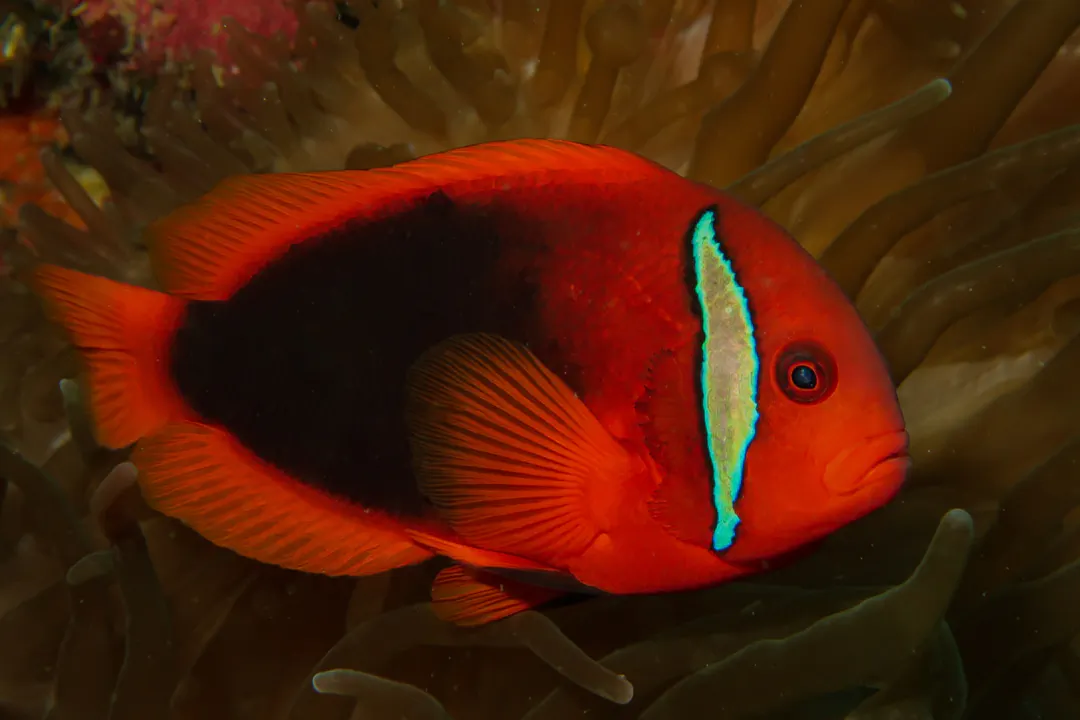
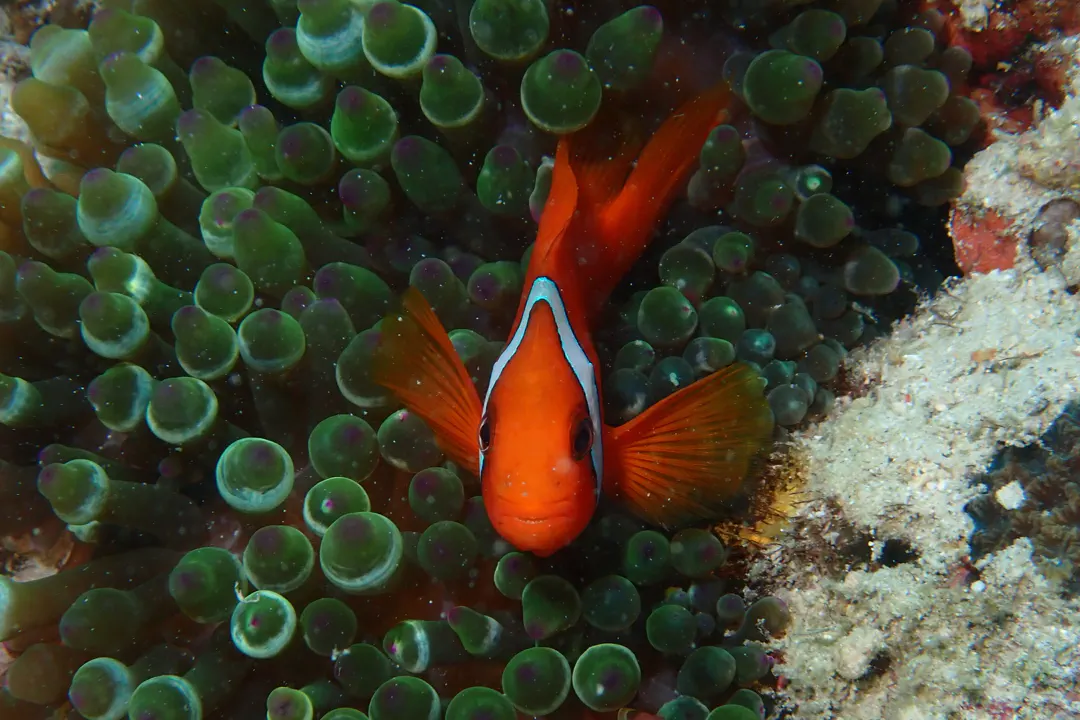
Bridled Clownfish (male)
Amphiprion frenatus
Amphiprion frenatus
Amphiprion frenatus is a marine fish belonging to the family Pomacentridae, the clownfishes and damselfishes and is found in the waters of the Western Pacific, from the Ryukyu Islands, Japan, to Malaysia and Indonesia.
The adult fish is bright orange-red, with a white head bar or vertical stripe just behind the eyes, joined over the head and with a distinctive black outline. Females are mainly blackish on the sides. Males are considerably smaller and are red overall. Juveniles are a darker red, with two or three white bars. They have 9-10 dorsal spines, 2 anal spines, 16-18 dorsal soft rays and 13-15 anal soft rays. They reach a maximum length of 14 cm (5 ⁄2 in).
The only color variation is sex related with females having darker coloration or dark spots on their sides.
A. rubrocinctus has a similar coloration, however the female does not have the distinctive black outline of the white band, the band is poorly developed and may be discontinuous on top of the head. Geographic location is the easiest way to distinguish small juveniles as they are otherwise difficult to distinguish. A. melanopus is also similar, but has a broader white headbar and outside Melanesia it has black pelvic and anal fins .
A. frenatus is found as far north as Ryukyu Islands, Japan, to the South China Sea and surrounding areas including Malaysia and Indonesia.
Fautin & Allen report that A. frenatus is associated only with one species of anemone:
Lougher reports that A frenatus is also associated with Heteractis crispa Sebae anemone.
As a pet, many marine hobbyists agree that at least 20 US gallons (76 L) of tank volume is necessary for the fish, however others believe larger is necessary for this fish to have ample room for maneuvering. Many hobbyists use a quarantine tank prior to introduction into the main tank as it helps to rid the Tomato Clownfish of saltwater-borne diseases.
This species of fish thrives well even without a host anemone. In the absence of a host, it may "adopt" corals of a tank to reside. It will eat most meat or vegetable food preparations, including dried algae, mysis shrimp, and brine shrimp. The tomato clownfish has been reported to be aggressive and territorial when mature, and specimens have been known to be extremely aggressive even towards clownfishes of other species. For this reason, it is best kept singly or in mated pairs; The Tomato clownfish has successfully been bred and raised in captivity; the fry can be fed on baby brine shrimp and rotifers.
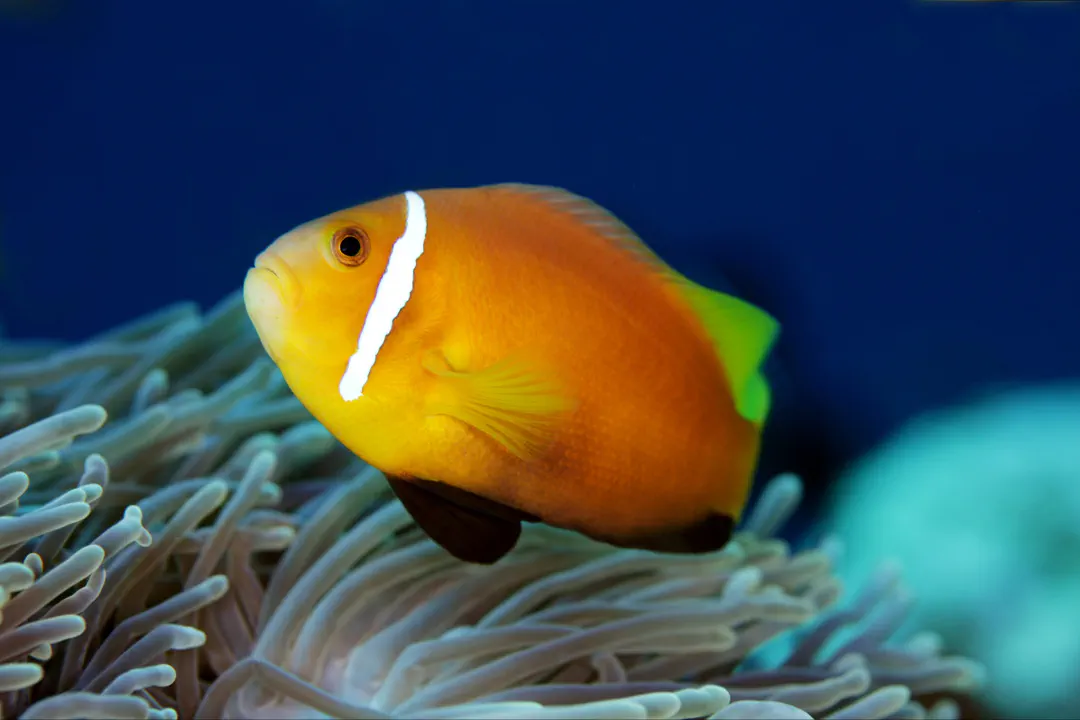
Clownfish or anemonefish are fishes that, in the wild, form symbiotic mutualisms with sea anemones and are unaffected by the stinging tentacles of the host anemone, see Amphiprioninae § Symbiosis and mutualism. The sea anemone protects the clownfish from predators, as well as providing food through the scraps left from the anemone's meals and occasional dead anemone tentacles. In return, the clownfish defends the anemone from its predators, and parasites. Clownfish are small-sized, 10–18 centimetres (3.9–7.1 in), and depending on species, they are overall yellow, orange, or a reddish or blackish color, and many show white bars or patches. Within species there may be color variations, most commonly according to distribution, but also based on sex, age and host anemone. Clownfish are found in warmer waters of the Indian and Pacific oceans and the Red Sea in sheltered reefs or in shallow lagoons.
In a group of clownfish, there is a strict dominance hierarchy. The largest and most aggressive fish is female and is found at the top. Only two clownfish, a male and a female, in a group reproduce through external fertilization. Clownfish are sequential hermaphrodites, meaning that they develop into males first, and when they mature, they become females
© Gregor BailarCC BY 4.0 · iNaturalist 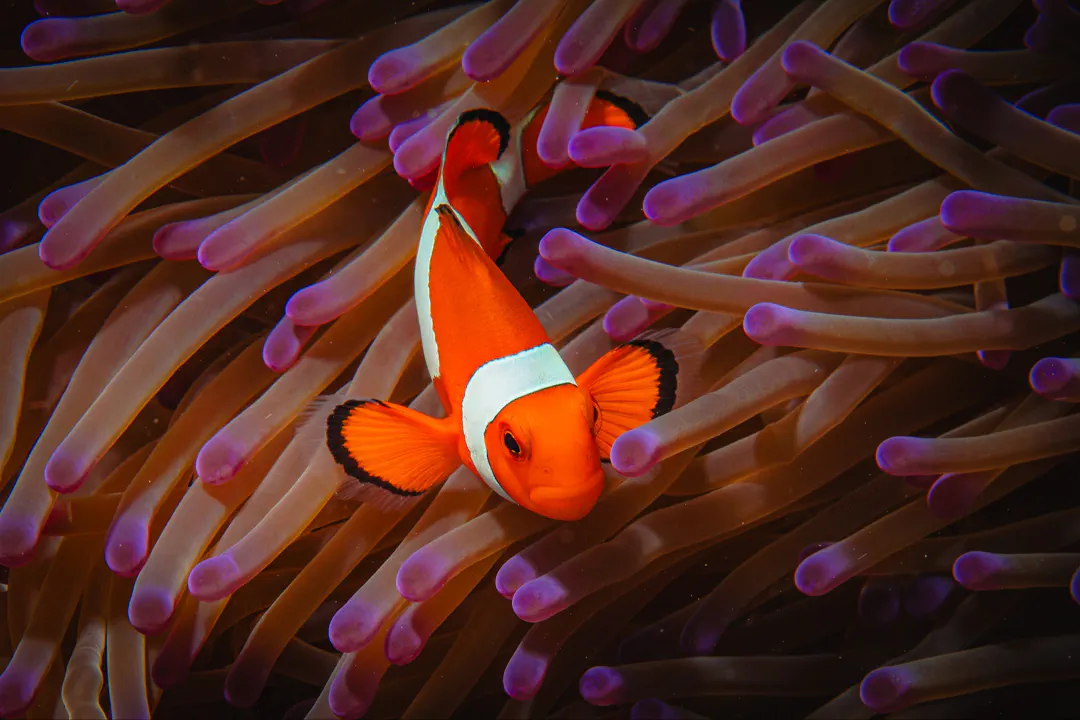 © Olka KuryanAll rights reserved
  © Thomas Badstuebner for MDC SeaMarc MaldivesCC BY-SA 4.0 · iNaturalist
 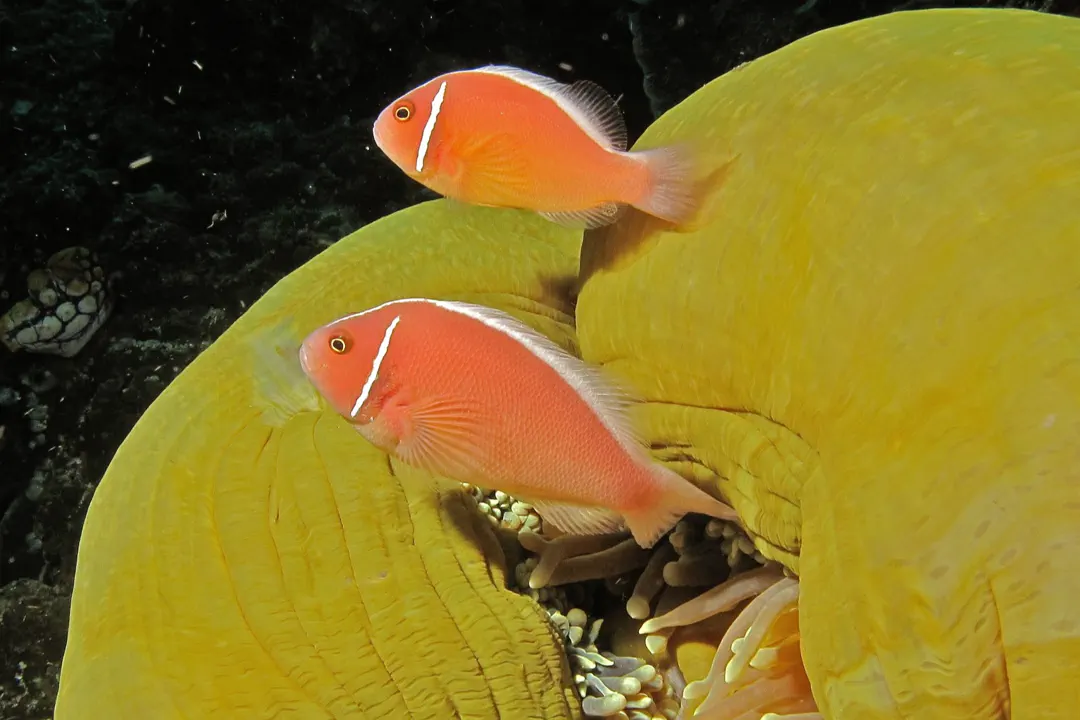 © Bernard DUPONTCC BY 4.0 · iNaturalist
 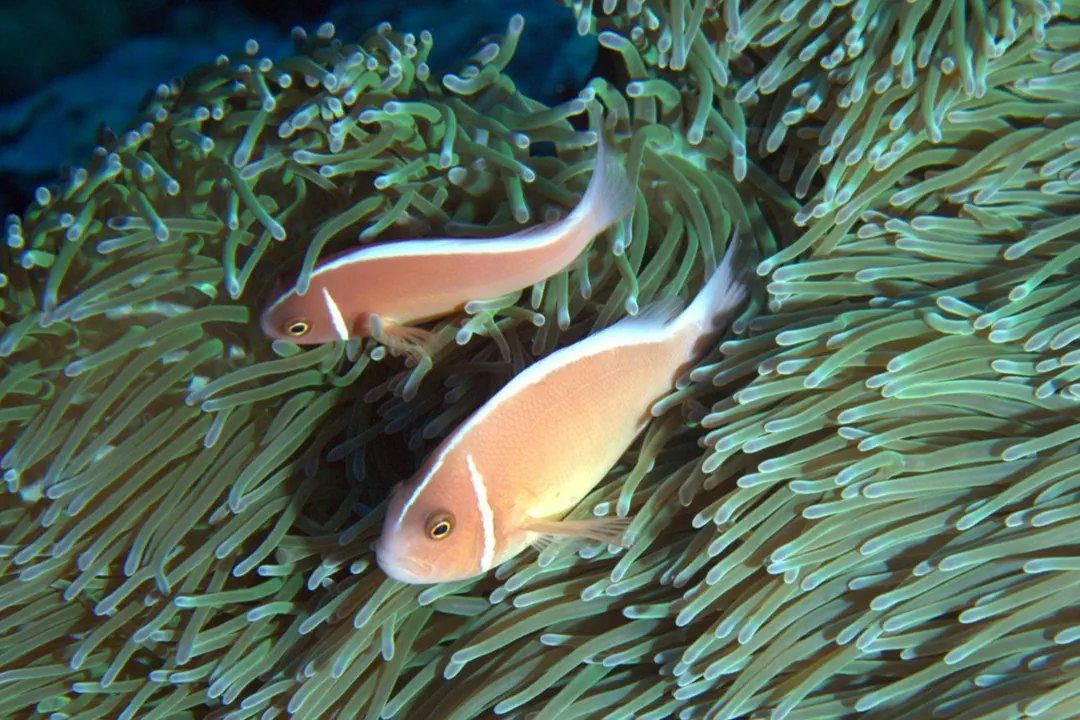 © craigjhoweCC BY 4.0 · iNaturalist
 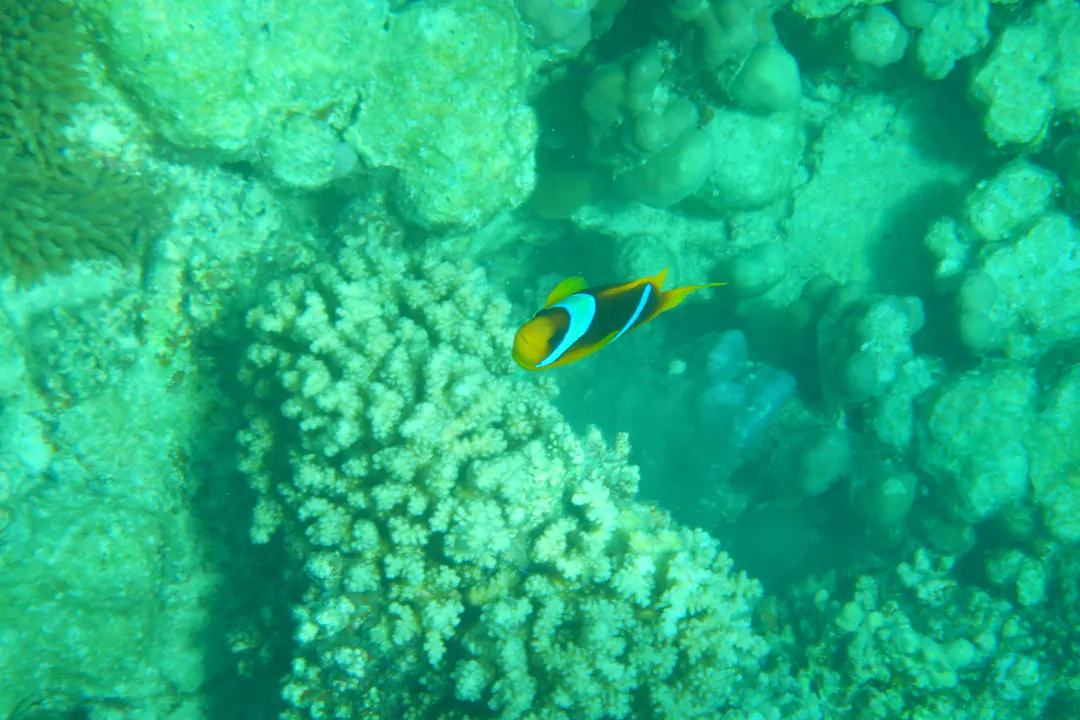 © Gergely NiggCC BY 4.0 · iNaturalist
 Bridled Clownfish (female) has no known danger to humans. However, always observe marine life responsibly.
Bridled Clownfish (female) can be found at depths of up to 12 meters.
Download Seabook free for iOS and Android.