 © Ewout KnoesterCC BY-SA 4.0
Gracile Lizardfish
Saurida gracilis
Synodus dermatogenys
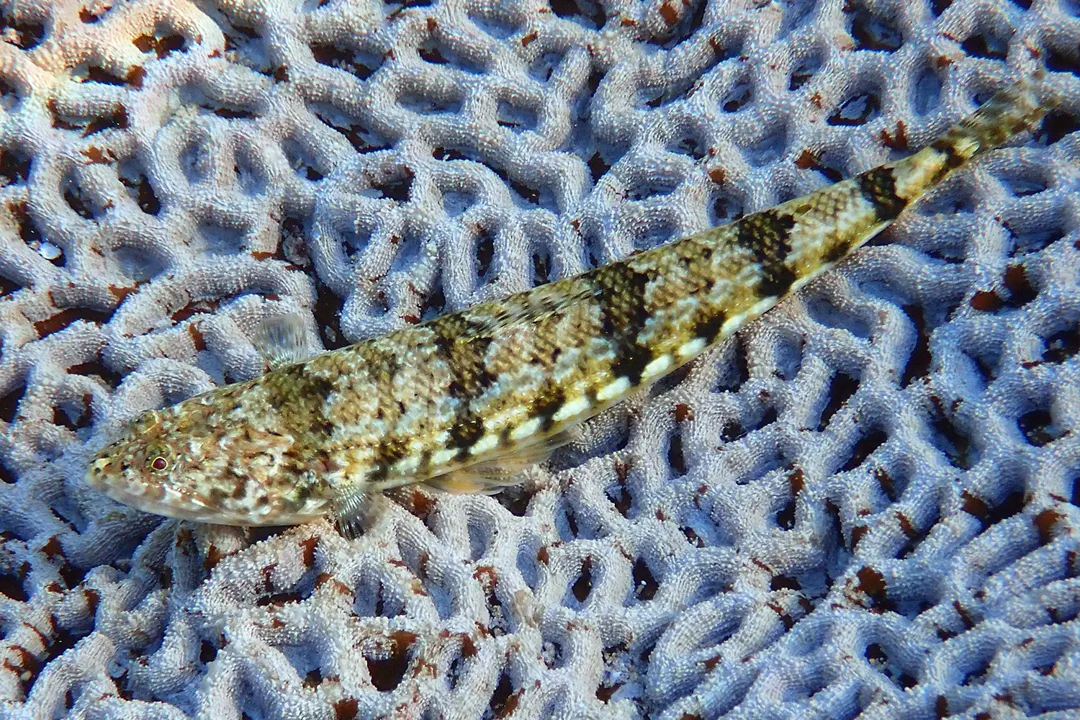
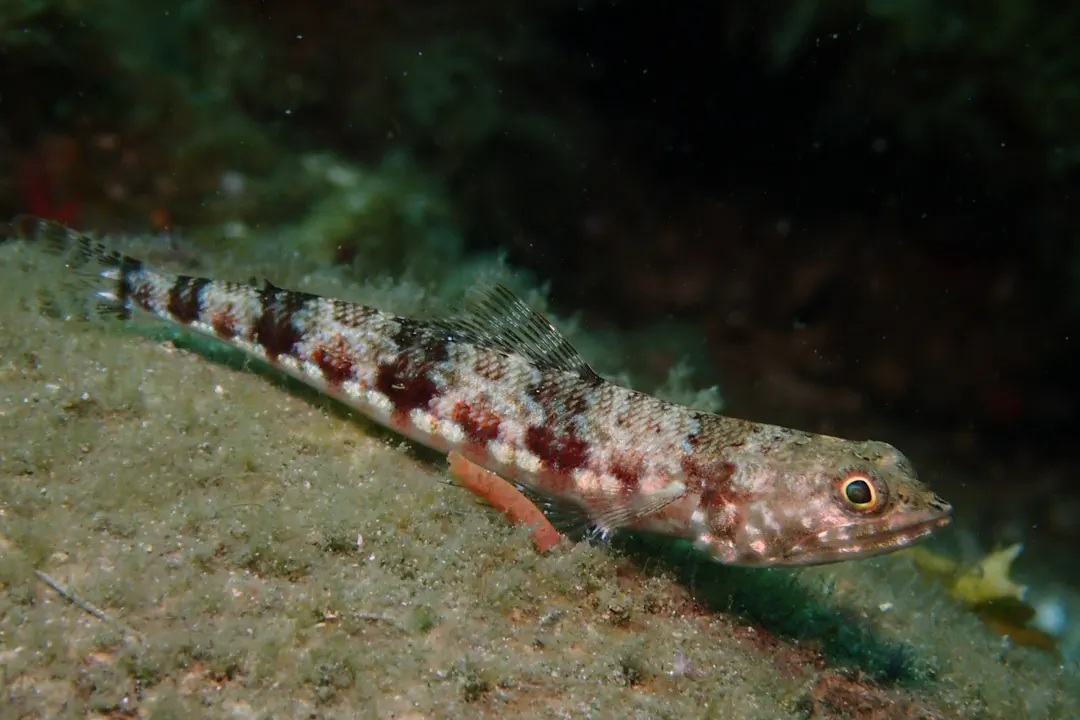
Synodus dermatogenys is a species of lizardfish that lives mainly in the Indo-Pacific.
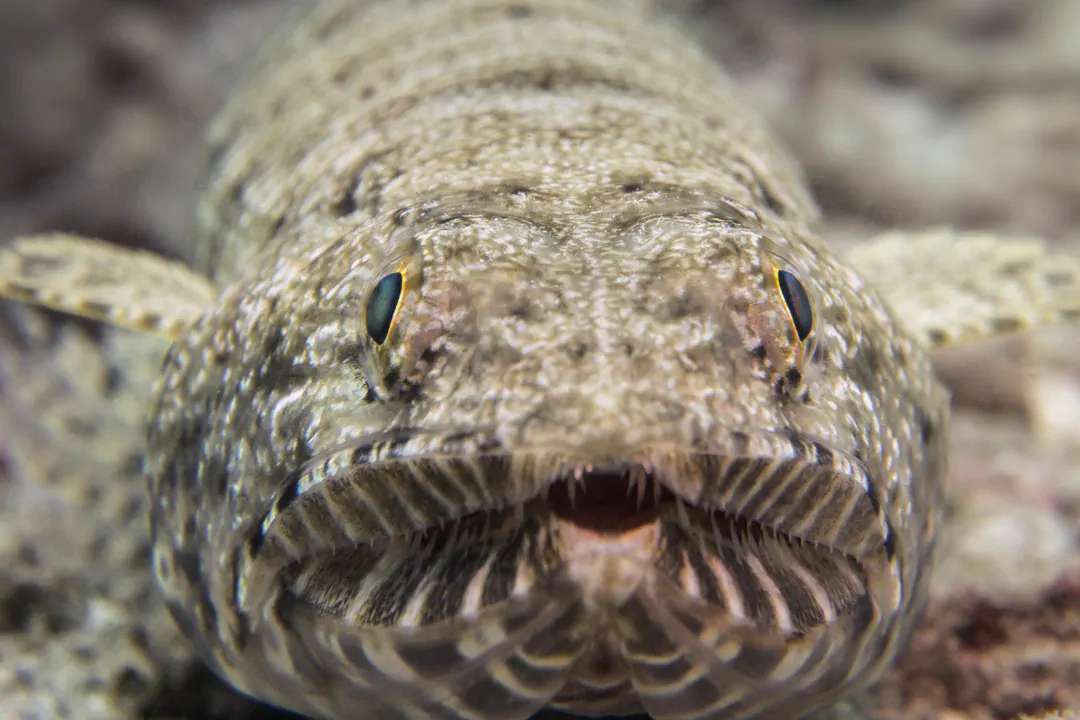
The maximum recorded length of the Synodus dermatogenys as an unsexed male is about 24 centimeters or about 9.44 inches. It can be identified by the five or six red-brown vertical bars that intersect a red horizontal broken band on the flank, immediately below this band is a line of whitish dots although the colours can vary depending on the surroundings. Cheek usually not scaled to preopercular margin; membranous flap on anterior nostrils long and slender; pectoral fins not reaching a line connecting origins of dorsal and pelvic fins. Sand lizardfish exhibits biofluorescence, that is, when illuminated by blue or ultraviolet light, it re-emits it as green, and appears differently than under white light illumination. Biofluorescence may assist in intraspecific communication and camouflage.
This species is native to the areas of Indo-Pacific, Red Sea, Hawaiian, Line, Marquesan, Tuamoto islands, north to Ryukyu Islands, south to Lord Howe, Micronesia, Southeast Atlantic, Algoa Bay, and South Africa.
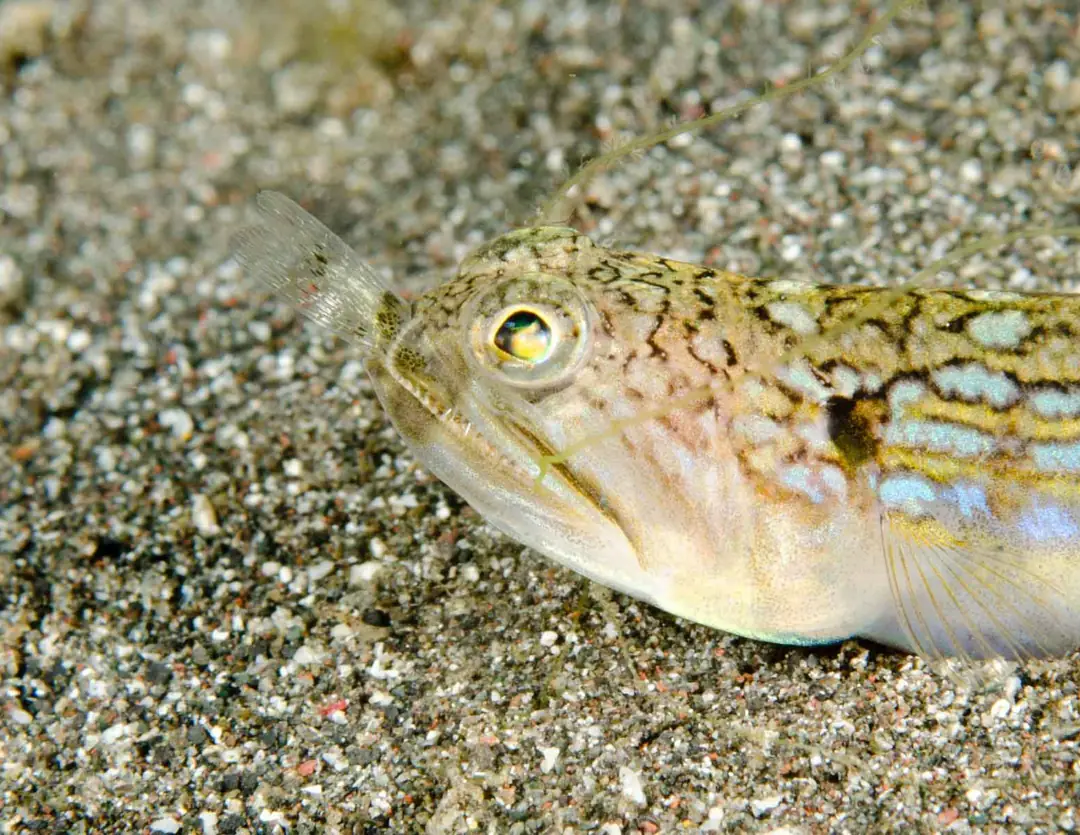
The Synodus dermatogenys is known to be found in a marine environment within a reef-associated depth range of about 1–70 meters. This species is native to a tropical climate. It is common to find this species in sand-rubble areas of lagoon and seaward reefs to over 20 meters of benthic depth. This species buries itself in the sand while exposing its eyes and nostrils. It is known to find this species solitary or in small groups. The Variegated Lizardfish is a predator of small fish and crustaceans, its mouth is full of sharp needle-like teeth.
© Ewout KnoesterCC BY-SA 4.0 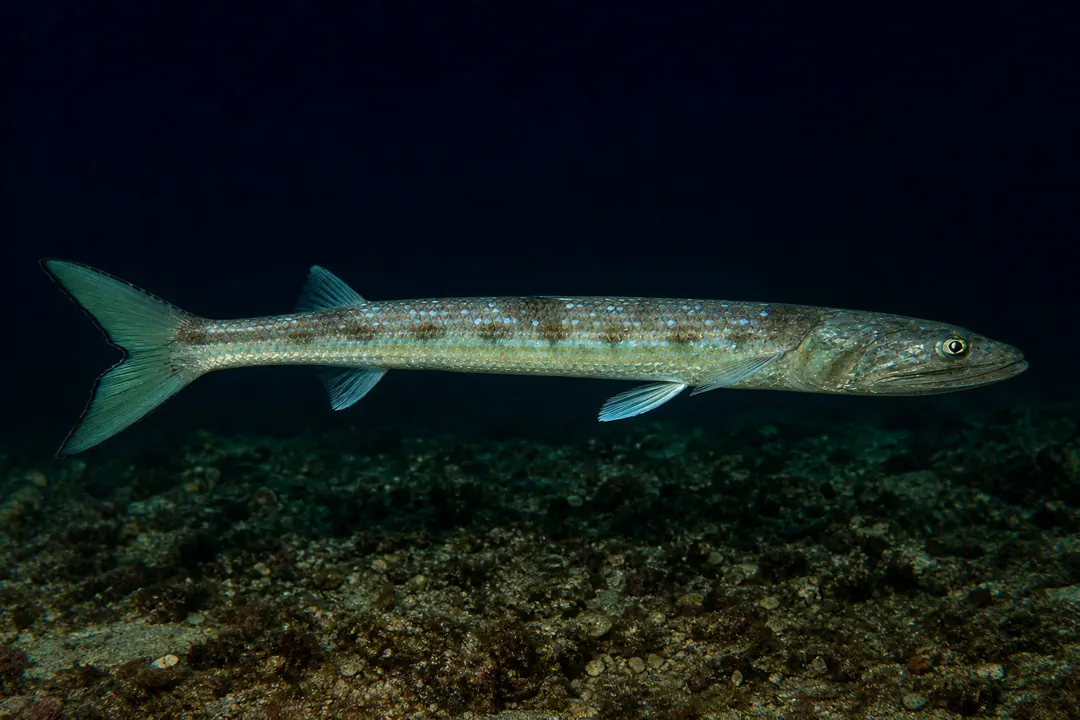
 © Ian ShawAll rights reserved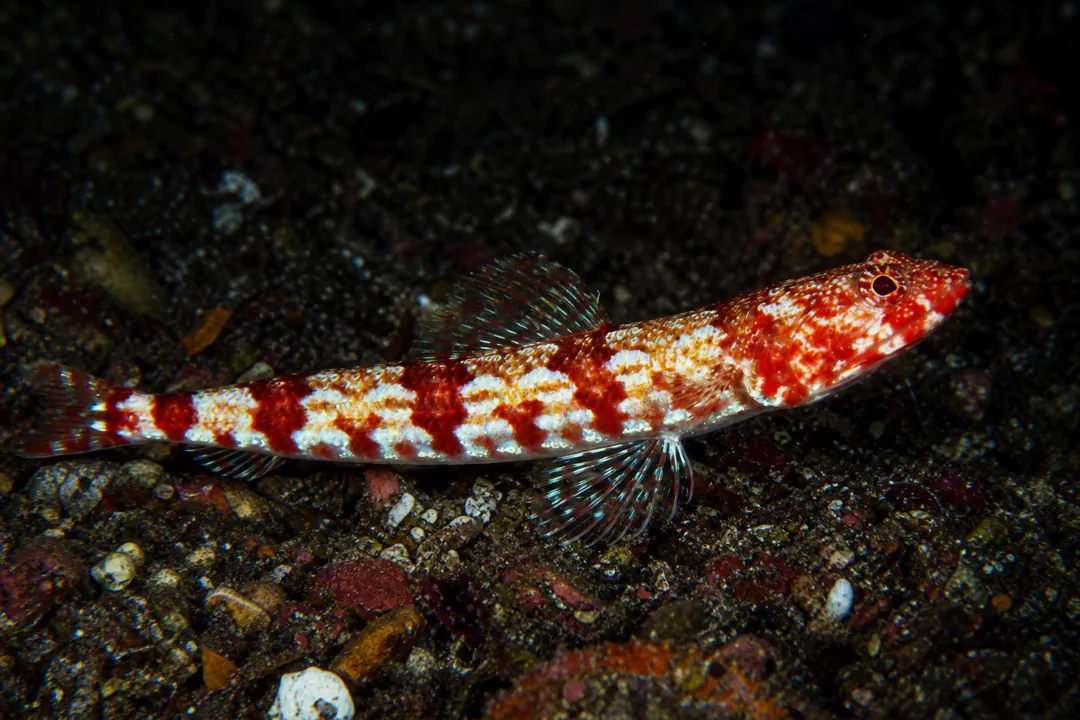
 © Dan SchofieldCC BY 4.0 · iNaturalist
 Bluestripe Lizardfish has no known danger to humans. However, always observe marine life responsibly.
Bluestripe Lizardfish can be found at depths of up to 91 meters.
Download Seabook free for iOS and Android.