 © seabook.appAll rights reserved
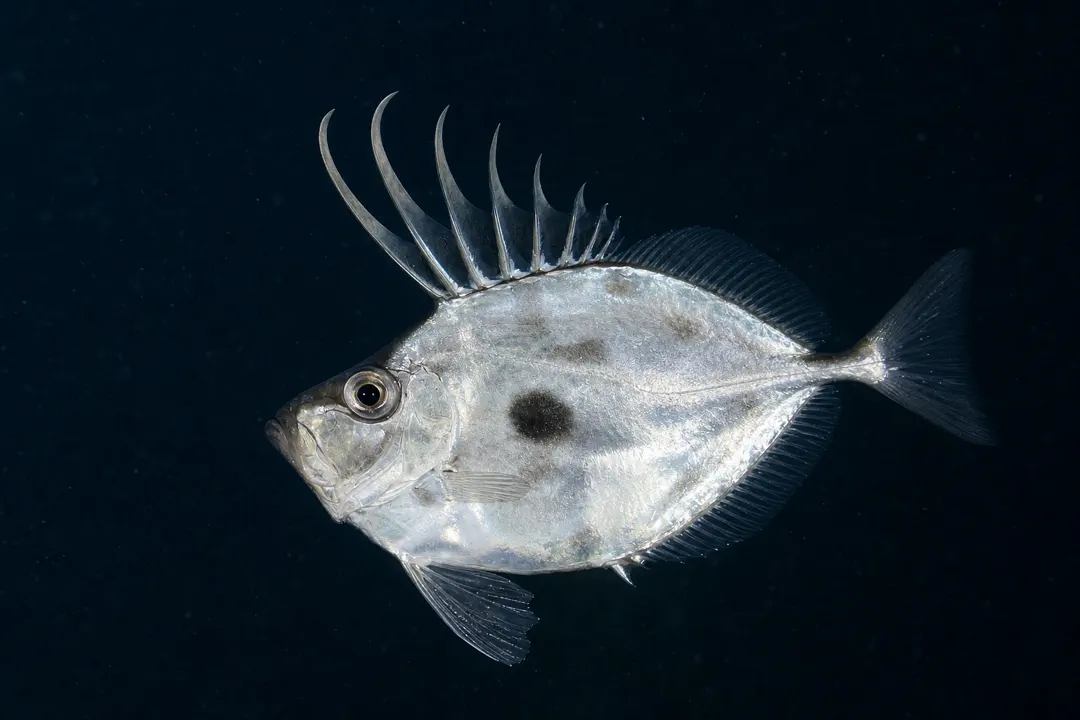
Mirror Dory
Zenopsis nebulosa
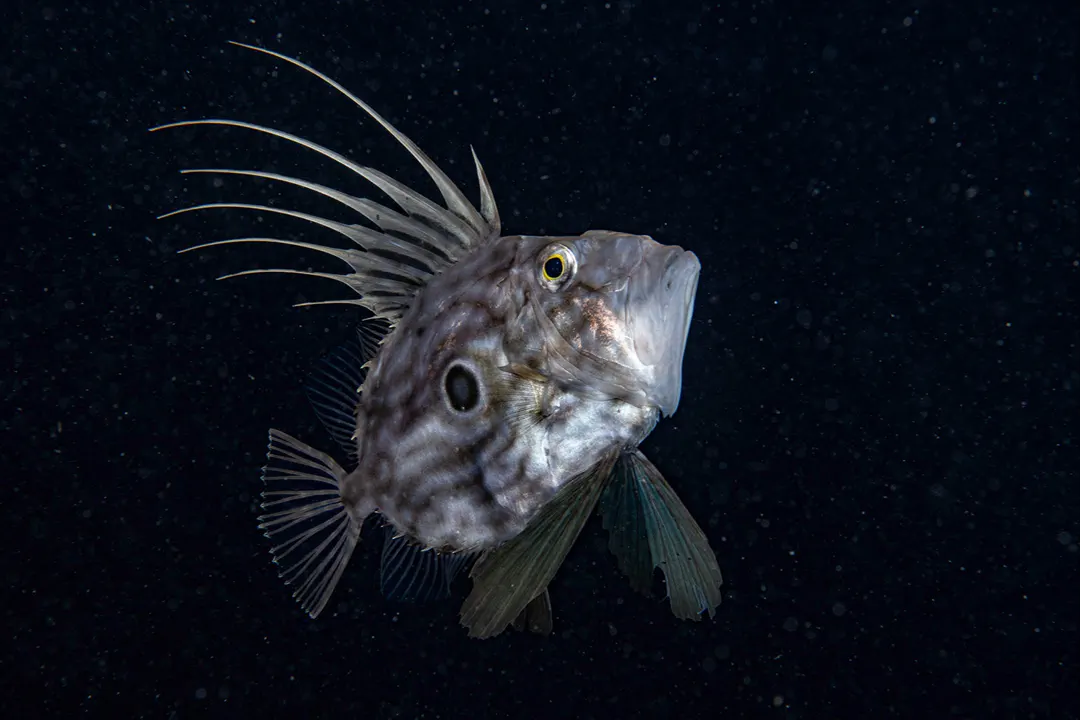
Zeus faber
John Dory, St Pierre or Peter's Fish, refers to fish of the genus Zeus, especially Zeus faber, of widespread distribution. It is an edible benthic coastal marine fish with a laterally compressed olive-yellow body which has a large dark spot, and long spines on the dorsal fin. The dark spot is used to flash an 'evil eye' if danger approaches. Its large eyes at the front of the head provide it with binocular vision and depth perception, which are important for predators. The John Dory’s eye spot on the side of its body also confuses prey, which are scooped up in its big mouth.
In New Zealand, Māori know it as kuparu, and on the East Coast of the North Island, they gave some to Captain James Cook on his first voyage to New Zealand in 1769. Several casks of them were pickled.
Various, often doubtful explanations are given of the origin of the name. It may be an arbitrary or jocular variation of dory (from French dorée, gilded), or an allusion to John Dory, the hero of an old ballad. Others suggest that "John" derives from the French jaune, yellow. The novel An Antarctic Mystery by Jules Verne gives another account, which has some popularity but is probably fanciful: "The legendary etymology of this piscatorial designation is Janitore, the 'door-keeper,' in allusion to St. Peter, who brought a fish said to be of that species, to Jesus at his command." Other known names for the John Dory are the "St. Pierre", or "Peter's Fish", perhaps explaining why dories were often referred to as "Peter Boats", Saint Peter being the patron saint of fishermen. A related legend says that the dark spot on the fish's flank is St. Peter's thumbprint.
The John Dory grows to a maximum size of 65 cm (2 ft) and 3 kg (7 lb) in weight. It has 10 long spines on its dorsal fin and 4 spines on its anal fin. It has microscopic, sharp scales that run around the body. The fish is an olive green color with a silvery white belly and has a dark spot on its side. Its eyes are near the top of its head. It has a flat, round body shape and is a poor swimmer.
The John Dory catches its prey by stalking it, then extending its jaw forward in a tube like structure to suck the fish in with some water. The water then flows out through the gills; the pre-maxillary bone, the only tooth-bearing bone in this fish, is used to grind the food. The John Dory is primarily a piscivore; it eats a variety of fish, especially schooling fish such as sardines. Occasionally it eats squid and cuttlefish.
Their predators are sharks, such the dusky shark, and large bony fish.
John Dory are coastal fish, found on the coasts of Africa, South East Asia, New Zealand, Australia, the coasts of Japan, and on the coasts of Europe. They live near the seabed, living in depths from 5 metres (15 ft) to 360 metres (1200 ft). They are normally solitary.
When John Dories are 3 or 4 years of age, they are ready to reproduce. This happens around the end of winter. They are substrate scatterers, which means that they release sperm and eggs into the water to fertilize. Typical lifespan is about 12 years in the wild.
The cookery writer Eliza Acton observes in her 1845 book, Modern Cookery for Private Families, that John Dory "though of uninviting appearance, is considered by some persons as the most delicious fish that appears at table". She recommends simply baking it "very gently", avoiding drying it out in the oven.
© seabook.appAll rights reserved John Dory has no known danger to humans. However, always observe marine life responsibly.
John Dory can be found at depths of up to 400 meters.
Download Seabook free for iOS and Android.