 © Ditch TownsendCC BY-SA 4.0 · iNaturalist
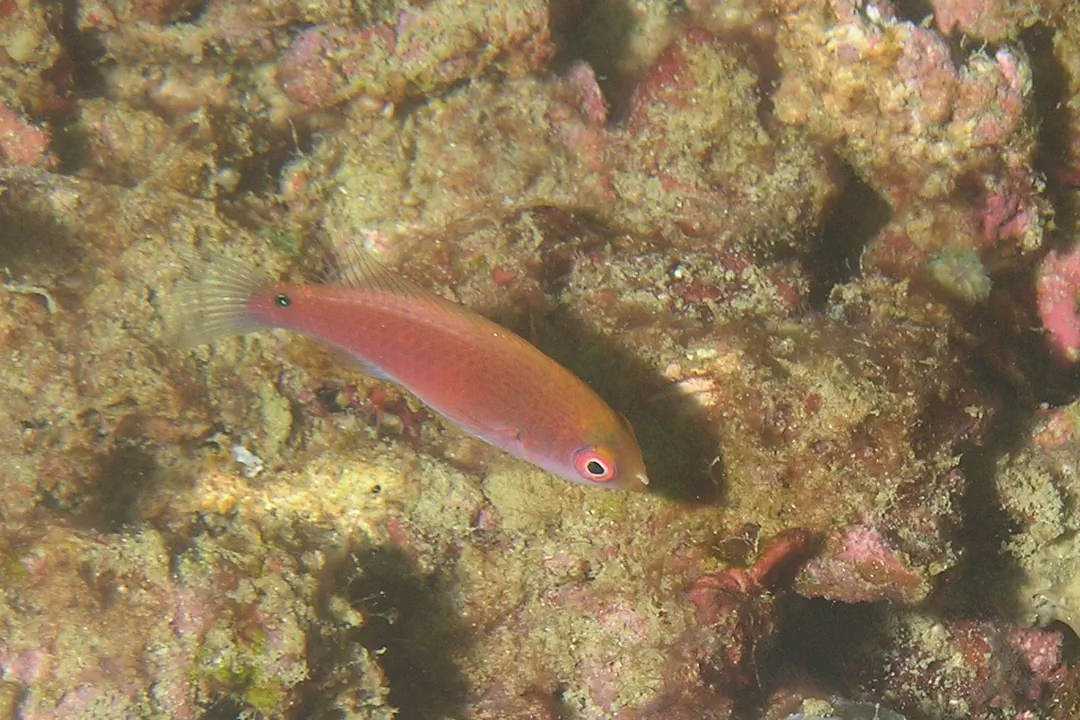
Blueside Wrasse (female)
Cirrhilabrus cyanopleura
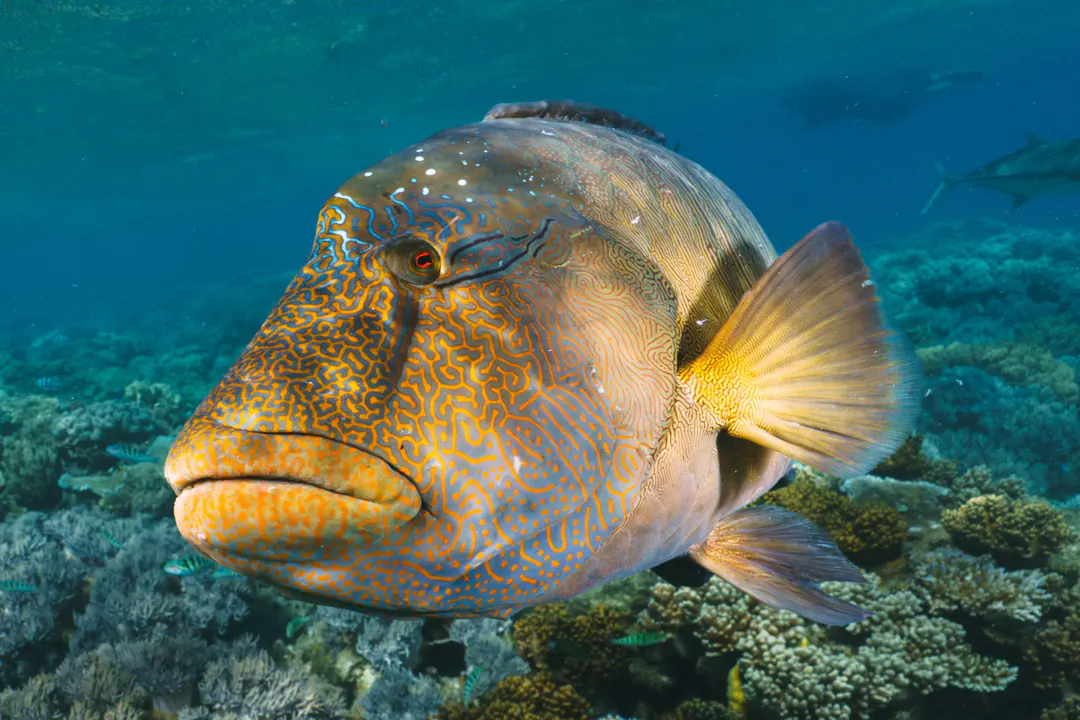
Cheilinus undulatus
Cheilinus undulatus is a species of wrasse mainly found on coral reefs in the Indo-Pacific region.
The humphead wrasse is the largest living member of the Labridae family. Males are typically larger than females and are capable of reaching lengths of up to 2 meters from tip to tail and weighing up to 180 kg, but the average length is generally a little less than 1 meter. Females rarely grow larger than one meter in length. This species of fish can be easily identified by its large size, thick lips, two black lines behind its eyes, and the hump that appears on the forehead of larger adults. The color of the humphead wrasse can vary between a dull blue-green to more vibrant shades of green and purplish-blue. This particular reef fish prefers to live singly but adults are occasionally observed moving in small groups.
The humphead wrasses can be located with in the east coast of Africa and Red sea as well as in the Indian Ocean to the Pacific Ocean. There are different ranges in which juvenile and adult humphead wrasses are found. Juveniles are usually found in shallow sandy ranges that are bordering coral reef waters, while adults are mostly found in offshore and deeper areas of the coral reefs, typically in outer-reef slopes and channels but can also be found in lagoons. Humphead wrasses are found in small groups or larger combinations within their habitat.
The humphead wrasse is long-lived, but has a very slow breeding rate. Individuals become sexually mature at four to six years, and females are known to live for around 50 years, whereas males live a slightly shorter 45 years. Humphead wrasses are protogynous hermaphrodites, with some members of the population becoming male at about 9 years old The factors that control the timing of sex change are not yet known. Adults move to the down-current end of the reef and form local spawning aggregations (they concentrate to spawn) at certain times of the year. It is speculated that Humphead Wrasse do not travel very far for their spawning aggregations.
The Humphead Wrasse produces pelagic eggs and larvae that ultimately settle on or near coral reef habitats. Eggs are 0.65 mm in diameter and spherical, with no pigment.
Being very opportunistic predators, the Cheilinus undulatus prey primarily on invertebrates such as mollusks (particularly gastropods and pelecypods), echinoids, crustaceans, annelids) and vertebrates, in the form of fish. Half of echinoids and most pelecypods hide under the sand, leaving scientists to believe one of two options: the humphead wrasses rely on fish excavators like stingrays, or they themselves excavate by ejecting water and nosing around to look for prey. Often, these wrasse, alone with many other Red Sea wrasses, crack sea urchins (echinoids) by carrying them to a rock in their mouths and striking them against a rock by moving their heads in sideways, brisk movements.
Ocean acidification is becoming a very big threat to coral reefs because it is reducing the calcification rate of coral species. These coral species will be pushed beyond what they can handle in terms of growth and survival for decades to come. Due to an increased concentration of atmospheric CO2, the pH of Earth’s oceans are causing this acidification, and therefore decline in reef building activity. Adults are commonly found on steep coral reef slopes, channel slopes, and lagoon reefs in water 3 to 330 ft (1–100 m) deep. From this loss of calcifying coral, this endangered species may someday also lose its home.
This species actively selects branching hard and soft corals and seagrasses at settlement. Juveniles tend to prefer a more cryptic existence in areas of dense branching corals, bushy macro algae, or seagrasses, while larger individuals and adults prefer to occupy limited home ranges in more open habitat on the edges of reefs, channels, and reef passes. The species is most often observed in solitary male-female pairs, or groups of two to seven individuals.
The fish is listed as Endangered on the IUCN Red list and in Appendix II of CITES. Species numbers for the humphead wrasse have been declining due to a number of threats, including:
As noted, one of the causes for population decline is the unsustainable and severe over-fishing within the live reef food fish trade (LRFFT). Sabah (located on Borneo Island) is a major source for humphead wrasse. The fishing industry is specifically important to this state because of its severe poverty rates. The export of this fish out of Sabah has led to an approximate 99% decline in the population in that area. In an effort to protect the species there was a ban placed on the export of the humphead wrasse out of Sabah. However, this does not prevent illegal, unreported, and unregulated activities (IUU). The protection by the Convention on International Trade in Endangered Species of Wild Fauna and Flora (CITES) is managed in this area by the federal Department of Fisheries Malaysia, Sabah (DOFS) who issue permits to regulate fishing activity. There are two pieces of legislation that serve to protect the species as well. The Fisheries Act 1985 controls the transport of live fish as well as prohibits destructive fishing techniques and the Trade of Endangered Species Act 2008 supports Malaysia’s adoption of CITES.
The humphead wrasse is considered to be an umbrella species. This means that there are many other species that are sympatric with this species that have much smaller ranges. The conservation of the habitat of an umbrella species such as the humphead wrasse would not only benefit this species but also all of the other sympatric species. The concept of an umbrella species can lead to a better understanding of endangered species protection.
The species has historically been fished commercially in northern Australia, but has been protected in Queensland since 2003 and Western Australia since 1998.
In Guangdong Province, southern mainland China, permits are required for the sale of this species; Indonesia allows fishing only for research, mariculture, and licensed artisanal fishing; the Maldives instituted an export ban in 1995; Papua New Guinea prohibits export of fish over 2 ft (65 cm) total length; and Niue has banned all fishing for this species.
The humphead wrasse is a U.S. National Marine Fisheries Service Species of Concern. Species of Concern are those species about which the NMFS, has some concerns regarding status and threats, but for which insufficient information is available to indicate a need to list the species under the Endangered Species Act.
In 1996, the humphead wrasse became listed as a vulnerable species in the International Union for Conservation of Nature Red List. It was put on this list because in the last decade, humphead wrasse populations were declining rapidly. Because of this fact, it is extremely important to analyze and evaluate the genomes of the humphead wrasse so as to try and determine a way to help keep the species alive.
Since so little is known about the genetic relationships at a geographical scale of the humphead wrasse, thanks to a test utilizing microsatellite loci, (usually DNA markers are used for this specific test, but the humphead wrasse lack such markers,) researchers were able to facilitate population genetic studies in this species.
Of the 15 microsatellite loci used in the test, only 4 of them seem to have a different outcome than the other 11 loci. These 4 microsatellite loci were all prone to null alleles. However, with the presence of these null alleles, the results may have been slightly biased. Or they may be related to a particularity of the C. undulatus which are highly restricted to coral reef habitats.
© Ditch TownsendCC BY-SA 4.0 · iNaturalist 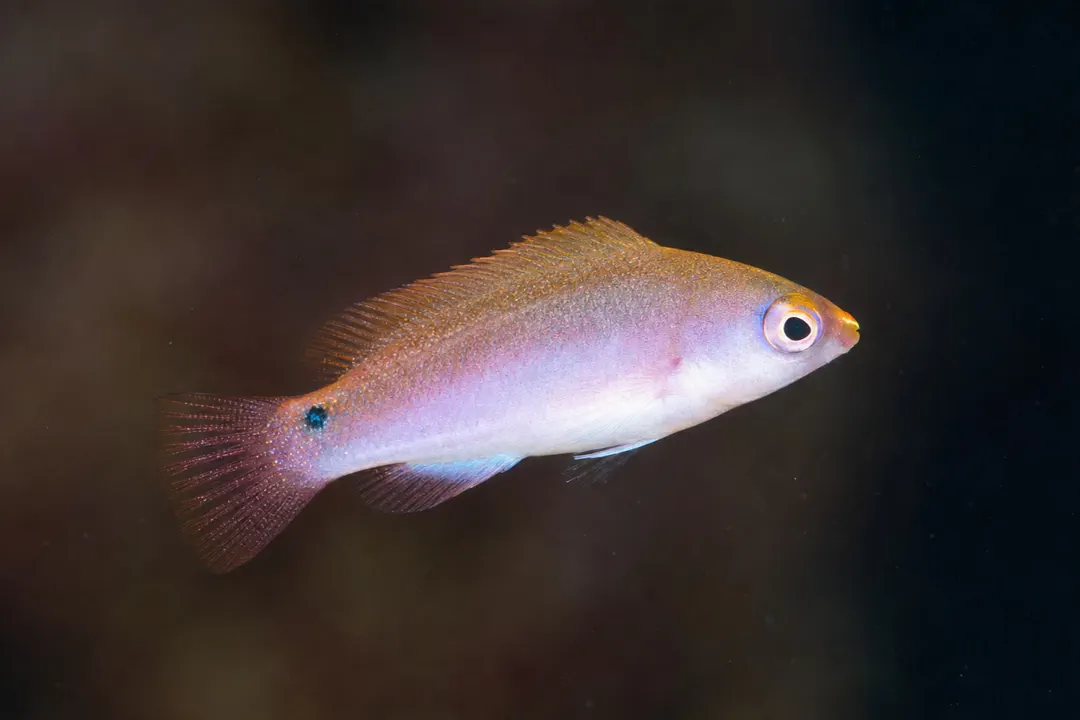 © seabook.appAll rights reserved
 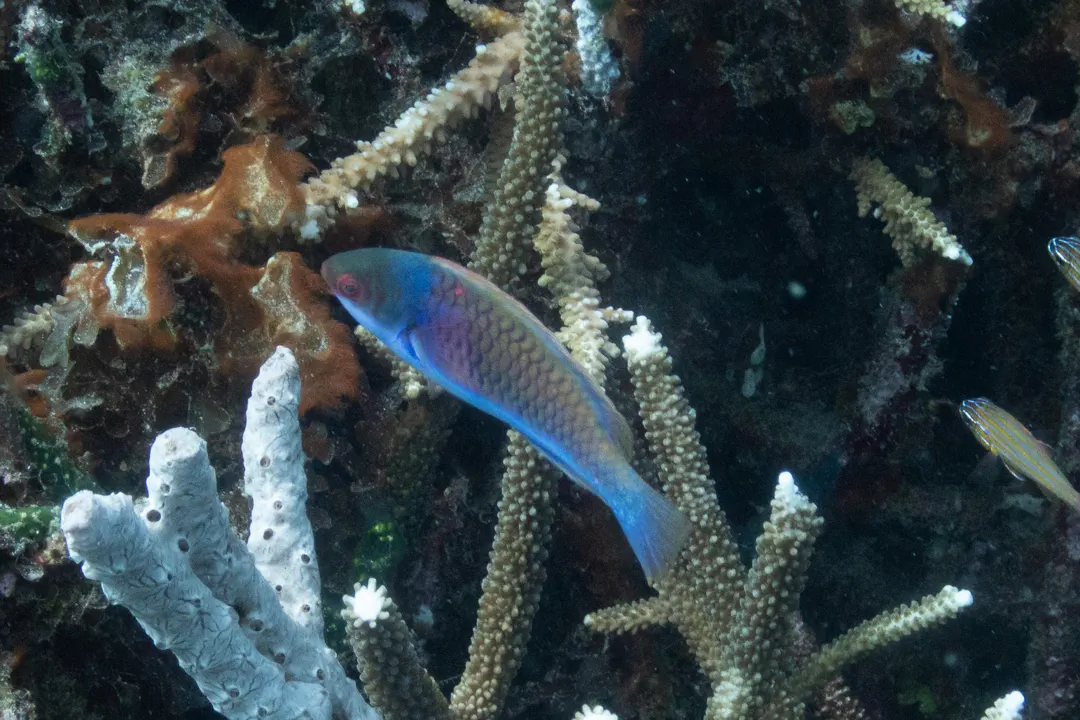 Justin PhilboisCC0 · iNaturalist
 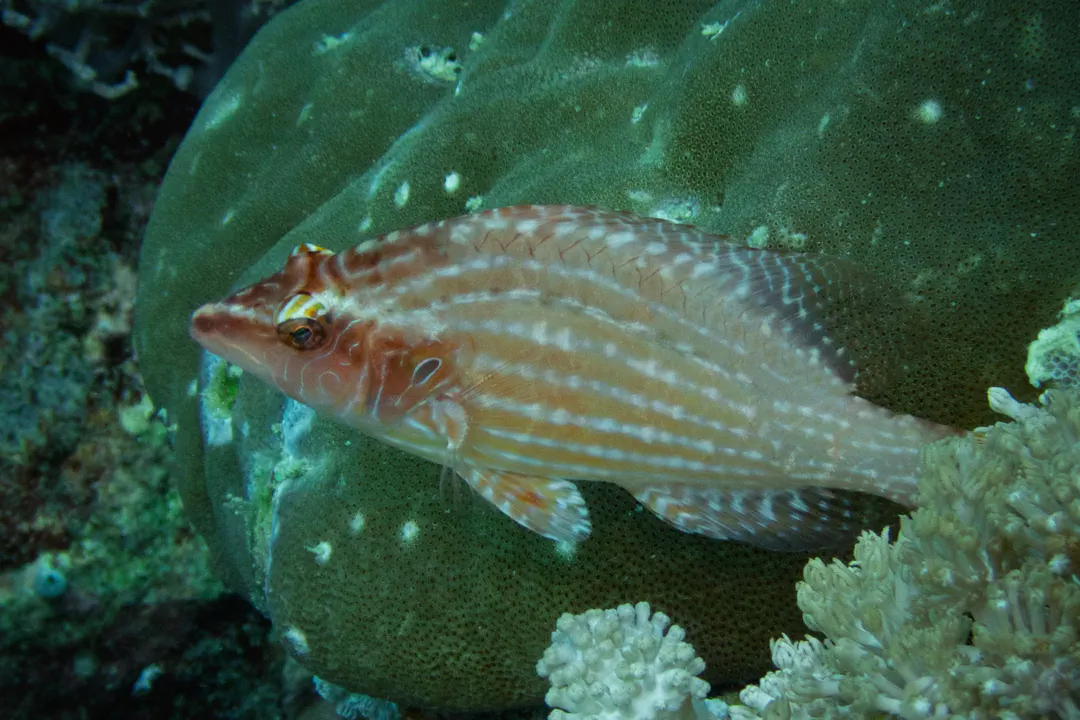 © Pierre PericardCC BY 4.0 · iNaturalist
 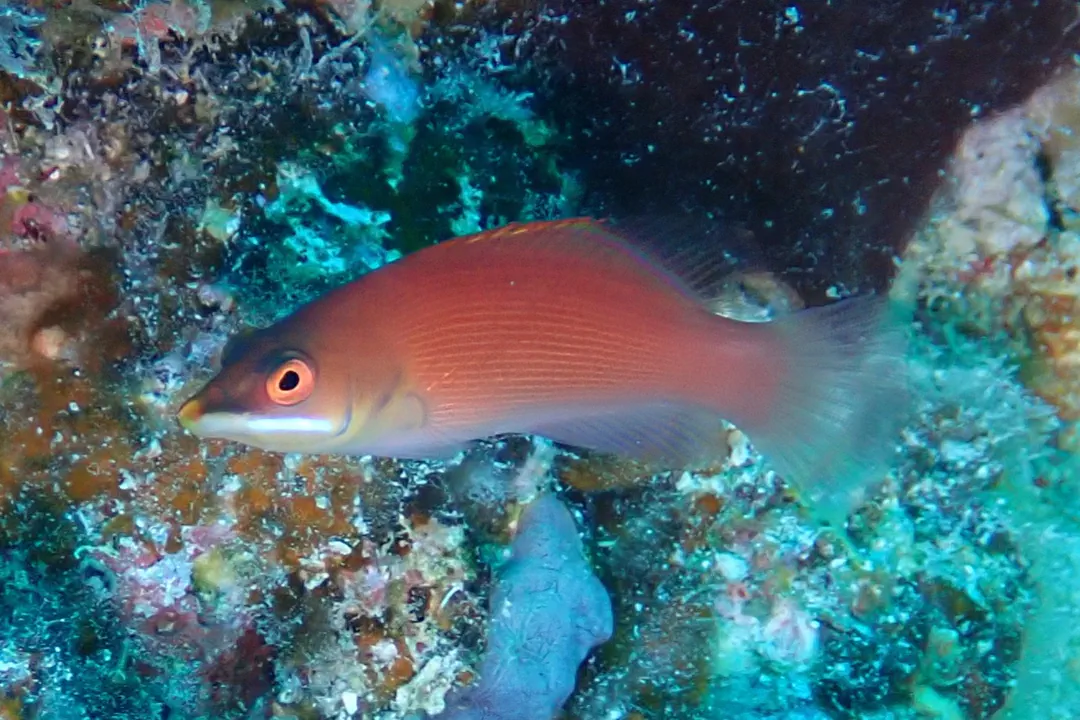 © Debra BakerCC BY 4.0 · iNaturalist
  © Debra BakerCC BY 4.0 · iNaturalist
 Napoleon Wrasse (motley) is classified as poisonous. Always exercise caution and keep a safe distance.
Napoleon Wrasse (motley) can be found at depths of up to 100 meters.
Download Seabook free for iOS and Android.