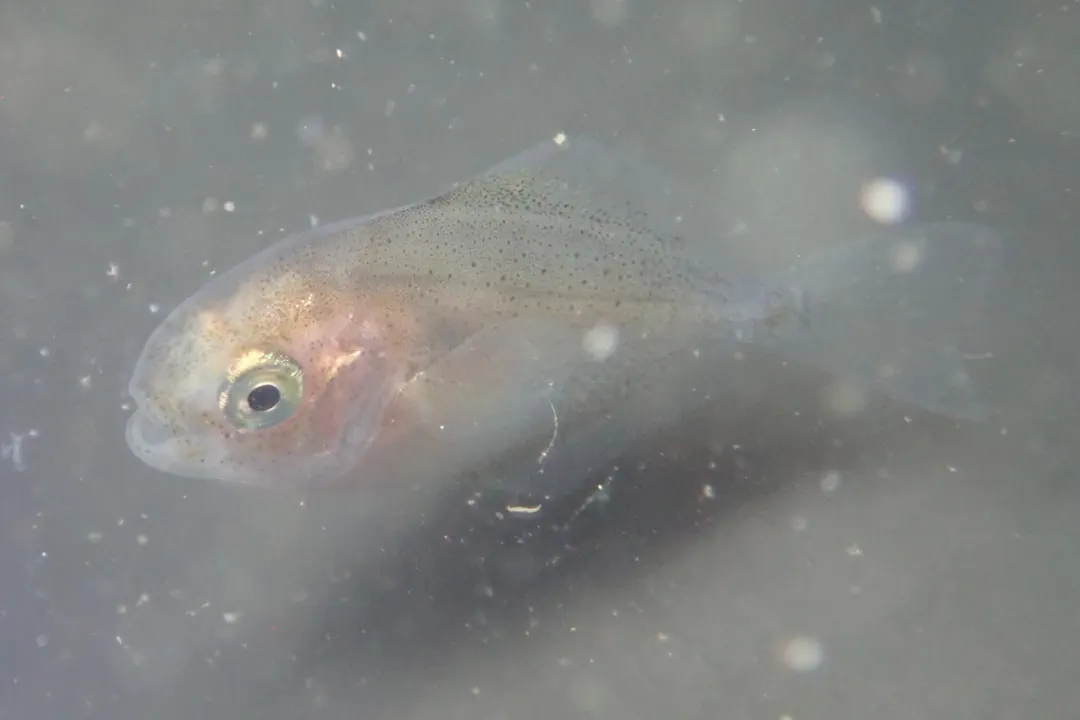
Pacific Pompano
Peprilus simillimus
- Max size
- View in app
- Max depth
- 91 m
- Found in
- 7 regions
How to recognise it
- Colours
- silvergreenblue
Peprilus simillimus is a species of fish in the family Stromateidae (Butterfishes) found in Pacific and Atlantic Oceans
Description
Coloration: iridescent blue-green above, silvery below. Body highly compressed, an elongate oval, shallow to moderately deep. Eye large, surrounded by a fatty right. Snout equal eye length or longer, mouth small, oblique, ends before or under front of eye. Jaw teeth compressed, 3-pointed, in 1 row, no teeth on roof of mouth. Gill rakers 23-27. Dorsal and anal fins long based, front lobes only slightly raised in a blunt point, anal much lower than dorsal. Dorsal rays III, 43-47 (41-48). Anal rays II, 38-41 (35-44). No pelvic fins but a small spine projecting from pelvis. Pectorals long and pointed, 19-23, usually 21 rays. Tail fin deeply forked, stiff. Scales very small, smooth, very easily shed. Dorsal and anal fins covered with scales. Lateral line high, follows upper body profile, almost complete. 30-31 vertebrae.
Distribution
Northeast Pacific: Queen Charlotte Sound in British Columbia, Canada to southern Baja California Sur and the Gulf of California.
Habitat
Commonly found on sand bottom of exposed coasts. Usually occurs in shallow water near shore and often forms small, but fairly dense, schools.
Questions
Is Pacific Pompano dangerous?
Pacific Pompano has no known danger to humans. However, always observe marine life responsibly.
Where can you find Pacific Pompano?
How deep does Pacific Pompano live?
Pacific Pompano can be found at depths of up to 91 meters.