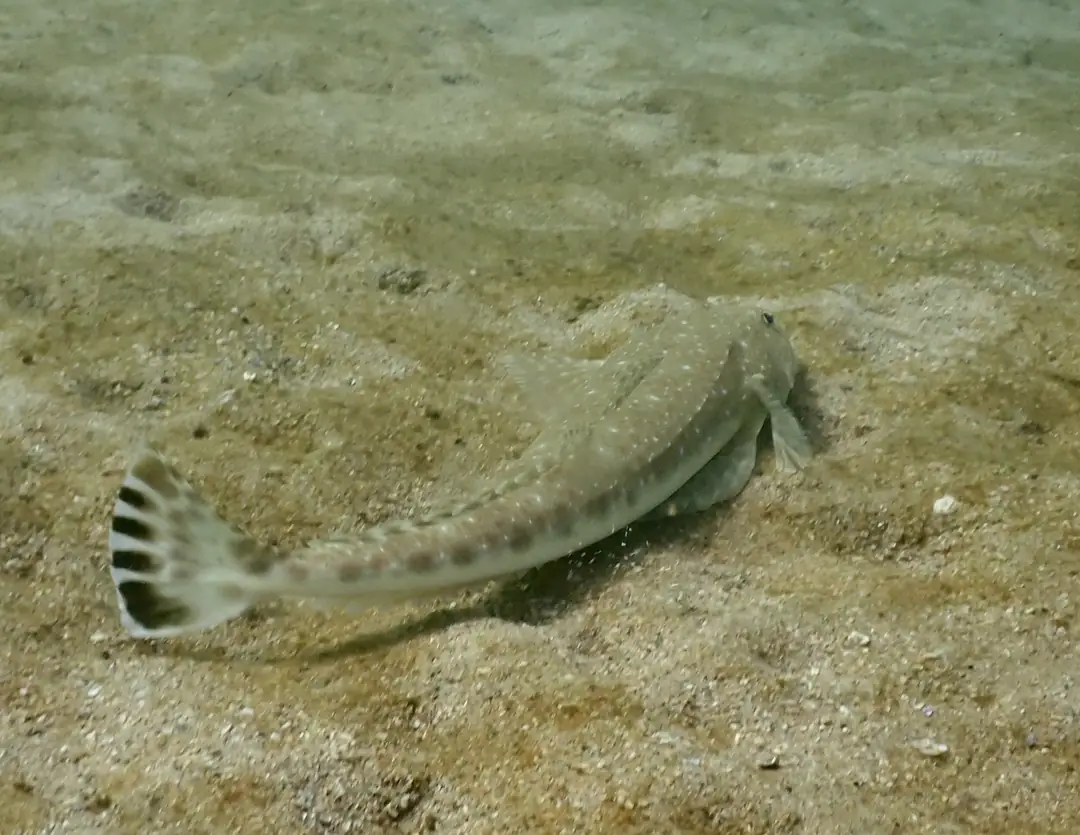
 © Lucy SmiechuraAll rights reserved
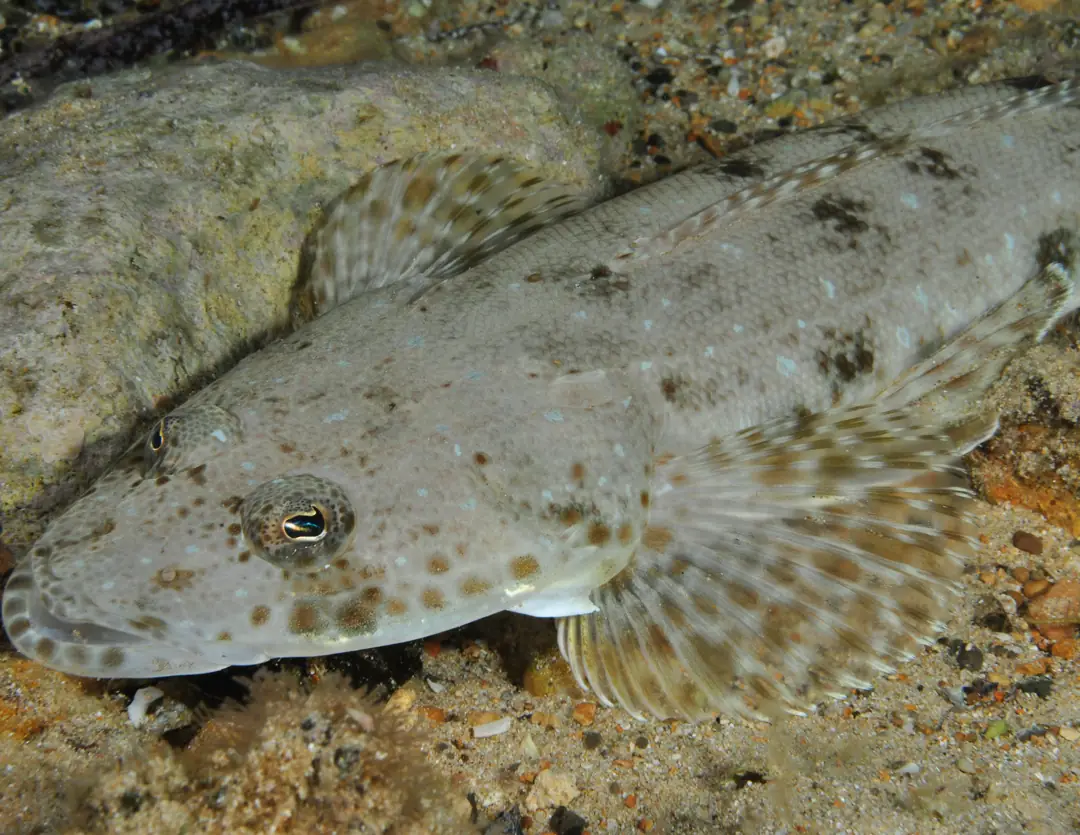
Blue-spotted Flathead
Platycephalus caeruleopunctatus
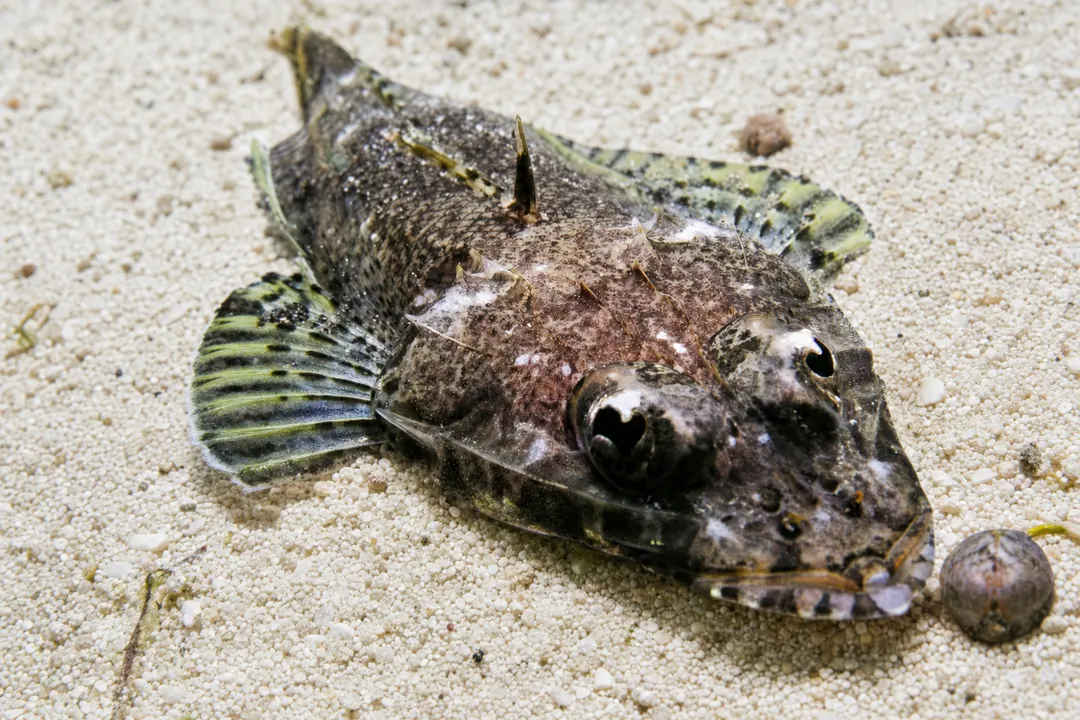 © seabook.appAll rights reserved
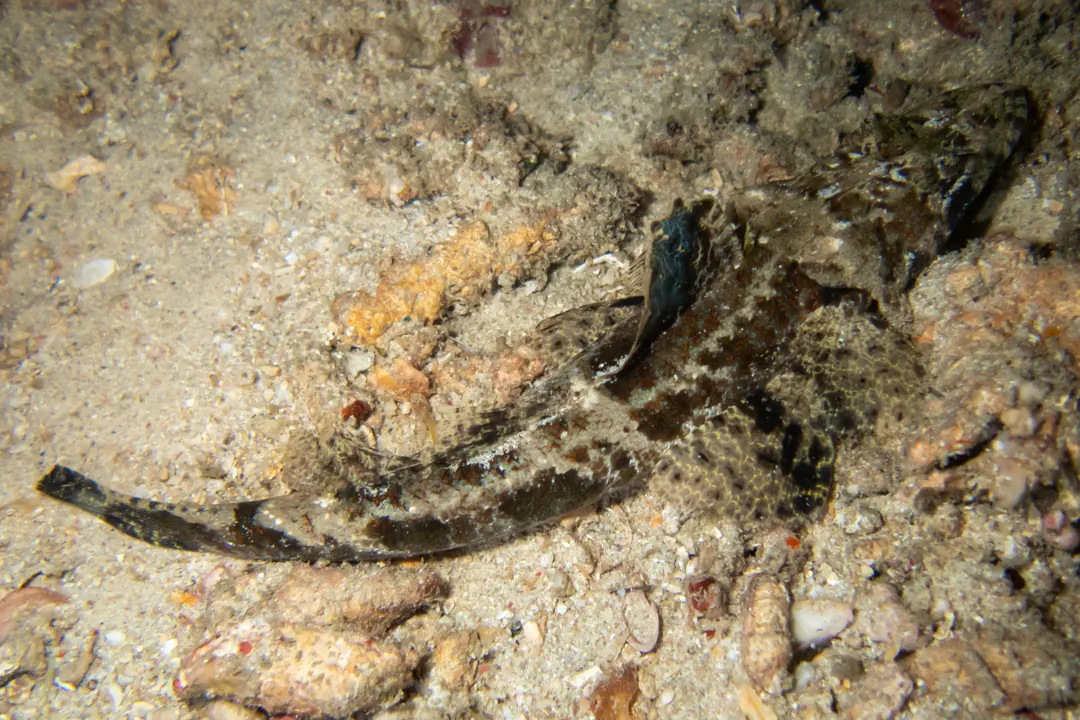
Rogadius pristiger
Rogadius pristiger is a species of Family Platycephalidae (Flatheads) native to the Indian Ocean and the western Pacific Ocean.
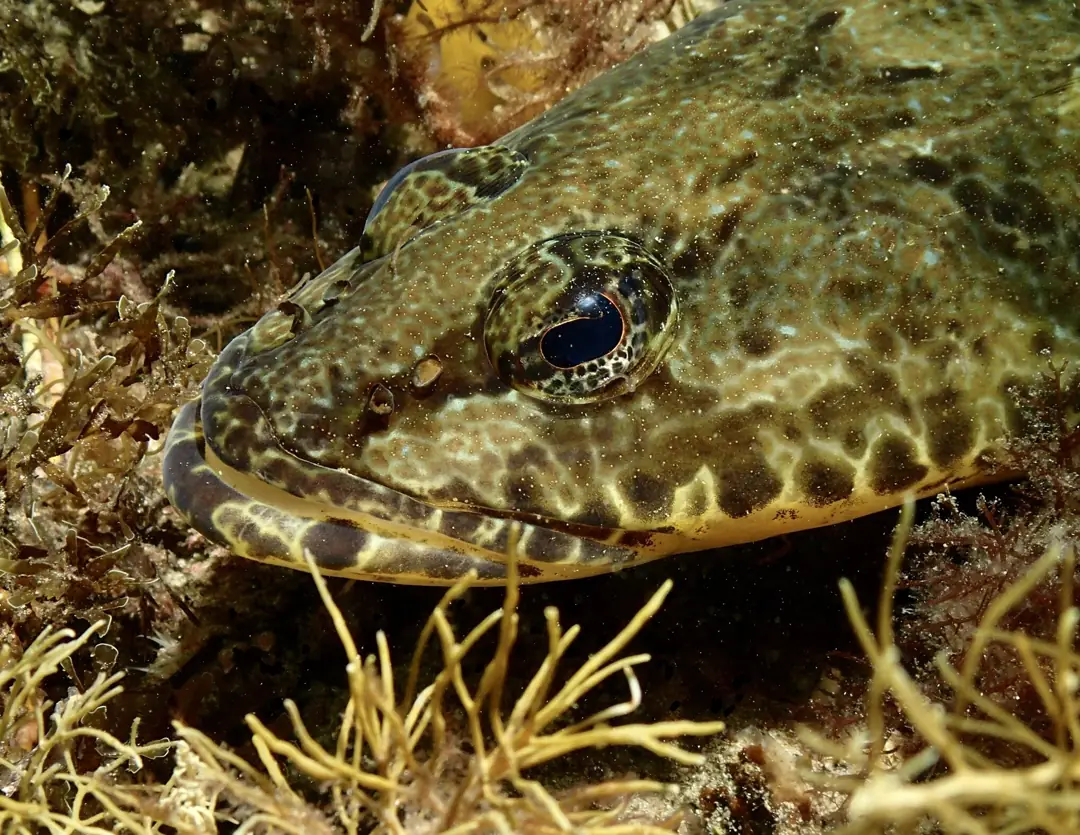
Characterized by brown color and 3-4 dark brown to blackish bars/saddles on back and sides. First dorsal fin blackish with yellowish white and black bands on spines; black spots on second dorsal fin; base of pectoral fin yellowish white with black spots on central portion; black spots on pectoral fins and white outer margin. Caudal fin with a white basal band, a broad dusky submarginal band and a narrow white edge. Their eyes are covered by a tasselled curtain which helps to disguise them from predators. The tassels expand and contract with intensity of light.
Lower edge of preopercle projecting downward as a strong antrorse spine. Infraorbital and suborbital ridges bearing many fine serrations. Lower side of head unicarinate. Dorsal fin usually 11. Iris lappet bilobed.
Indo-West Pacific: Red Sea, Madagascar and Gulf of Oman; northern Indian Ocean; Indonesia, Gulf of Thailand, Philippines, Papua New Guinea, the Arafura Sea, northwest shelf of Australia and New Caledonia.
Benthic on sand and mud bottoms. Usually caught with trawls to depths of about 80 m. Found singly buried with just their heads showing or resting over mud and sandy bottoms of bays and coastal reefs. They feed nocturnally on fish and swimming invertebrates.
© Lucy SmiechuraAll rights reserved 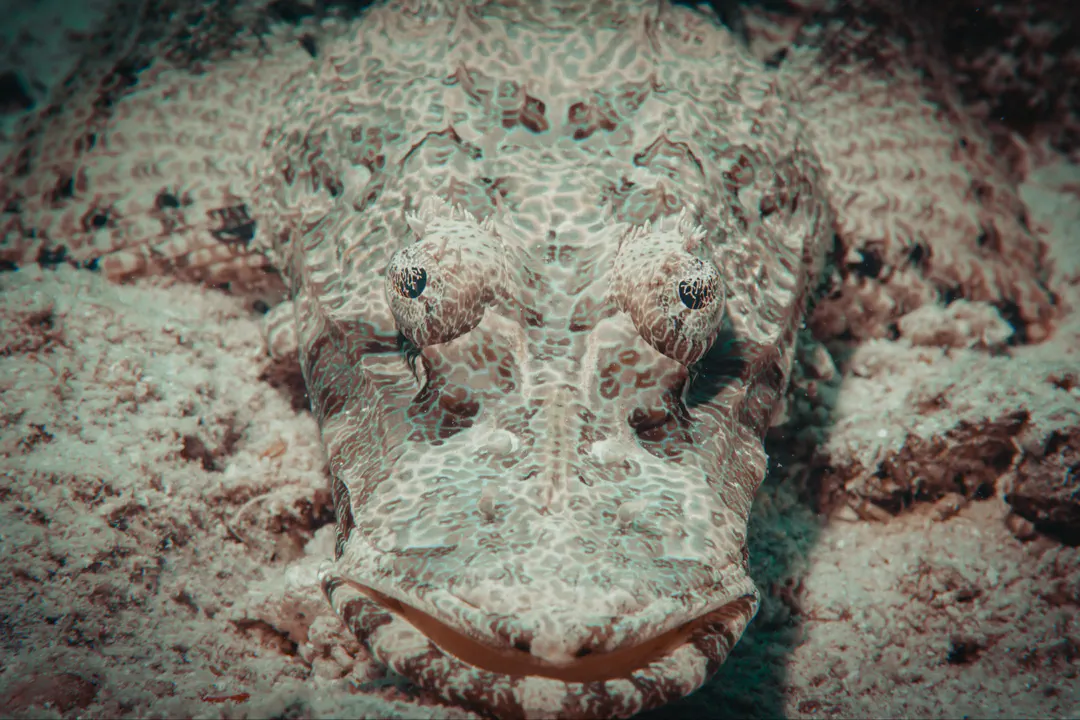 © Olka KuryanAll rights reserved
 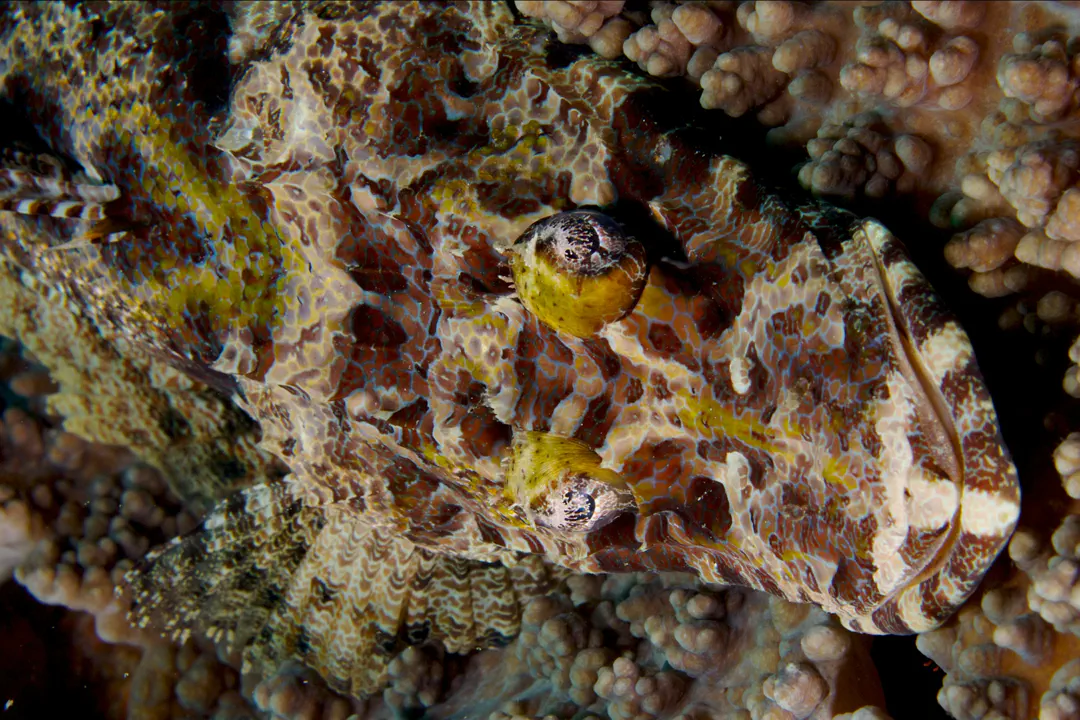 © Nick HobgoodCC BY-SA 4.0 · iNaturalist
  © portioidCC BY 4.0 · iNaturalist
  © James PeakeAll rights reserved
  © kerryanneborgulaAll rights reserved
 Thorny Flathead has no known danger to humans. However, always observe marine life responsibly.
Thorny Flathead can be found at depths of up to 95 meters.
Download Seabook free for iOS and Android.