 Jean-Paul BoerekampsCC0 · iNaturalist
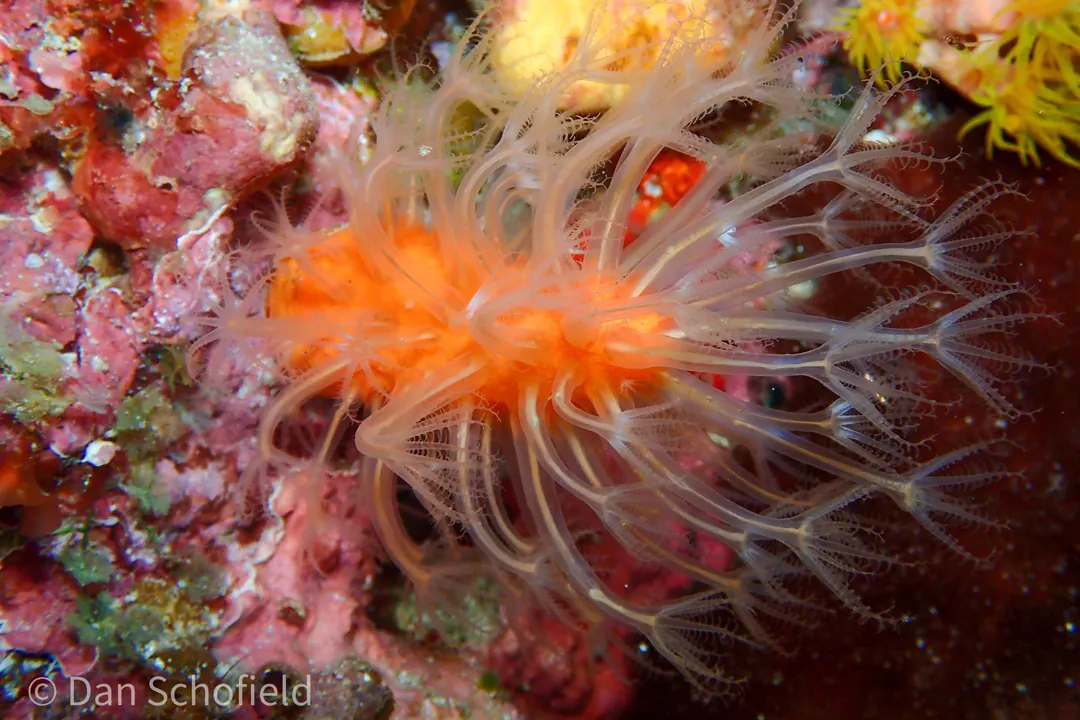
Blue-grey pulse coral
Anthelia glauca
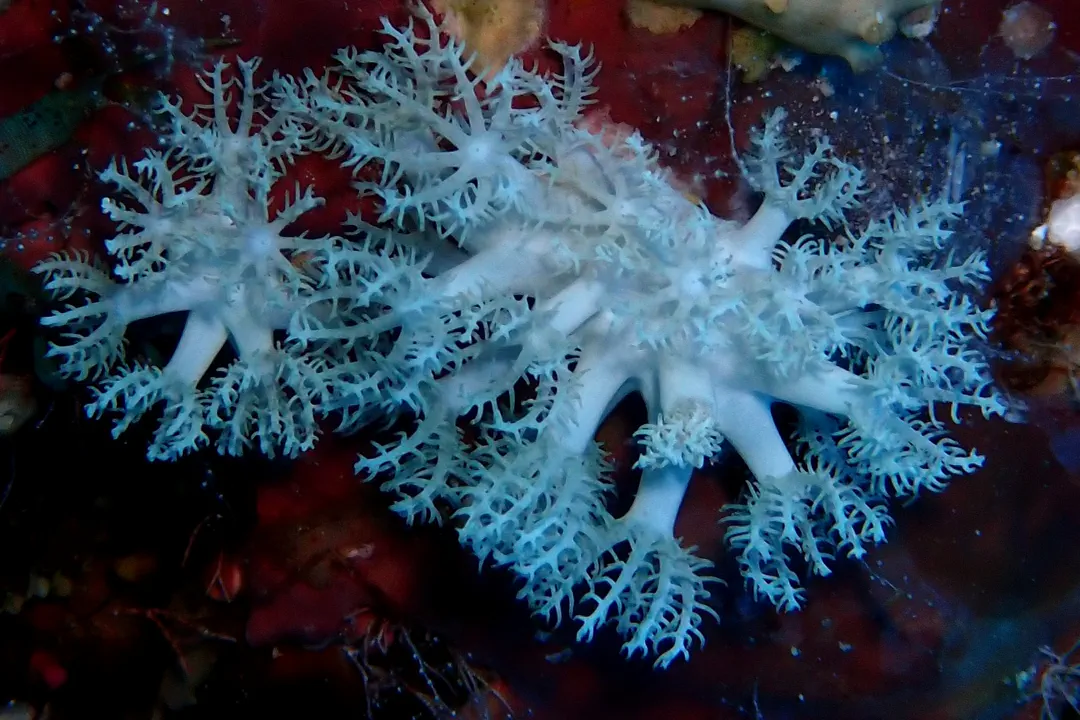
Paraminabea aldersladei
Paraminabea aldersladei is a species of soft coral in the Alcyoniidae family.
This coral looks like an upside down carrot growing out of the substrate. Its striking white polyps are extended only at night to feed. A colony of leathery coral is stiff, hard and inflexible. It is composed of tiny polyps projecting from a shared leathery tissue. Members of the family may have two kinds of polyps; the autozooids have long trunks and eight tiny branched tentacles and project from the shared leathery tissue while the siphonozooids remain below the surface and pump water for the colony. They appear as tiny hollows or mounds among the taller autozooids.
It is found in the central Indo-Pacific to Palau.
Members of the class Anthozoa are either gonochoric or hermaphroditic. Mature gametes are shed into the coelenteron and spawned through the mouth. Life cycle: The zygote develops into a planktonic planula larva. Metamorphosis begins with early morphogenesis of tentacles, septa and pharynx before larval settlement on the aboral end.
Jean-Paul BoerekampsCC0 · iNaturalist  © Julien RenoultCC BY 4.0 · iNaturalist
  © Diego DelsoCC BY-SA 4.0 · iNaturalist
 Alderslade's Carrot Coral has no known danger to humans. However, always observe marine life responsibly.
Download Seabook free for iOS and Android.