 © Ewout KnoesterCC BY-SA 4.0 · iNaturalist
Bloch's Bigeye
Priacanthus blochii
Priacanthus arenatus
Priacanthus arenatus is a species of marine ray finned fish, a bigeye in the family Priacanthidae.
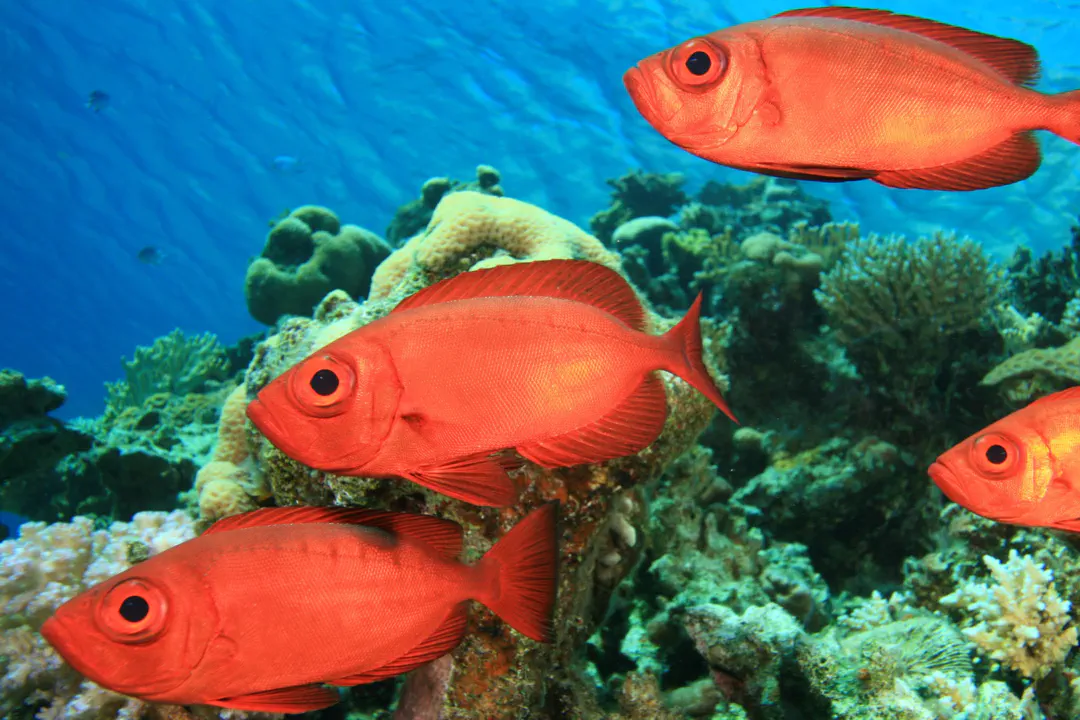
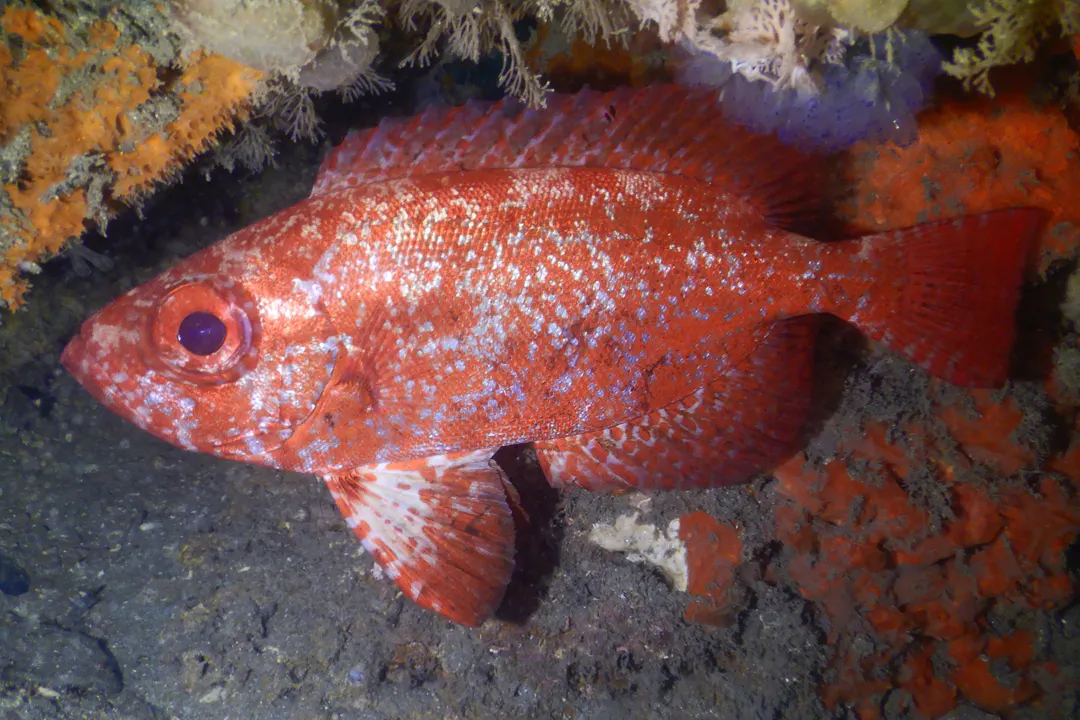
This is a strikingly colorful fish that easily catches the eye. Its body is bright red or orange-red, a coloration that remains vivid even after death, making it easily recognizable among marine species. The fish features large, round, and slightly protruding eyes, perfectly adapted for hunting in low-light conditions, such as at depth or during nighttime.
Its body is oval, slightly elongated, and moderately compressed on the sides, averaging 20–30 cm in length, though larger specimens can grow up to 50 cm. The dorsal fin is long with sharp spines at the front, while the anal and pectoral fins have shades of red or pink. The tail fin is slightly forked, adding an elegant touch to its appearance.
The fish’s large, upward-facing mouth and sharp teeth are well-suited for catching prey like small fish and crustaceans. Its small, tightly packed scales give it a smooth texture, and the sides often display silvery or pearly reflections.
Tropical and tropically influenced areas of the Atlantic Ocean. Western Atlantic: Canada to Bermuda and at least North Carolina, USA southward to northern Argentina. Eastern Atlantic: Madeira to Namibia. Mediterranean and Black Seas.
It lives on rocky bottom ocean floors and coral reefs. Forms small aggregations near the bottom. Depth range 10 - 200 m, usually 15 - 100 m. It is a nocturnal feeder. It generally feeds at night on small fish, bristle worms and crustaceans.
© Ewout KnoesterCC BY-SA 4.0 · iNaturalist 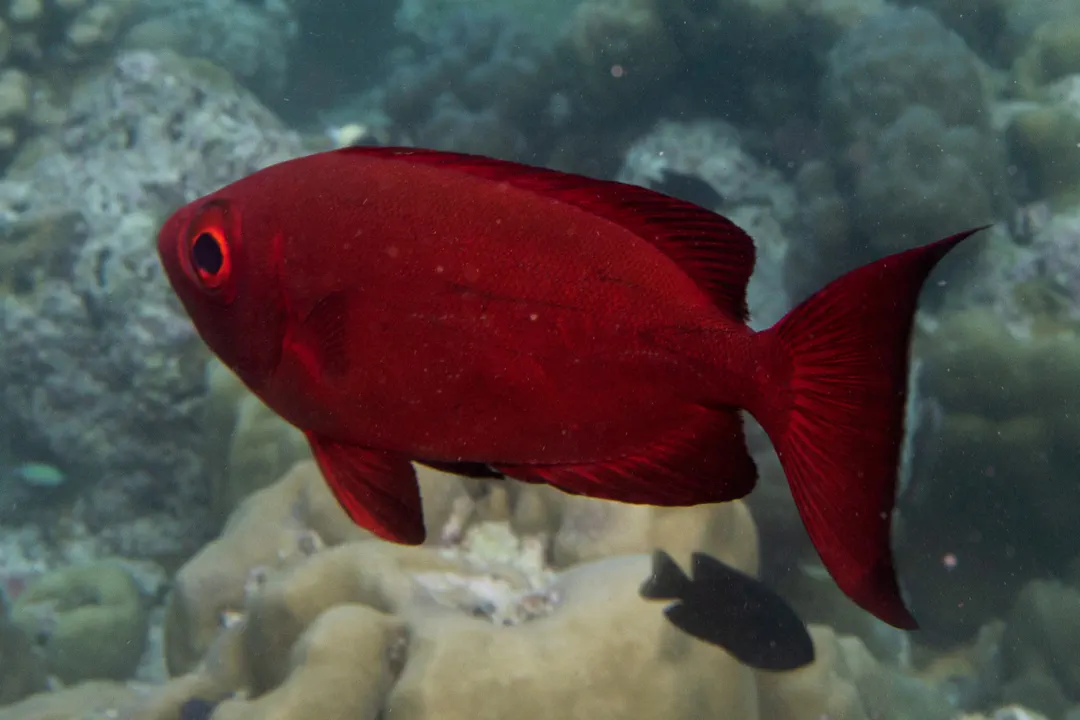 © Storm MartinCC BY 4.0 · iNaturalist
 Atlantic Bigeye is classified as poisonous. Always exercise caution and keep a safe distance.
Atlantic Bigeye can be found at depths of up to 200 meters.
Download Seabook free for iOS and Android.