 © coenobitaCC BY 4.0
Banded Toadfish
Marilyna pleurosticta
Canthigaster axiologus
Canthigaster axiologus is a species of marine fish in the family Tetraodontidae.
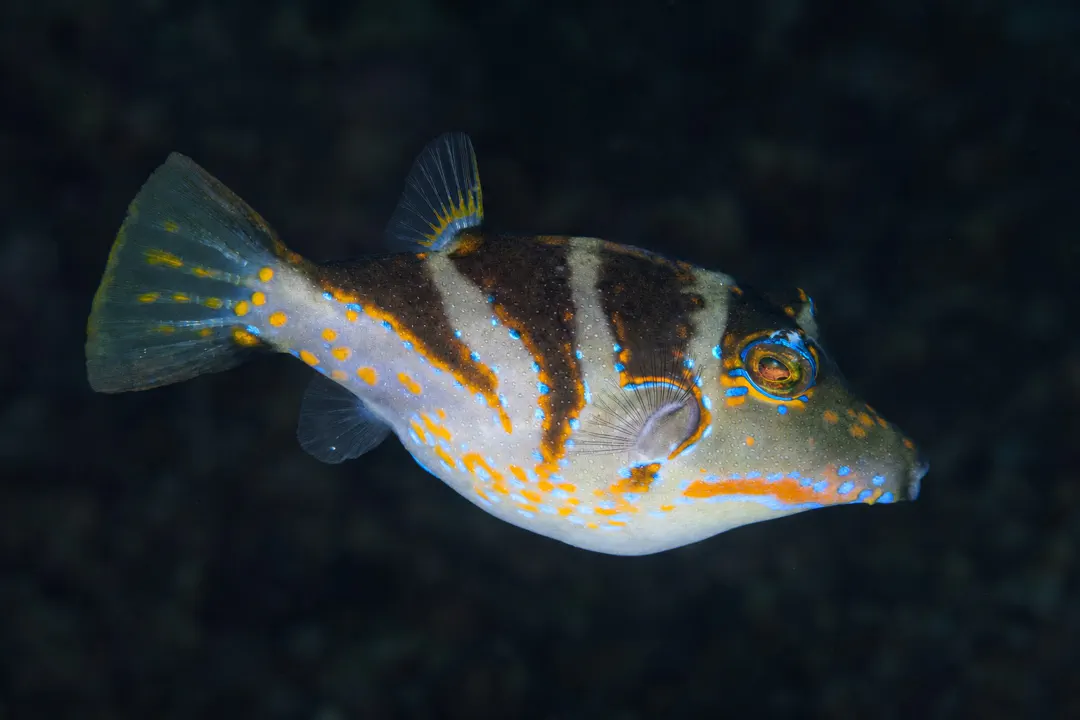
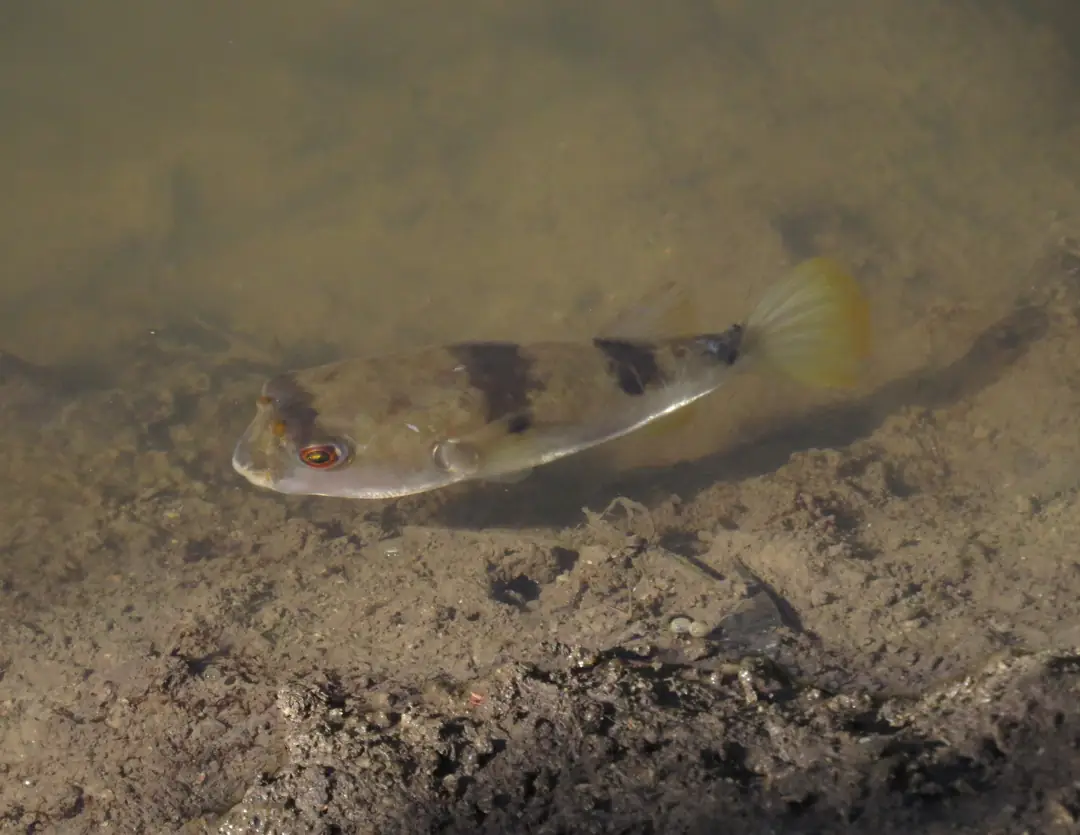
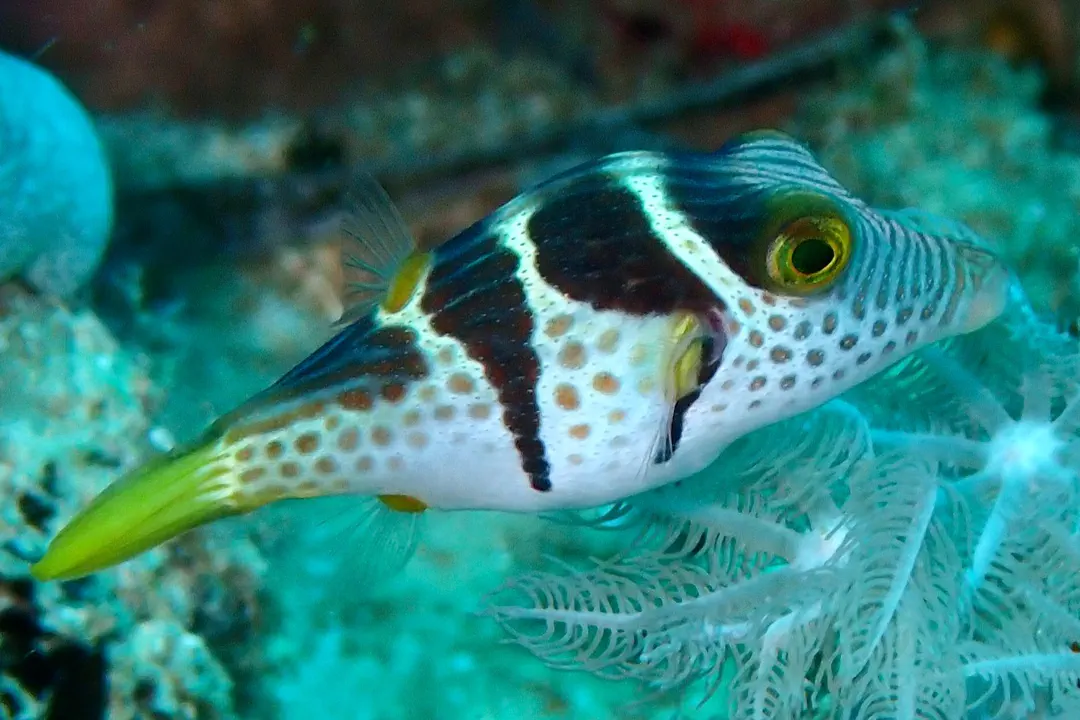
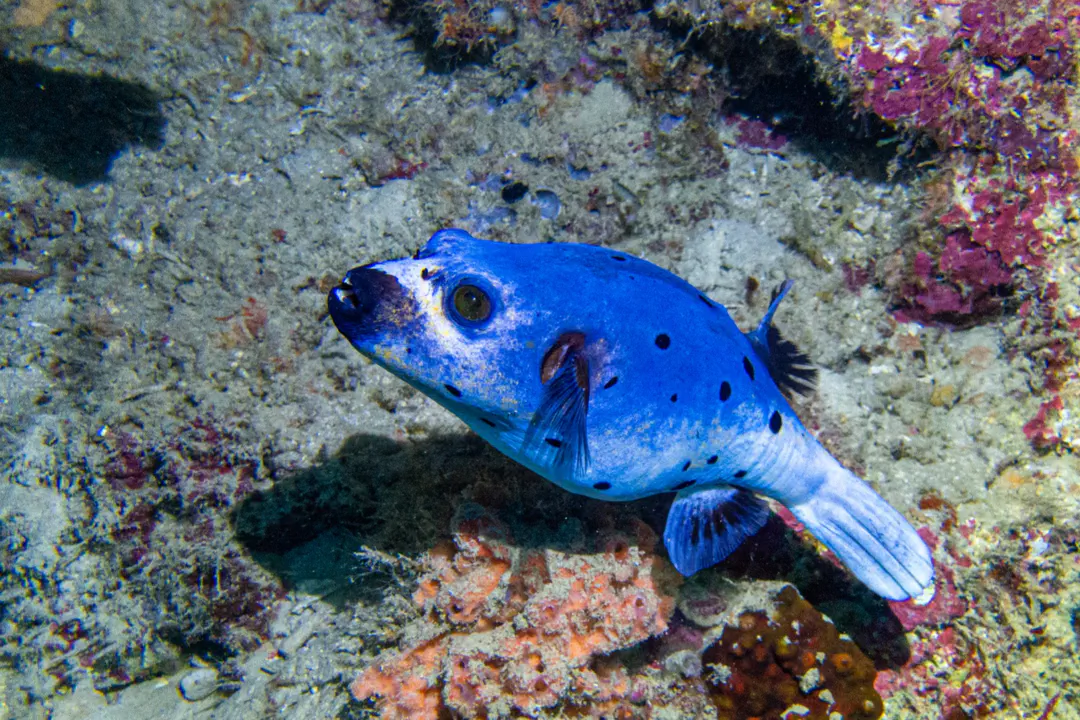
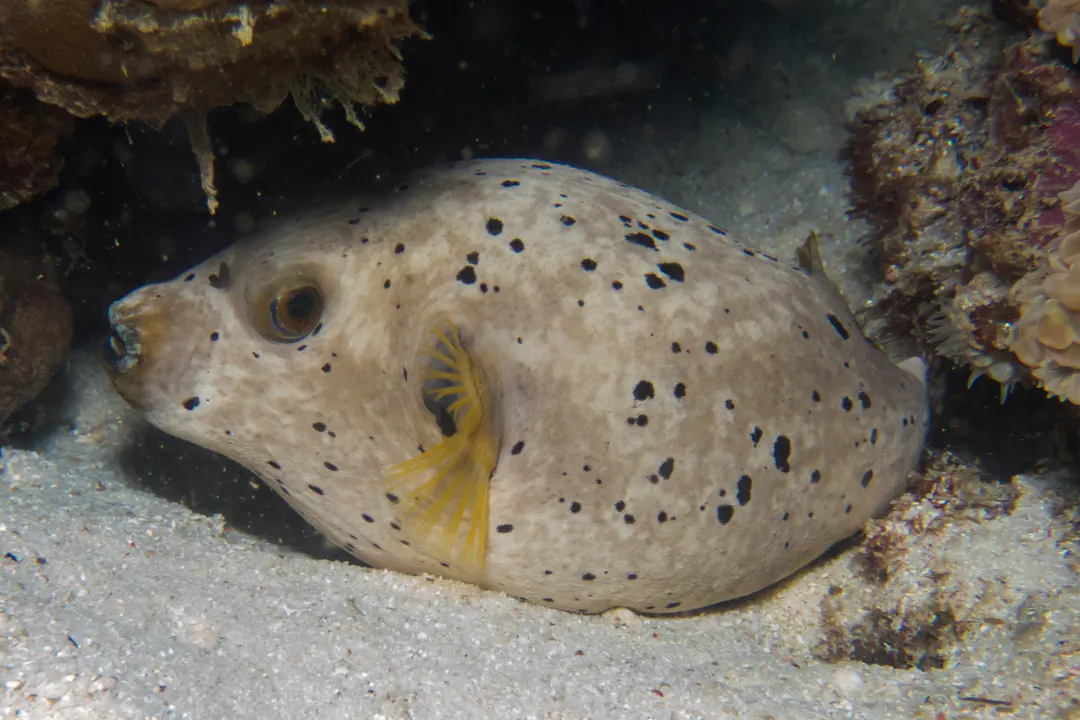
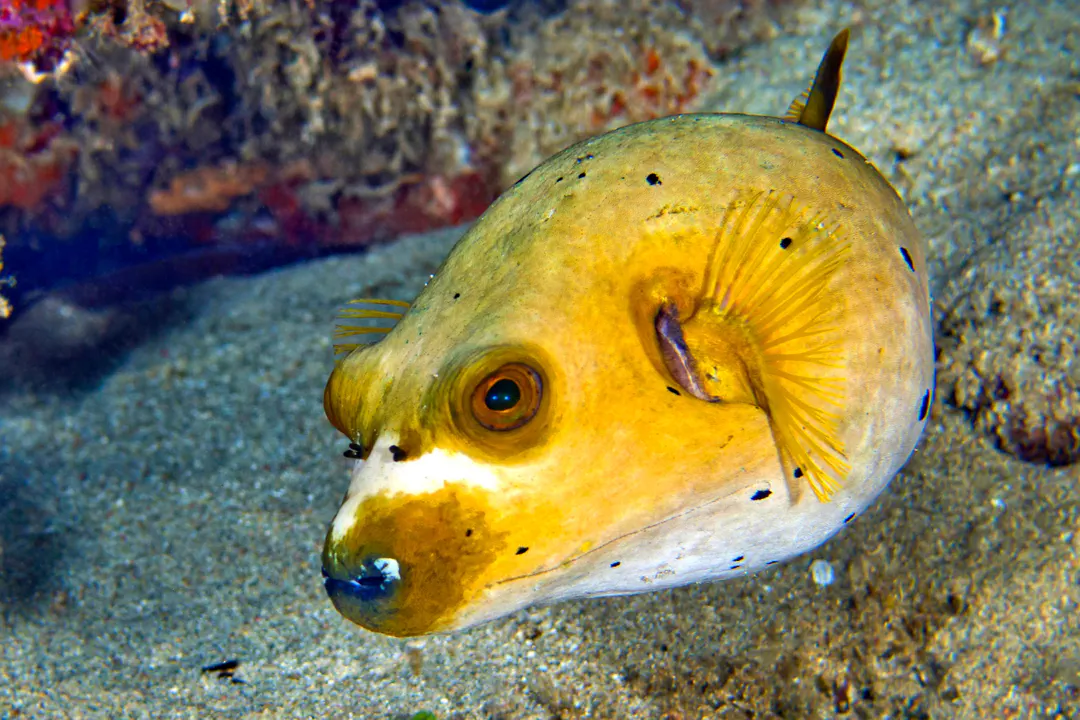
Canthigaster axiologus is a small sized fish that can reach a maximum size of 10.1 cm length. Colour is pale grey to pale tan with 3 saddle-like, dark brown bars on body, similar to C. coronata, the edges of bars with close-set, small, pale-edged dark spots or short lines, irregularly alternating with unpigmented pale spots or lines. It has numerous bright blue and yellow spots or lines around the eyes and along the edges of the saddles. Ventral part of body is with or without small pale spots or pale-edged dark spots. Across posterior interorbital and anterior occiput is a broad dark brown band. Below base of pectoral fin is a dark brown spot. From chin to below gill opening, a narrow curved pale band edged in small dark spots. Around eye is a pale area with radiating dark brown lines (except adjacent interorbital band). On head and abdomen is a midventral dark brown line varying from faint to conspicuous. Lips are pale, usually rimmed by a dusky band. Fins are pale grey, the upper and lower edges of caudal fin with or without a broad dark marginal band.
Dorsal soft rays (total): 9-11; Anal soft rays: 9 - 10. This species is distinguished by the following characters: D 9-11 (usually 10, rarely 11); A 9-10 (usually 9); pectoral rays 15-18 (modally 16 in the North Pacific and 17 in the South Pacific); gill rakers 7-9; body depth between origins of dorsal and anal fins 3.0-3.3 in SL; head length (HL) 2.3-2.5 in SL; interorbital width 3.75-4.4 in HL; gill opening 4.8-5.55 in HL; origin of anal fin below or posterior to rear base of dorsal fin, the preanal length 1.25-1.35 in SL; longest dorsal ray 2.4-2.9 in HL.
Pacific: Japan to New South Wales, east to the Marshall Islands and Tonga; with records from Western Australia, from Exmouth Gulf northwards.
Occurs in sheltered habitat, often on open sand and rubble bottom near reefs. But appears to be far less common than C. coronata. Solitary.
© coenobitaCC BY 4.0 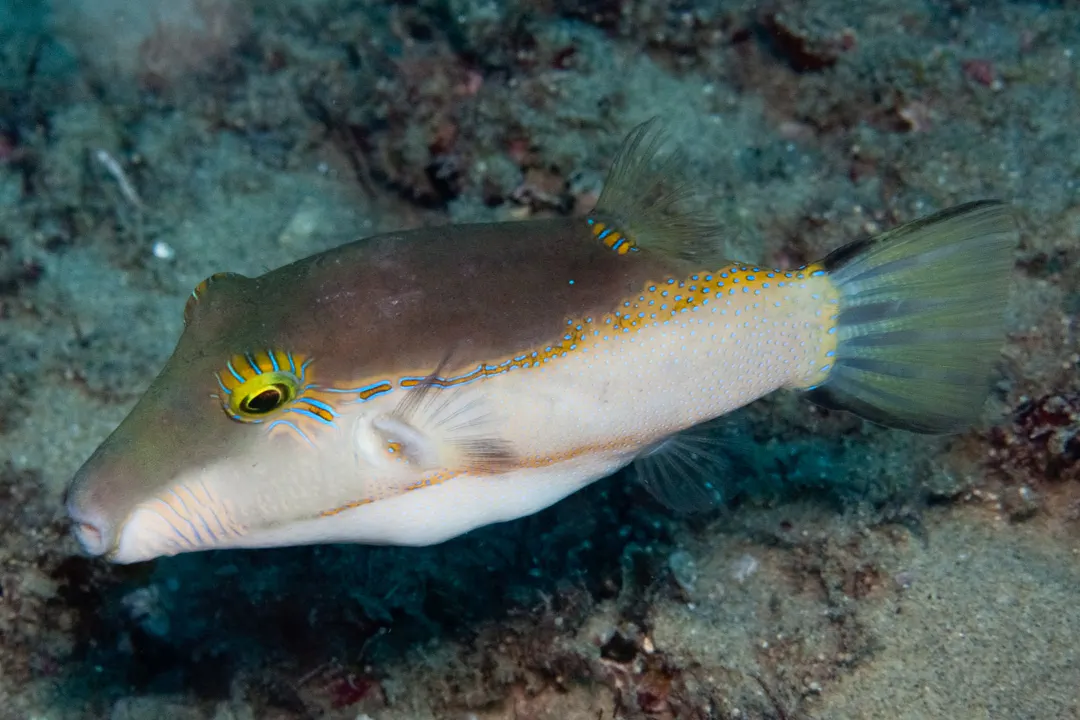 © Georgina JonesCC BY-SA 4.0 · iNaturalist
  Jean-Paul BoerekampsCC0 · iNaturalist
  © Dirk FroebelCC BY 4.0 · iNaturalist
  © portioidCC BY 4.0 · iNaturalist
  © seabook.appAll rights reserved
 Pacific Crown Toby has no known danger to humans. However, always observe marine life responsibly.
Pacific Crown Toby can be found at depths of up to 80 meters.
Download Seabook free for iOS and Android.