 © Julien RenoultCC BY 4.0 · iNaturalist
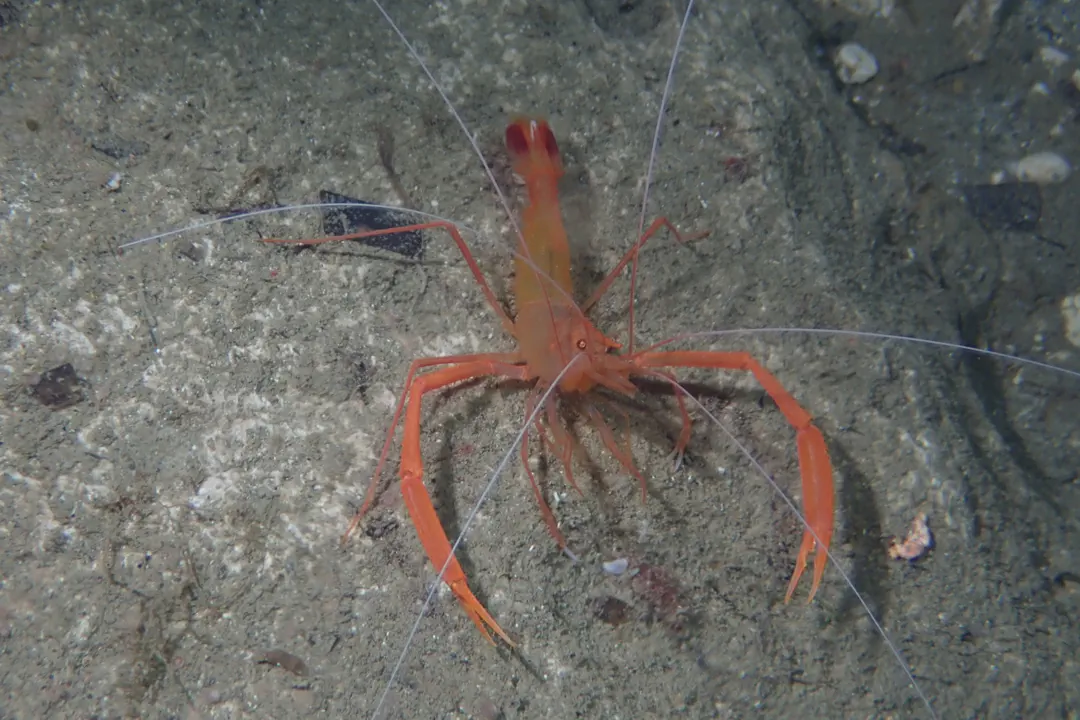
Golden Coral Shrimp
Stenopus spinosus
Stenopus hispidus
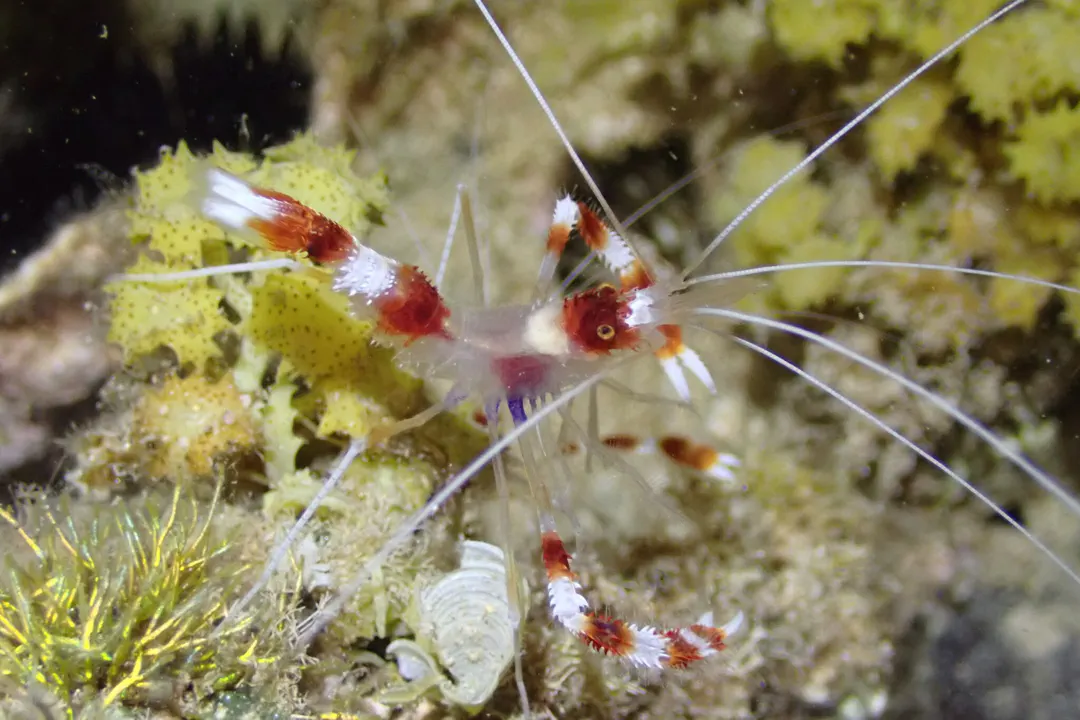
Stenopus hispidus is a shrimp-like decapod crustacean belonging to the infraorder Stenopodidea. Common names include banded coral shrimp and banded cleaner shrimp.
Stenopus hispidus has a pan-tropical distribution, extending into some temperate areas. It can be found in tropic waters throughout the Indo-Pacific Region from the Red Sea and southern Africa to the Hawaiian Tuamotu. It is also found in the western Atlantic Ocean from Canada to Brazil, including the Gulf of Mexico. In Australia, it is found as far south as Sydney and it also occurs around New Zealand.
Stenopus hispidus reaches a total length of 60 millimetres (2.4 in), and has striking colouration. The ground colour is transparent, but the carapace, abdomen and the large third pereiopod are all banded red and white with the bands sometimes bordered in purple. The antennae and other pereiopods are white. The abdomen, carapace and third pereiopods are covered in spines. The walking legs and some parts of the body appear translucent while the third, or middle, pair of legs is enlarged and supports large claws. The claws have the ability to automize, or break off by natural means, when the individual feels threatened. The claw can regenerate and often results in unequal claw size.
Stenopus hispidus lives below the intertidal zone, at depth of up to 210 metres (690 ft), on coral reefs. It can be found in a variety of reef habitats from coral ledges to rocky ledges and crevices, but are occasionally found in undercut mats of rhizomes of Thalassia or discarded man-made objects such as car tires and buckets. It is a cleaner shrimp, and advertises to passing fish by slowly waving its long, white antennae.S. hispidus uses its three pairs of claws to remove parasites, fungi and damaged tissue from the fish.
Stenopus hispidus is monogamous. Mates may go through a courtship ritual when a male is equal or larger than a female. The female Stenopus hispidus mates with her paired male immediately after molting. The eggs initially appear as a greenish mass and are placed on the swimmerets underneath the female’s abdomen. The eggs hatch 16 days later (at 28 deg C), and usually at night.
It is extremely territorial and only moves about in its own territory. Researchers have discovered that in the course of a year, they only move within an area of one square metre. Stenopus hispidus juveniles often pair and grow together. Adults are usually found in pairs and remain in the same area for days, months or even years. More specifically, S. hispidus has never been observed to move a distance greater than half a meter unless disturbed, and even then, the paired individuals attempt to stay together. Depending on diet and temperature, the banded coral shrimp molt every 3 to 8 weeks.
S. hispidus consumes the parasites, injured tissue and undesirable food particles it “cleans” from cooperating coral reef fish species.
© Julien RenoultCC BY 4.0 · iNaturalist Banded Coral Shrimp has no known danger to humans. However, always observe marine life responsibly.
Banded Coral Shrimp can be found at depths of up to 210 meters.
Download Seabook free for iOS and Android.