 © Cricket RaspetCC BY 4.0 · iNaturalist
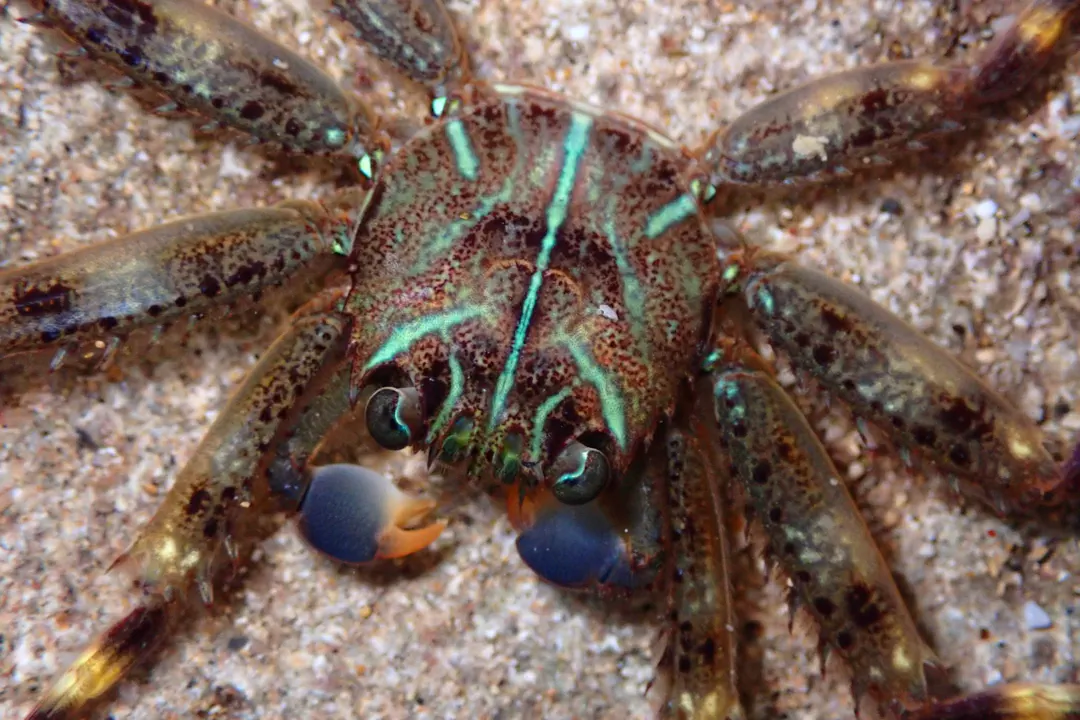
Flat Rock Crab
Percnon planissimum
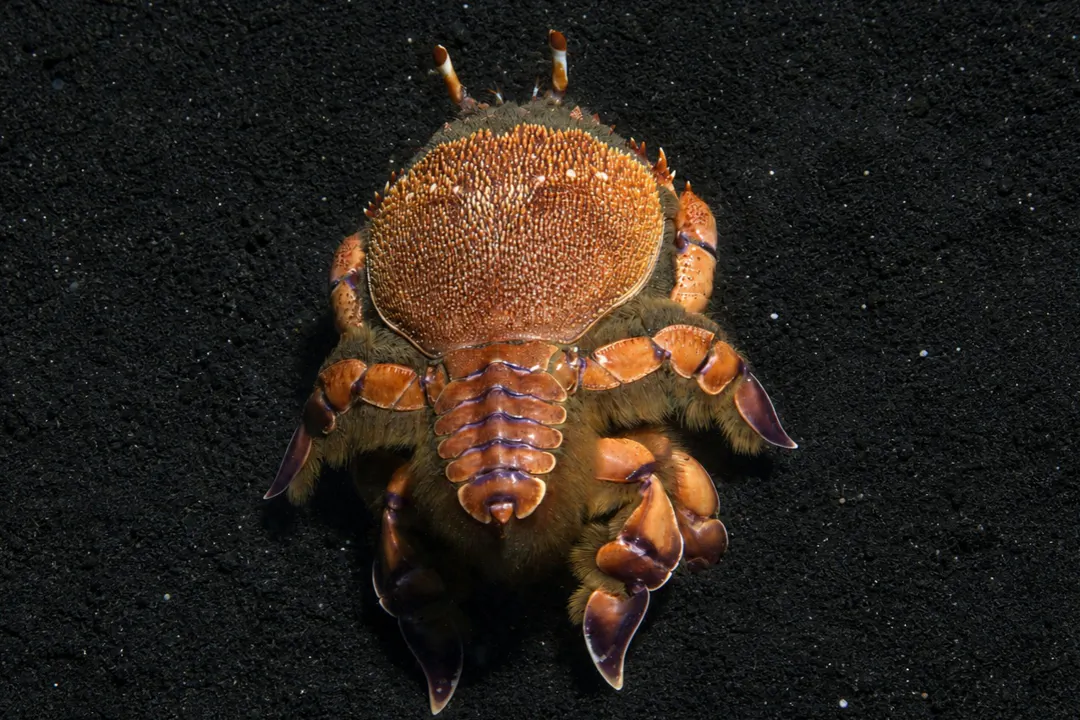
Ranina ranina
Ranina ranina is a species of edible crab, found throughout tropical and subtropical habitats. It is the only extant species in its genus.
Carapace very elongate, much longer than broad; anterior part much broader than narrow, posterior waist-like. Abdomen clearly visible from dorsal view. Chelae greatly outsized in males; chelae and legs laterally flattened, spade-like. Color: orange to reddish brown overall. It may grow up to 150 millimetres long, and may weigh up to 900 grams. Ranina ranina is easily distinguished from other crab species in its habitat due to its red carapace and elongated midsection.
Spanner crabs inhabit coastal waters along the east coast of Australia, from Yeppoon in Queensland to Nowra on the south coast of New South Wales. There is also a population to the north of Perth in Western Australia.Ranina ranina is abundant in the coastal waters of south-western Mindanao, Philippines. These crabs are also found in the eastern coast of Africa, across the Indian Ocean to Indonesia, Japan and Hawaii and Vietnam.
Ranina ranina is mainly nocturnal, and remains buried in the sand during the day. Ranina ranina inhabits depths of 10–100 metres on sandy-smooth substrata in which they bury themselves from where they attack small bottom-dwelling fish. When waiting for prey, Ranina ranina will cover itself with sand, but leave its eye and mouthparts sticking out to help detect its food. It feeds on a variety of worms and soft shelled mollusks. Offshore areas within this range in a subtropical or tropical environment serves as a habitat for Ranina ranina, but they must have ample sand for Ranina ranina to flourish, as covering themselves in sand is instrumental in their method of catching prey.
The species is commercially exploited over much of its range, but the largest fishery is in Australia, where the annual commercial catch an estimated at 3,592 tonnes. In Queensland, only adults above 100 mm carapace length may be landed. In the Philippines in 2008, prices for Ranina ranina were around 200–300 pesos per kilogram.Ranina ranina populations have been surveyed to avoid overfishing and are currently stable.
Although Ranina ranina is a target of commercial fishing operations, little is known about the species' biology, population dynamics and ecology. Attempts have been made to grow Ranina ranina in captivity, but have so far been met with little success.
© Cricket RaspetCC BY 4.0 · iNaturalist Spanner Crab has no known danger to humans. However, always observe marine life responsibly.
Spanner Crab can be found at depths of up to 100 meters.
Download Seabook free for iOS and Android.