 © seabook.appAll rights reserved
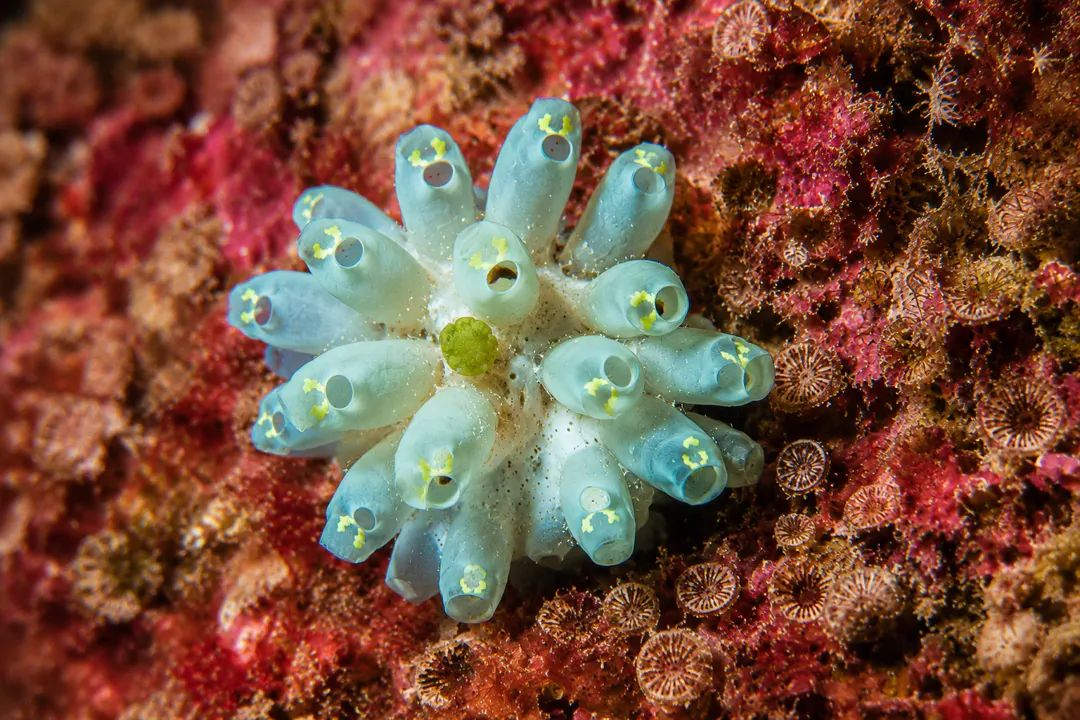
Clavelina
Clavelina sp
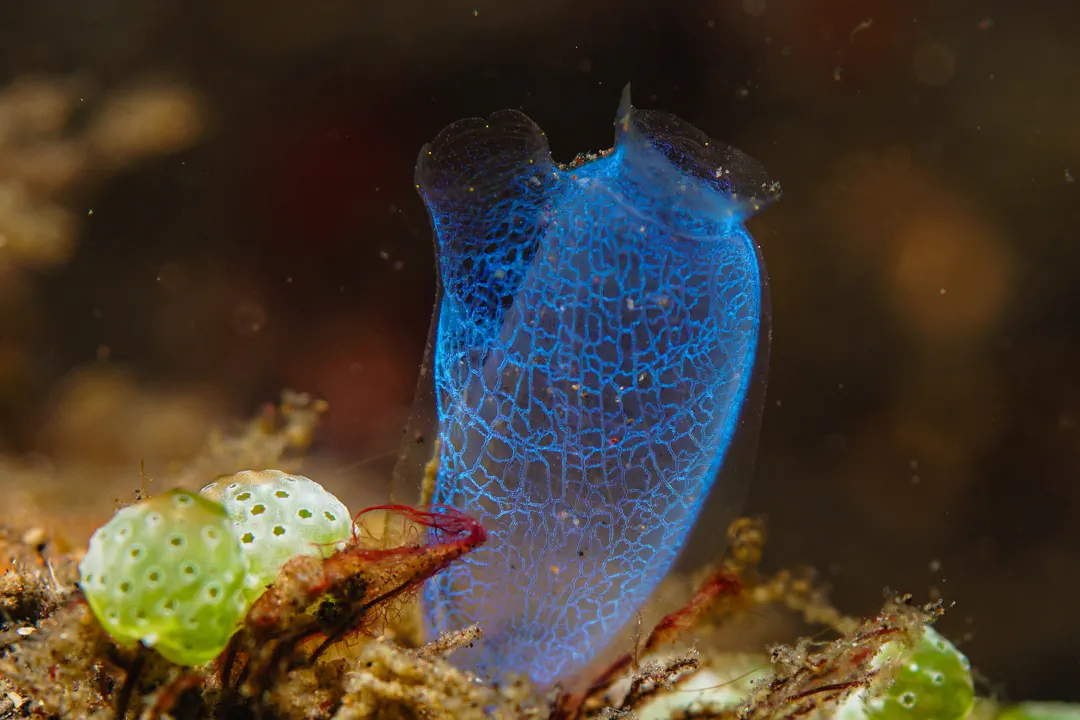
Rhopalaea crassa
Rhopalaea crassa is a species of tunicate belonging to the family Diazonidae.
Rhopalaea crassa can reach a length of about 4 cm. It has an urn-shaped, hollow body with two siphons, one at the top and the other on the side. The body colour of this tunicate is from white to transparent blue (sometimes with dark rim of the siphons). Tunicates feed by drawing water in through the branchial siphon at the top, filtering out phytoplankton, bacteria and other food particles, before expelling the water through the atrial siphon at the side.
This species can be found in the Indo-West Pacific.
It lives in crevices or between coral branches. It is found in marine caves and fringing reefs. Members of the class Ascidiacea are hermaphroditic. Both cross- and self-fertilization is typical. Life cycle: Eggs develop into lecithotrophic larva before metamorphosing into benthic adults. It feeds on detritus and suspended zooplankton. It is often fed upon by Nembrotha Sea Slug.
© seabook.appAll rights reserved  © Stas KuryanAll rights reserved
  © Jan Ebr & Ivana EbrováCC BY 4.0 · iNaturalist
 Blue Club Tunicate has no known danger to humans. However, always observe marine life responsibly.
Blue Club Tunicate can be found at depths of up to 260 meters.
Download Seabook free for iOS and Android.