 © portioidCC BY 4.0 · iNaturalist
Fivefinger Razorfish
Iniistius pentadactylus
Iniistius aneitensis
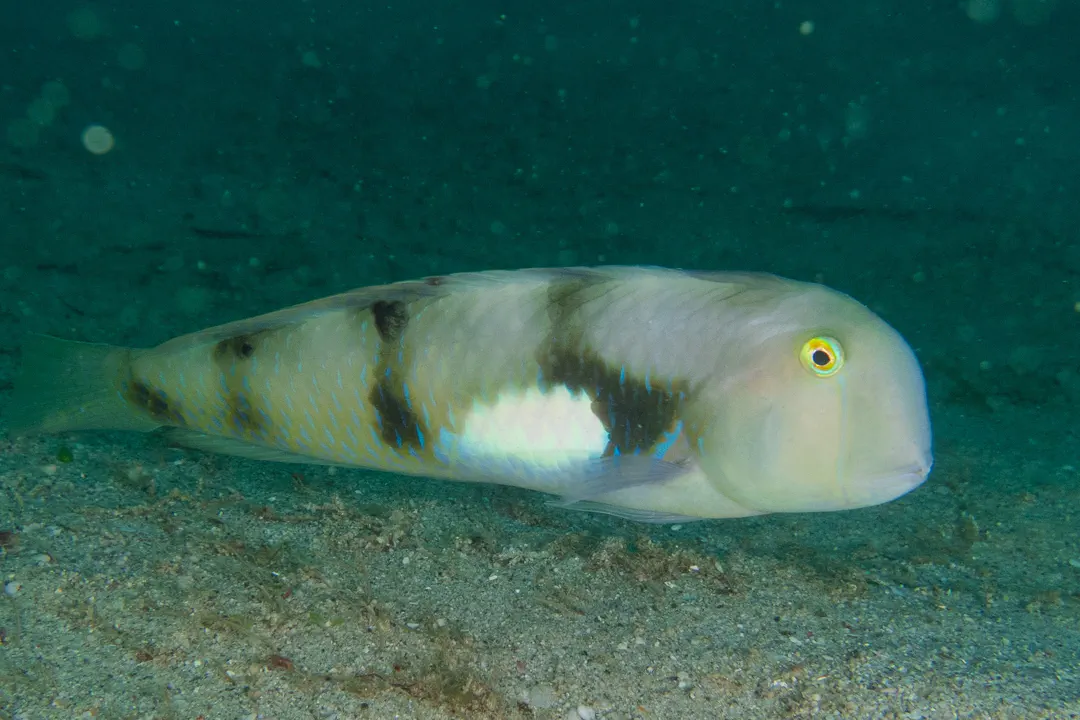
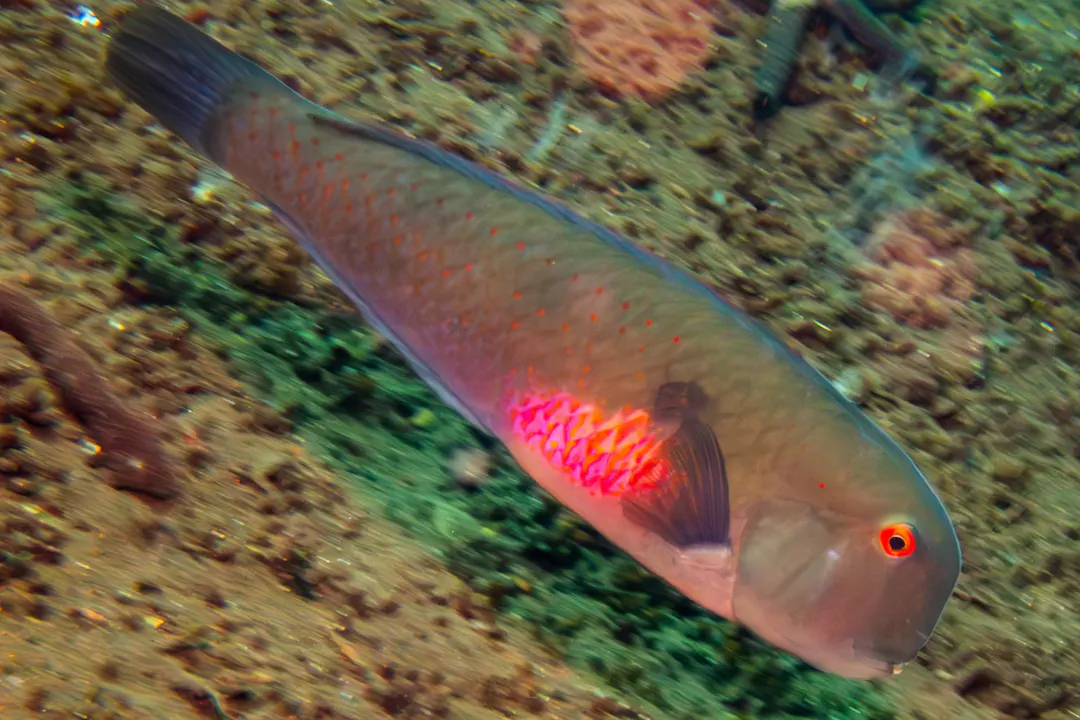
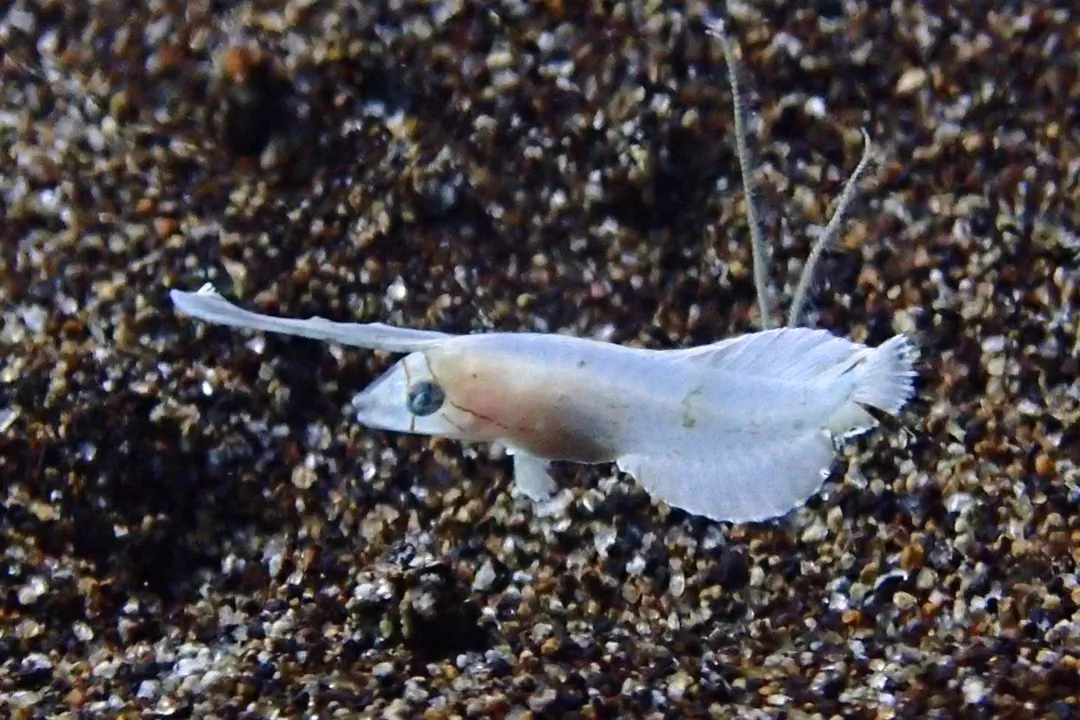
A razor wrasse with a large white patch on the side. Males have a faint yellow patch in front of the white patch, and the patch is darker in females. Juveniles have three dark bands on the body that reduce in size with growth becoming one to three dark spots along the back. They have highly compressed bodies and a steep forehead with a firm knife-like anterior edge - enabling them to easily dive into the sand when threatened.
Great Barrier Reef and offshore reefs of the Coral Sea; also Christmas Island and Cocos (Keeling) Islands in the eastern Indian Ocean, and Lord Howe Island in the Tasman Sea. Elsewhere, the species is widespread in the Indo-west-central Pacific from Zanzibar to Hawaii.
Inhabits open, clean, sandy areas of reef lagoons and seaward slopes at depths of 6-91 m. When threatened during the day, they dive into the sand, and also sleep there at night to avoid predators.
Razorfish are protogynous sequential hermaphrodites (sex-change from female to male) and live in a harem defended by a single large male.
© portioidCC BY 4.0 · iNaturalist 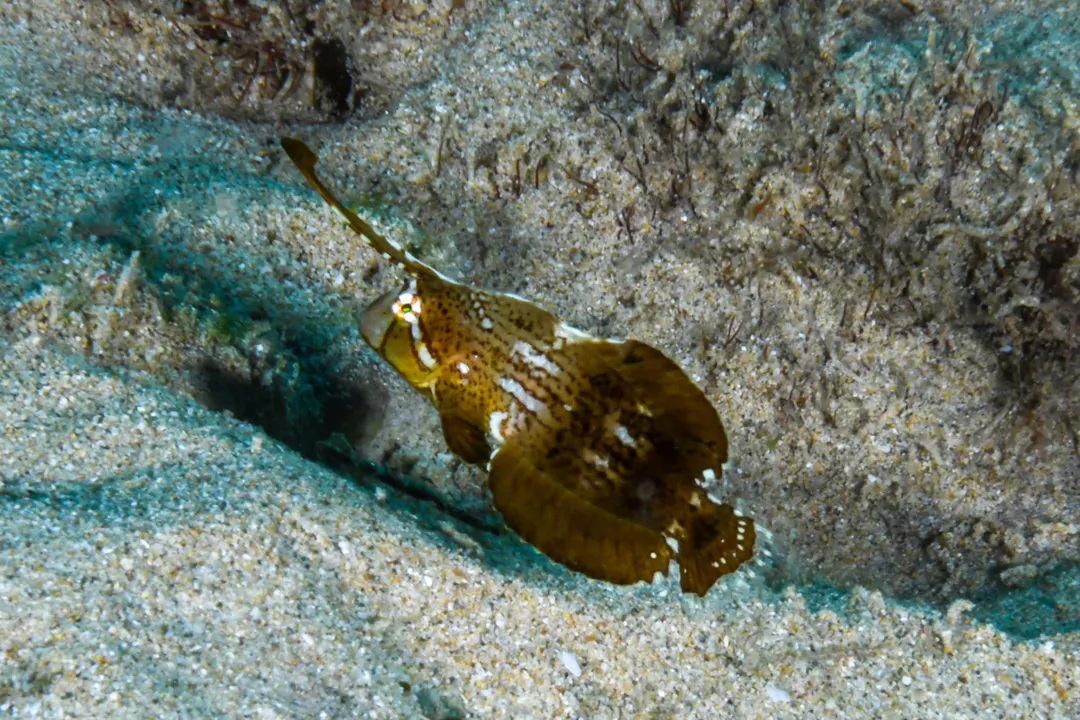 © Robin WhiteCC BY 4.0 · iNaturalist
  © Dan SchofieldCC BY 4.0 · iNaturalist
 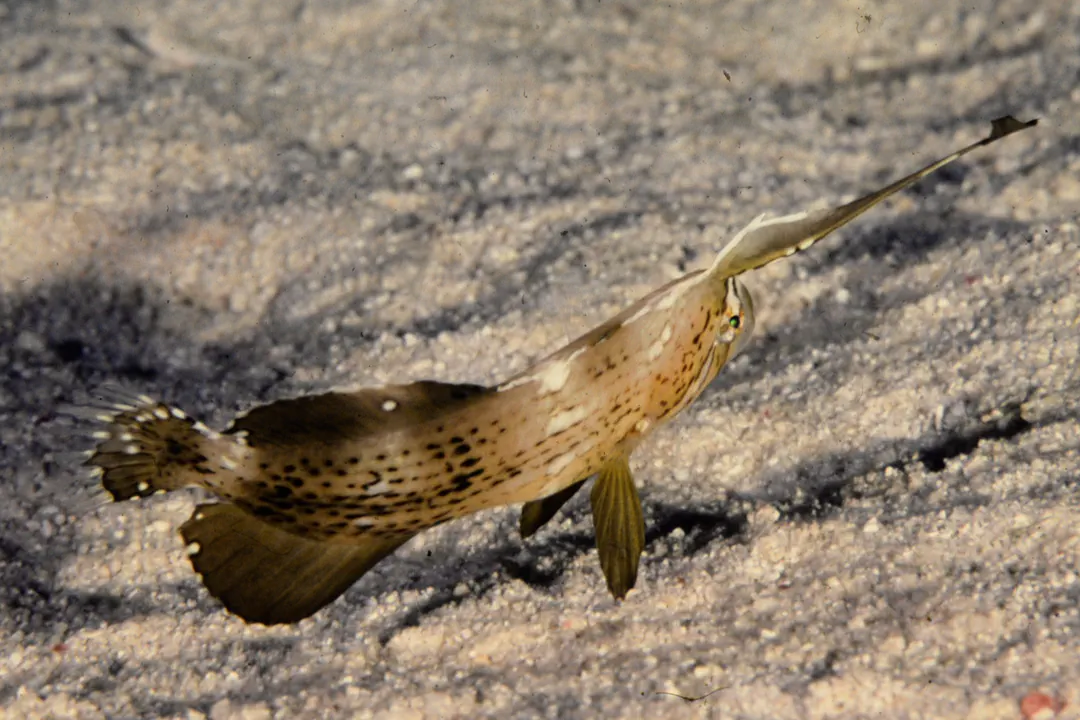 © Roger RittmasterCC BY 4.0 · iNaturalist
 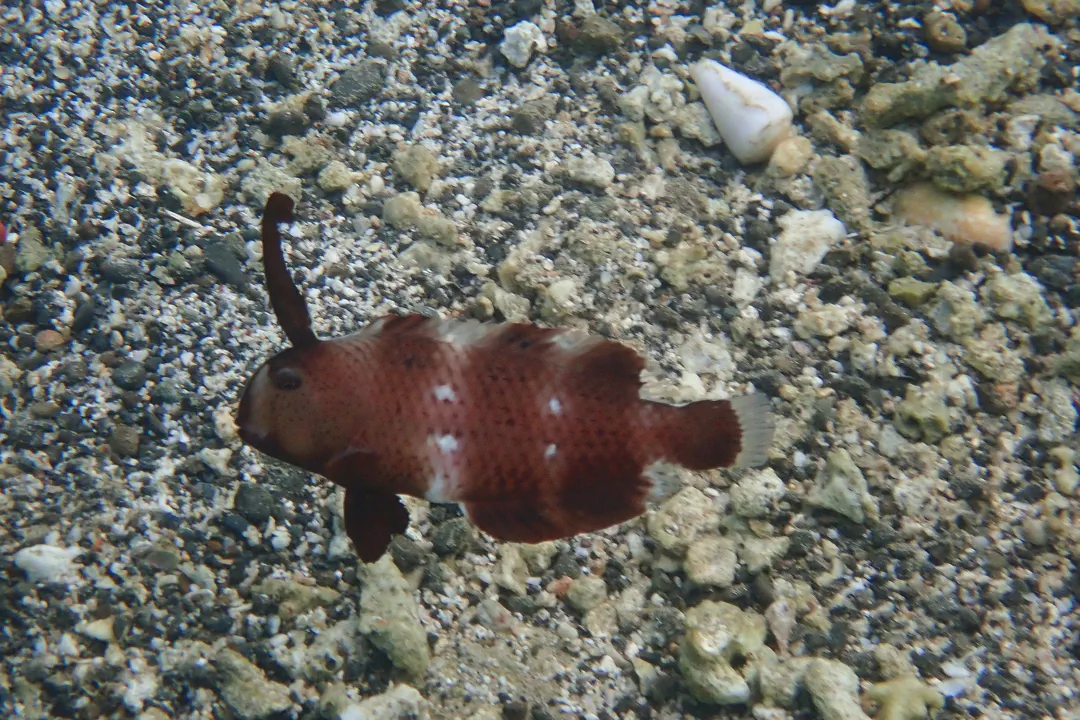 © keesgroenendijkCC BY 4.0 · iNaturalist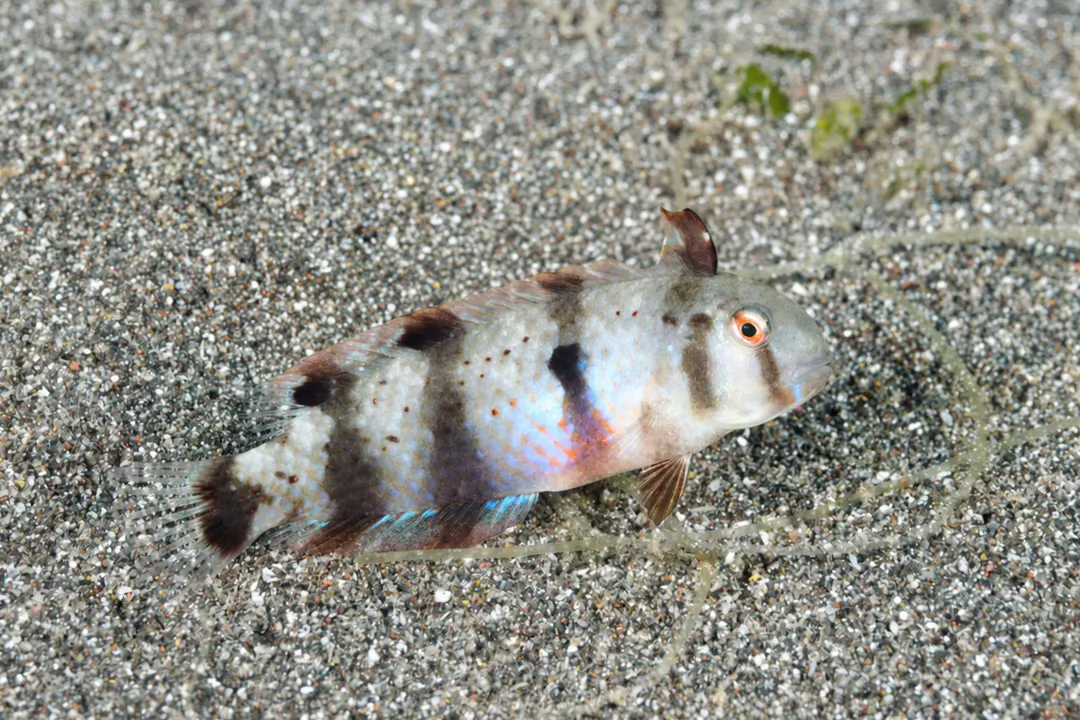
Whitepatch Razorfish has no known danger to humans. However, always observe marine life responsibly.
Whitepatch Razorfish can be found at depths of up to 92 meters.
Download Seabook free for iOS and Android.