 © Heather Dawnstar SabinCC BY 4.0 · iNaturalist
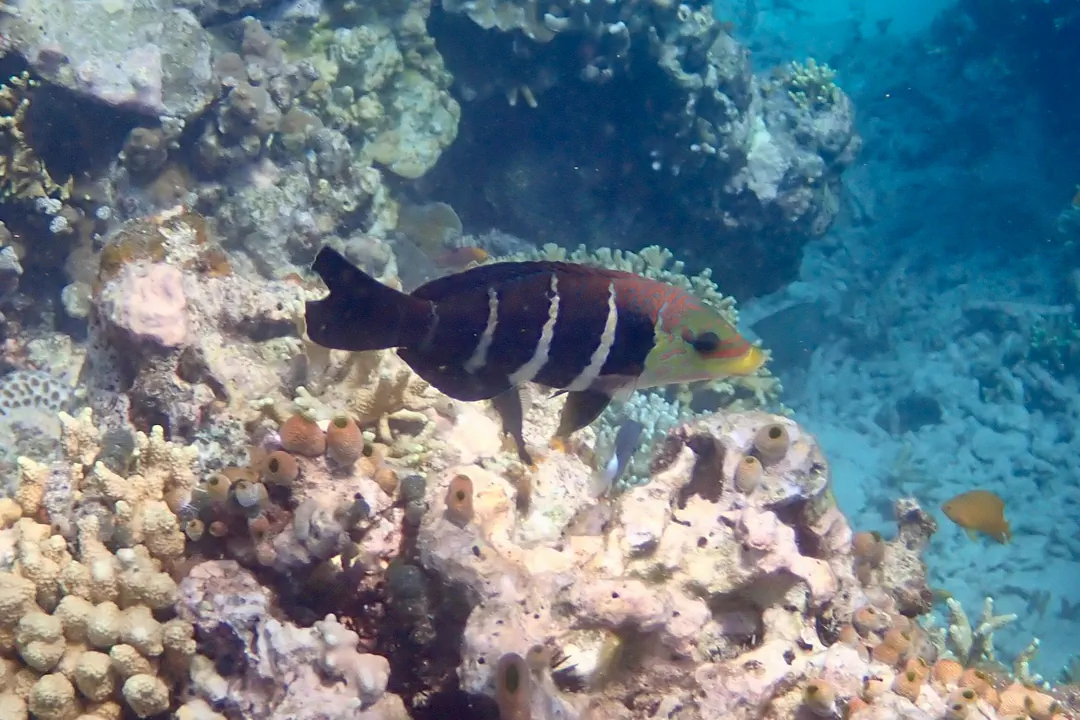
Barred Thicklip (female)
Hemigymnus fasciatus
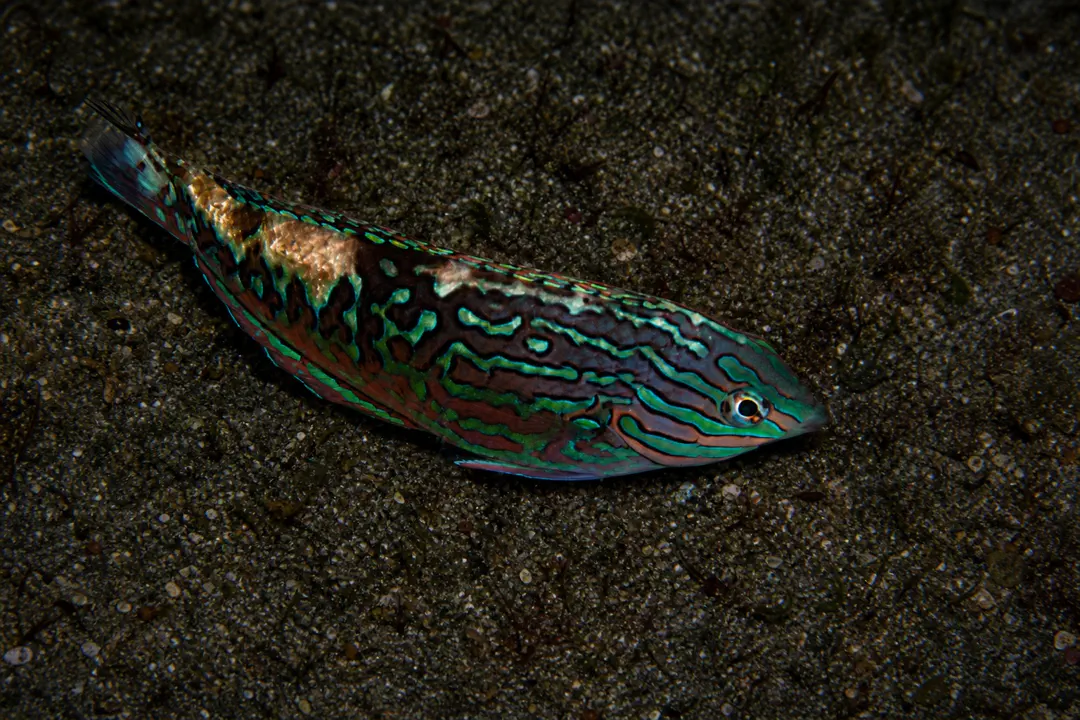
Macropharyngodon bipartitus bipartitus
Vermiculate Wrasse is very colorful fish. It is also know as Splendid Leopard Wrasse, African Leopard Wrasse, Peacock Splendid Wrasse, Peacock Leopard Wrasse, Blue Star Leopard Wrasse, and Divided Leopard Wrasse.
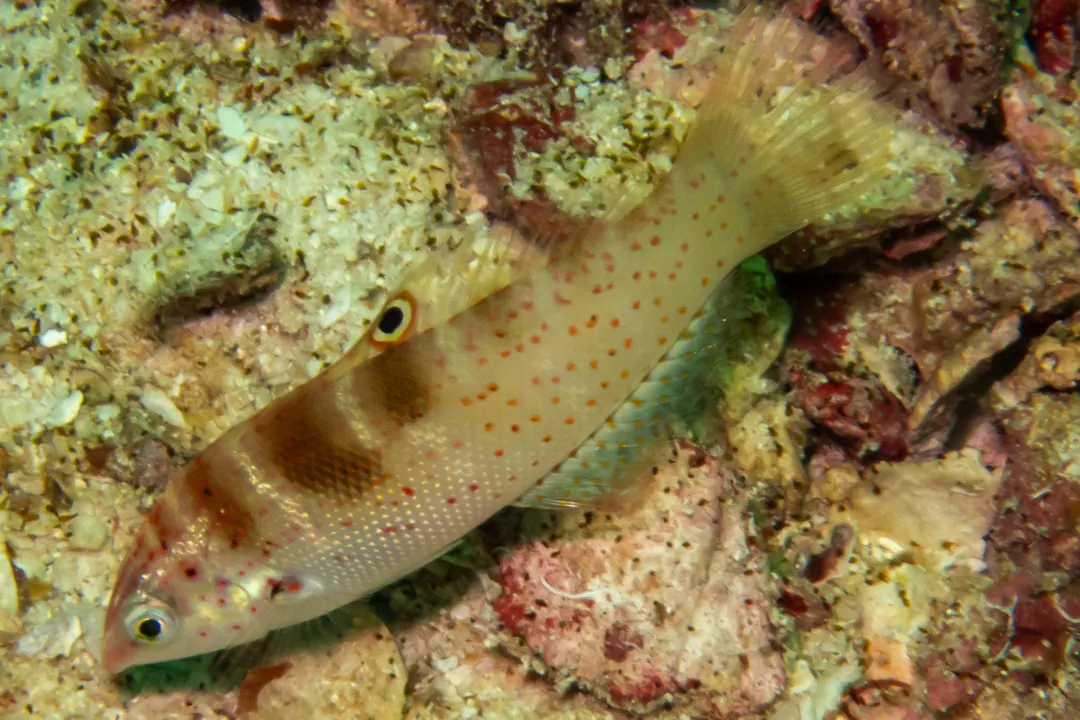
Its appearance changes from one beautiful color pattern as a female into another when becoming male. Juveniles and females have white spots all over. Their bodies have a black stomach area with a reddish color on the top half or next to the stomach. The fins on both the top and bottom, the tail, and the top of the body are yellow. Males develops a blue linear patterning on the body and have a bluish green coloration. Max length : 13.0 cm.
Western Indian Ocean: from Zanzibar to Mozambique and Aldabra, Sychelles, Réunion, Mauritius and Maldives, South Africa (Kwa-Zulu-Natal), Chagos Archipelago, southern Oman, Rodrigues, and Yemen.
The Peacock Leopard Wrasse is found over mixed sand, rubble, and coral areas of lagoons and sheltered seaward reefs to depths of 30m (98ft), where it occurs singly, in pairs, or in large aggregations of females, and is usually observed browsing for molluscs and foraminiferans amongst the substratum.
© Heather Dawnstar SabinCC BY 4.0 · iNaturalist 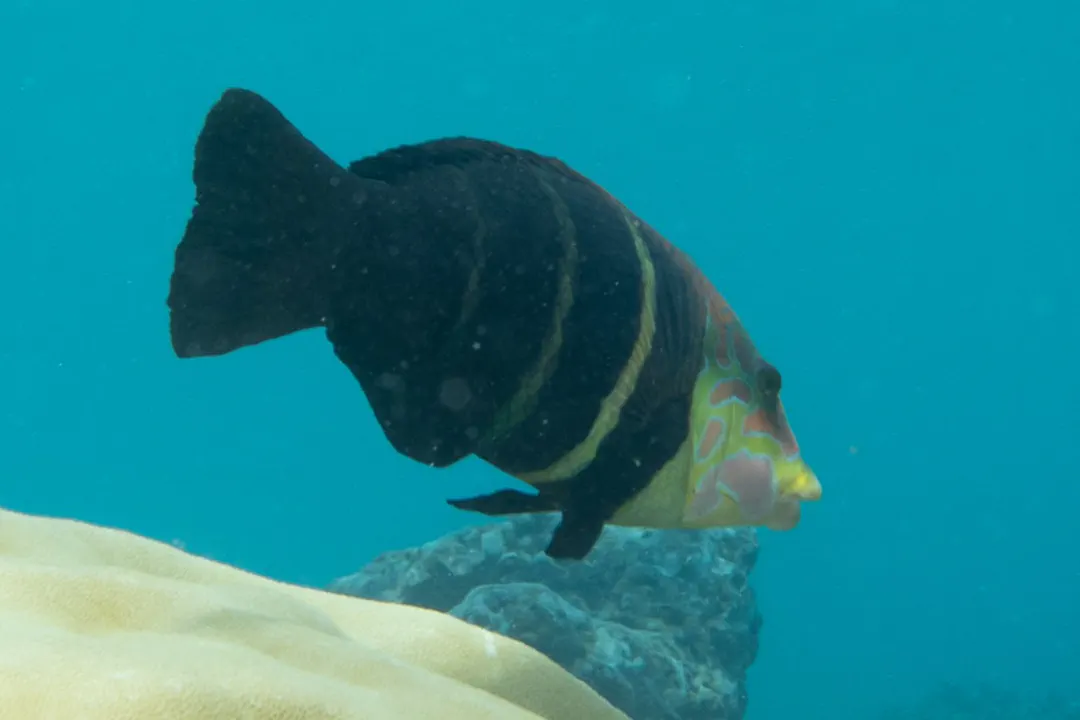 © Storm MartinCC BY 4.0 · iNaturalist
  © portioidCC BY 4.0 · iNaturalist
 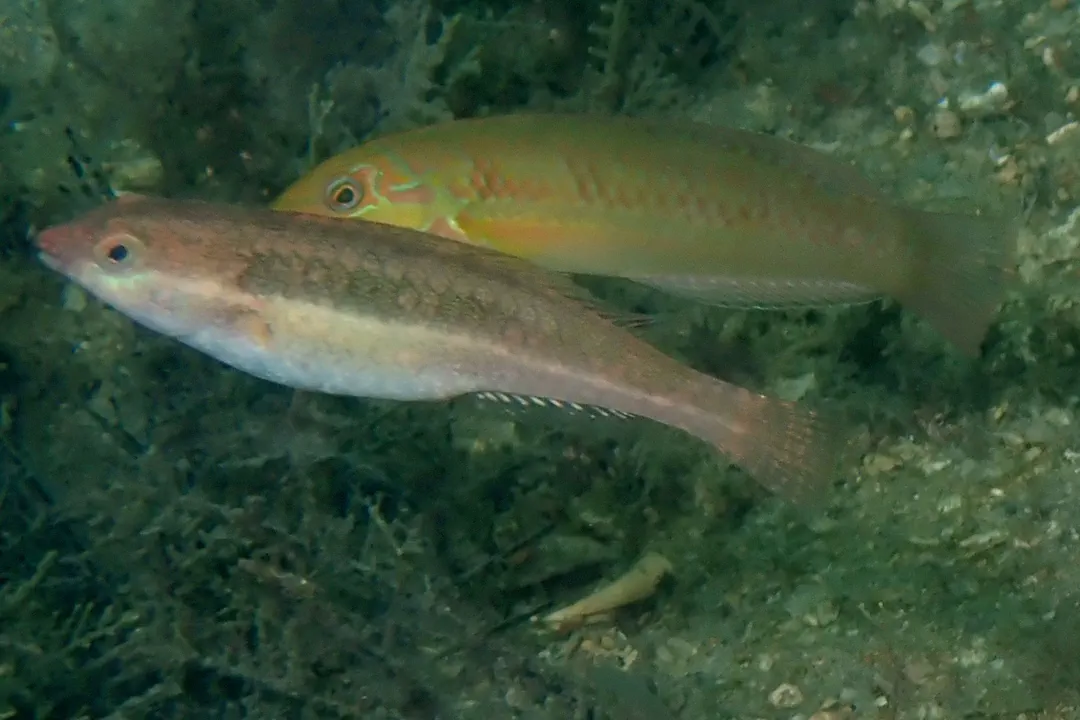 © jeyreCC BY 4.0 · iNaturalist
 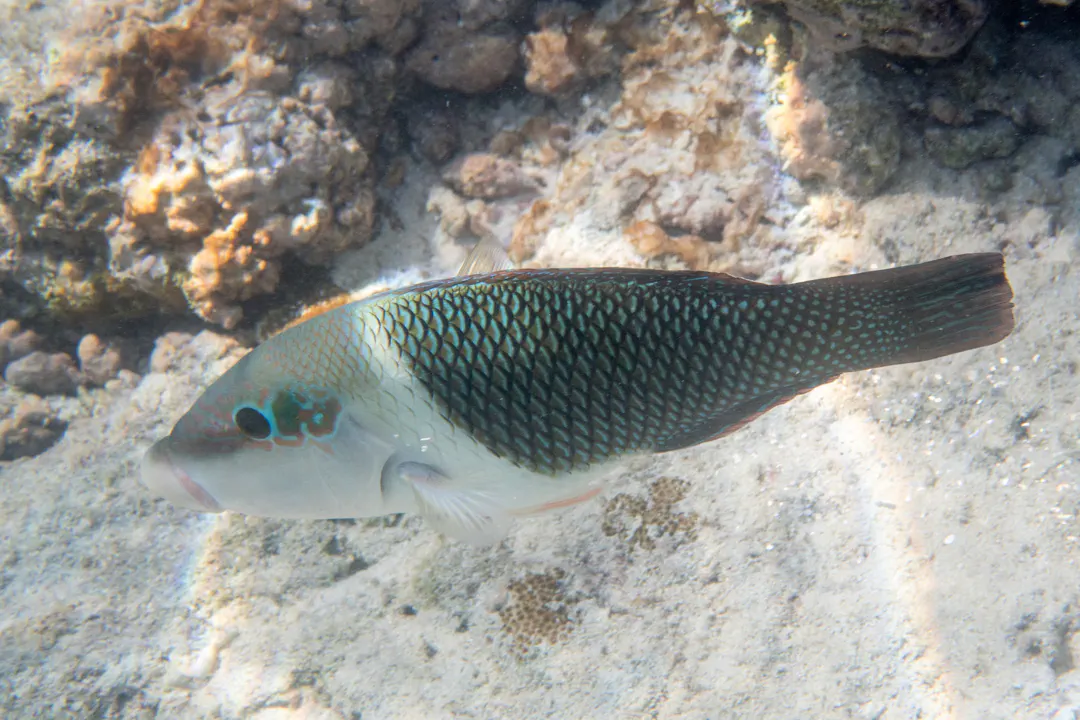 © Emanuele SantarelliCC BY-SA 4.0 · iNaturalist
 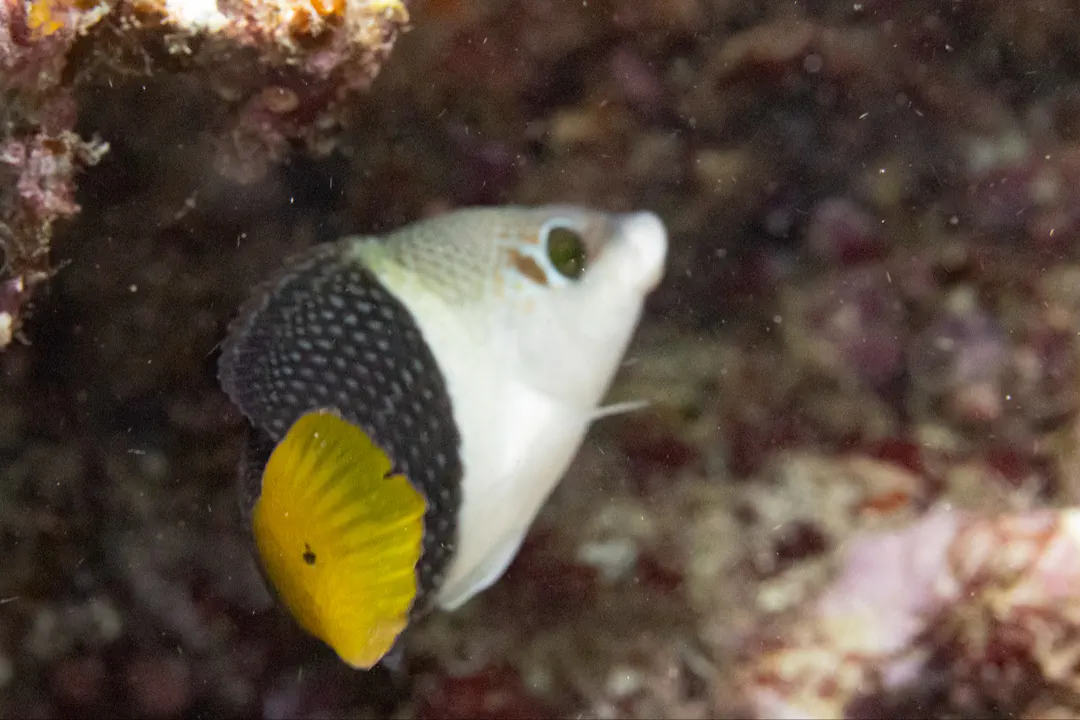 © cello caruso-turielloCC BY 4.0 · iNaturalist
 Vermiculate Wrasse has no known danger to humans. However, always observe marine life responsibly.
Vermiculate Wrasse can be found at depths of up to 30 meters.
Download Seabook free for iOS and Android.