 © Vsevolod RudyiCC BY 4.0 · iNaturalist
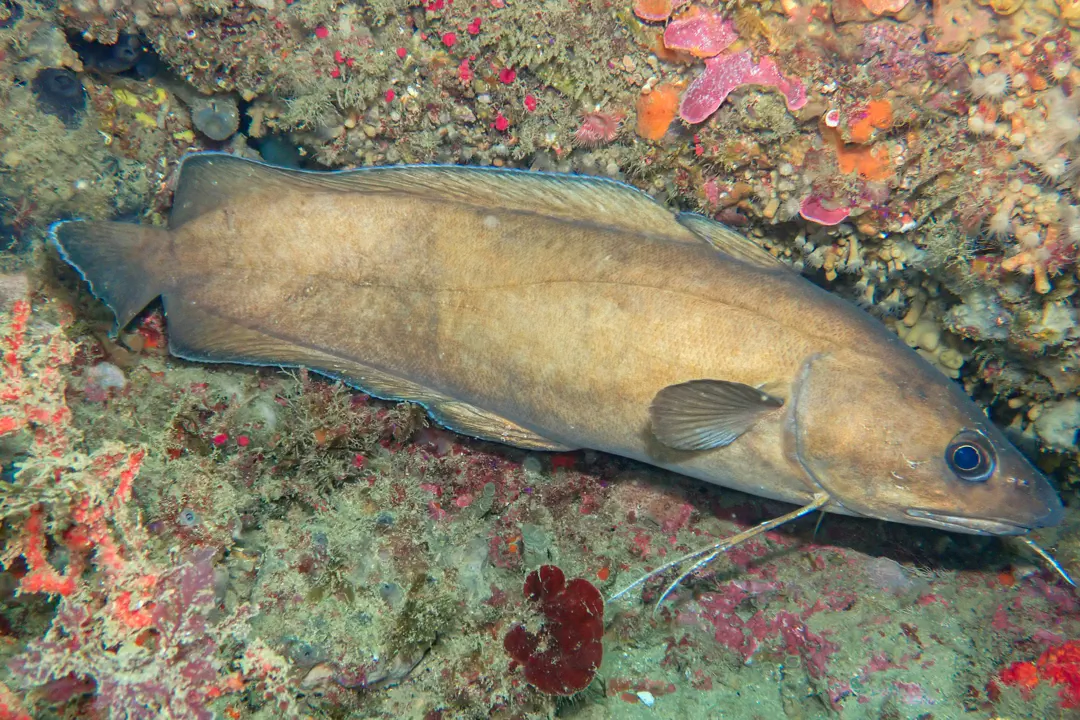
Forkbeard
Phycis phycis
 © Julien SavoieCC BY 4.0 · iNaturalist
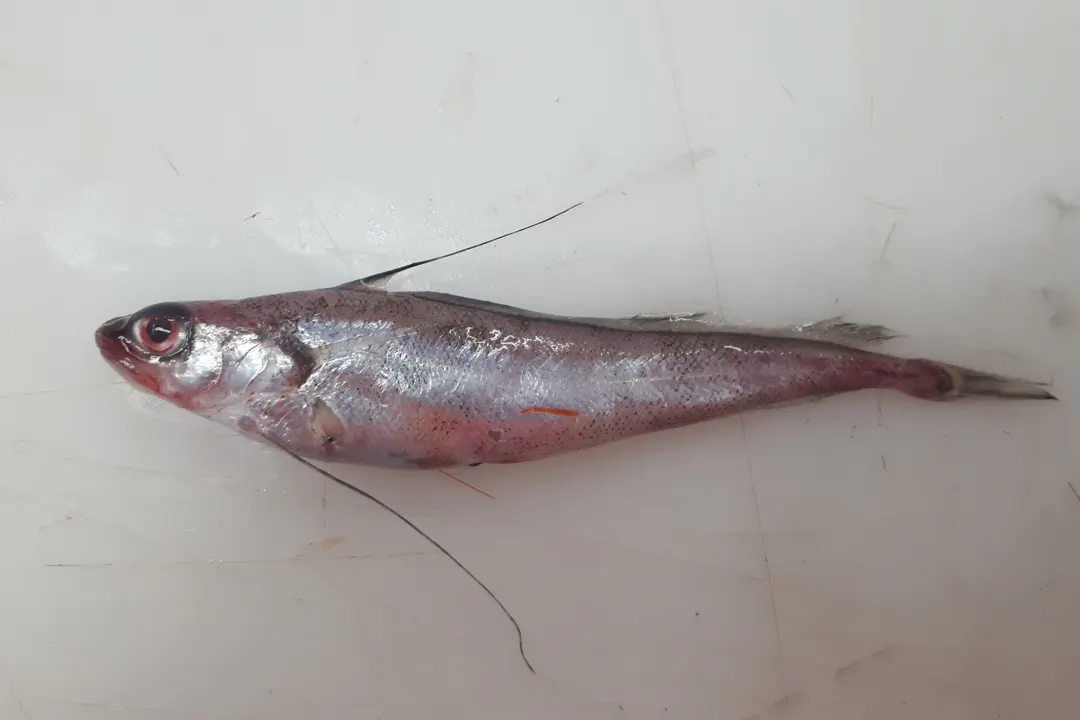
Phycis chesteri
Phycis chesteri, commonly known as the longfin hake or longfinned hake, belongs to the family Phycidae and is found in the western North Atlantic. The species typically inhabits the outer continental shelf and slope of eastern North America, ranging from Newfoundland to the Gulf of Mexico. It is most commonly found at depths of approximately 360–800 m.
The species was first described by George Brown Goode and Tarleton Hoffman Bean in 1878 under the name Phycis chesteri. The holotype was collected by Captain Hubbard C. Chester during Arctic exploration aboard Polaris. The species name chesteri honors Hubbard C. Chester, a U.S. Fish Commission sailing master and collector of the holotype. The genus name Phycis is derived from the Greek word phýkos (φῦκος), meaning 'seaweed'. Some authorities have placed this species in the genus Urophycis as Urophycis chesteri, but major modern catalogs treat Phycis chesteri as valid.
The longfin hake has an elongated, soft-bodied shape with a narrow caudal peduncle and a slightly rounded tail. Its head is relatively large, with a broad mouth that extends to about the middle of the eye or farther back. The species displays olive to olive-brown sides and a pale or silvery-white belly. The dorsal, caudal, and anal-fin margins are darker, but there is no well-established distinctive spot or band pattern for adults. The first dorsal fin is short-based and triangular, featuring a conspicuously elongated first ray that is longer than the head. The second dorsal fin has a long base and a relatively straight edge, while the anal fin is long-based and lacks a pronounced notch. The two pelvic rays form long, thread-like filaments that extend to or beyond the end of the anal-fin base, which is a key identifying feature. A short chin barbel is present, and the species has no fin spines, a complete lateral line, and a small rounded tail fin separated from both the dorsal and anal fins. The longfin hake can be distinguished from the white hake by its more pointed or triangular tail profile and conspicuously longer pelvic filaments. Identification of the longfin hake from other Urophycis species relies on the long pelvic filaments, the very long first ray of the first dorsal fin, and the straight-edged second dorsal fin.
The longfin hake is a deep-water, bottom-associated species that inhabits the outer continental shelf and continental slope. It occurs mainly in the deep neritic to upper bathyal environment and is not primarily associated with reefs. The species predominantly inhabits soft bottom substrates, especially mud or sand-mud, and is epibenthic, living on or just above the seabed. The depth range of the longfin hake is reported to be approximately 90–1,500 m, with the greatest abundance commonly found at depths of 360–800 m. Geographically, the longfin hake is distributed in the western North Atlantic, from Newfoundland/Labrador southward to the Straits of Florida and the Gulf of Mexico. It is primarily associated with offshore shelf edges and continental slopes, being uncommon south of Cape Hatteras.
The longfin hake is a benthic predator that feeds on crustaceans, mollusks, and bony fishes. Its documented prey includes shrimps, crabs, benthic gastropods, bivalves, squid, and related cephalopods. It feeds by hunting macrofauna near the seafloor, often observed over or in depressions beside rubble at depths of approximately 500–630 m. The pelvic fins of the longfin hake may assist in detecting prey while it moves across the bottom.
The longfin hake has limited or incidental fishery importance and is caught using bottom trawls, gillnets, longlines, traps, and handlines, but separate catch statistics are generally not reported. No authoritative source identifies an established aquarium trade for the longfin hake due to its deep-water habitat and capture depths, which make it unsuitable for ordinary home aquaria. The species is not documented as a significant food fish or regularly marketed seafood, and its edibility is therefore not well documented. No authoritative source reports the longfin hake as venomous, poisonous, aggressive, or dangerous to people, although handling a captured specimen could cause ordinary puncture or fin injuries. The longfin hake has not been assessed by the IUCN Red List and is not listed under CITES, indicating limited information on its population and fishery impact.
Longfin Hake has no known danger to humans. However, always observe marine life responsibly.
Longfin Hake can be found at depths of up to 1500 meters.
Download Seabook free for iOS and Android.