 © Ditch TownsendCC BY-SA 4.0 · iNaturalist
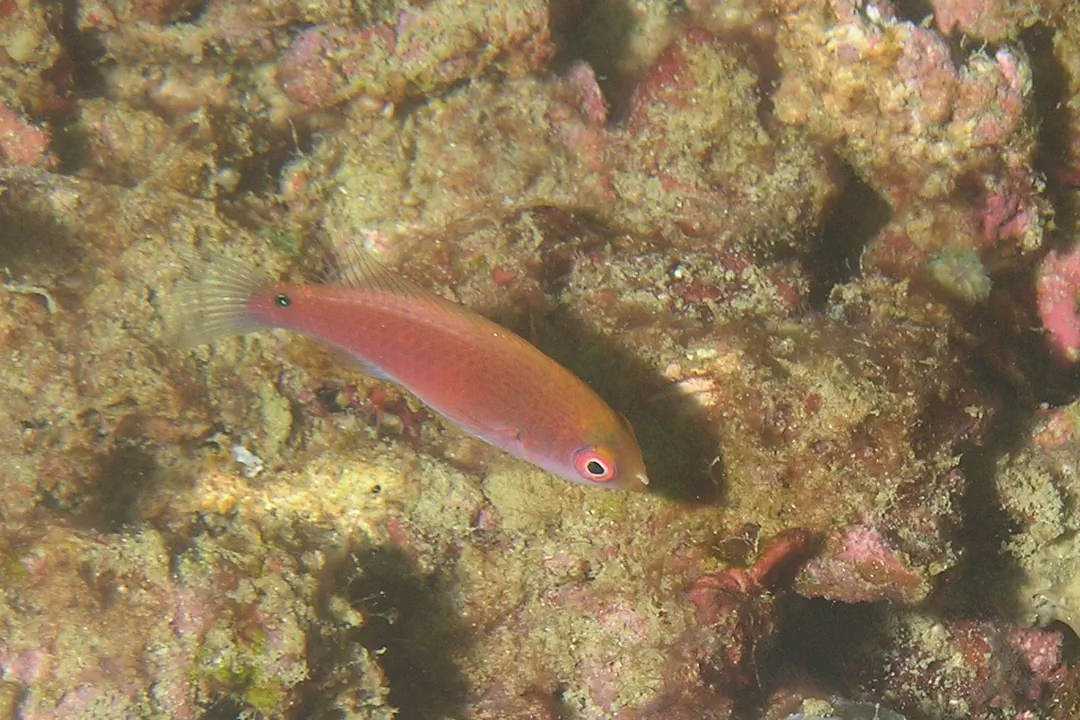
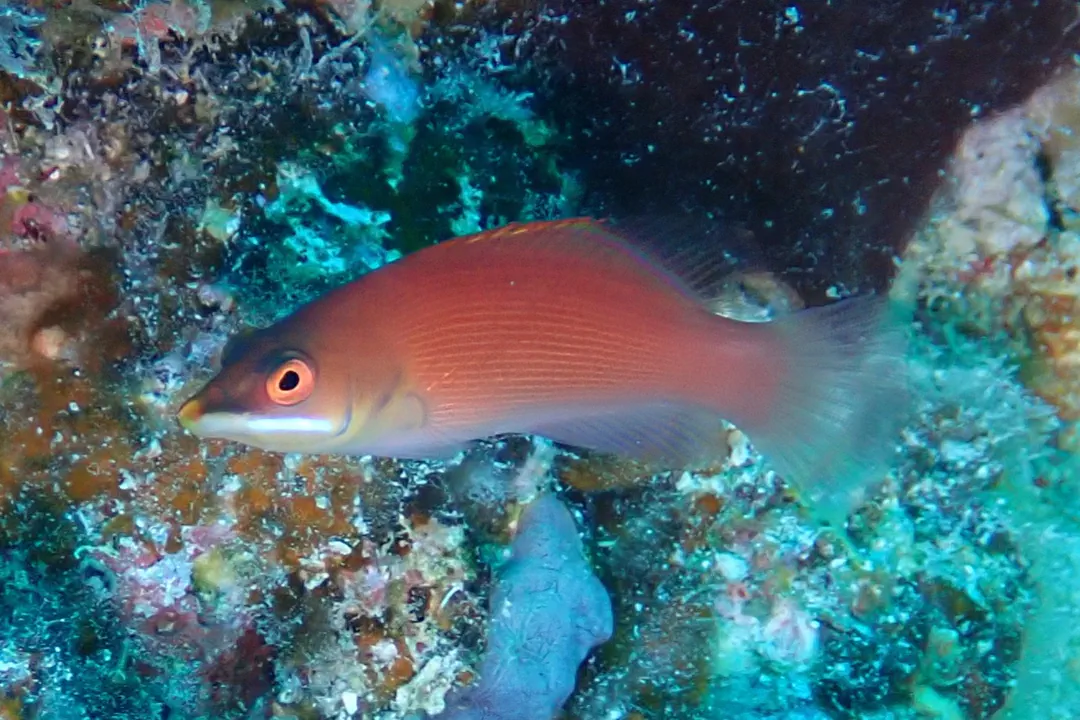
Blueside Wrasse (female)
Cirrhilabrus cyanopleura
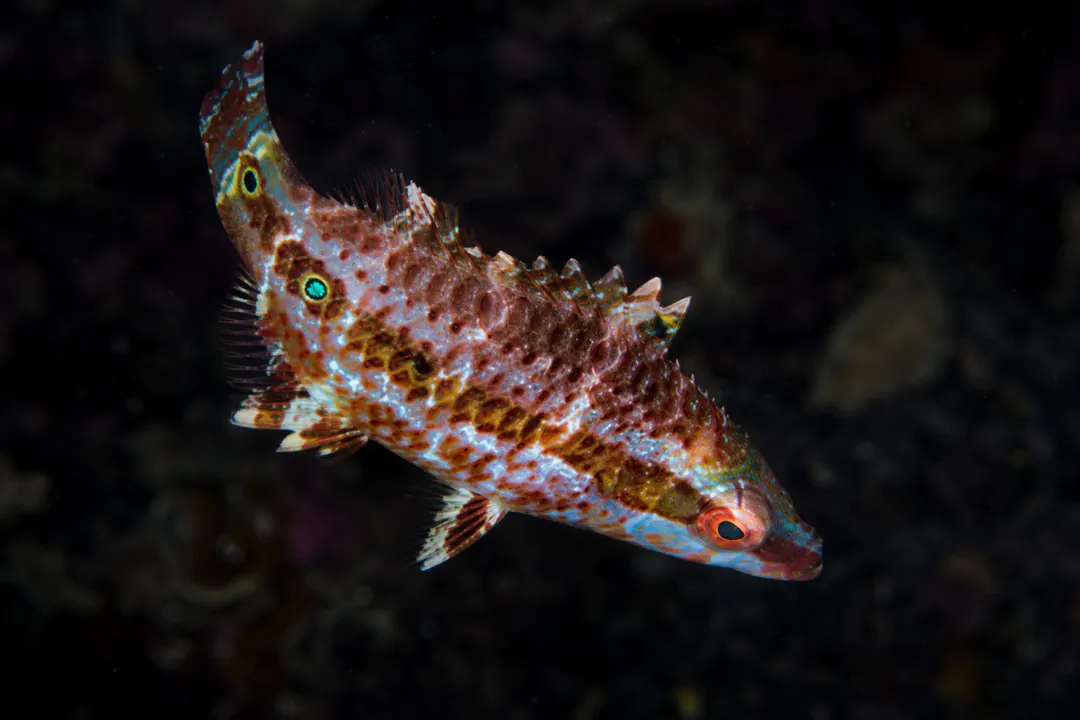
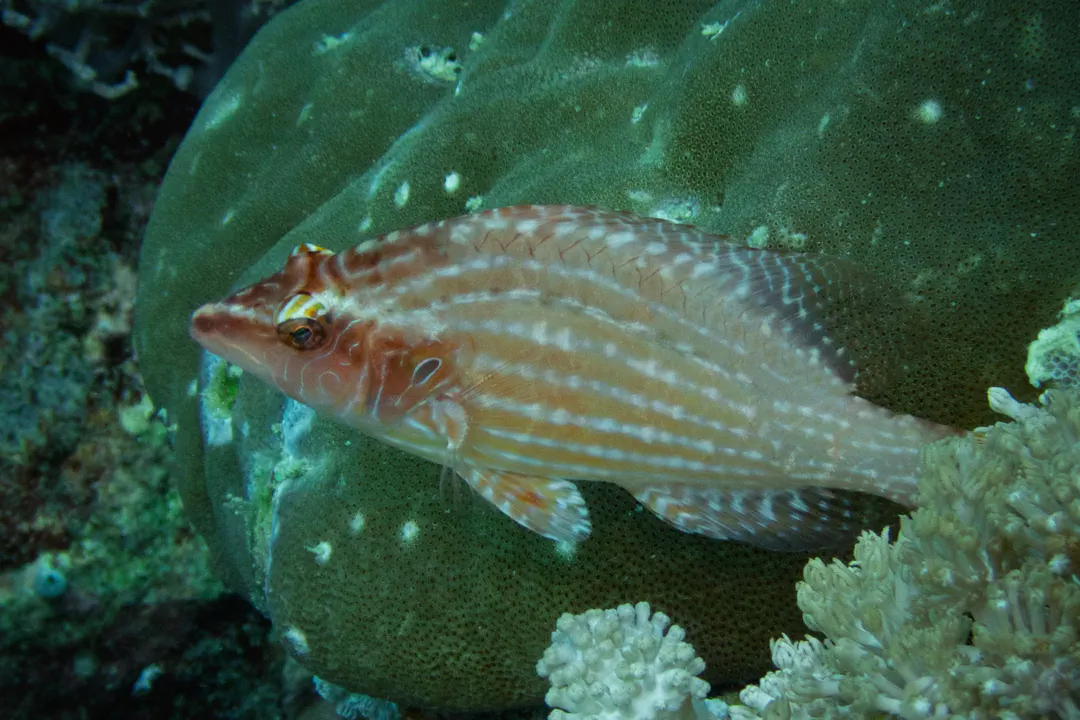
Oxycheilinus unifasciatus
It has an elongated body that is slightly compressed laterally. Adult individuals reach a length of about 20–30 cm, making them medium-sized among wrasses.
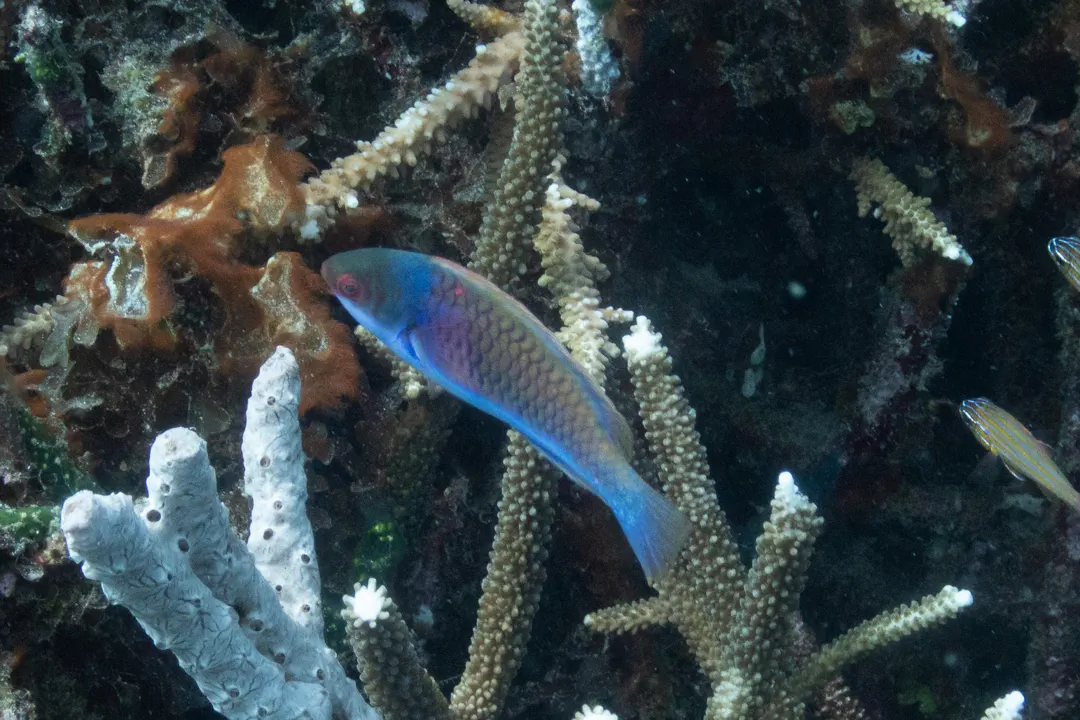
The body color ranges from reddish-brown to greenish-brown, with lighter tones on the belly. A distinct horizontal stripe runs along the body, which is the defining feature of this species. Adults developing a distinctive black blotch covering the rears of the dorsal and anal fins. In some individuals, the stripe may appear white or light blue. White bar often present on caudal peduncle (this pattern very changeable). Red lines radiating posteriorly from eye continuous across opercle to posterior opercular edge. Membranes of spinous portion of dorsal fin smooth, not incised. Males have a distinct whitish to greyish bar outlined in orange to brown on the gill cover behind the eye, and fine oblique lines on the cheek.
The head is large, with powerful jaws and a relatively small mouth. The eyes are striking, often tinged with orange or yellow, adding to the fish’s visual appeal.
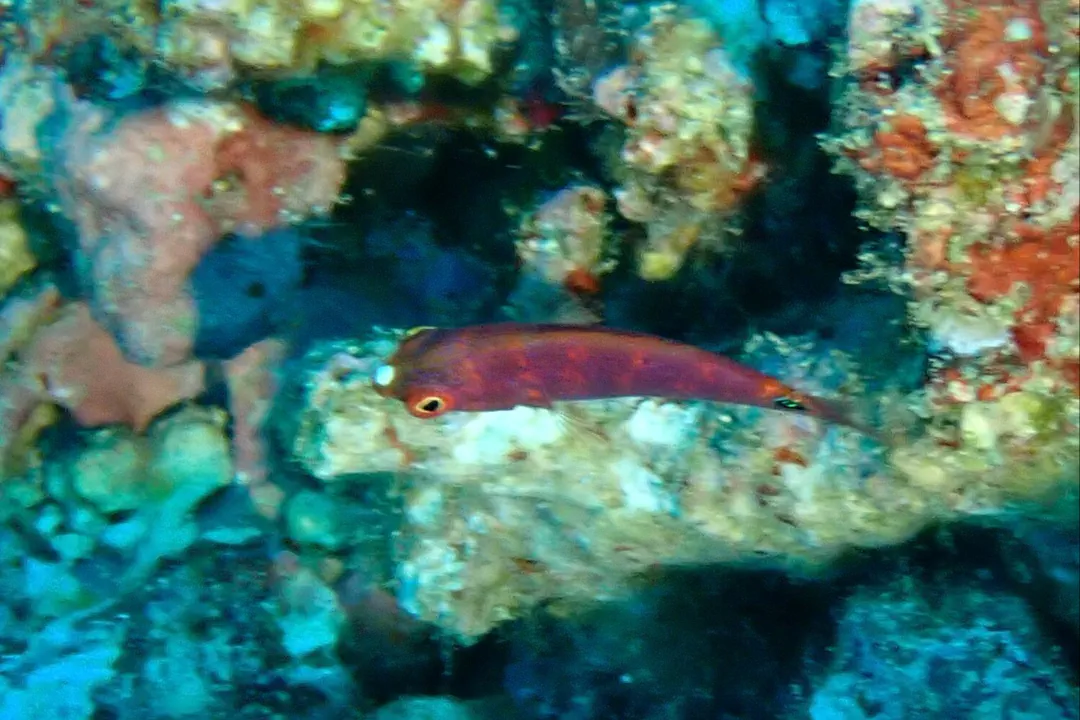
Juveniles have a broad orange to brownish mid-lateral stripe with four small eye-like spots on the rear of this stripe.
Recorded in Australia from Ningaloo Reef and offshore reefs (Rowley Shoals & Scott Reef), Western Australia, Ashmore Reef, Timor Sea, and Lizard Island to the Capricorn Group, Great Barrier Reef, Queensland; also Cocos (Keeling) Islands and Christmas Island in the eastern Indian Ocean. The species occurs elsewhere in the tropical, west-central Pacific.
© Ditch TownsendCC BY-SA 4.0 · iNaturalist 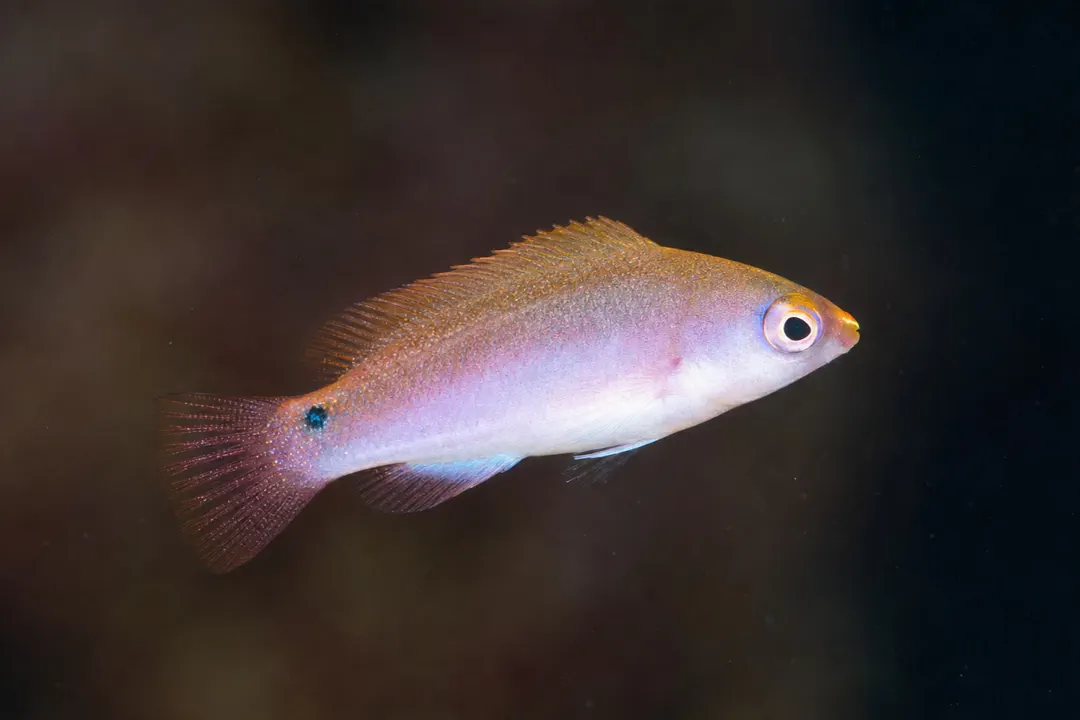 © seabook.appAll rights reserved
  Justin PhilboisCC0 · iNaturalist
  © Pierre PericardCC BY 4.0 · iNaturalist
  © Debra BakerCC BY 4.0 · iNaturalist
  © Debra BakerCC BY 4.0 · iNaturalist
 Ringtail Maori Wrasse (juvenile) is classified as poisonous. Always exercise caution and keep a safe distance.
Ringtail Maori Wrasse (juvenile) can be found at depths of up to 160 meters.
Download Seabook free for iOS and Android.