 © Lesley ClementsAll rights reserved
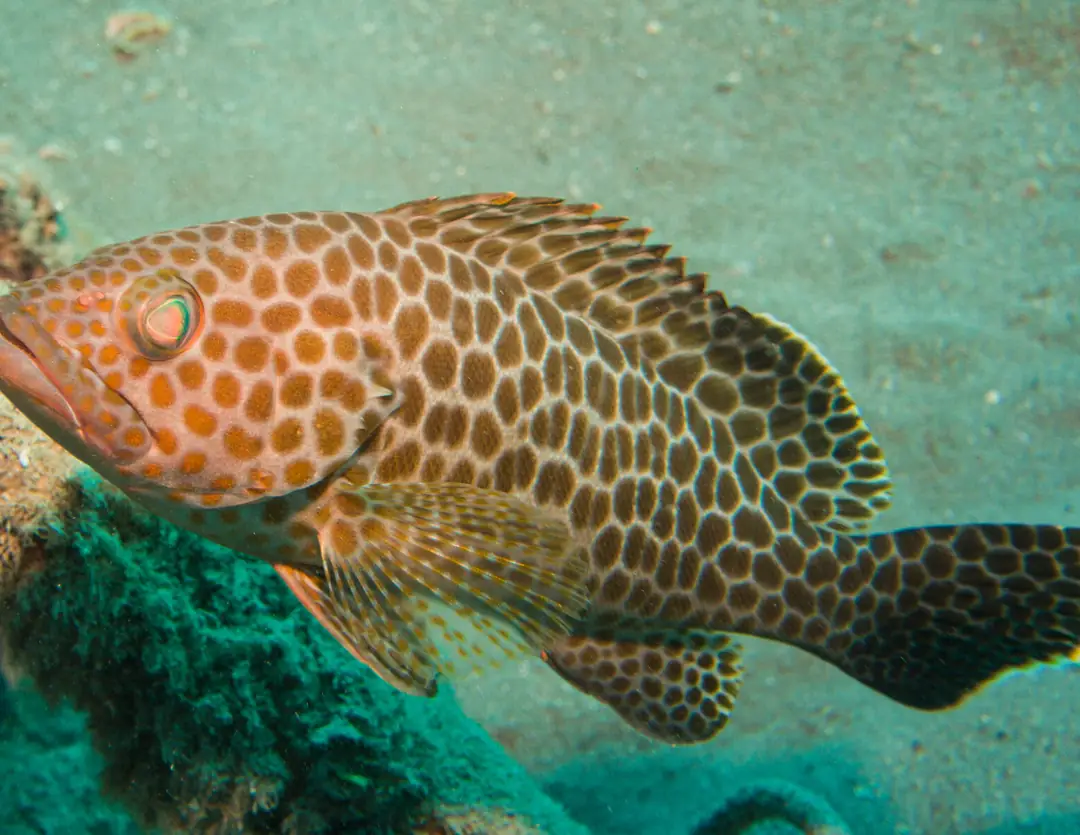
Areolate Rock Cod
Epinephelus areolatus
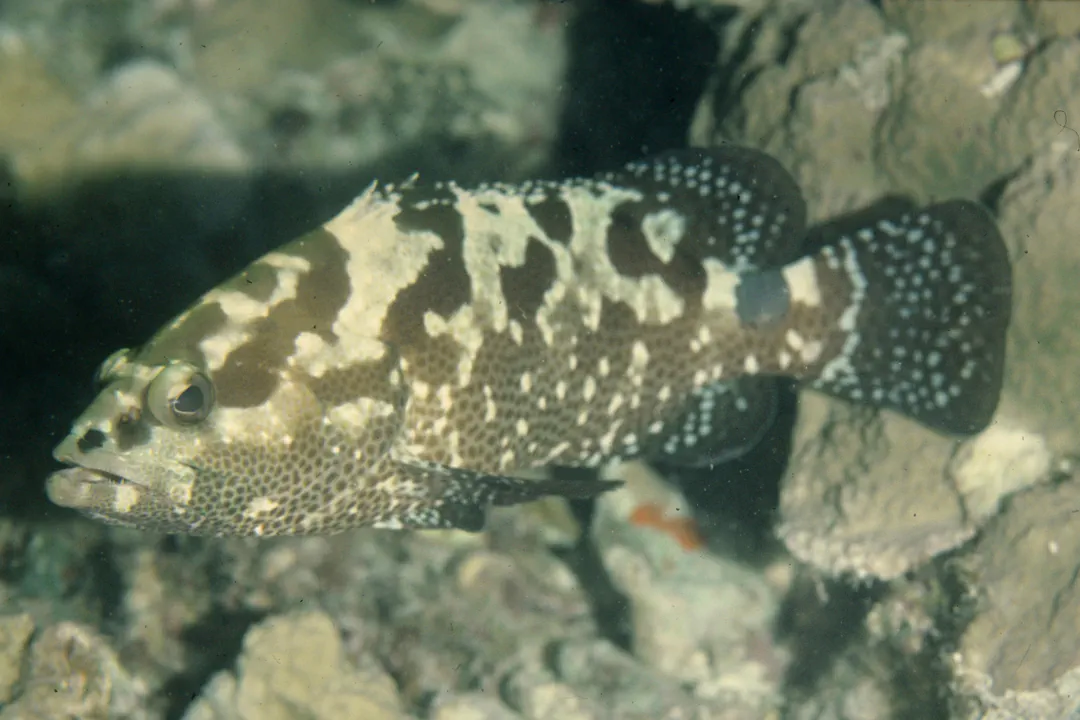
Epinephelus polyphekadion
Epinephelus polyphekadion is a species of marine fish in the family Serranidae. The Camouflage grouper is widespread throughout the tropical waters of the Indo-Pacific area from the eastern coast of Africa to the French Polynesia and it's also present in the Red Sea. Its natural habitats are open seas, shallow seas, subtidal aquatic beds, coral reefs, rocky shores, and coastal saline lagoons.
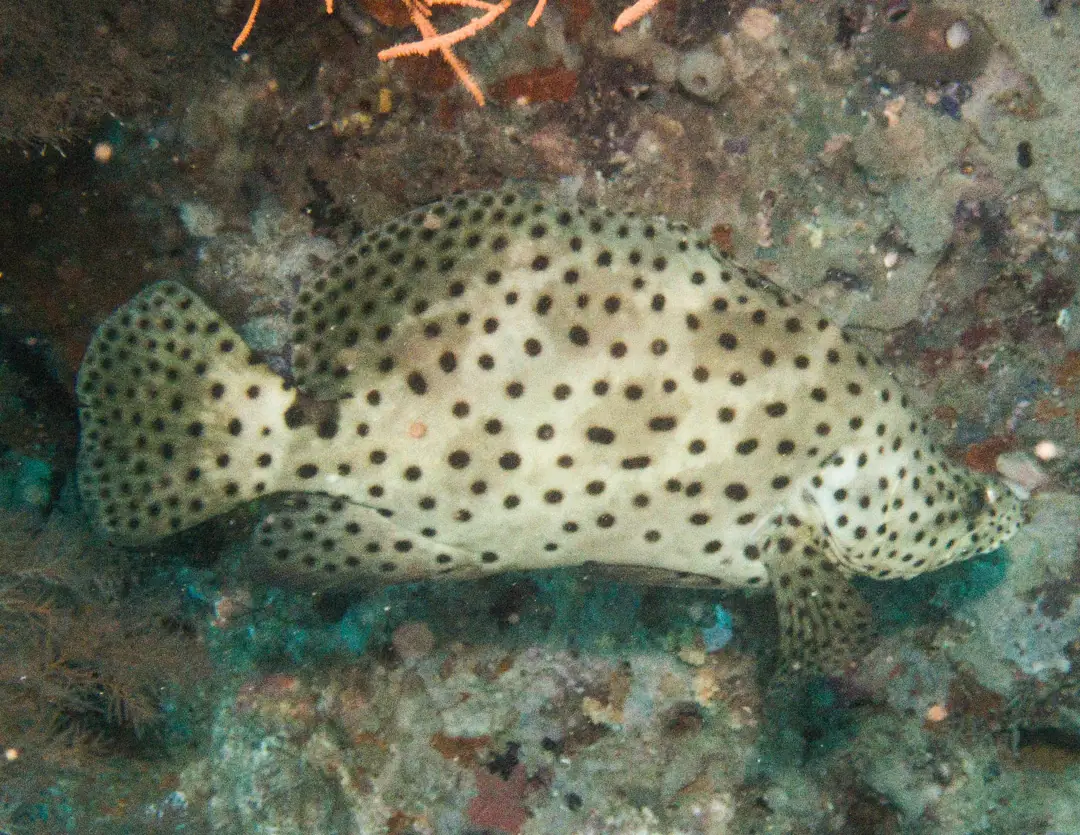
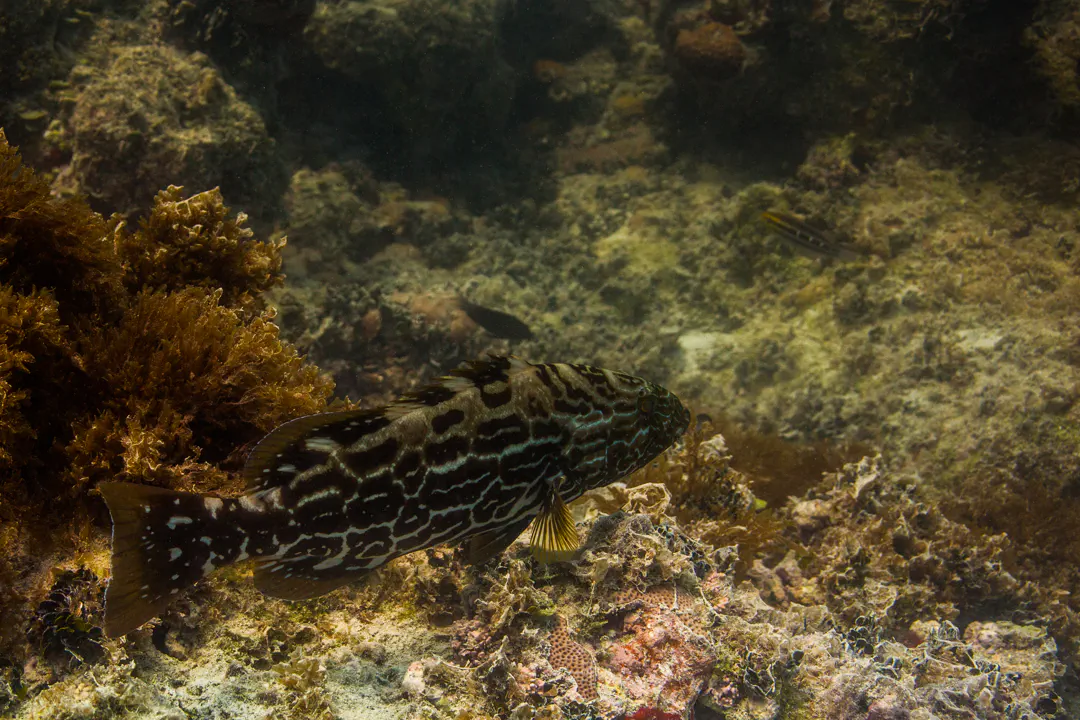
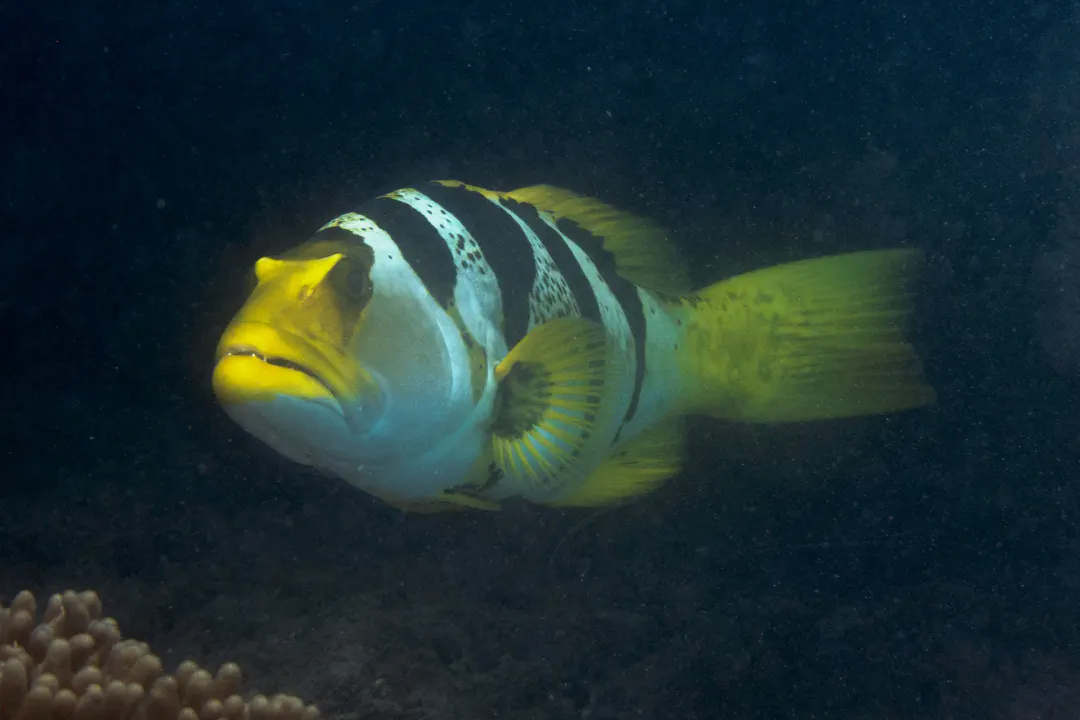
It is a pale brown covered in small dark brown spots, the upper body is whitish with the white being broken up by large dark blotches which resemble diagonal bands. There is a dark saddle-like blotch on the upper part of the base of the caudal fin. The area between the eyes is flat while the dorsal profile of the head is convex. The preopercle rounded with the serrations at its corner slightly enlarged and the gill cover has a distinctly convex upper edge.
The fourth spine in the dorsal fin is longer than the others and the membranes between the dorsal fin spines are slightly notched. The caudal fin is rounded in shape.
The camouflage grouper attains a maximum total length of 90 centimetres (35 in).
This species is frequently misidentified, the confusion species being Flowery Rockcod (Epinephelus fuscoguttatus).
The camouflage grouper has a wide Indo-Pacific distribution. Its range extends from the coast of East Africa from the Red Sea south to Mozambique, eastwards across the Indian Ocean where it is found around the Comoros, British Indian Ocean Territory, Mauritius and the Seychelles and east into the Pacific Ocean as far as French Polynesia. In the Pacific its range extends north to southern Japan and south as far as Australia. In Australia it is found from Shark Bay and Scott Reef in Western Australia around the northern coast to One Tree Island in Queensland. It is also found around reefs and islands in the Coral Sea and the Tasman Sea.
The camouflage grouper is found in lagoons and outer reefs in shallow water in areas which are rich in coral and is more numerous around islands, especially atolls. It also likes to have caves and crevices in the reefs to swim through. It is normally found in small schools but it can be a solitary species. It prefers areas where the water is clear. This is a predatory species which preys largely on crustaceans, especially portunid crabs, and fishes, occasionally on cephalopods and gastropods. It is thought to be gonochoristic and hermaphroditism is still to be demonstrated for this species. It reaches sexual maturity at around 4 years of age and can live for up to 42 years. They form spawning aggregations and individuals are known to follow regular migratory routes to reach these aggregations.
The Serranidae are a large family of fishes belonging to the order Perciformes. The family contains about 450 species in 64 genera, including the sea basses and the groupers (subfamily Epinephelinae). Although many species are small, in some cases less than 10 cm (3.9 in), the giant grouper (Epinephelus lanceolatus) is one of the largest bony fishes in the world, growing to 2.7 m (8 ft 10 in) in length and 400 kg (880 lb) in weight.
Many serranid species are brightly colored, and many of the larger species are caught commercially for food. They are usually found over reefs, in tropical to subtropical waters along the coasts. Serranids are generally robust in form, with large mouths and small spines on the gill coverings. They typically have several rows of sharp teeth, usually with a pair of particularly large, canine-like teeth projecting from the lower jaw.
All serranids are carnivorous. Although some species, especially in the Anthiinae subfamily, only feed on zooplankton, the majority feed on fish and crustaceans. They are typically ambush predators, hiding in cover on the reef and darting out to grab passing prey. Their bright colours are most likely a form of disruptive camouflage, similar to the stripes of a tiger.
Many species are protogynous hermaphrodites, meaning they start out as females and change sex to male later in life. They produce large quantities of eggs and their larvae are planktonic, generally at the mercy of ocean currents until they are ready to settle into adult populations.
As other fish, serranids harbour parasites, including nematodes, cestodes, digeneans,monogeneans, isopods, and copepods. A study conducted in New Caledonia has shown that coral reef-associated serranids harbour about 10 species of parasites per fish species.
Recent molecular classifications challenge the validity of the genera Cromileptes (sometimes spelled Chromileptes) and Anyperodon. Each of these two genera has a single species, which were included in the same clade as species of Epinephelus in a study based on five different genes.
© Lesley ClementsAll rights reserved  © seabook.appAll rights reserved
  © Ian ShawAll rights reserved
  © Lesley ClementsAll rights reserved
  © João D'AndrettaCC BY 4.0 · iNaturalist
  © Ewout KnoesterCC BY-SA 4.0 · iNaturalist
 Camouflage Grouper is classified as poisonous. Always exercise caution and keep a safe distance.
Camouflage Grouper can be found at depths of up to 50 meters.
Download Seabook free for iOS and Android.