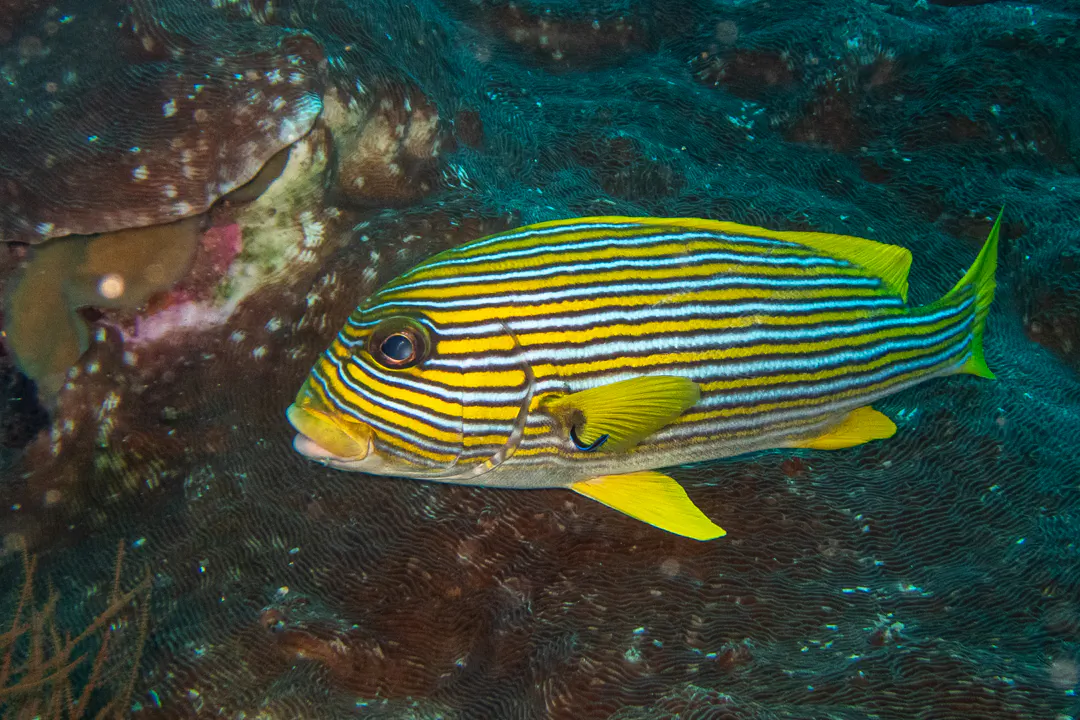
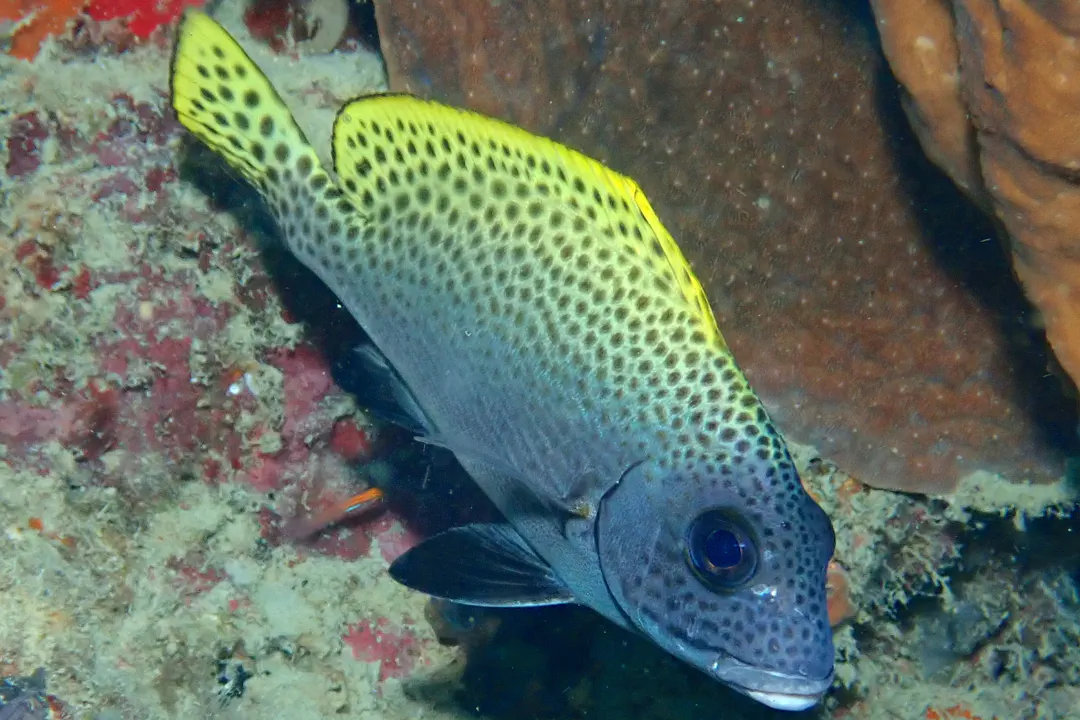
 © desertnaturalistCC BY 4.0
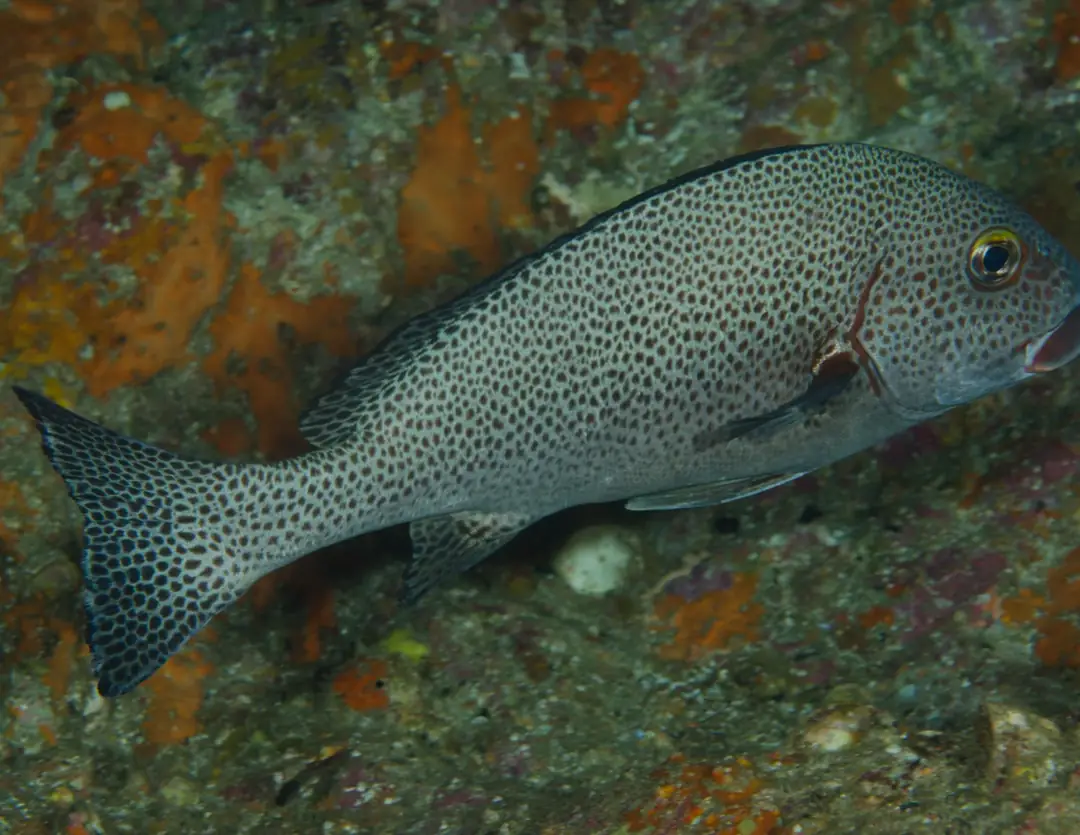
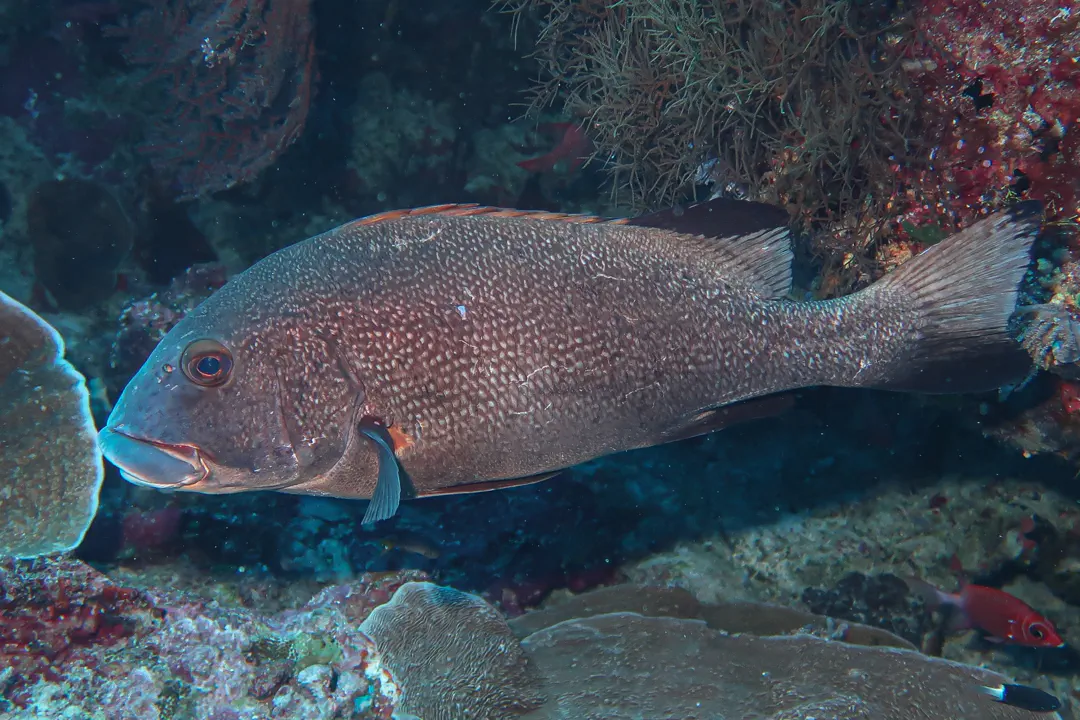
Blackfin Sweetlips
Diagramma melanacrum
Plectorhinchus polytaenia
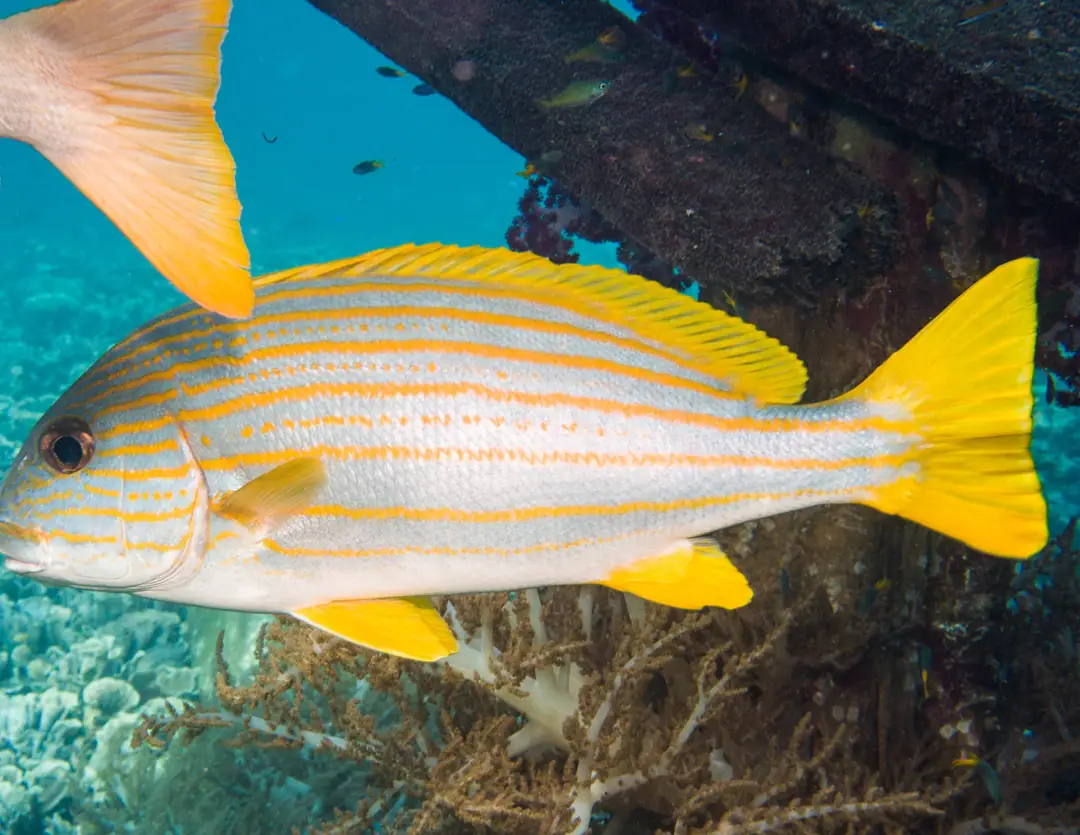
Plectorhinchus polytaenia is a species of grunt native to the Indian Ocean and the western Pacific Ocean, where they can be found on coral reefs at depths from 5 to 40 m (16 to 131 ft). This species can reach 50 cm (20 in) in TL. It is important commercially as a food fish.
Colour: brown to yellowish grey with 5 to 9 fairly narrow grey or white longitudinal stripes outlined with dark brown on body and continuing around snout. Fins are yellow, soft. Dorsal, caudal and pectoral fins are with darker stripes disappearing with age. Eye and lips are yellowish. Mouth, tongue, and gill rakers are scarlet. Chin is white. Juveniles have fins striped and fewer stripes on body. Juveniles have black stripes and live alone on rubble slopes in deep water. As they age, the black is reduced to an outline, and the stripes become more yellow; increasing stripes develop with age. Their bright colors help them blend into the coral in which they live. Dorsal spines (total): 12 - 13; Dorsal soft rays (total): 19-22; Anal spines: 3; Anal soft rays: 7 - 8. This species is distinguished by the following characters: chin with 6 pores, no median pit; gill rakers on first gill arch 7-9 + 1 + 17-20 = 26-29; Dorsal XII (rarely XIII), 19-22, 3rd-5th spines longest; lips fleshy, moderately swollen with age; scales ctenoid (rough to touch); lateral line tubed scales about 54-60; body depth 2.6-2.9 in SL; caudal fin rounded to slightly emarginate.
Indo-West Pacific: west coast of India; Philippines and Indonesia to Papua New Guinea, south to northern Australia.
It occurs on coastal and seaward reefs. Adults are on deep, current-prone slopes with rich invertebrate growth. Juveniles are on sheltered reefs nearby. It is found singly, in small groups under ledges or large resting aggregations by day. These fish feed on crabs, shrimps, sea snails, and worms.
© desertnaturalistCC BY 4.0 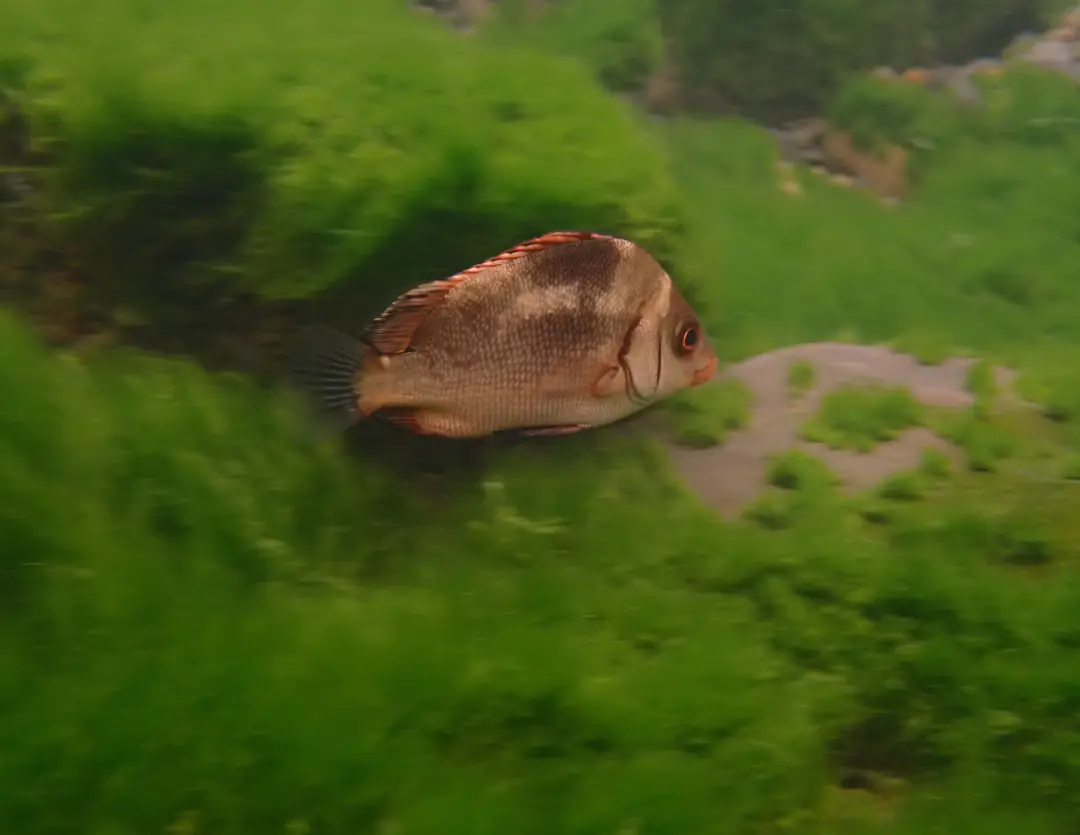 © Jacky YuAll rights reserved
 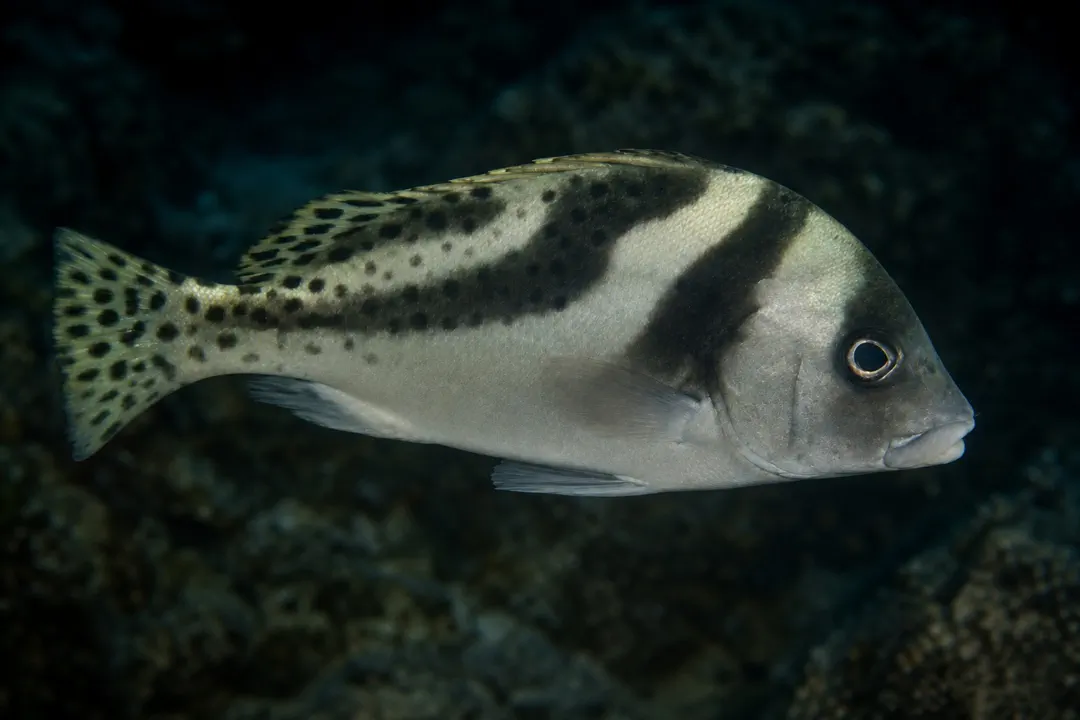 © seabook.appAll rights reserved
  © Ian ShawAll rights reserved
  © Ioannis MagourasCC BY 4.0 · iNaturalist
  © Lesley ClementsAll rights reserved
 Ribbon Sweetlips has no known danger to humans. However, always observe marine life responsibly.
Ribbon Sweetlips can be found at depths of up to 40 meters.
Download Seabook free for iOS and Android.