 © Jan Ebr & Ivana EbrováCC BY 4.0 · iNaturalist
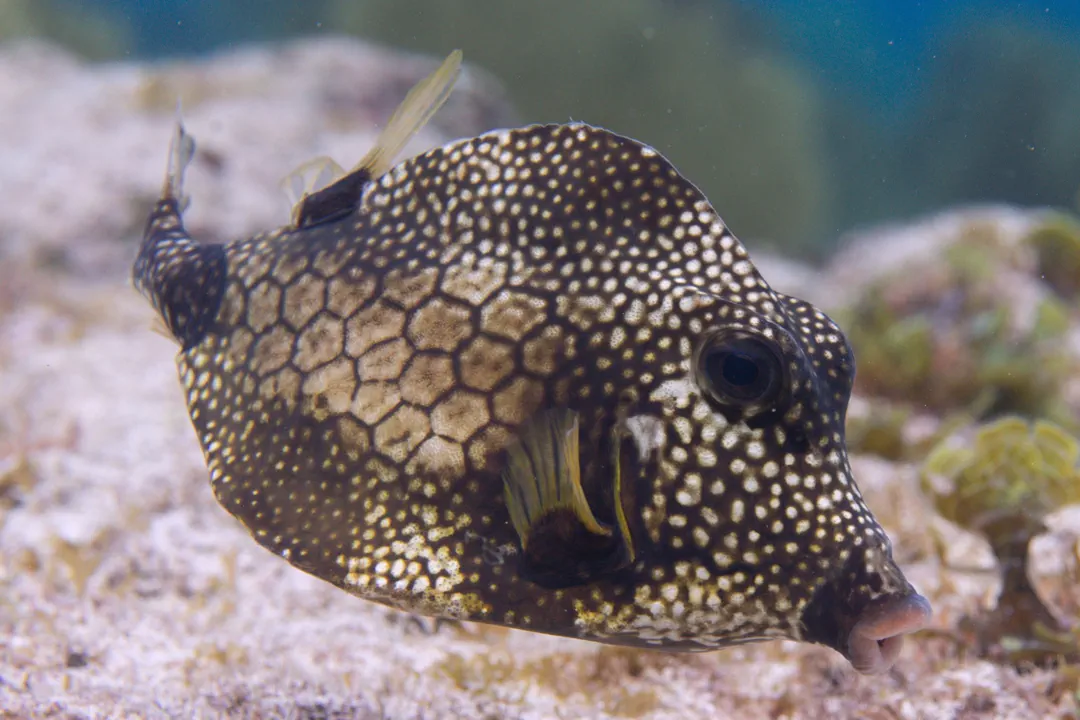
Honeycomb Cowfish
Acanthostracion polygonium
Tetrosomus gibbosus
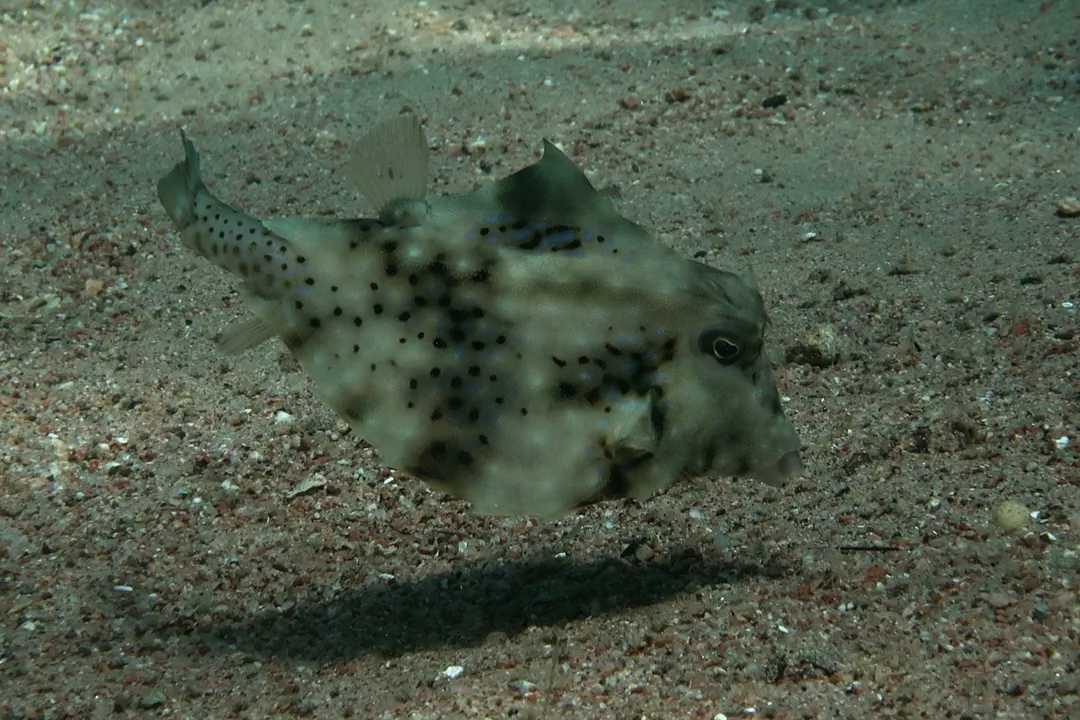
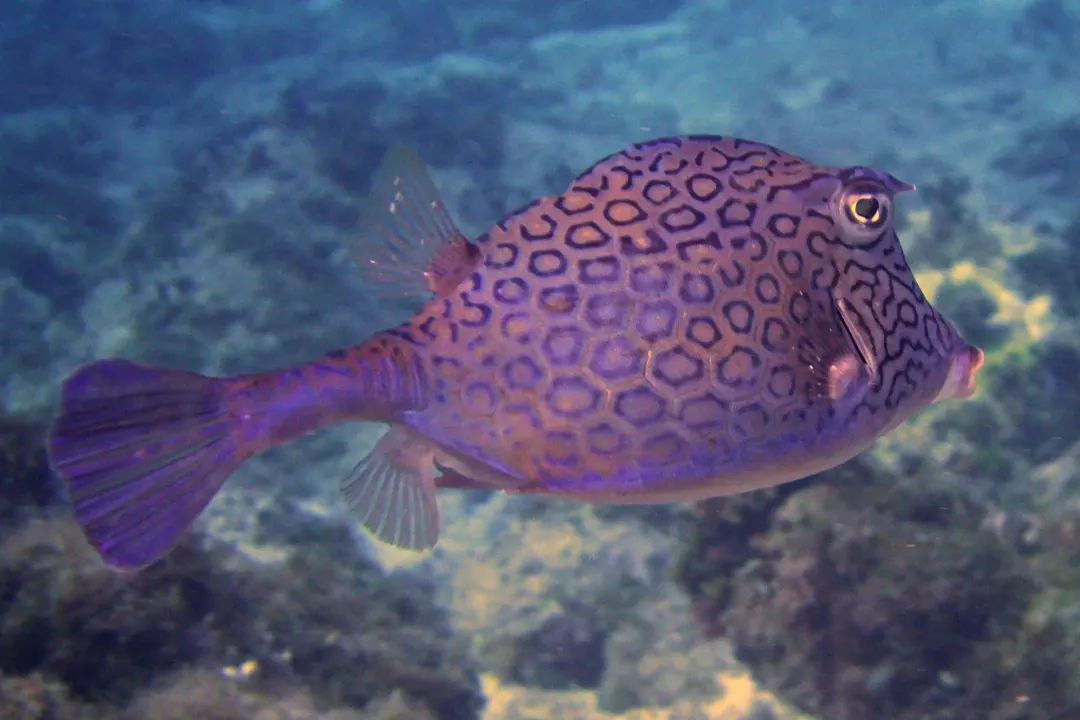
Tetrosomus gibbosus is a species of boxfish native to the Indo-West Pacific, but also established in the Mediterranean Sea via Lessepsian migration.
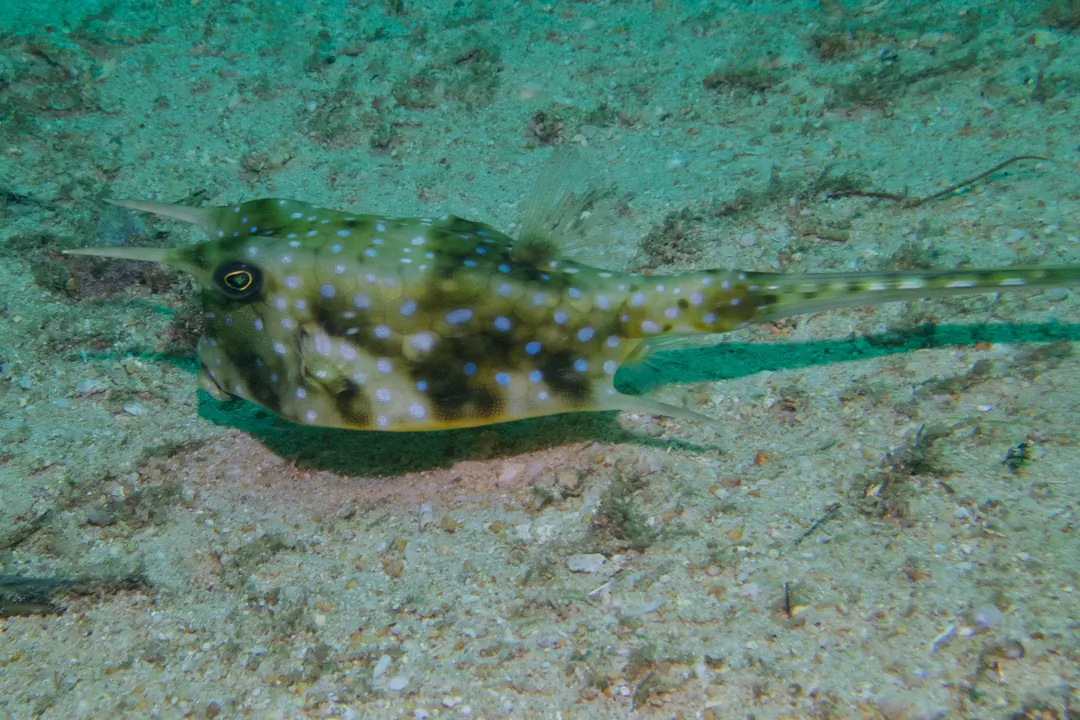
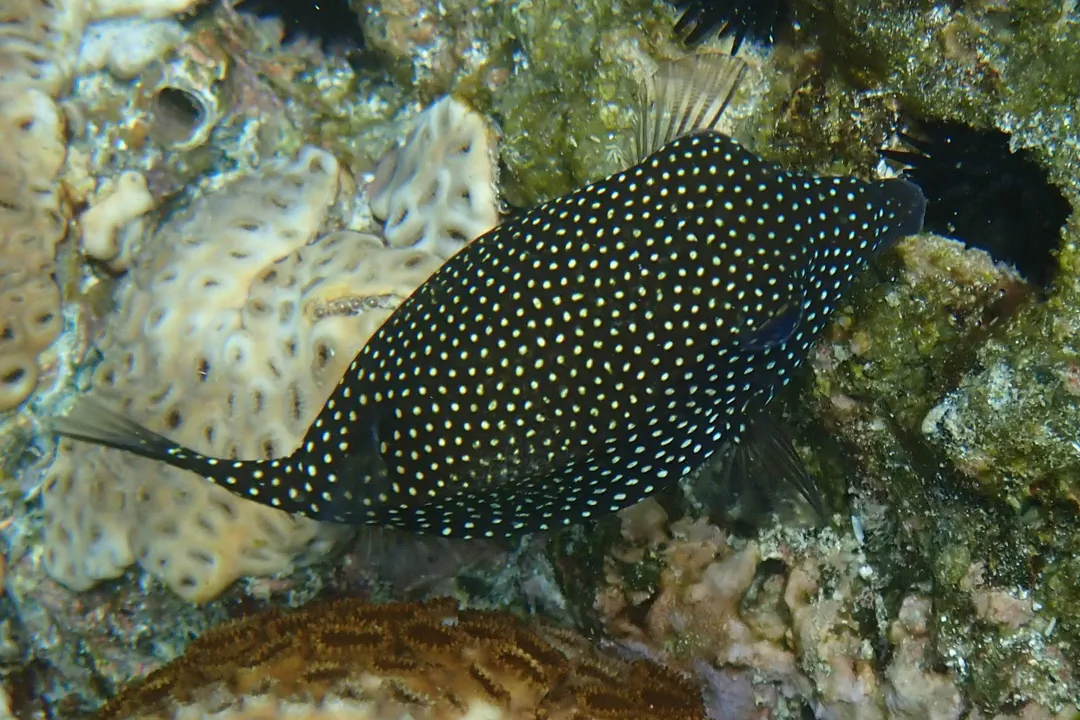
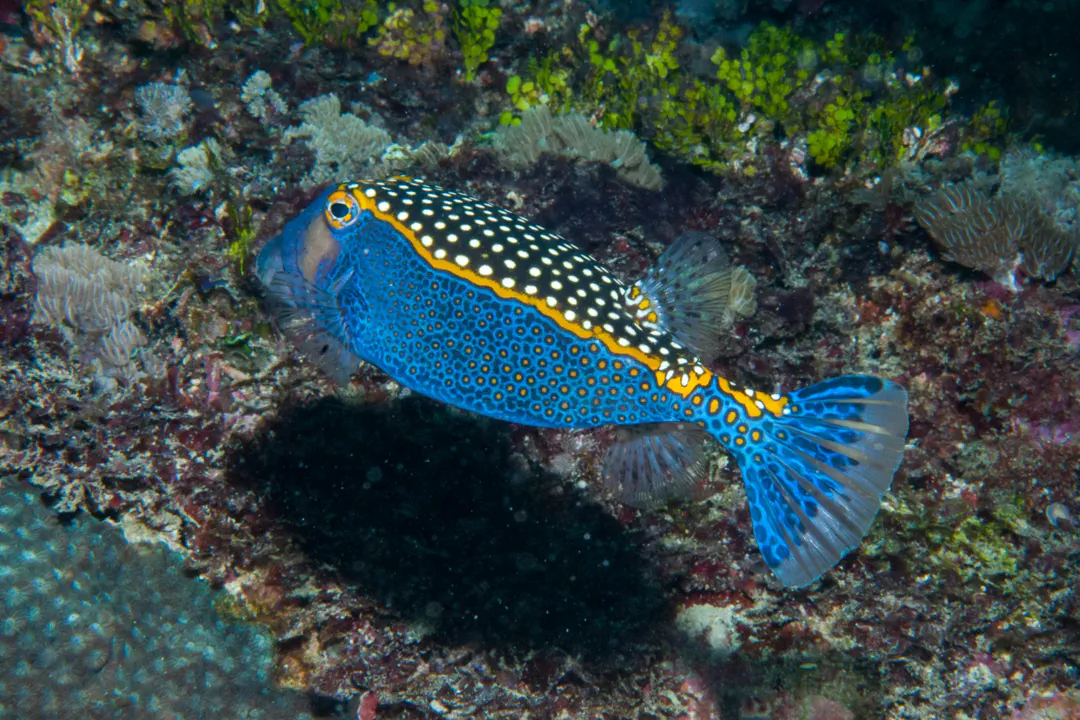
T. gibbosus is normally around 20 cm (7.9 in) long when it is fully grown, but can reach up to 30 cm (11.8 in) in length. Fish in the genus Tetrosomus are characterized by the presence of a carapace, a hard upper shell formed by thick scale plates. The body is completely encased in this bony shell, except for a few small openings such as the mouth, eyes, and gills. The mouth is small with fleshy lips and conical teeth usually numbering less than 15.
Coloration is pale grey to brownish yellow with a hexagonal network pattern and irregular blotches on the side, especially along the lower margin of the carapace. It is triangular in shape, with a single spine on the tip of the strongly elevated dorsal ridge.
T. gibbosus has poisonous flesh, organs, and spines, and is known to secret poisonous mucus in defense or when it is disturbed. This poison can be fatal to humans or other marine organisms that come into contact it.
T. gibbosus is hermaphroditic; all individuals of this species are born female, but some may change into males as they grow. Juveniles live together in small schools, but individuals become solitary as they mature into adulthood.
T. gibbosus is an omnivorous species, and its diet is known to include seaweeds, sponges, molluscs, worms, and crustaceans found on the bottom of its habitat.
Indo-West Pacific: Red Sea and East Africa to Indonesia, north to southern Japan, south to northern Australia. Immigrated into the southeastern Mediterranean through the Suez Canal.
It is mainly found at depths of 37–110 m (121–361 ft) on slopes or over muddy bottoms, but can sometimes be seen near shallow seagrass beds.
Like other boxfish, its flesh is poisonous. It feeds on a wide variety of invertebrates and algae.
It occasionally makes its way into the aquarium trade, but is difficult to keep.
© Jan Ebr & Ivana EbrováCC BY 4.0 · iNaturalist 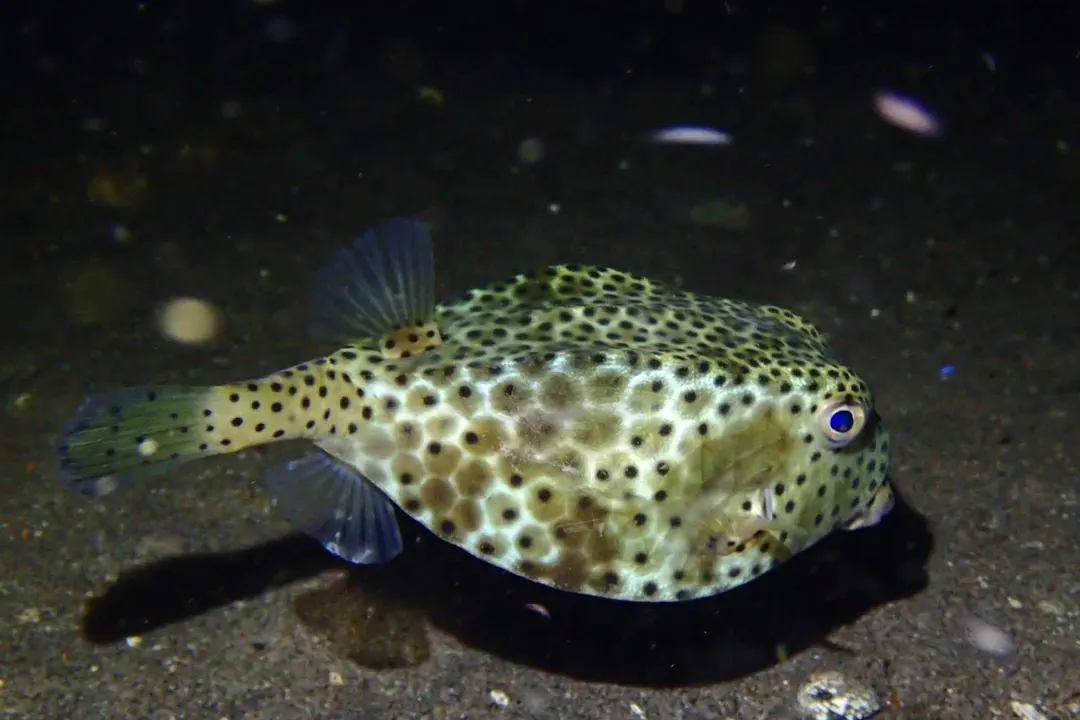 © Dan SchofieldCC BY 4.0 · iNaturalist
  © Pierre PericardCC BY 4.0 · iNaturalist
  © Dan SchofieldCC BY 4.0 · iNaturalist
  © Cricket RaspetCC BY 4.0 · iNaturalist
  © Bernard PictonCC BY 4.0 · iNaturalist
 Humpback Turretfish is classified as venomous. Always exercise caution and keep a safe distance.
Humpback Turretfish can be found at depths of up to 110 meters.
Download Seabook free for iOS and Android.