 © Alberto AlcaláCC BY 4.0 · iNaturalist
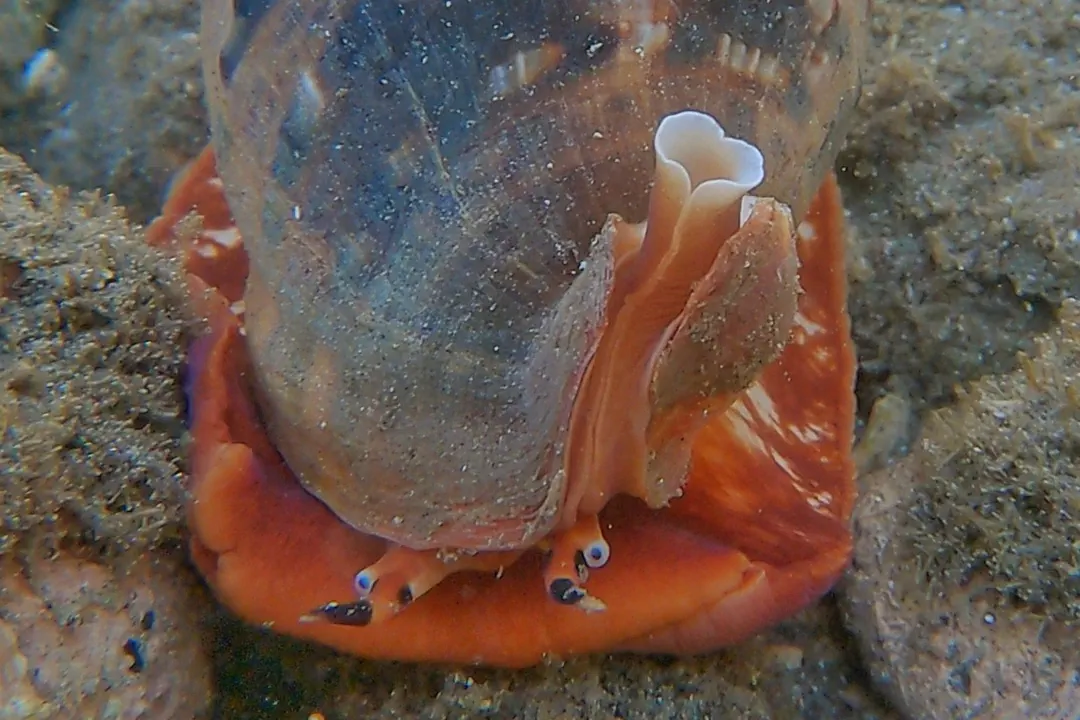
Contracted Cowry Helmet
Cypraecassis coarctata
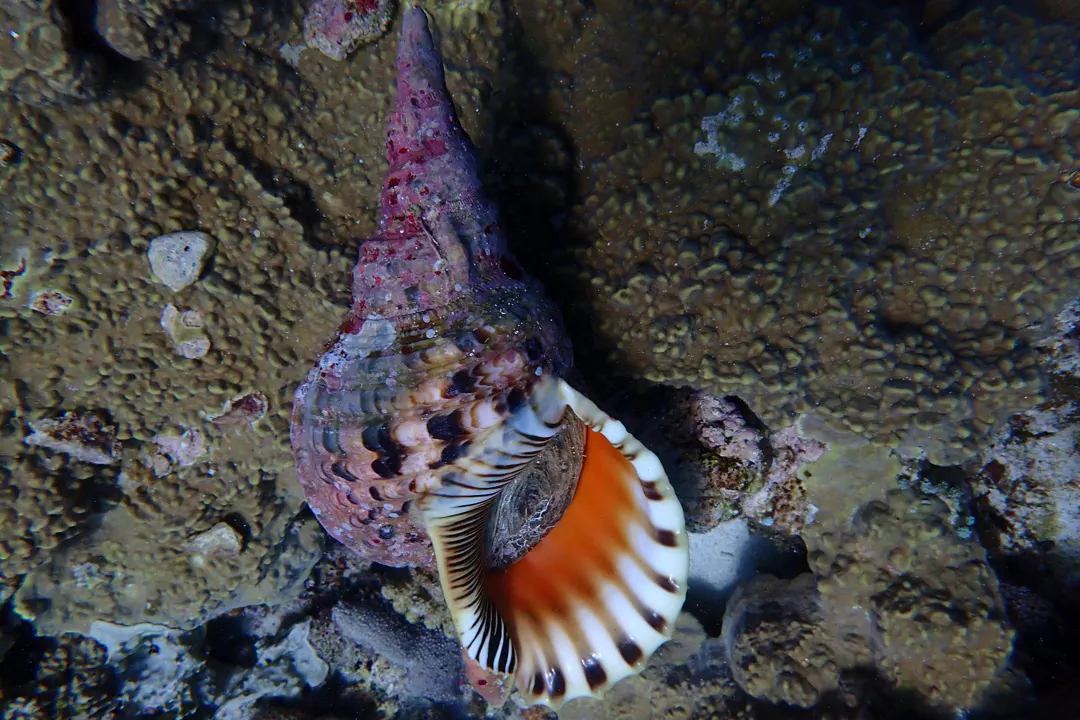
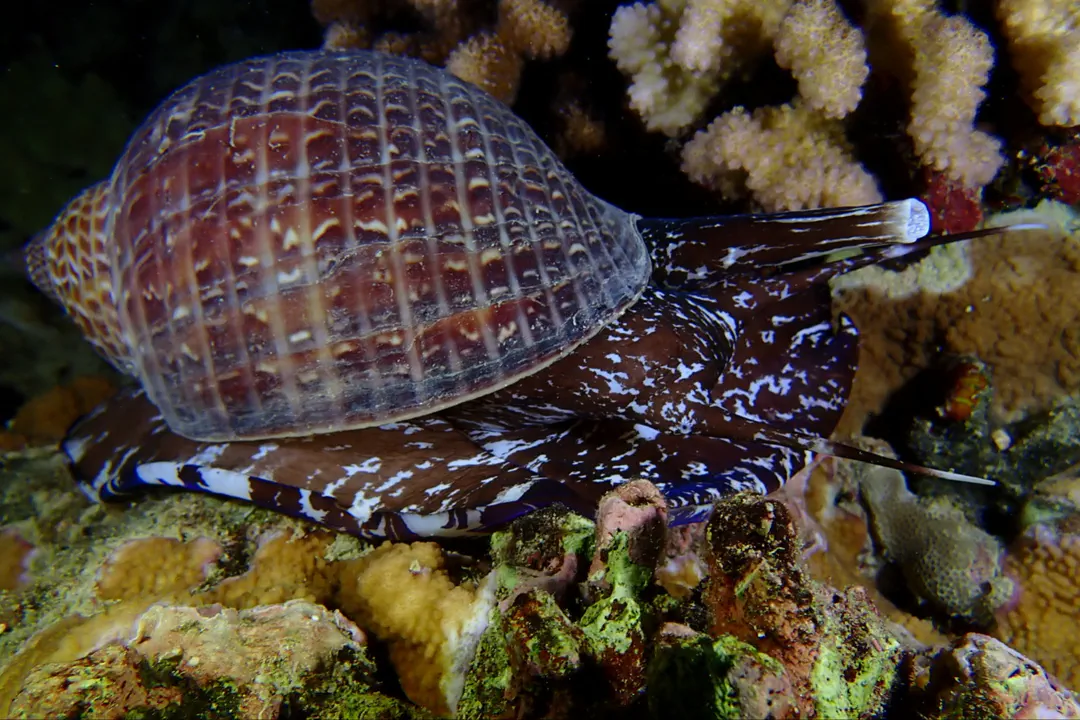
Charonia tritonis
Charonia tritonis is a species of very large sea snail, a marine gastropod mollusc in the family Ranellidae, the tritons. Reaching up to two feet (or 60 cm) in shell length this is one of the biggest mollusks in the coral reef.
It has a distinctive shell, with a pointed spire and a large body whorl. Exterior creamy with darker brown dashes and chevrons. Aperture large, orange, and with banded lip.
This species is found throughout the Indo-Pacific Oceans, Red Sea included.
It is found among shallow coral and sand. It feeds on echinoderms, especially Acanthaster planci, a starfish that feeds on corals.
The shell is well known as a decorative object, and is sometimes modified for use as a trumpet (such as the Japanese horagai or the Māori pūtātara).
C. tritonis is one of the few animals to feed on the crown-of-thorns starfish, Acanthaster planci. Occasional plagues of this large and destructive starfish have killed extensive areas of coral on the Great Barrier Reef of Australia and the western Pacific reefs. The triton has been described as tearing the starfish to pieces with its file-like radula.
Much debate has occurred on whether plagues of crown-of-thorns starfish are natural or are caused by overfishing of the few organisms that can eat this starfish, including C. tritonis. In 1994, Australia proposed that C. tritonis should be put on the CITES list, thereby attempting to protect the species. Because of a lack of trade data concerning this seashell, the Berne Criteria from CITES were not met, and the proposal was consequently withdrawn. While this species may be protected in Australia and other countries (such as India), it can be legally traded and is found for sale in many shell shops around the world and on the Internet.
© Alberto AlcaláCC BY 4.0 · iNaturalist 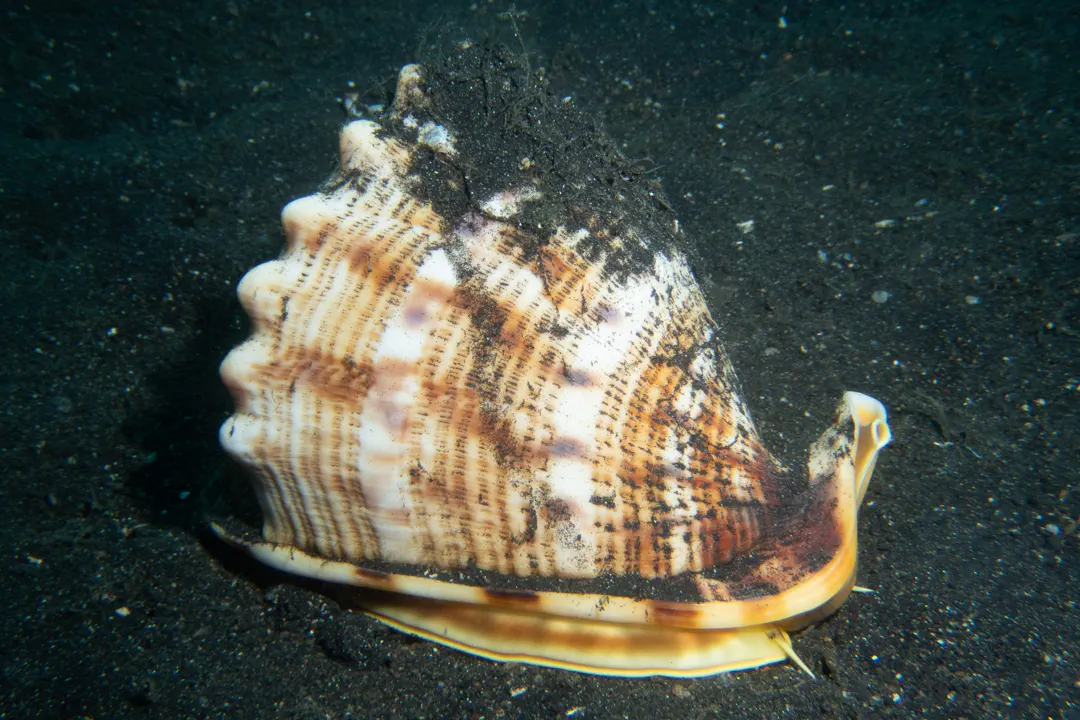 Justin PhilboisCC0 · iNaturalist
  © Robin WhiteCC BY 4.0 · iNaturalist
 Triton's Trumpet has no known danger to humans. However, always observe marine life responsibly.
Triton's Trumpet can be found at depths of up to 40 meters.
Download Seabook free for iOS and Android.