 © Lesley ClementsAll rights reserved
Areolate Rock Cod
Epinephelus areolatus
Epinephelus ongus
Epinephelus ongus is a species of marine fish in the family Serranidae.
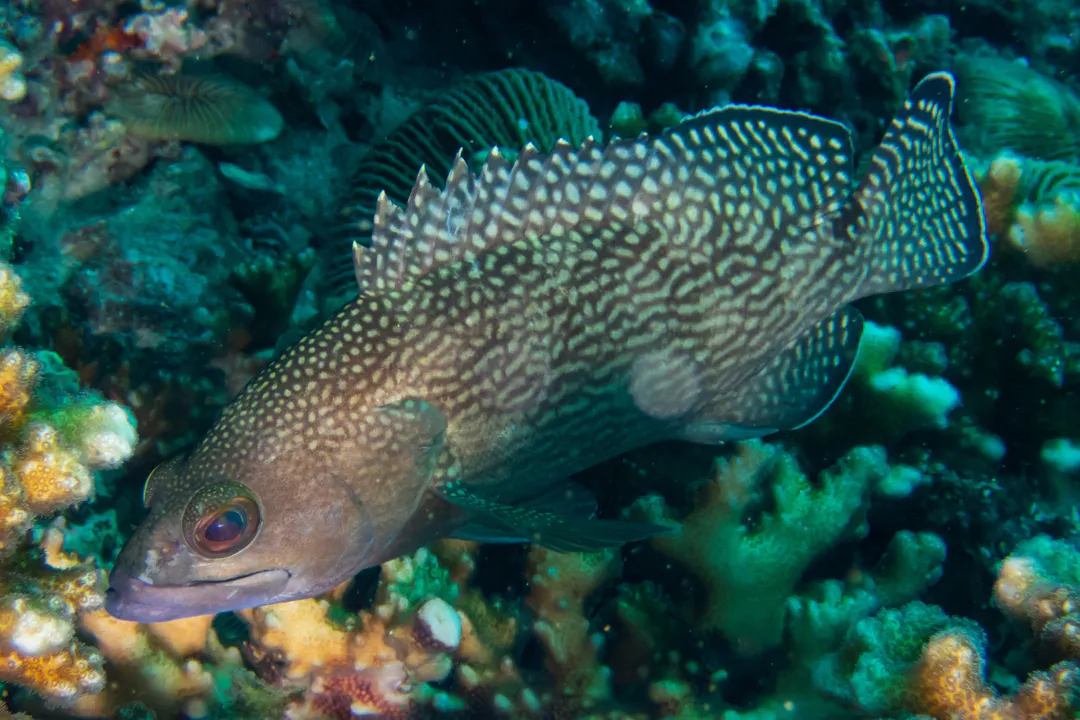
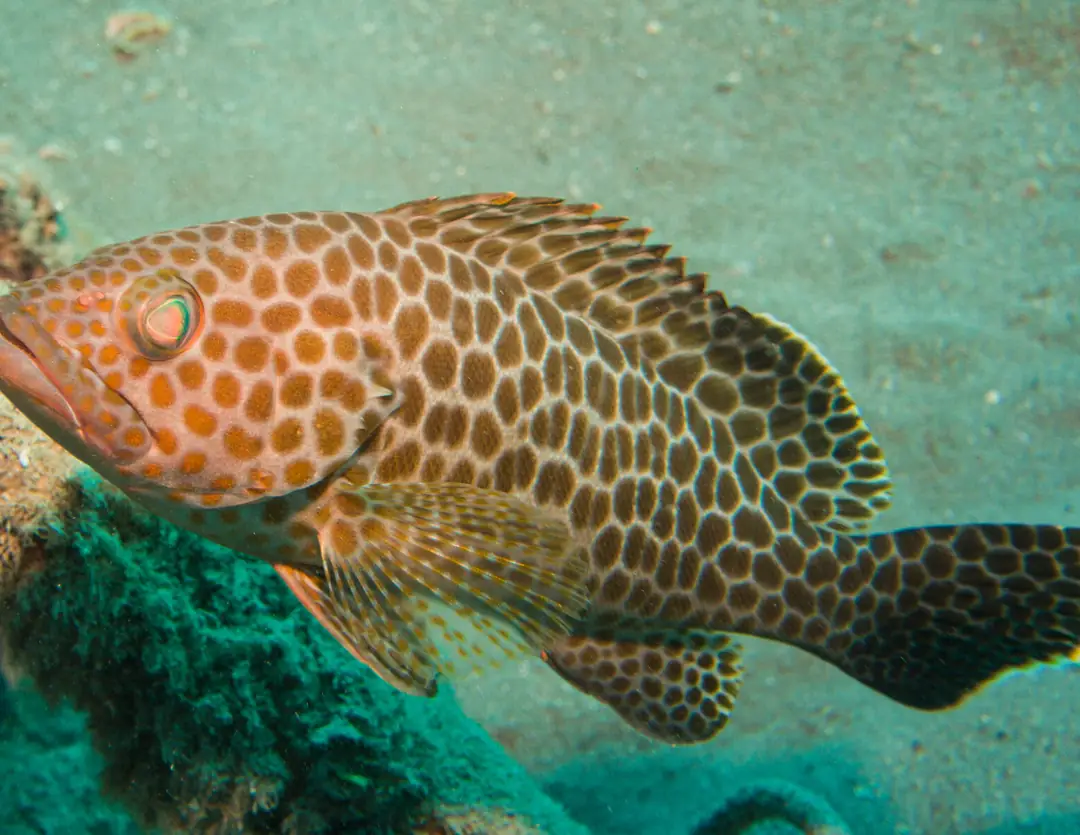
Epinephelus ongus has a body which has a standard length that is 2.7 to 3.2 times as long as it is deep. The dorsal profile of the head is moderately convex, while the area between the eyes is flat. The preopercle is rounded and the serrations on its edge are largely clothed in skin. The upper edge of the gill cover is notably convex. The dorsal fin contains 11 spines and 14-16 soft rays, while the anal fin has 3 spines and 8 soft rays. The caudal fin varies from convex to slightly rounded. The overall colour of this species is brown marked with large white blotches and many smaller pale spots on its head, body and fins which elongate and form streaks in the larger fish. The median fins have a dark submarginal band. The juveniles are dark brown with a pattern of white spots covering their bodies and fins.The spots often form wavy lines and there is a faint dark maxillary streak. This species attains a maximum published total length of 40 centimetres (16 in).
The White-streaked grouper is widespread throughout the tropical waters of the Indo-West Pacific area from the eastern coast of Africa to the Tonga Islands but is not present in the Red Sea.
Epinephelus ongus is found on inner coastal and lagoon reefs, as well as in brackish waters where it can be found in ledges and caves, at depths between 5 and 25 metres (16 and 82 ft). Adults are normally found in deeper water than juveniles. The main prey of this species are crustaceans and small fishes. Off Okinawa this species is associated with branching corals such as Acropora. It is likelyto be a protogynous hermaphrodite, with half of the fish changing sex at a total length of 27.2 centimetres (10.7 in) and 7 years of age. They have been reported to form spawning aggregations and, off Olinanwa, these were formed over a sand and rubble seabed in the vicinity of a pass between areas of reed and fish moved to spawn here form an average distance of 5 to 6 kilometres (3.1 to 3.7 mi). Groupers, as other fish, have usually a number of parasites. Not much is known about the parasitological fauna of the white-streaked grouper. In New Caledonia, it has a diplectanid monogenean on its gills, Pseudorhabdosynochus quadratus, which is specific to it. Other endoparasites known from this species are Lepidapedoides angustus and Pearsonellum corventum, both Digeneans.
Groupers, as other fish, have usually a number of parasites. Not much is known about the parasitological fauna of the white-streaked grouper. In New Caledonia, it has a diplectanid monogenean on its gills, Pseudorhabdosynochus quadratus, which is specific to it.
© Lesley ClementsAll rights reserved 
 © Lesley ClementsAll rights reserved
 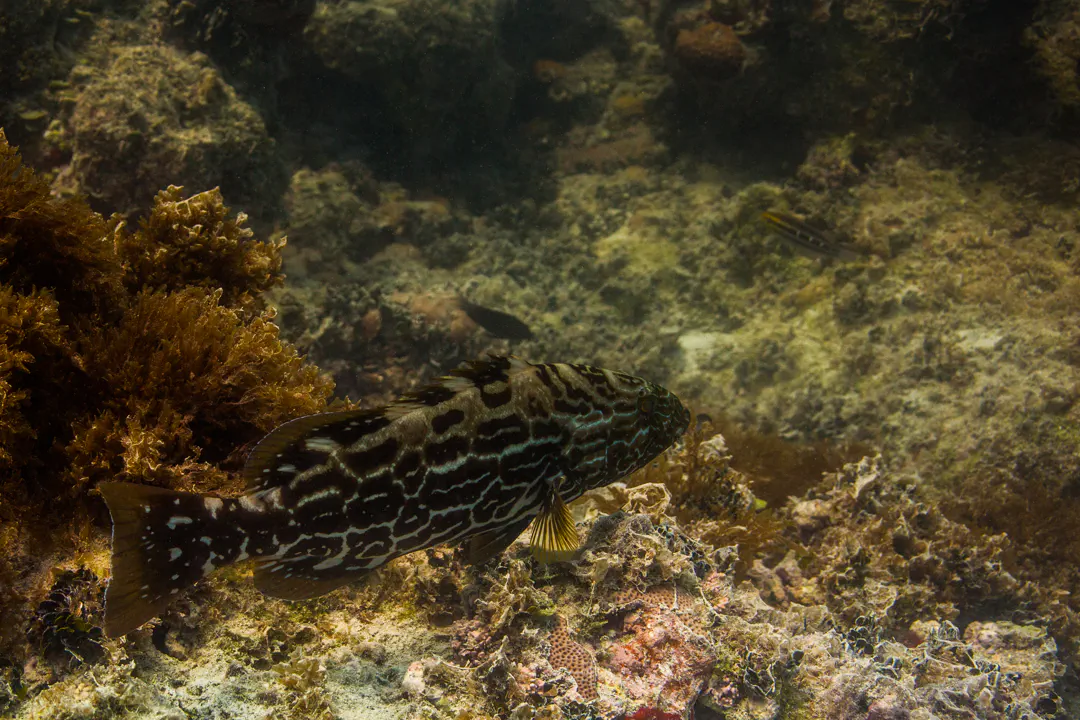 © João D'AndrettaCC BY 4.0 · iNaturalist
 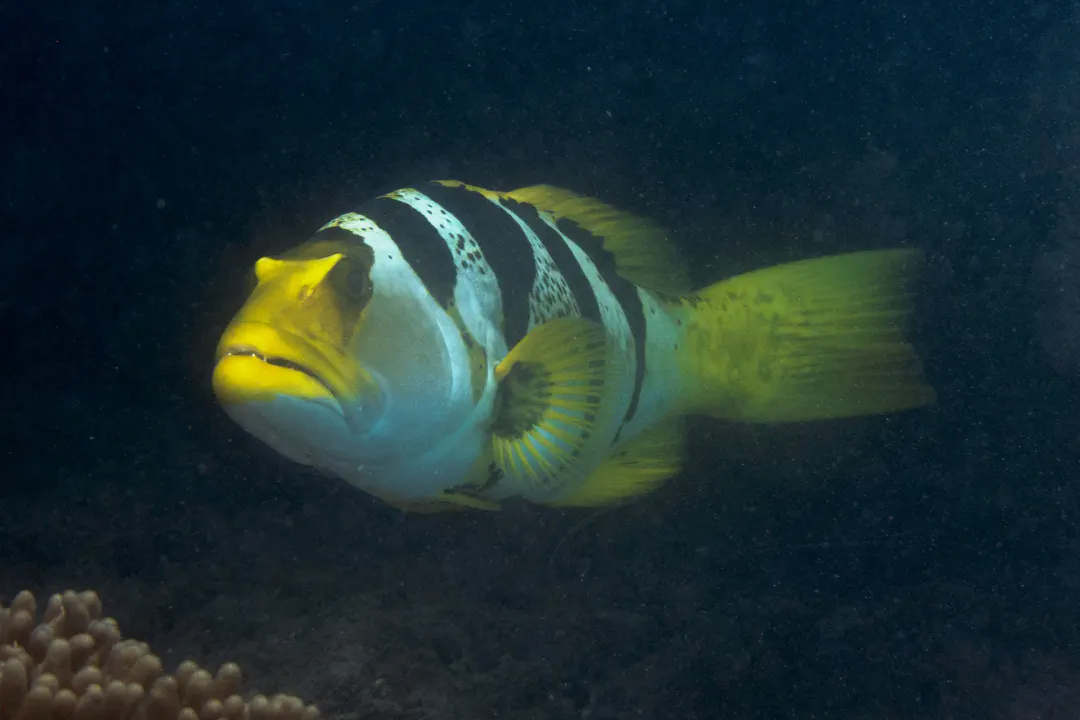 © Ewout KnoesterCC BY-SA 4.0 · iNaturalist
 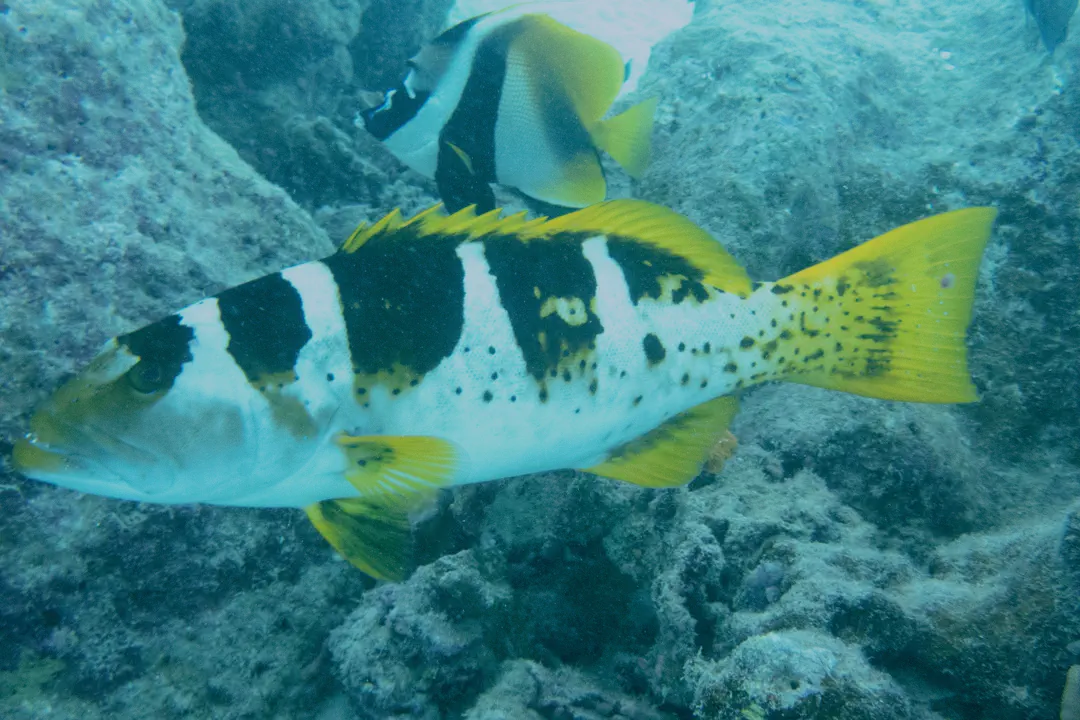 © Logan JonesCC BY 4.0 · iNaturalist
 Specklefin Grouper (juvenile) has no known danger to humans. However, always observe marine life responsibly.
Specklefin Grouper (juvenile) can be found at depths of up to 60 meters.
Download Seabook free for iOS and Android.