 © Stas KuryanAll rights reserved
Grooved Razorfish
Centriscus scutatus
Aeoliscus strigatus
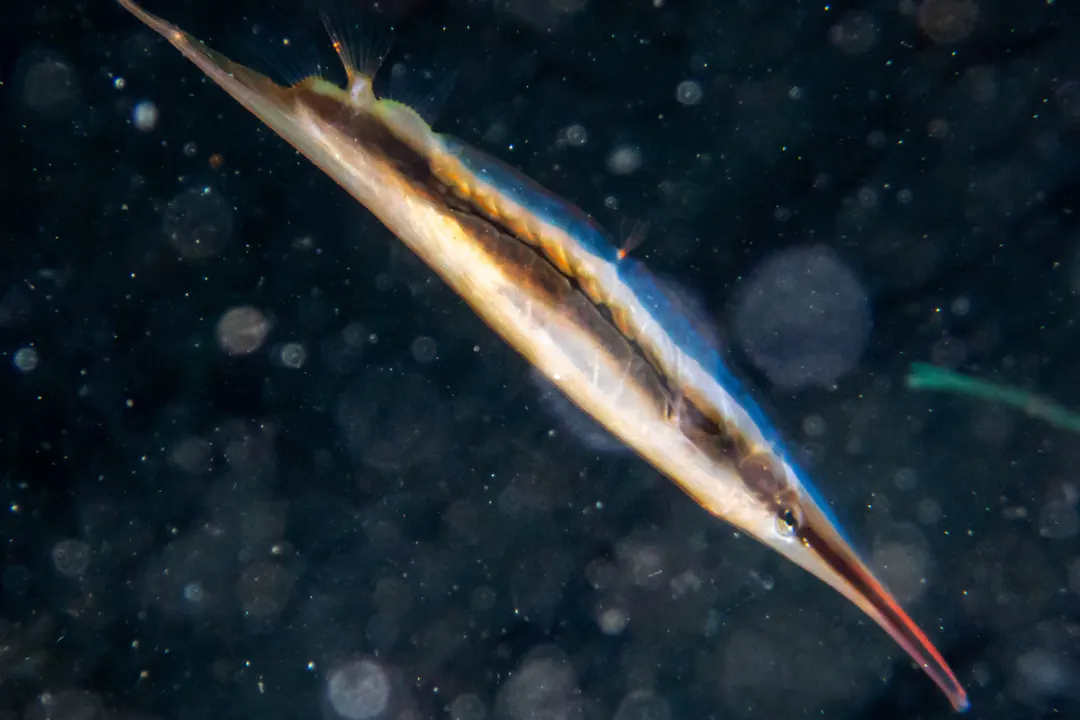
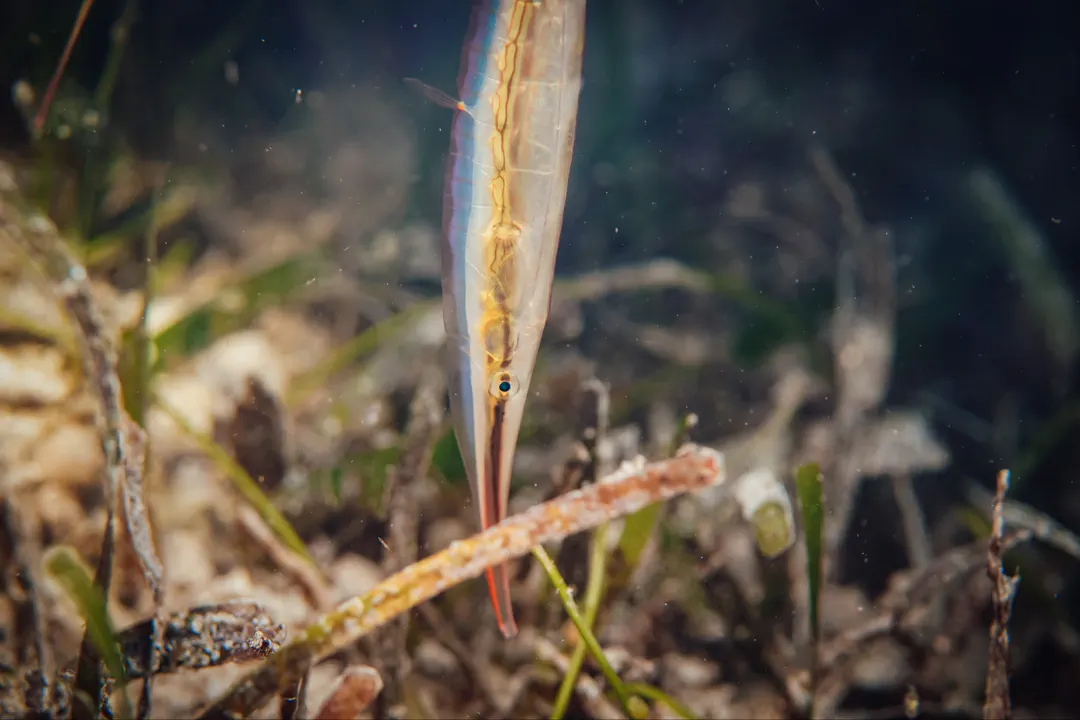
Aeoliscus strigatus is a member of the family Centriscidae of the order Syngnathiformes. This unique fish adopts a head-down tail-up position as an adaptation for hiding among sea urchin spines. The razorfish is found in coastal waters in the Indo-West Pacific. Its natural habitat includes beds of sea grass and coral reefs, where sea urchins are found.
The razorfish is easily identifiable due to its particular body shape as well as its way of moving in synchrone group head down. It is a small fish with a maximum size of 15 cm (5.9 in) long, its body is stretched ending by a long fine "beak". Its fins are considerably reduced and transparent. The dorsal surface of the razorfish is covered by protective bony plates. They extend past the end of the body and over the tail fin, which terminates in a sharp spine. A black to brown median band runs the length of the fish crossing also the eyes. The color of the body is variable with the habitat. In seagrass environment, the background color of the body can be greenish-yellow with light brown stripes. In open areas like sand patch, rubble or close to coral reef, then the body coloration occurs to be light silver with a black to brown stripe. There is no known sexual dimorphism.
Indo-West Pacific: Tanzania and Seychelles; then from southern Japan to New South Wales, Australia eastward to Vanuatu.
The razorfish eats mainly small brine shrimp and other small invertebrates. They have also been known to eat minute crustaceans in the zooplankton. In the wild they have been observed hiding in the spines of sea urchins, both as a defense mechanism and as a hunting mechanism. When threatened by larger fish, the razorfish darts away to a nearby sea urchin. The larger fish, wary of being stung by the sea urchin, which can sometimes be deadly, gives up the chase. They also hide in the spines for a completely different reason. When hunting, razorfish will hide among the sea urchin spines and wait for small invertebrates that feed on the urchins. When their prey gets close the razorfish will dart out and try to catch its dinner.
© Stas KuryanAll rights reserved 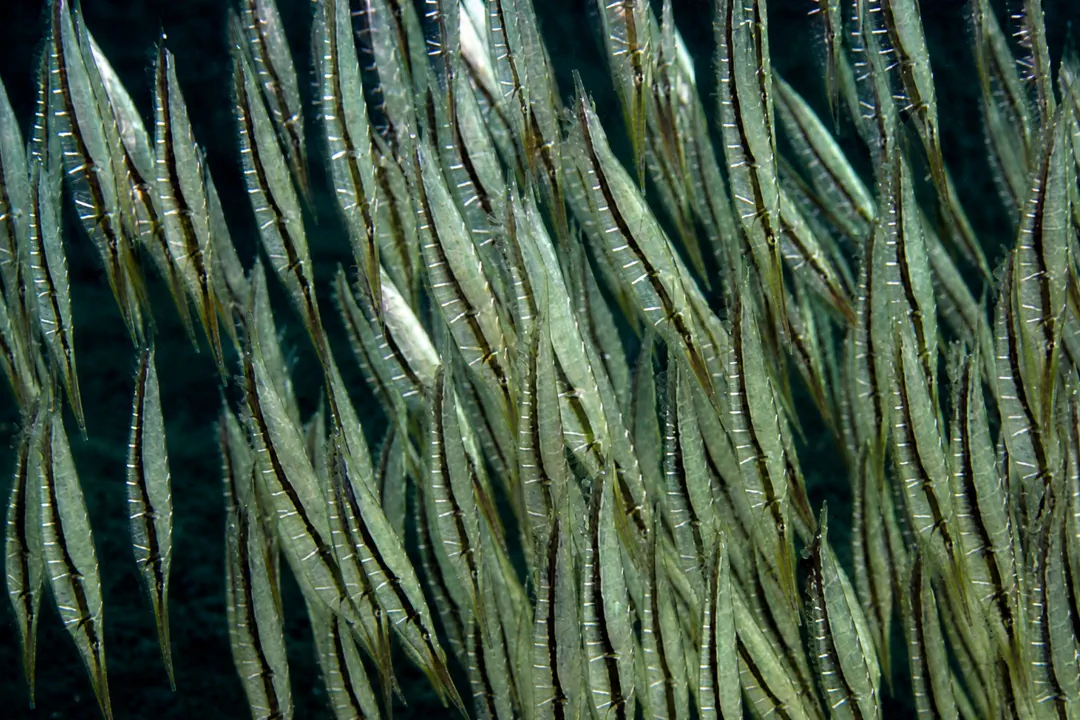 © seabook.appAll rights reserved
 Jointed Razorfish has no known danger to humans. However, always observe marine life responsibly.
Jointed Razorfish can be found at depths of up to 42 meters.
Download Seabook free for iOS and Android.