 © Heather Dawnstar SabinCC BY 4.0 · iNaturalist
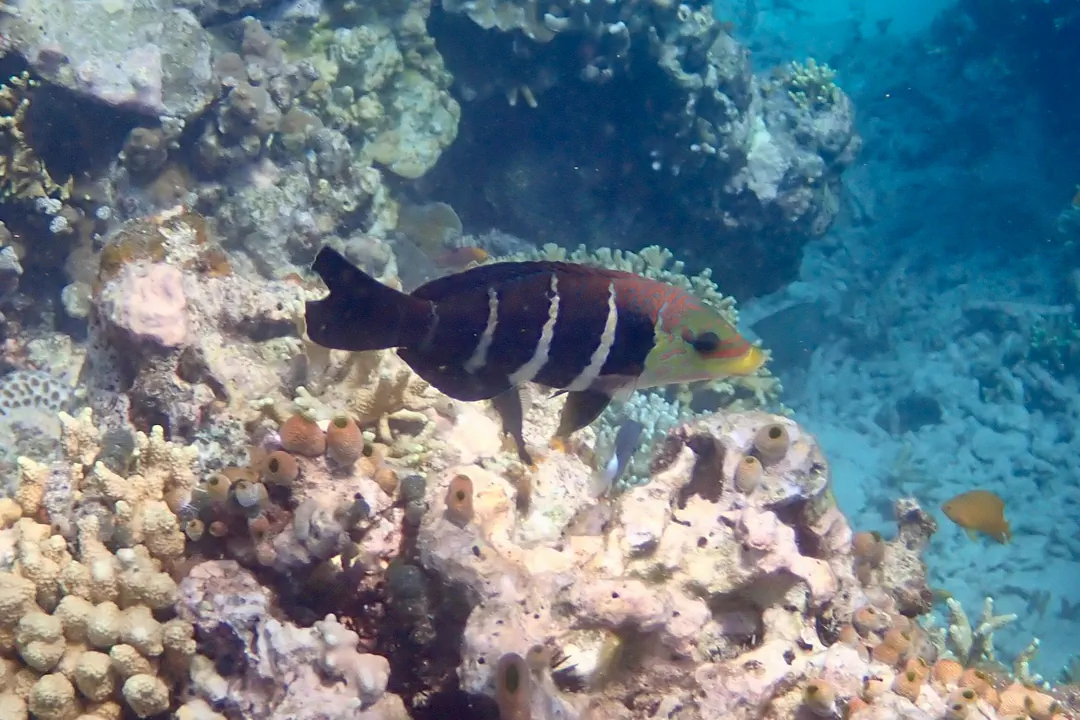
Barred Thicklip (female)
Hemigymnus fasciatus
Anampses caeruleopunctatus
Anampses caeruleopunctatus, is a species of wrasse found from the Atlantic coast of South Africa through the Indian Ocean to Japan and Australia east to Easter Island in the Pacific Ocean (though absent from Hawaii).
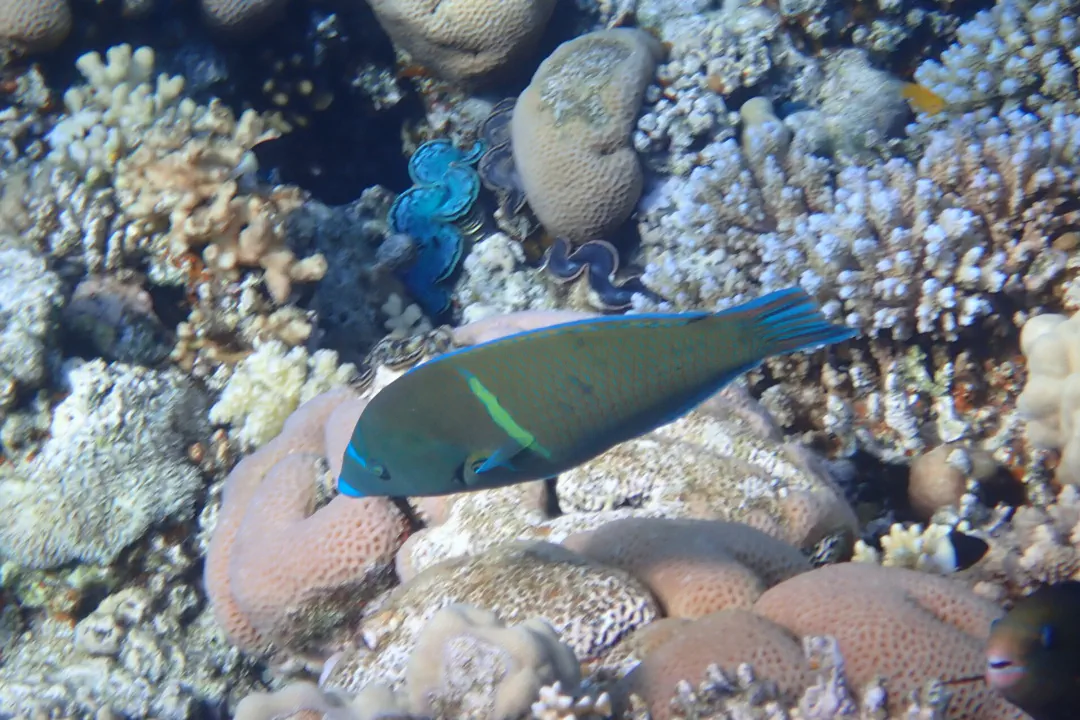
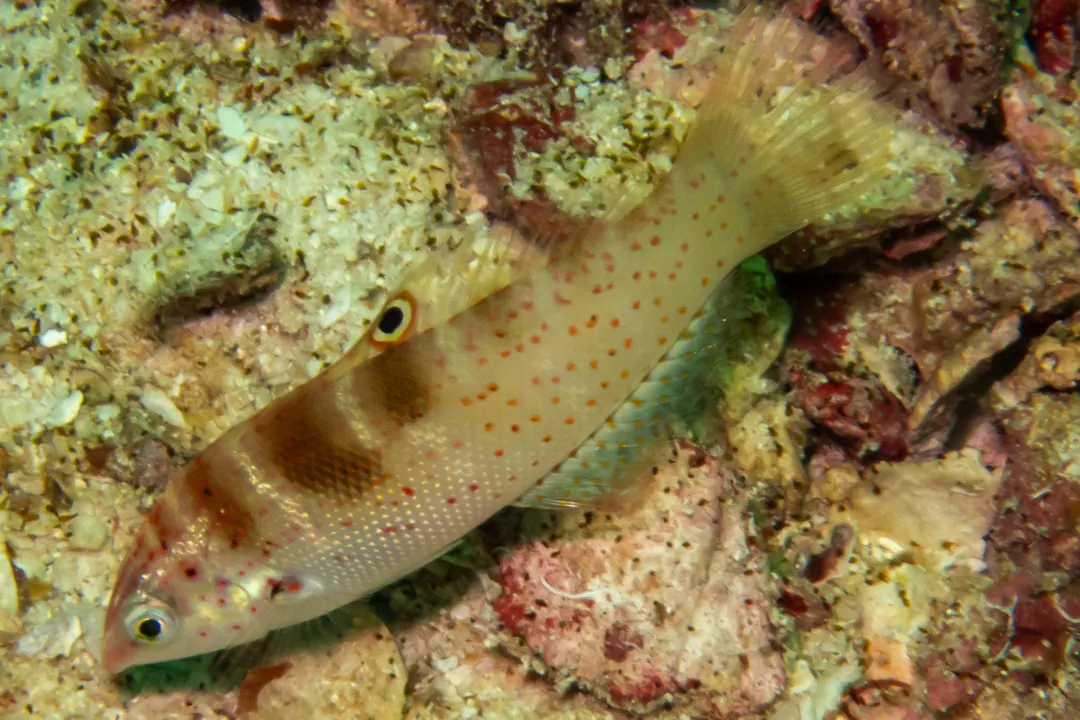
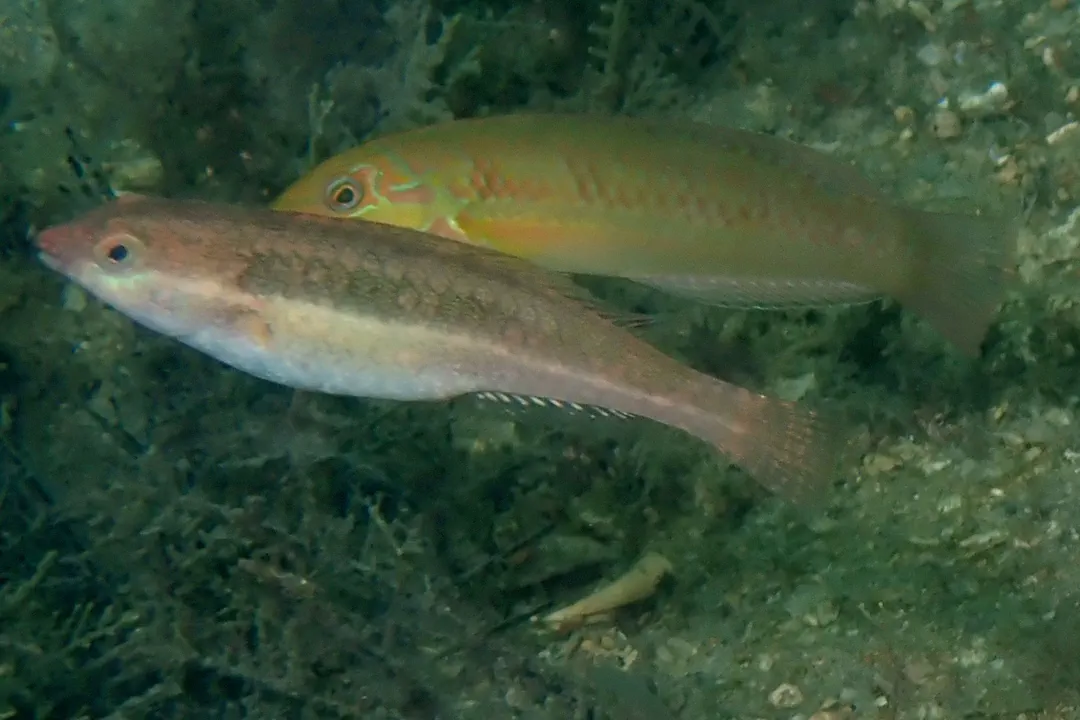
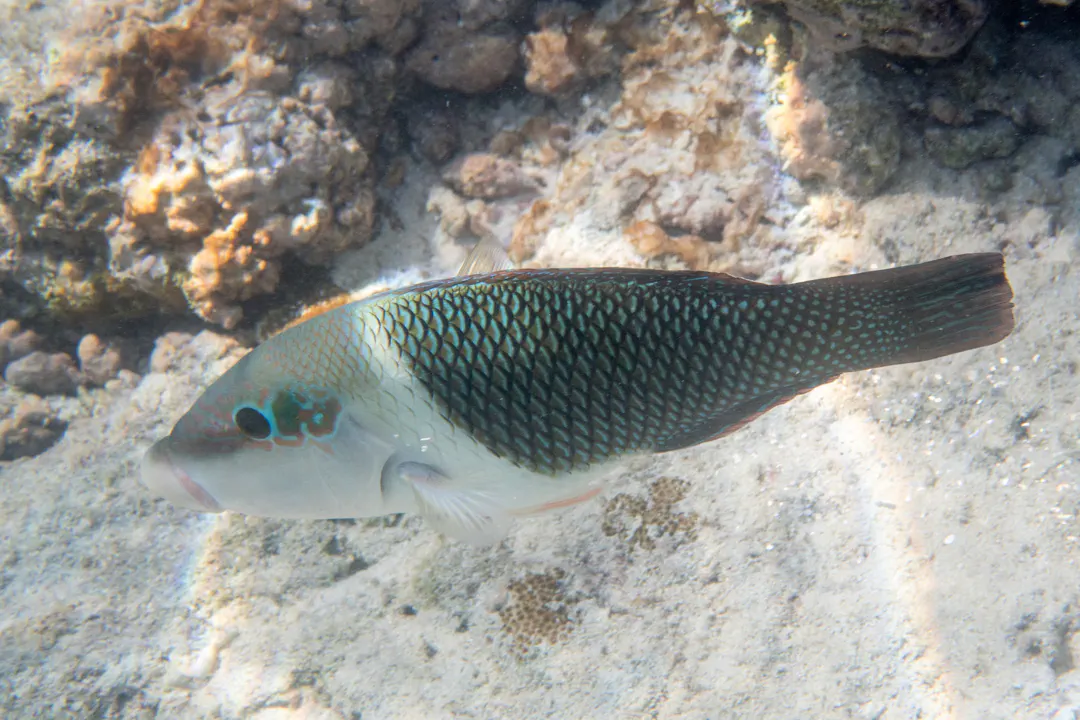
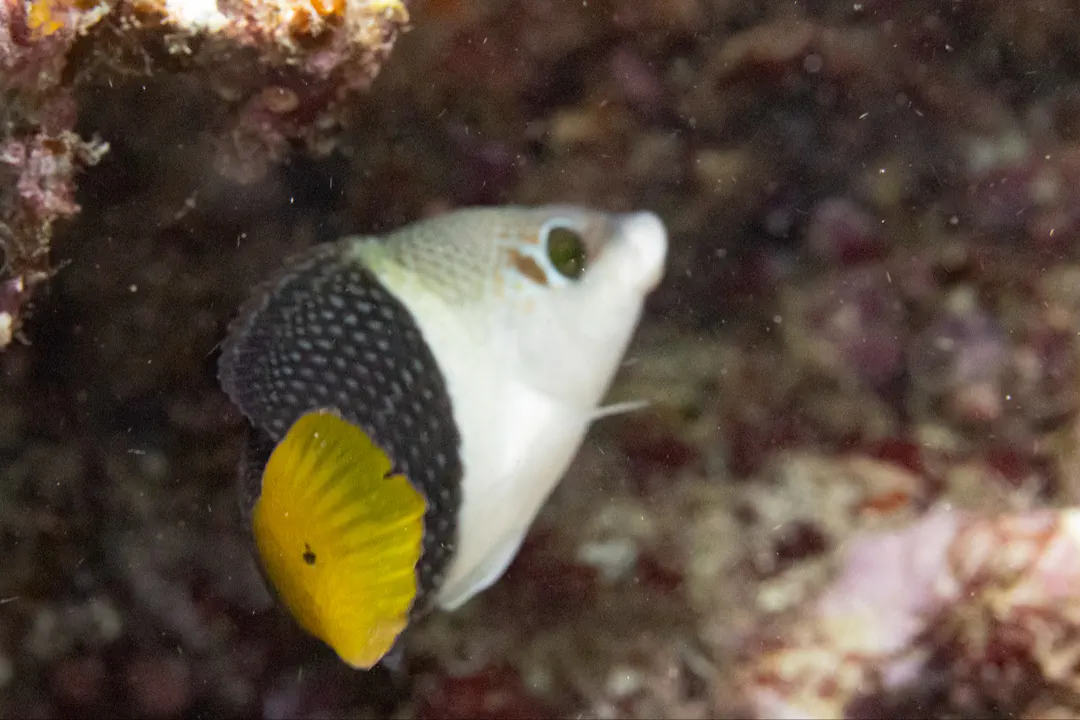
Males (Terminal Phase) are dark bluish to bluish-green with a pale green vertical bar behind the pectoral-fin base, narrow blue lines on the head, a pale blue stripe between the eyes and a vertical blue dash on each body scale. Females (Initial Phase) are reddish-brown with iridescent blue spots forming rows along the side, blue lines and dashes on the head, pale blue spots on the caudal fin, reddish anal and pelvic fins and a narrow transparent margin on the tail. Juveniles have a broad transparent margin on the caudal fin which lacks the pale blue spots of females. Very small juveniles are olive-green with narrow brown stripes and a mostly transparent tail.
Indo-West Pacific: Red Sea and South Africa, including the southeast coast to Easter Island, north to Japan, south to Australia. Not found in the Hawaiian Islands, but replaced by the closely related Anampses cuvier.
Adults are found on the surge zone of coral reefs or rocky coasts. They occur singly or in pairs. Tiny juveniles swim with head towards the bottom and slowly undulate the body, looking like a floating leaf in the current. Young feed primarily on small crustaceans and polychaetes, adults switch to larger crustaceans and mollusks as well as polychaetes. They bury at night. Oviparous, distinct pairing during breeding. Occasionally trawled. Not common in fish markets. This species is found at depths from 3 to 30 m (9.8 to 98.4 ft), with the adults preferring the surge zone on coral reefs or along rocky coastlines. Juveniles orient their bodies and move in such a way as to resemble floating leaves. This species can reach a length of 42 cm (17 in). It is of minor importance to local commercial fisheries and can be found in the aquarium trade.
© Heather Dawnstar SabinCC BY 4.0 · iNaturalist 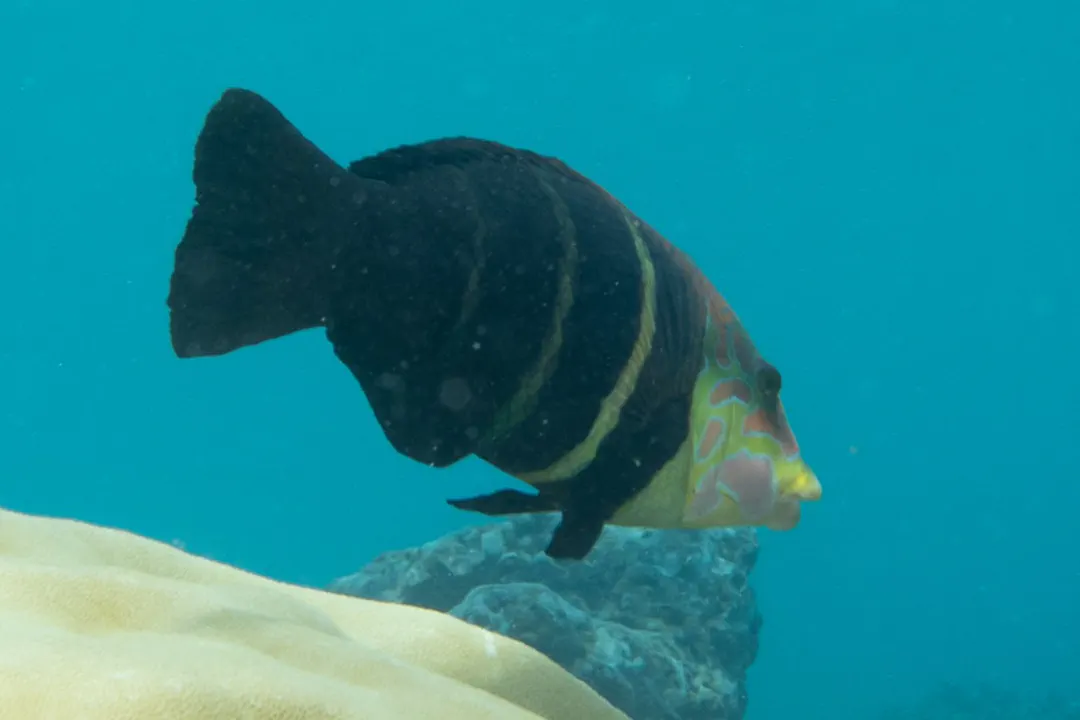 © Storm MartinCC BY 4.0 · iNaturalist
  © portioidCC BY 4.0 · iNaturalist
  © jeyreCC BY 4.0 · iNaturalist
  © Emanuele SantarelliCC BY-SA 4.0 · iNaturalist
  © cello caruso-turielloCC BY 4.0 · iNaturalist
 Bluespotted Wrasse has no known danger to humans. However, always observe marine life responsibly.
Bluespotted Wrasse can be found at depths of up to 30 meters.
Download Seabook free for iOS and Android.