 © Brian GratwickeCC BY 4.0 · iNaturalist
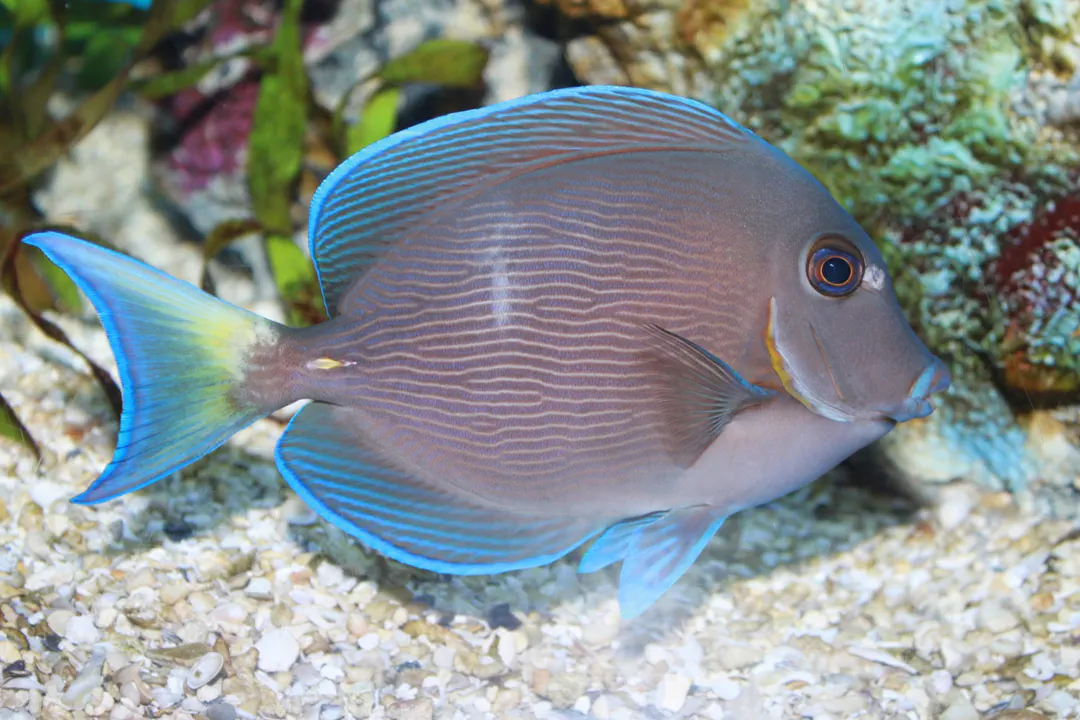
Atlantic Blue Tang
Acanthurus coeruleus
Ctenochaetus tominiensis
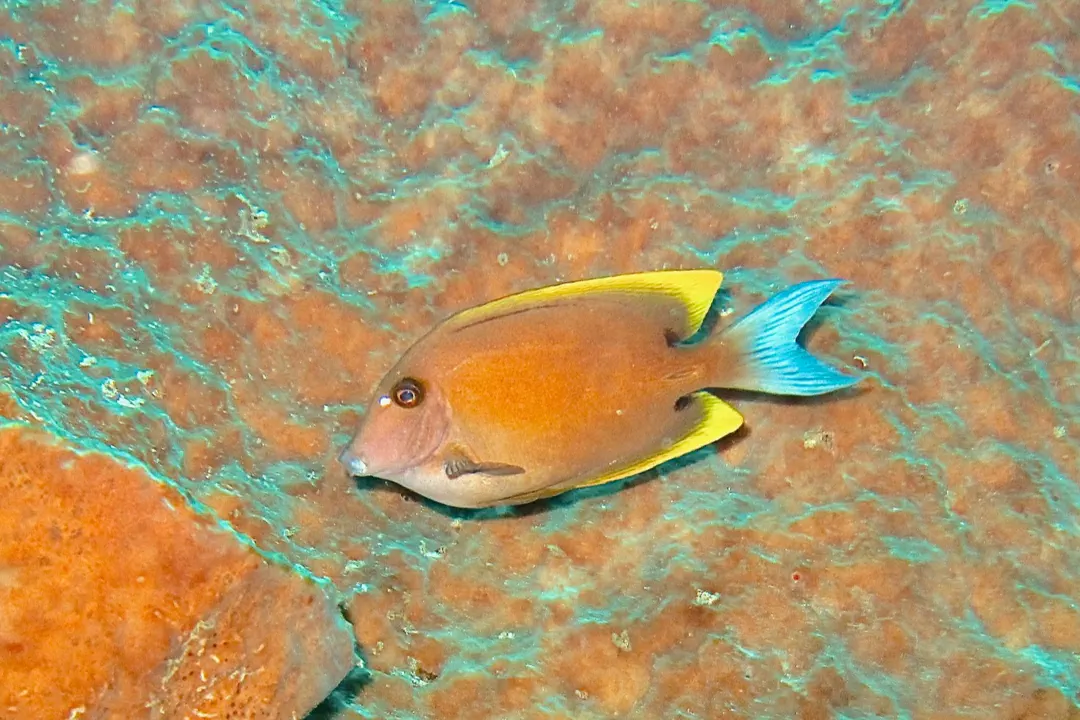
Ctenochaetus tominiensis, the Tomini surgeonfish, is a species of marine fish in the family Acanthuridae.
It is tan combined with yellow, blue, and white highlights as a juvenile. When mature, the body color solidifies, the tail becomes bluish white, and the dorsal and anal fins are tipped with a golden-yellow hue. The area above the eyes has small golden flecks while sporting a golden half circle beneath.
Dorsal spines (total): 8; Dorsal soft rays (total): 24-25; Anal spines: 3; Anal soft rays: 22 - 23. Margins of lips papillate. Only species of Ctenochaetus with angular dorsal and anal fins. Caudal fin of juveniles forked, of adults lunate. Gill rakers on anterior row 20-21, on posterior row 20. Outer soft portion of dorsal and anal fins orange (pale in preservative). Edge of lips crenulate. Upper teeth with 2 or 3 denticulations (not including tip). Anterior gill rakers 19-23.
The Tomini surgeonfish is a small size fish and can reach a maximum size of 16 cm length.
The Tomini surgeonfish is widespread throughout the tropical waters of the central Indo-Pacific region from Indonesia to the Tonga Islands.
Occurs singly or in small groups along steep coral-rich drop-offs of sheltered coasts. Feeds on algae and microfauna living in between the algae.
It occasionally makes its way into the aquarium trade.
© Brian GratwickeCC BY 4.0 · iNaturalist  © seabook.appAll rights reserved
  © Dr. Thomas DörnerCC BY-SA 4.0 · iNaturalist
 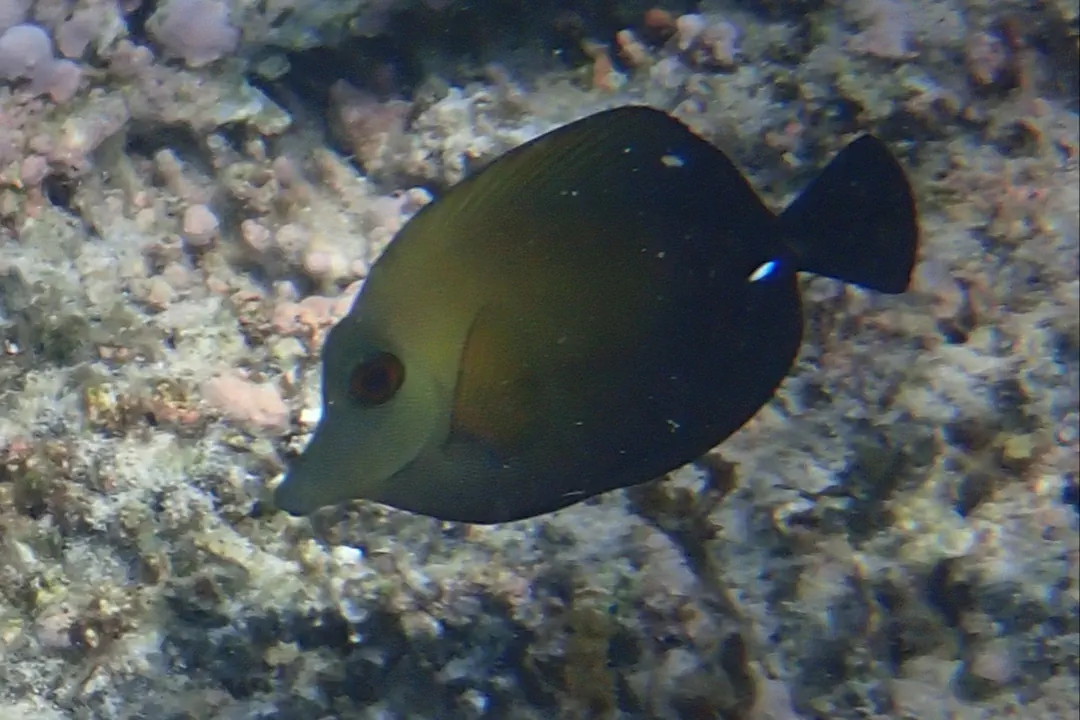 © Debra BakerCC BY 4.0 · iNaturalist
 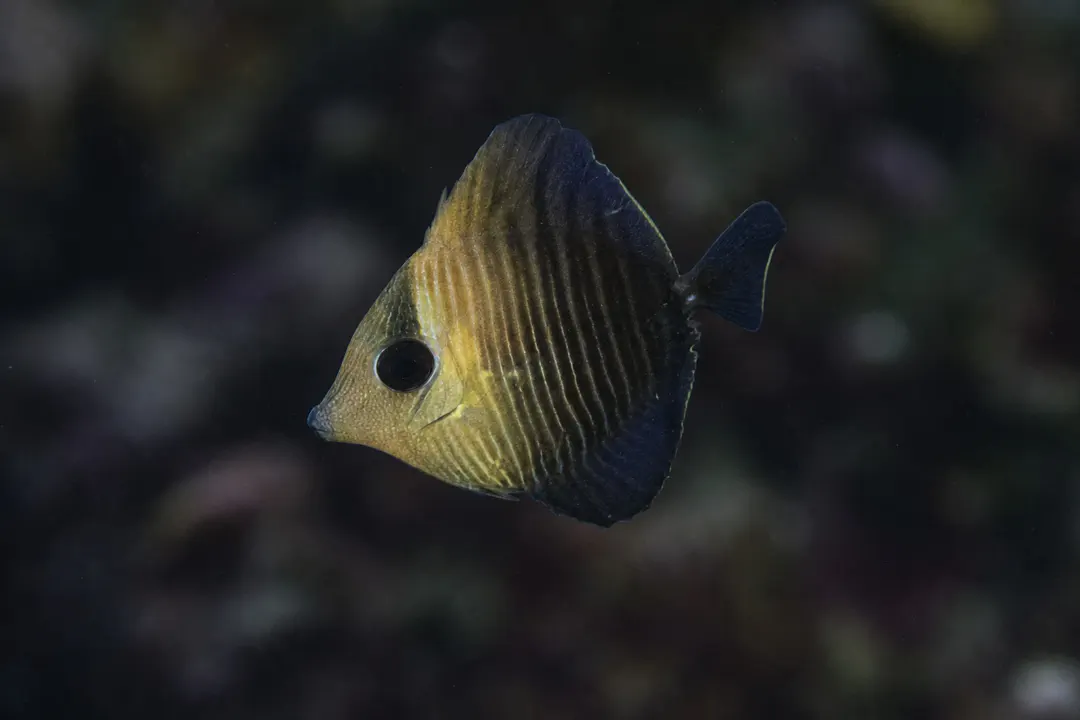 © seabook.appAll rights reserved
 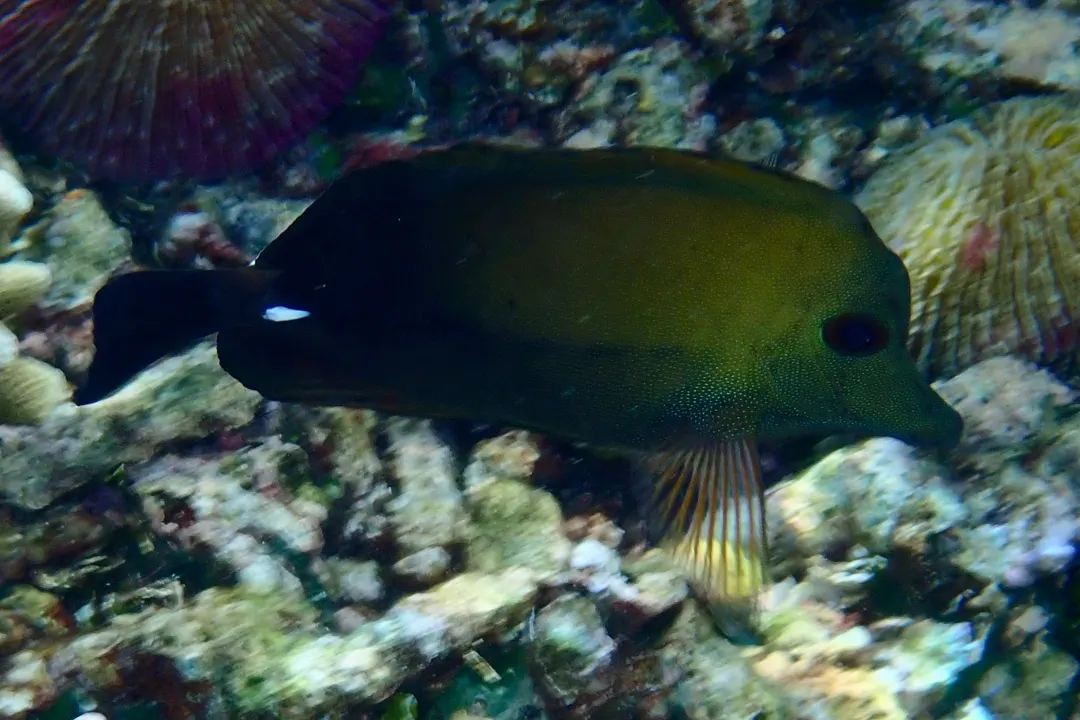 Jean-Paul BoerekampsCC0 · iNaturalist
 Orange-tip Bristletooth has no known danger to humans. However, always observe marine life responsibly.
Orange-tip Bristletooth can be found at depths of up to 45 meters.
Download Seabook free for iOS and Android.