 © Ewout KnoesterCC BY-SA 4.0 · iNaturalist
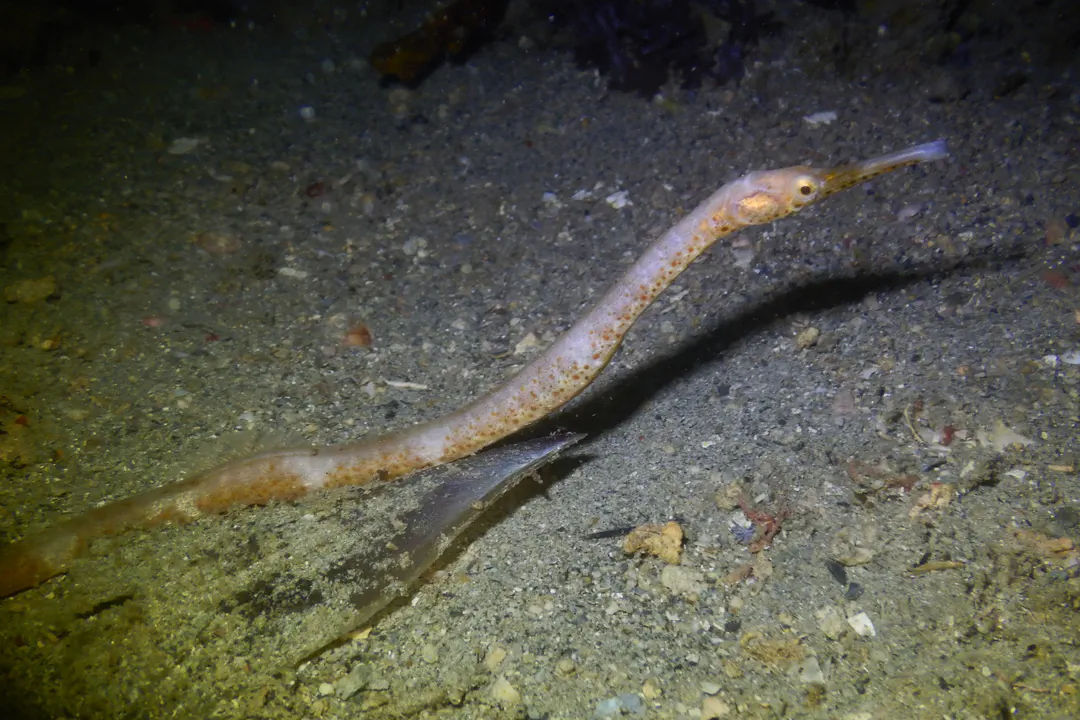
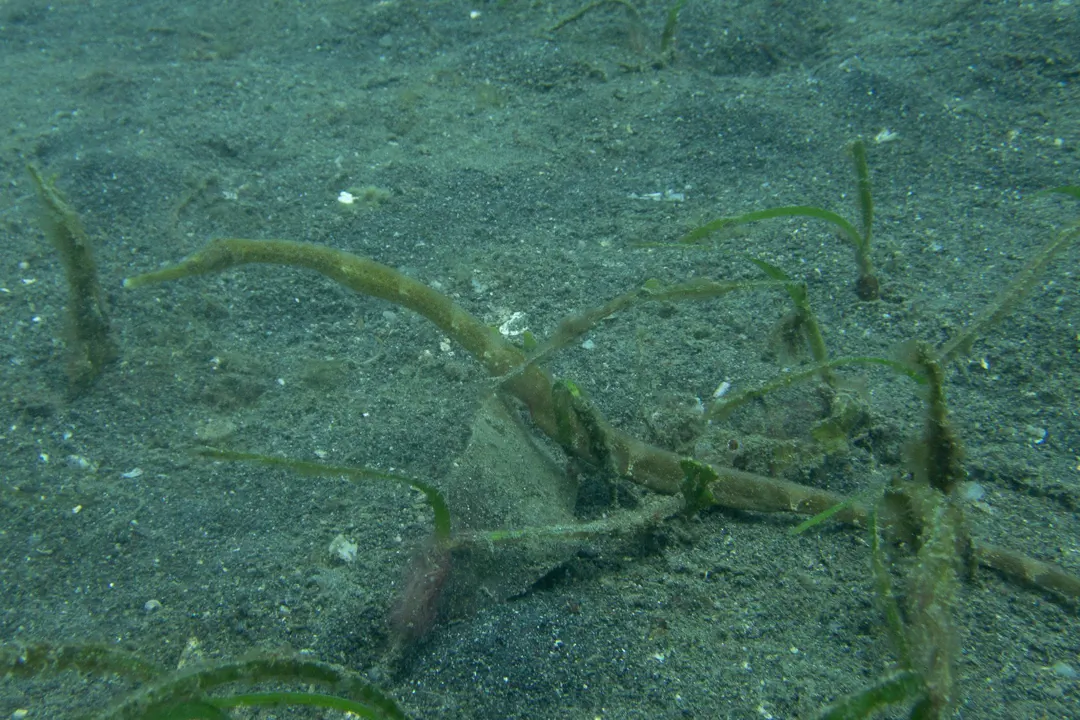
Bentstick Pipefish
Trachyrhamphus bicoarctatus
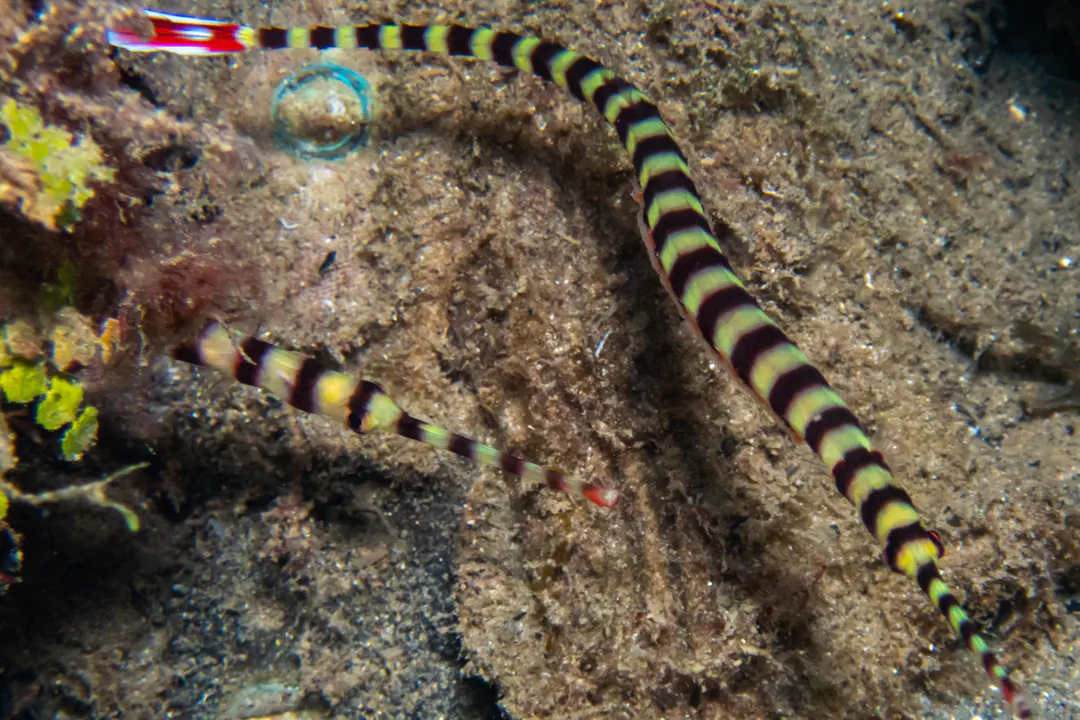
Dunckerocampus dactyliophorus
Dunckerocampus dactyliophorus is a species of fish in the Syngnathidae (seahorses and pipefish) family.
The banded pipefish has a straight, elongated body which reaches a maximum length of 19 cm (7.4 in). It has fleshy streams coming back from its head. These trails are thought to be mechanisms of camouflage for the pipefish whilst hiding in reeds. It has alternating pale and red to blackish bands, a reddish caudal fin with white dorsal and ventral margins, and usually 1-3 white spots in the centre.
The banded pipefish is widespread throughout the tropical waters of the Indo-Pacific region, Red Sea included. Its range includes Australia, Fiji, French Polynesia, Indonesia, Japan, the Marshall Islands, New Caledonia, Northern Mariana Islands, Papua New Guinea, the Philippines, Samoa, the Solomon Islands, South Africa, and Taiwan. It inhabits tide pools, lagoons, and outer reef slopes in tropical climates. It is found solitary, pairs or in small aggregations in caves, crevices or under ledges. It feeds on small invertebrates.
Similar to other seahorses and pipefishes, the male banded pipefish is equipped with a specialised brood pouch, rather than the female. The female deposits her eggs in the male's pouch, where they develop. The male later gives birth.
© Ewout KnoesterCC BY-SA 4.0 · iNaturalist 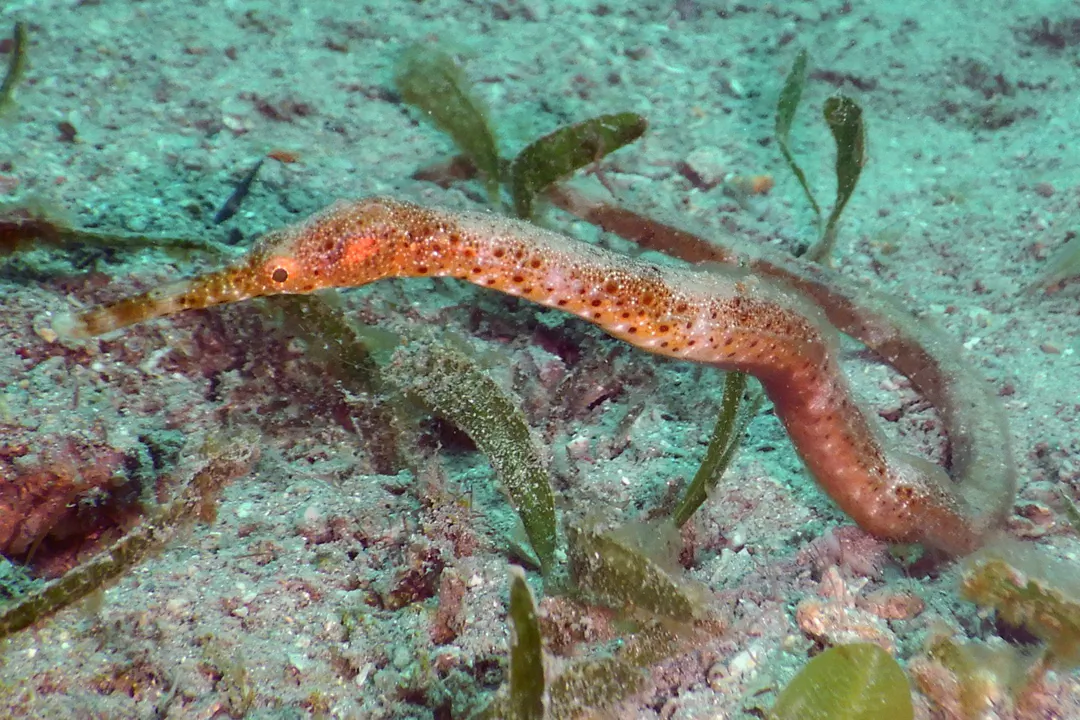 © Ewout KnoesterCC BY-SA 4.0 · iNaturalist
  Justin PhilboisCC0 · iNaturalist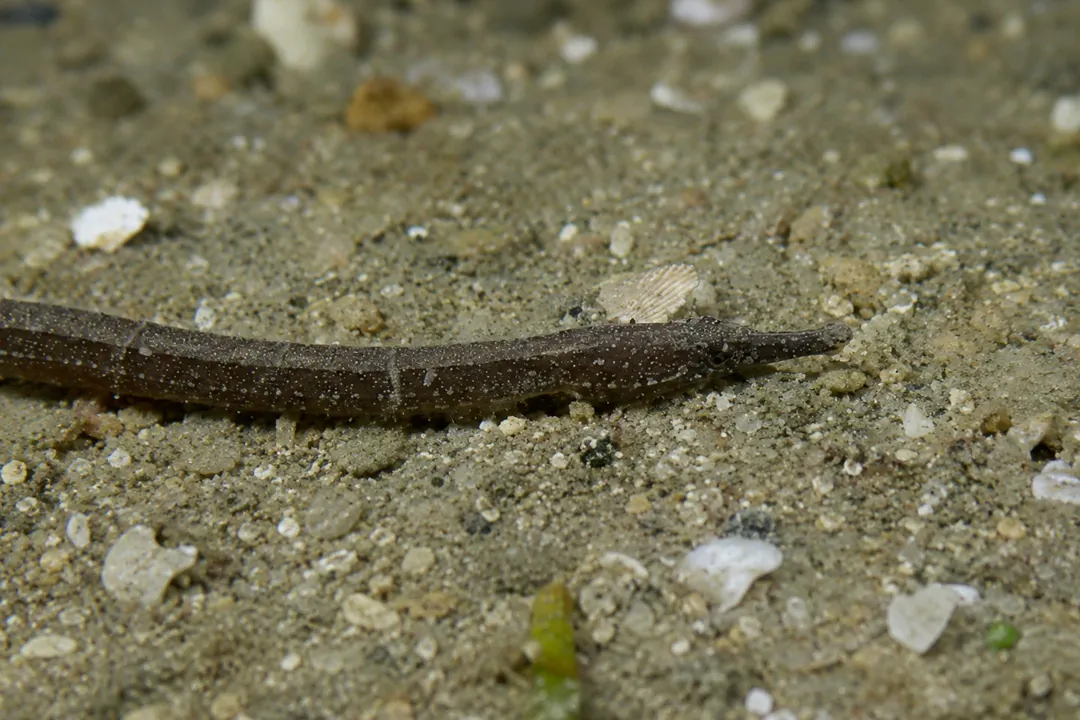
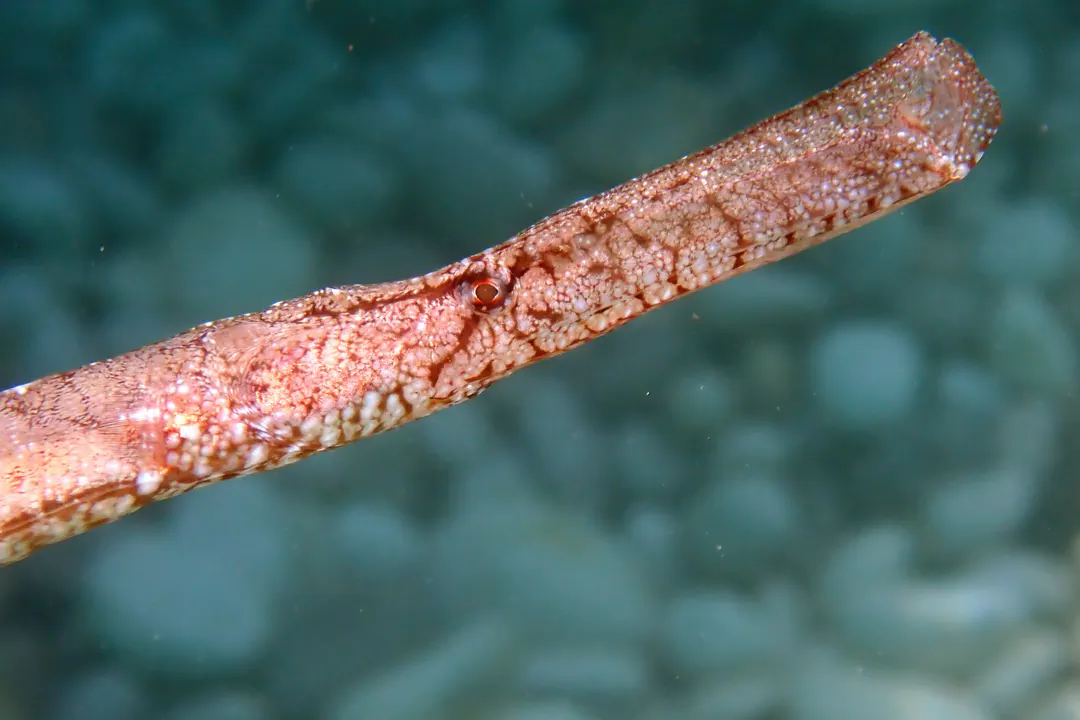 © Eridan XharahiCC BY 4.0 · iNaturalist
 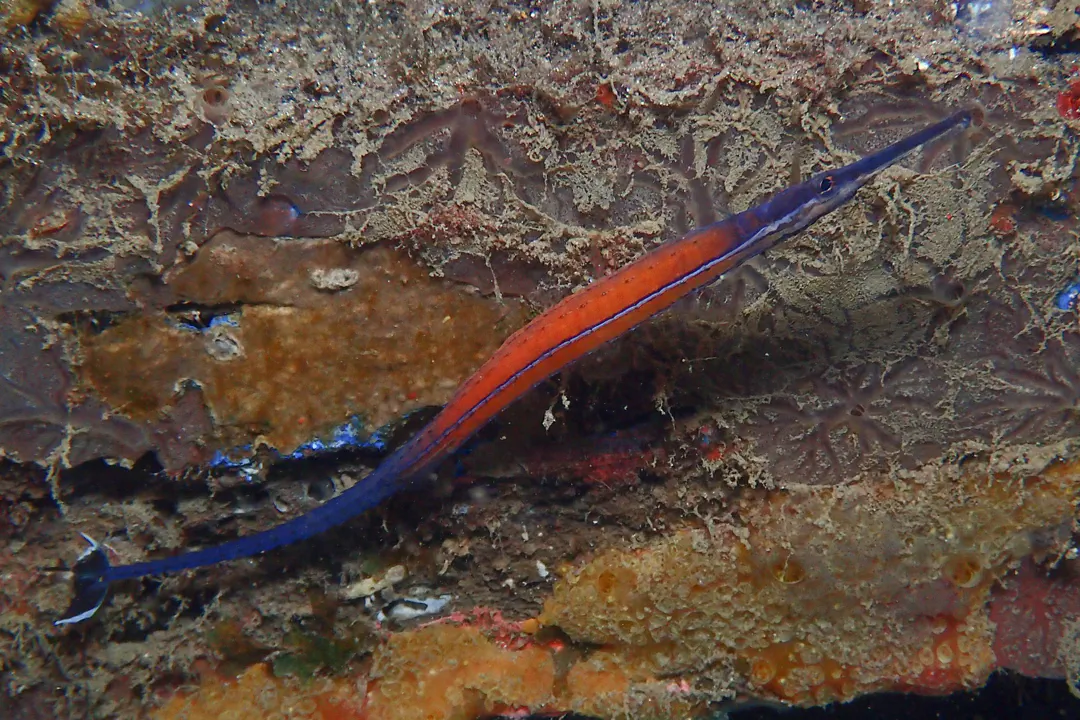 © Dan SchofieldCC BY 4.0 · iNaturalist
 Banded Pipefish has no known danger to humans. However, always observe marine life responsibly.
Banded Pipefish can be found at depths of up to 56 meters.
Download Seabook free for iOS and Android.