 © Lesley ClementsAll rights reserved
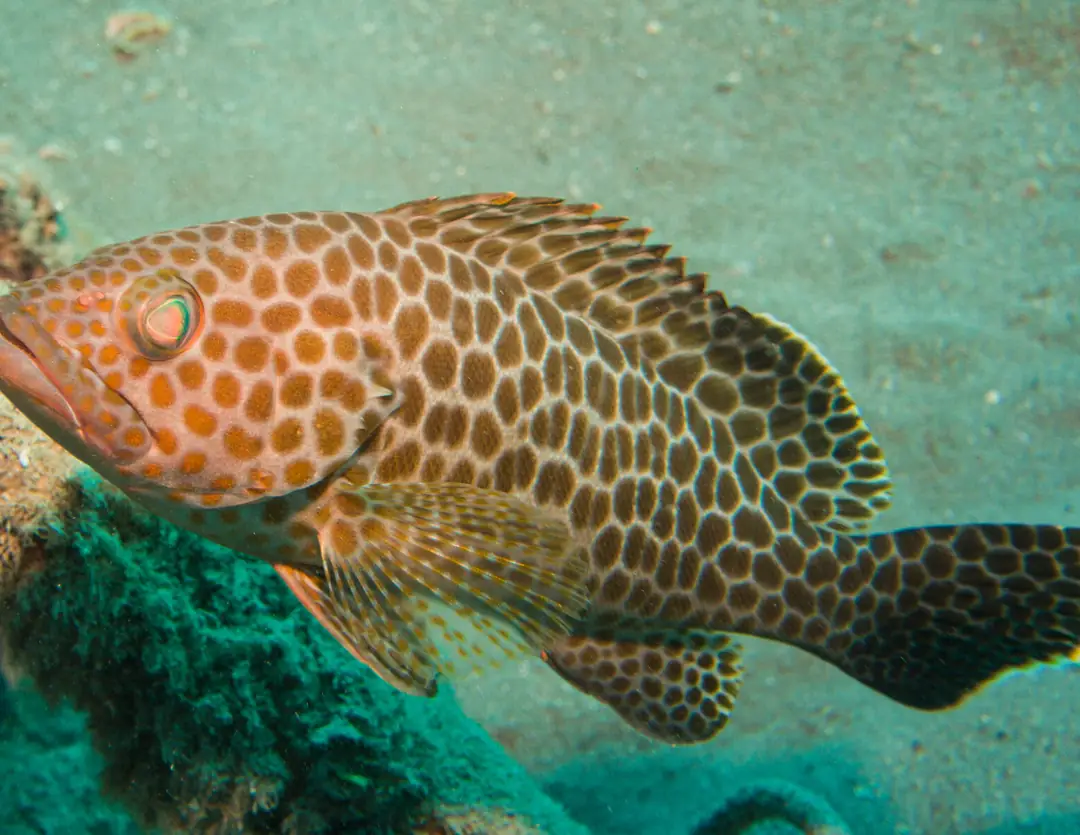
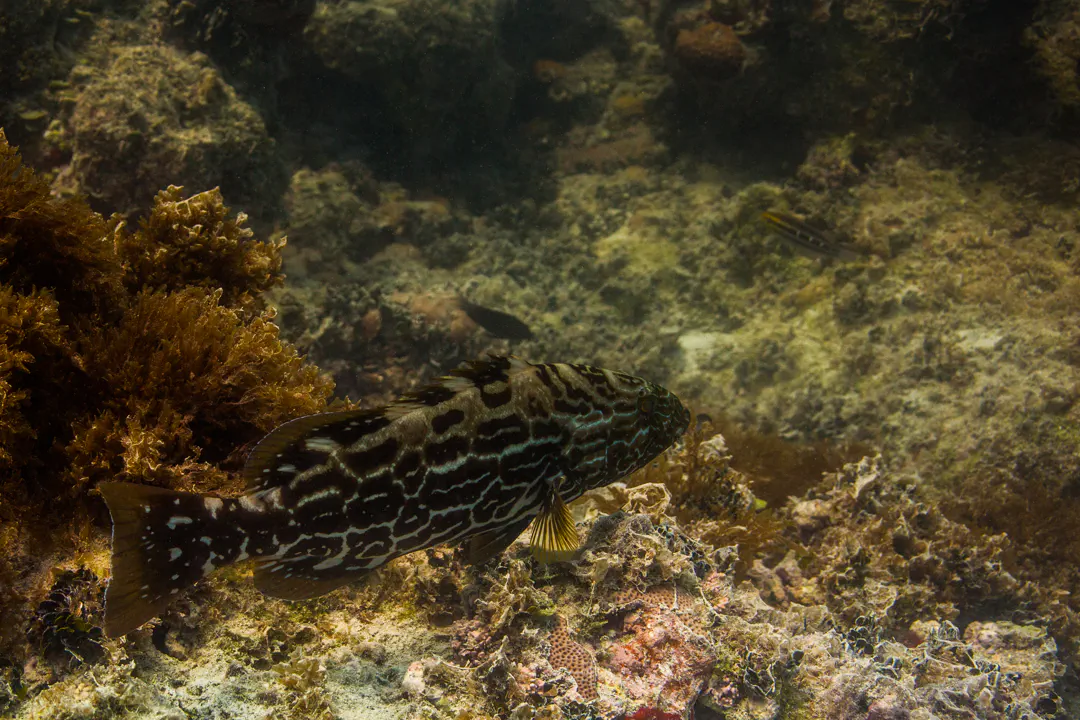
Areolate Rock Cod
Epinephelus areolatus
Cromileptes altivelis
Cromileptes altivelis is a demersal marine fish which belongs to the family Serranidae, the groupers. Recent molecular analyses based on five genes show that Cromileptes altivelis is included in the same clade as species of Epinephelus. Consequently, the species should be included in Epinephelus as Epinephelus altivelis.
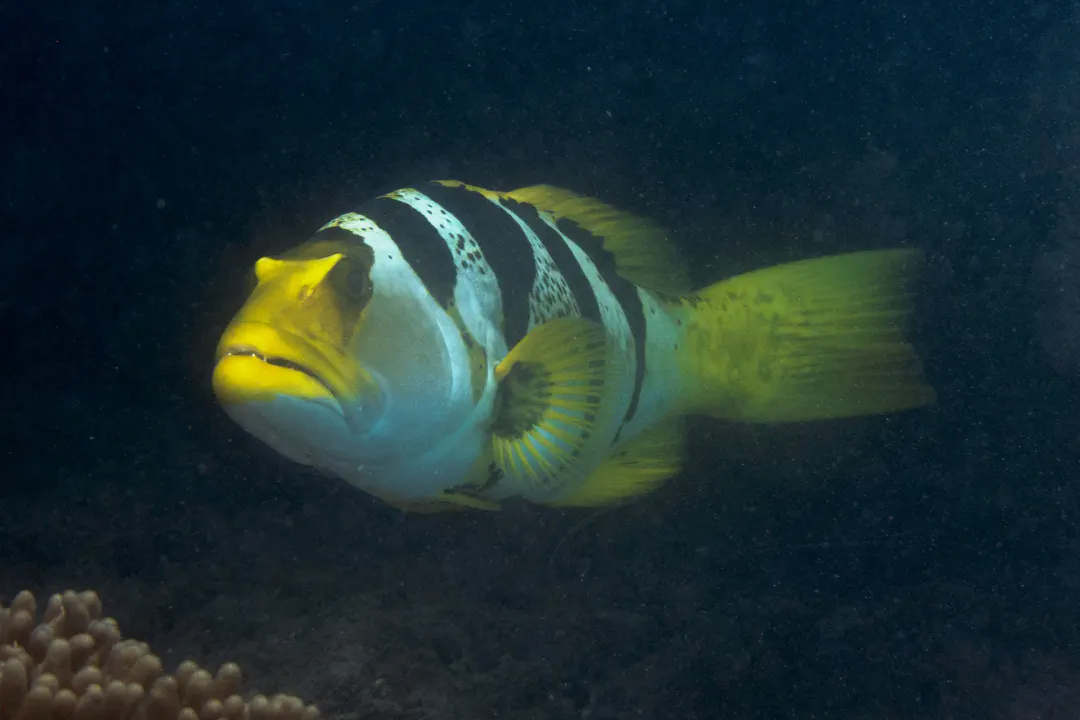
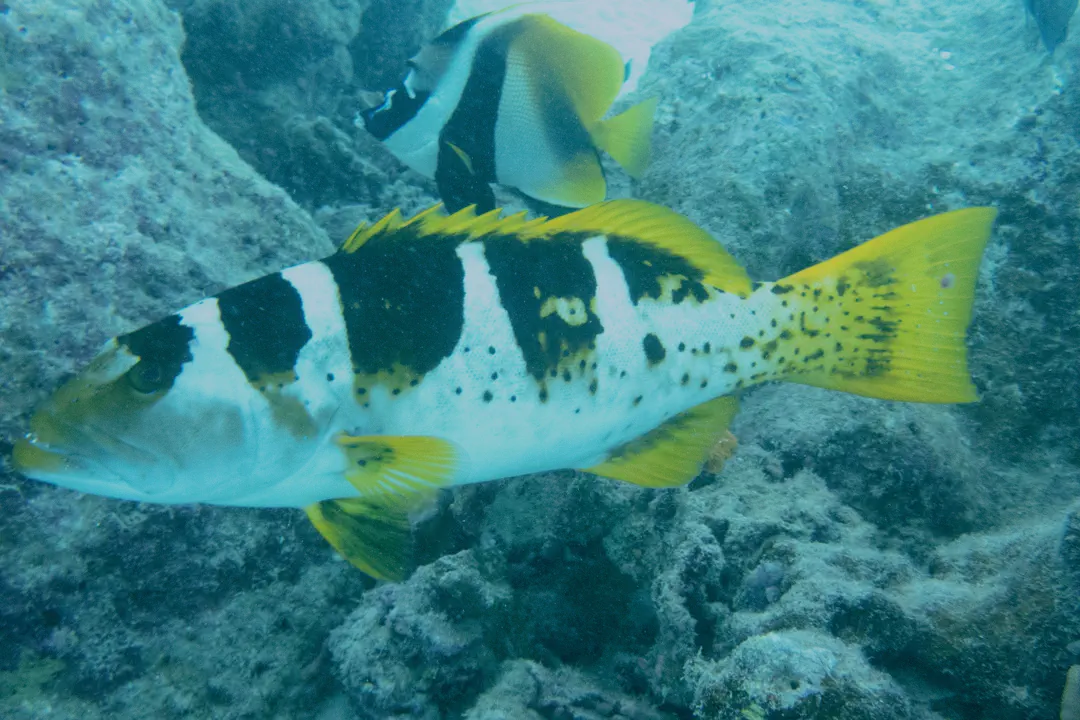
The humpback grouper is a medium-sized fish which grows up to 70 cm. Its particular body shape makes this grouper quite impossible to mix up with other fishes. Its body is compressed laterally and is relatively high. This stocky and strange visual effect is accented by its concave profile and its elongated snout which gives it a humpbacked appearance.
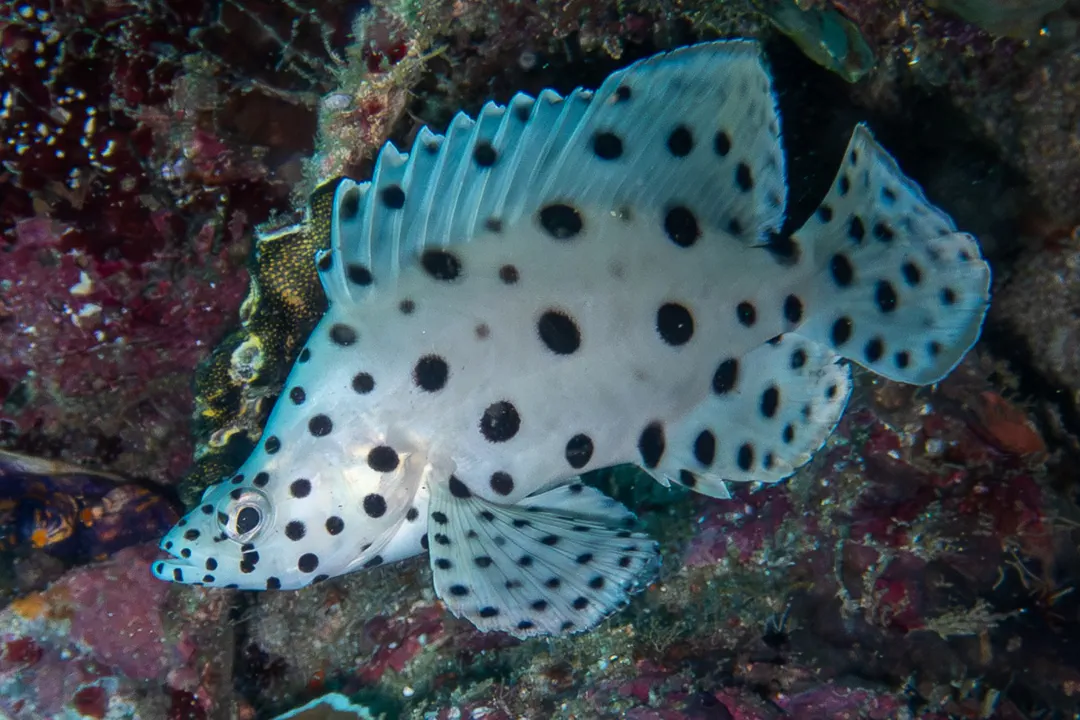
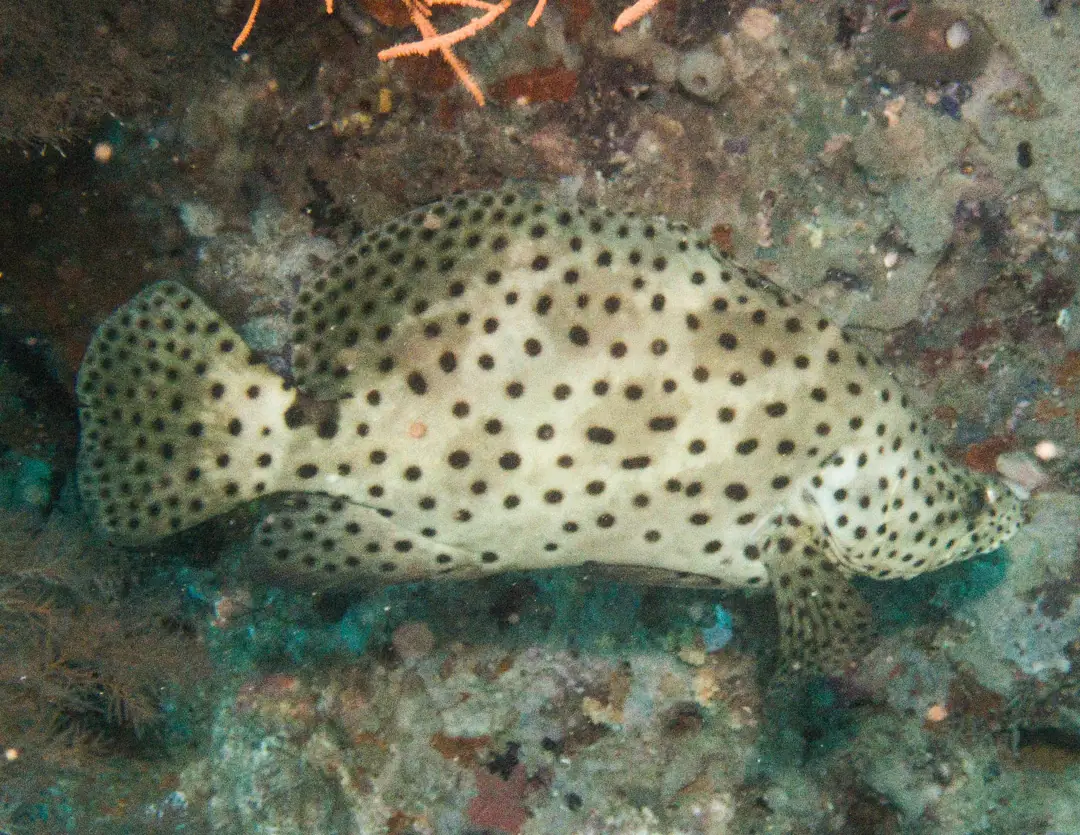
The young have a white background with round black spots and are continuously swimming head down. The adults have a body colouration with variances of grey and beige with darker blotches variable in size on the body. Small black spots cover the whole body.
It is widely distributed throughout the tropical waters of the central Indo-West Pacific region. The humpback grouper lives in clear waters from lagoons and seaward reefs with a preference for dead or silty areas. They are found in a range of depth from 2 to 40 m (6 ft 7 in to 131 ft 3 in).
The diet of this grouper is based on small fishes and crustaceans. Like the members of its family, the humpback grouper is demersal, solitary (except during mating periods), defends a territory, and is an ambush predator. Its feeding activity is maximal at sunrise and/or at sunset. This species is a protogynous hermaphrodite, which means it is able to change from the sex it was born as to the opposite sex.
This grouper is commonly kept in marine aquaria. Great care must be taken when purchasing this fish, as it can reach 50 cm (20 in), and is fast-growing. Its large adult size and fast growth rate means it should only be kept in large aquaria. If kept in the proper conditions, this is a very hardy and long-lived fish.
Since 2007, C. altivelis is listed as vulnerable on the IUCN Red List of Threatened Species, because the species is naturally rare, so is sensitive to overharvesting due to its high value in the live food fish trade and to habitat degradation. Hatchery production is not intended for reintroduction, but instead for the aquarium trade, so does not result in an increase in the natural population or a decrease in demand as food
© Lesley ClementsAll rights reserved  © seabook.appAll rights reserved
  © Lesley ClementsAll rights reserved
  © João D'AndrettaCC BY 4.0 · iNaturalist
  © Ewout KnoesterCC BY-SA 4.0 · iNaturalist
  © Logan JonesCC BY 4.0 · iNaturalist
 Humpback Grouper (juvenile) has no known danger to humans. However, always observe marine life responsibly.
Humpback Grouper (juvenile) can be found at depths of up to 40 meters.
Download Seabook free for iOS and Android.