 © Roger RittmasterCC BY 4.0 · iNaturalist
Banana Nudibranch
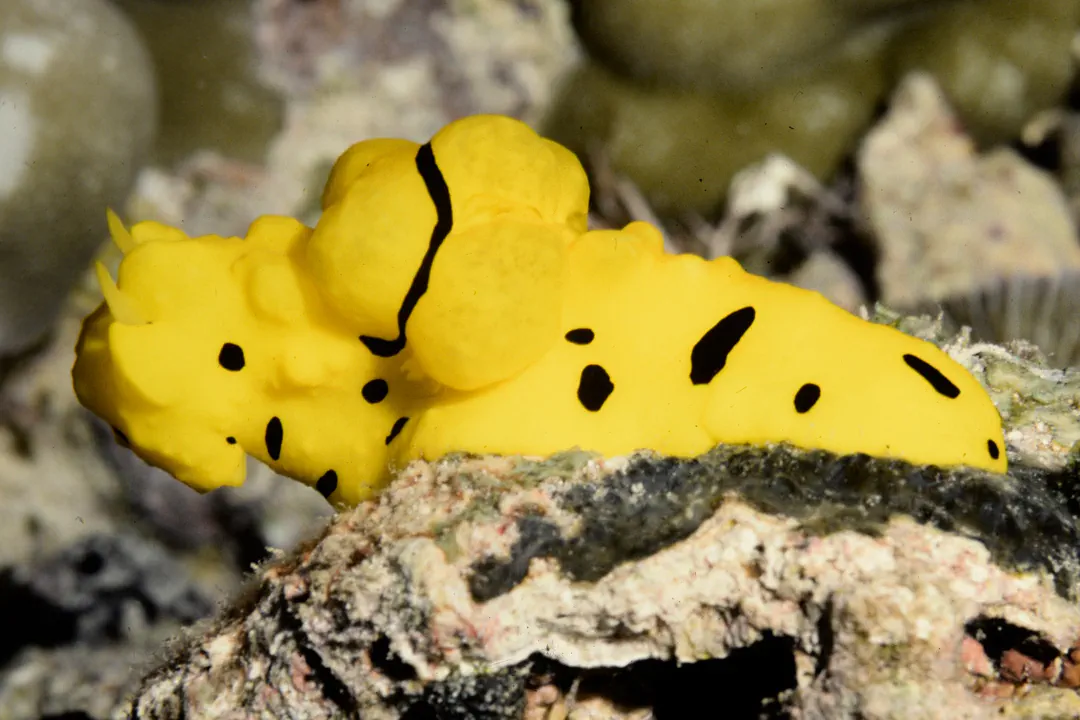
Notodoris minor
Hexabranchus sanguineus
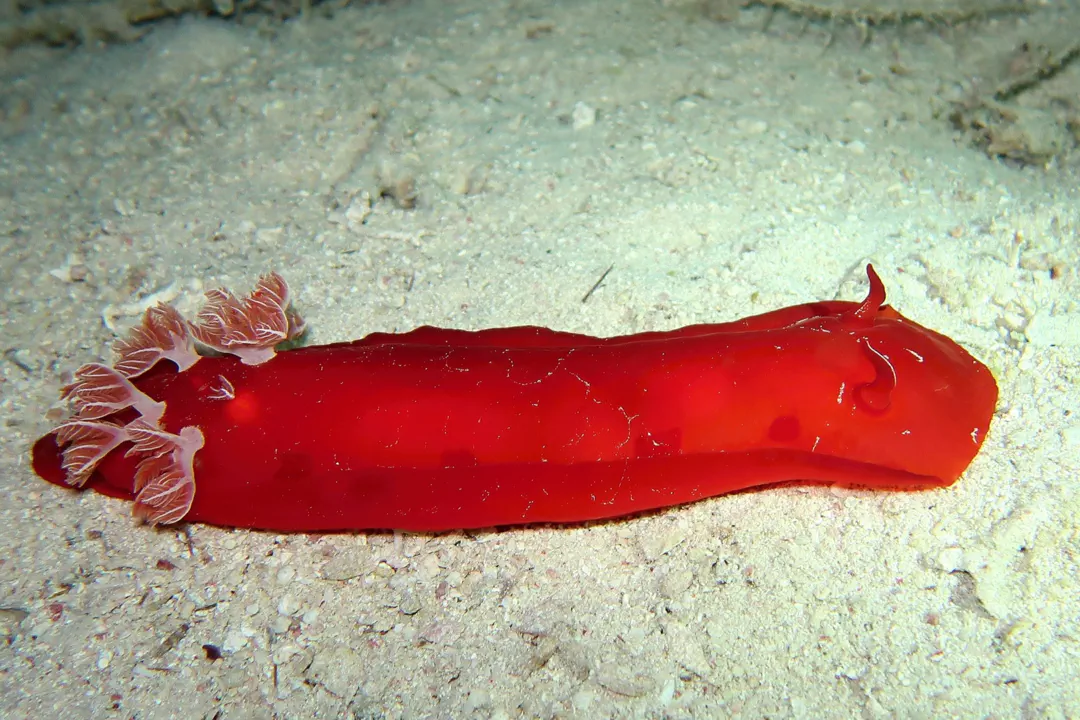
Hexabranchus sanguineus (literally meaning "blood-colored six-gills"), is a dorid nudibranch, a very large and colorful sea slug, a marine gastropod mollusk in the family Hexabranchidae.
The Spanish dancer is a large dorid nudibranch which can grow up to a maximum length of 60 cm. However, the commonly observed size is between 20 and 30 cm long. Its body coloration is generally orange-red speckled with multiple small white dots but it also can be uniformly bright red or yellow with red scattered spots. Its body is soft and flattened, the anterior dorsal portion has a pair of retractable rhinophores and the posterior part has six contractile gills inserted independently in the body. The pair of oral tentacles are constituted by a fin flexible membrane provided with large digital lobes.
In a normal situation when the animal is crawling, the edges of its mantle are curled inwards creating a peripheral blister. If the animal is disturbed, it unfolds its edges and can swim through contractions and undulations of the body to move away from the disturbing element. Its common name, Spanish dancer, comes from this particular defense.
Juveniles are rather whitish to yellowish with multiple purplish points and orange rhinophores and gills.
The Spanish dancer is widespread throughout the tropical and subtropical waters of the Indo-Pacific area from the eastern coasts of Africa, Red Sea included, to Hawaii and from south Japan to Australia.
It likes rocky and coral reefs with many sponges and shelters from 1 to 50 meters deep.
During daytime, the Spanish dancer hides away from the light in the crevices of its natural habitat to only come out late at night. It feeds on various species of sponge. Like all nudibranchs, it is hermaphrodite and its bright red to pink egg ribbon has a spiral shape related to the size of the animal so relatively large. The latter is coveted by some other species of nudibranch as Favorinus tsuragunus or Favorinus japonicus . The Emperor shrimp, Periclimenes imperator, is a commensal shrimp that is commonly found living on Hexabranchus sanguineus.
© Roger RittmasterCC BY 4.0 · iNaturalist  © Stas KuryanAll rights reserved
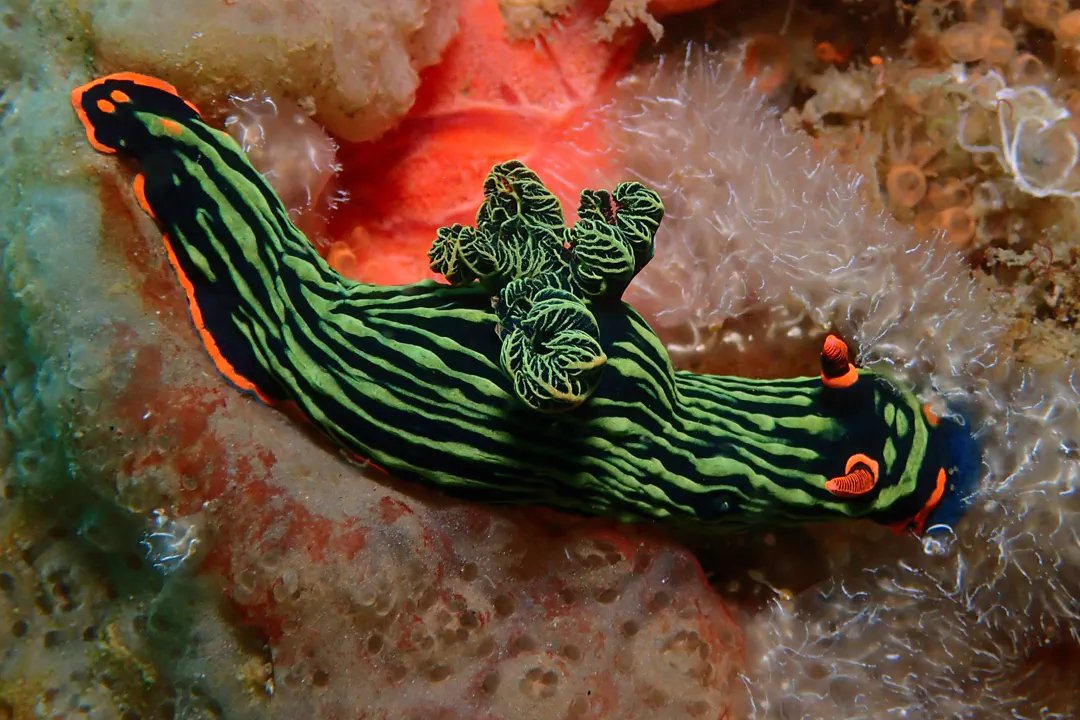 © Dan SchofieldCC BY 4.0
 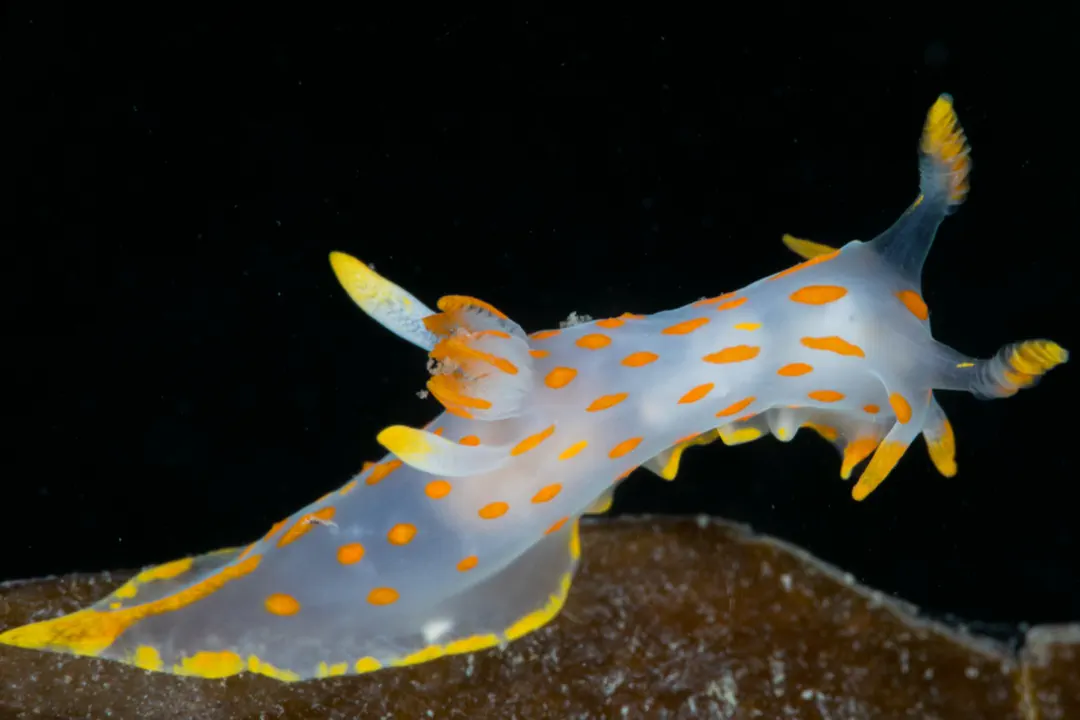 © Heine JensenCC BY 4.0 · iNaturalist
 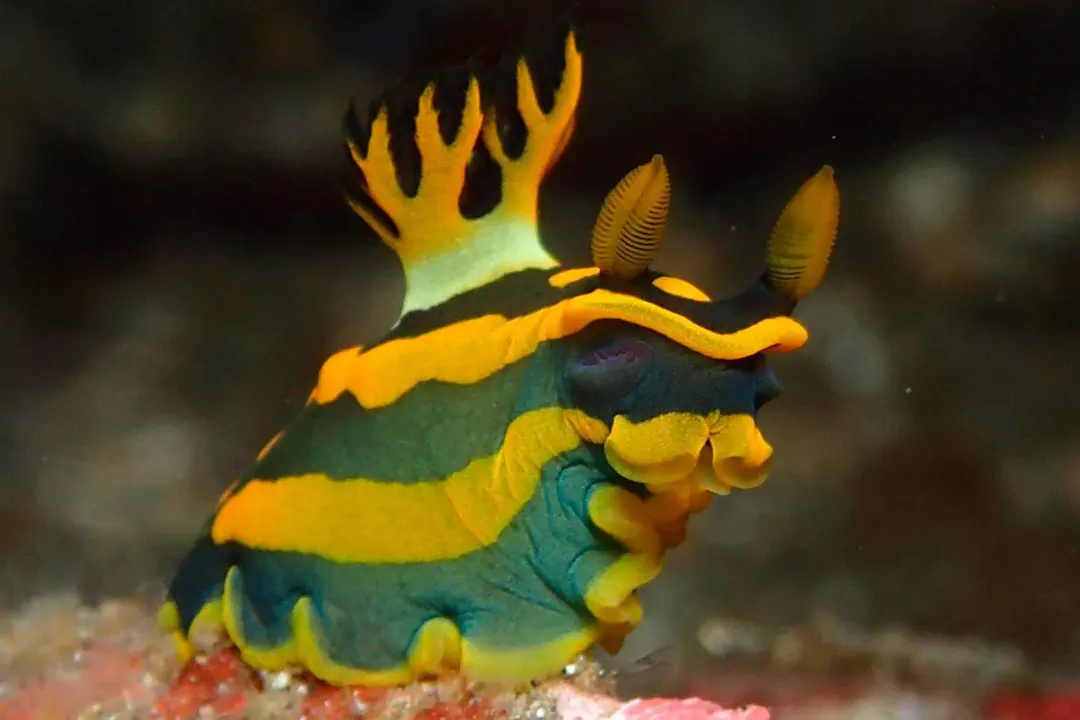 © Dan SchofieldCC BY 4.0 · iNaturalist
 Spanish Dancer has no known danger to humans. However, always observe marine life responsibly.
Spanish Dancer can be found at depths of up to 50 meters.
Download Seabook free for iOS and Android.