 © Lesley ClementsAll rights reserved
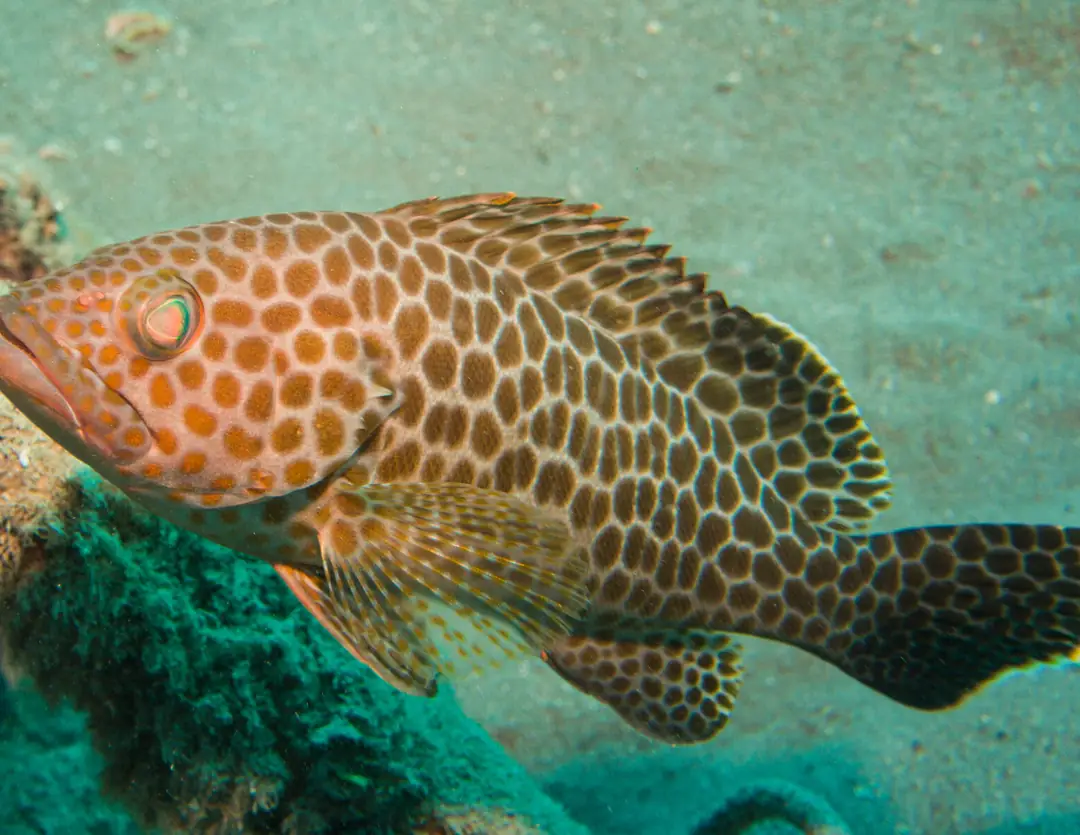
Areolate Rock Cod
Epinephelus areolatus
Epinephelus caeruleopunctatus
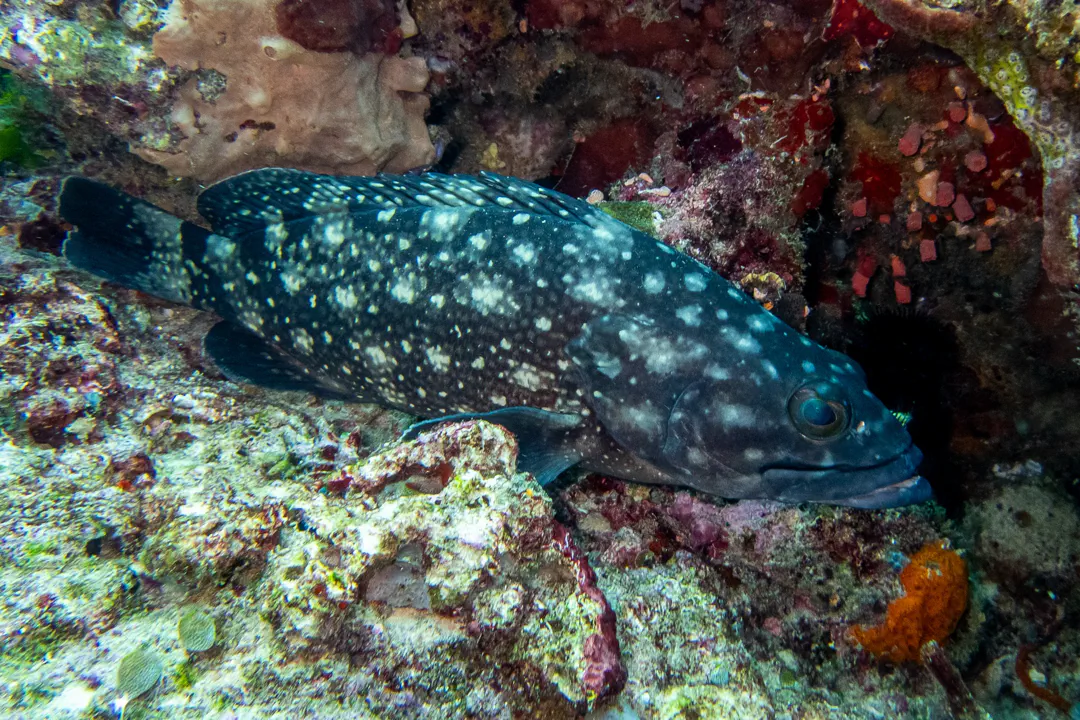
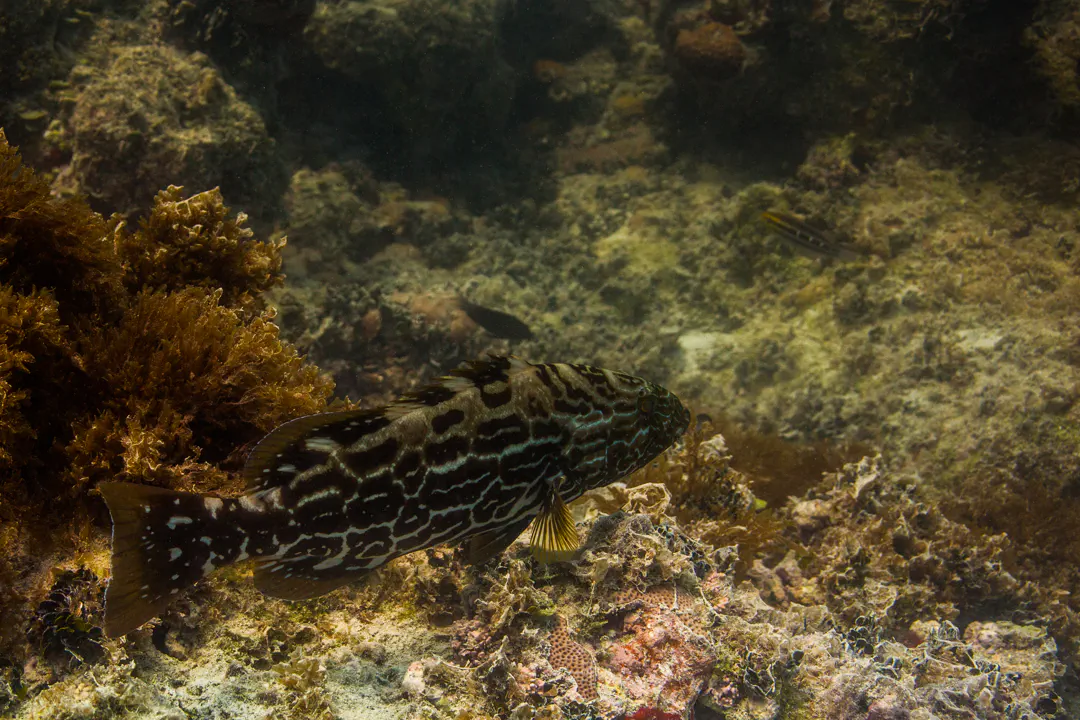
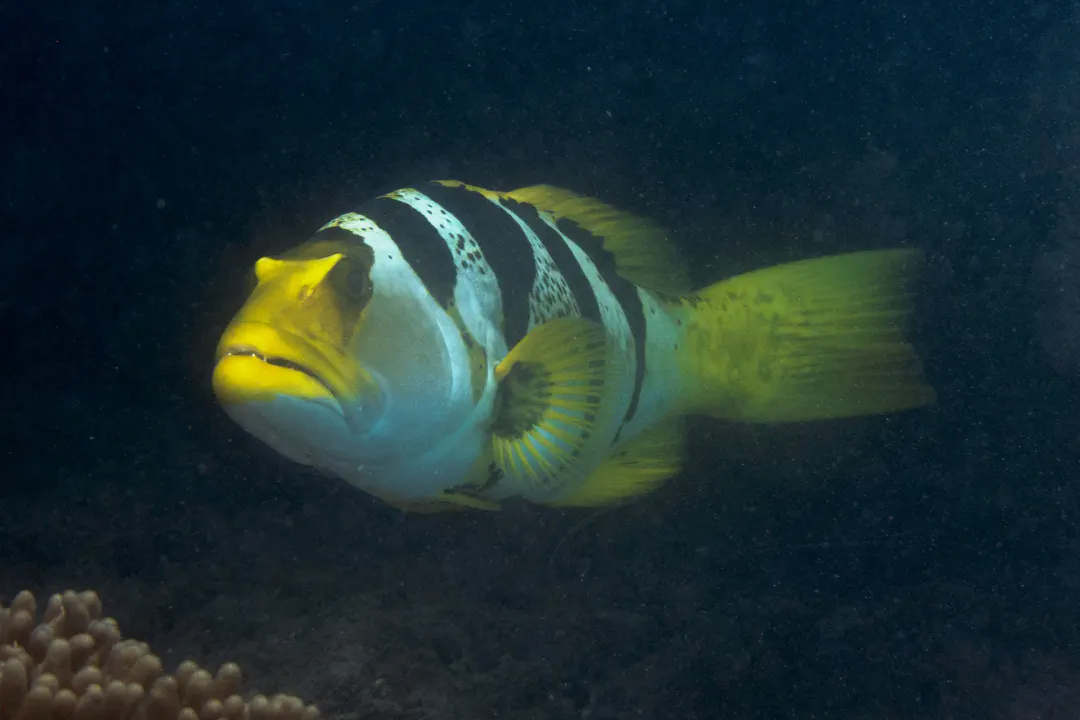
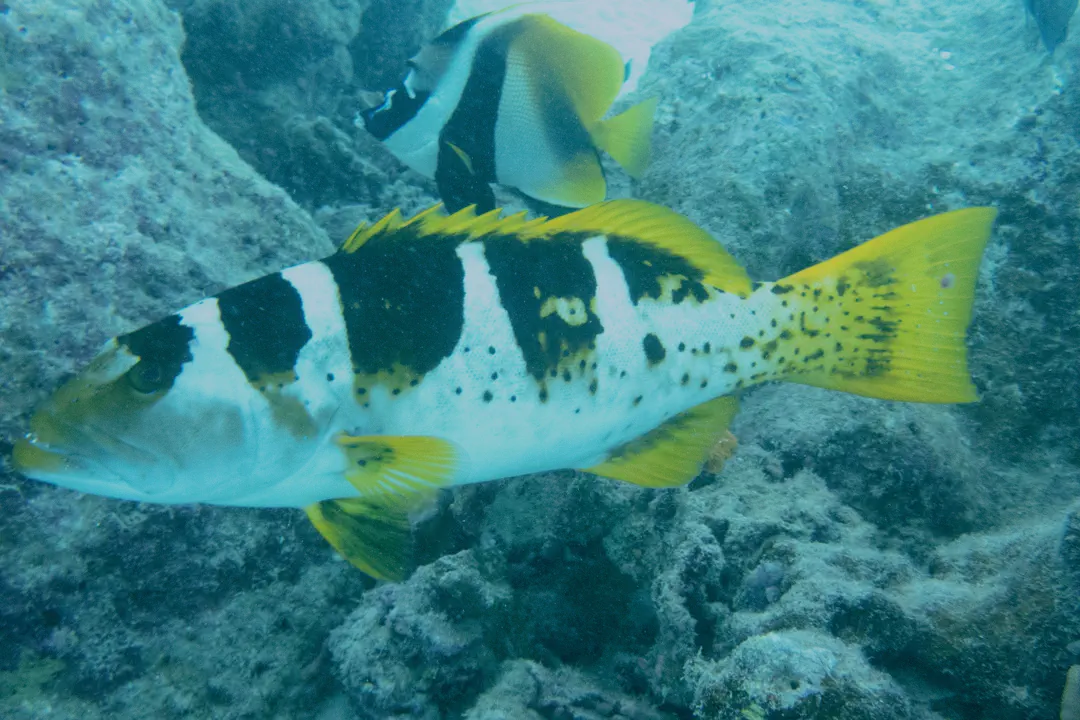
Epinephelus caeruleopunctatus is a species of marine ray-finned fish, a grouper from the subfamily Epinephelinae which is part of the family Serranidae, which also includes the anthias and sea basses.
Colour of adults is brownish grey, the body is covered with small pale spots overlain with large pale blotches. It has an oblique black saddle on rear half of peduncle and 4-5 indistinct black blotches at base of dorsal fin. It has a prominent black streak on maxillary groove. Large adults are brownish, covered with small, indistinct, contiguous pale spots; juveniles (less than 25 cm) dark grey to black, covered with prominent pupil-size white spots and smaller white dots. Dorsal spines (total): 11; Dorsal soft rays (total): 15-17; Anal spines: 3; Anal soft rays: 8. This species is distinguished by the following characters: body depth distinctly less than head length, 2.9-3.4 in SL (for specimens 11-47 cm SL); head length 2.3-2.5 in SL; head pointed, dorsal profile almost straight; preopercle rounded, finely serrate; opercular spines inconspicuous; upper edge of operculum straight, sinuous or slightly convex; maxilla naked, mostly covered by upper lip; small or absent canines at front of jaws; midlateral part of lower jaw with 3-5 rows of small teeth; gill rakers of first gill arch 8-10 + 13-17 in juveniles and 4-8 in upper limb for adults larger than 25 cm SL; adults with ctenoid scales on body in broad zone along middle of side, cycloid elsewhere and with numerous auxiliary scales; caudal fin rounded; pectoral fins large and fleshy, with 17-19 rays, the fin length 1.5-2.1 in HL; short pelvic fins, not reaching anus, 2.0-2.7 in head length.
Indo-Pacific: East Africa south to East London, South Africa and east to Fiji. Recently recorded from Tonga. It is not known from the Red Sea, but it does occur in the Persian Gulf. Record from northwestern Australia is doubtful. It is closely related to, and is often confused with, three other white-spotted species: Epinephelus ongus, Epinephelus summana, and Epinephelus corallicola.
It occurs in rocky or coral-rich areas of deep lagoons, channels and outer reef slopes; usually in or near caves. Solitary. Juveniles are found in tide pools. It feeds on fish and crustaceans. It is in Hong Kong live fish markets. Caught with hook-and-line, spear, and in traps and probably of some importance to fisheries in areas where it is common.
© Lesley ClementsAll rights reserved  © seabook.appAll rights reserved
  © Lesley ClementsAll rights reserved
  © João D'AndrettaCC BY 4.0 · iNaturalist
  © Ewout KnoesterCC BY-SA 4.0 · iNaturalist
  © Logan JonesCC BY 4.0 · iNaturalist
 Whitespotted Grouper has no known danger to humans. However, always observe marine life responsibly.
Whitespotted Grouper can be found at depths of up to 65 meters.
Download Seabook free for iOS and Android.