 © Emanuele SantarelliCC BY-SA 4.0 · iNaturalist
Maldivian Sandperch
Parapercis signata
Parapercis clathrata
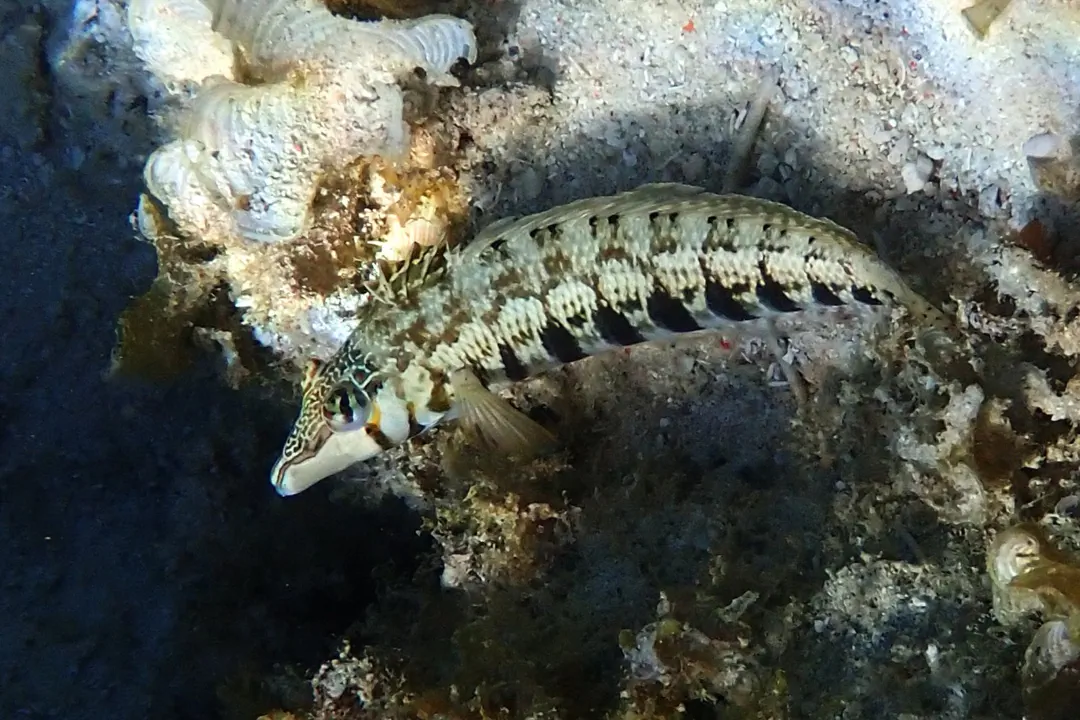
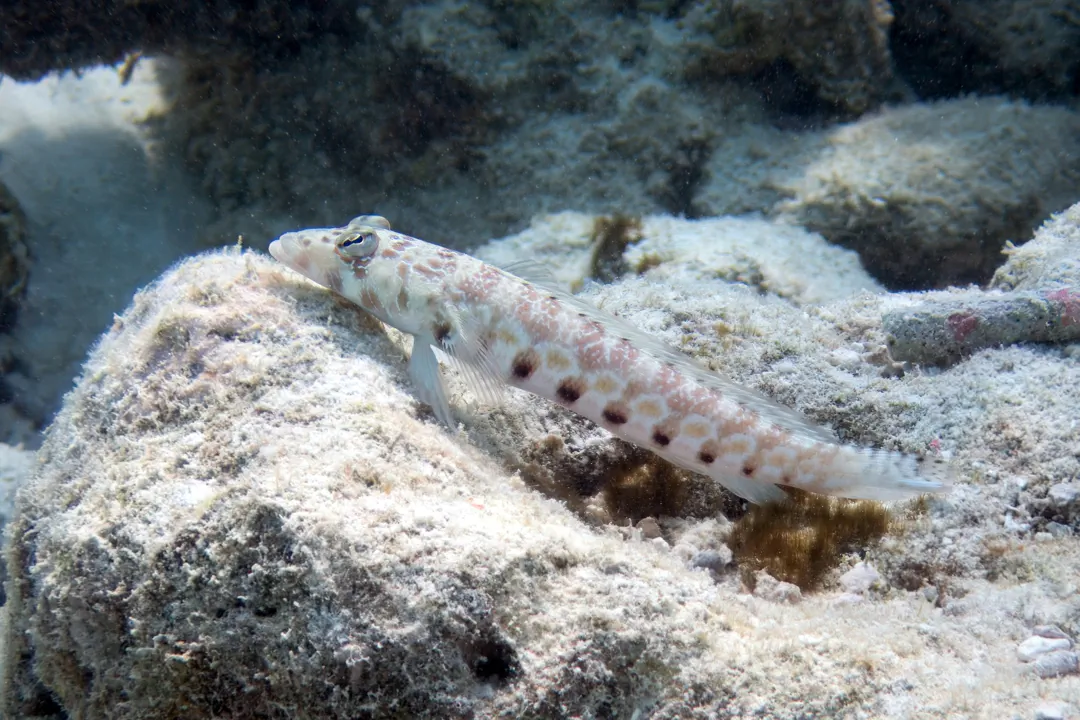
Parapercis clathrata is a member of the sandperch family Pinguipedidae, form the percomorph order Trachiniformes.
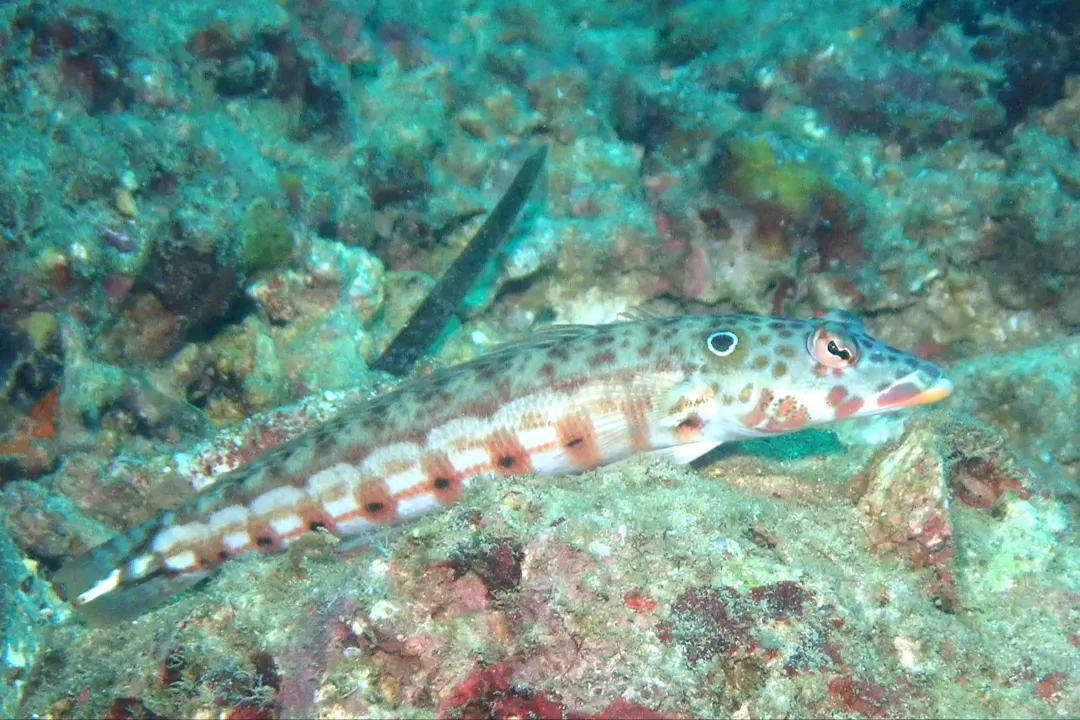
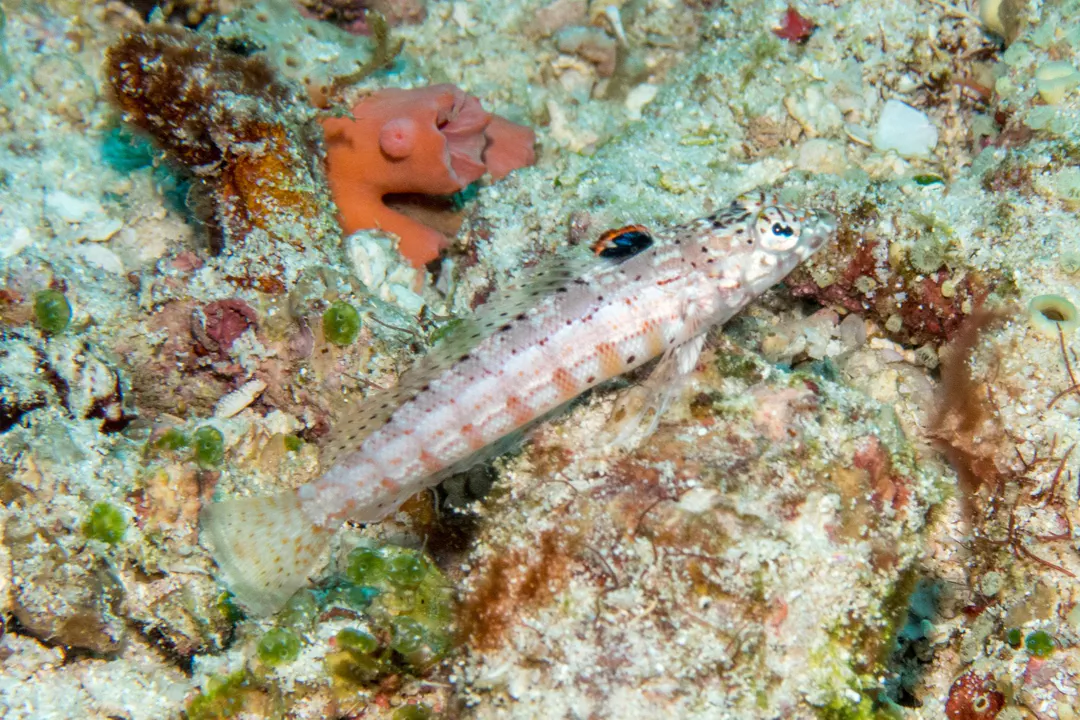
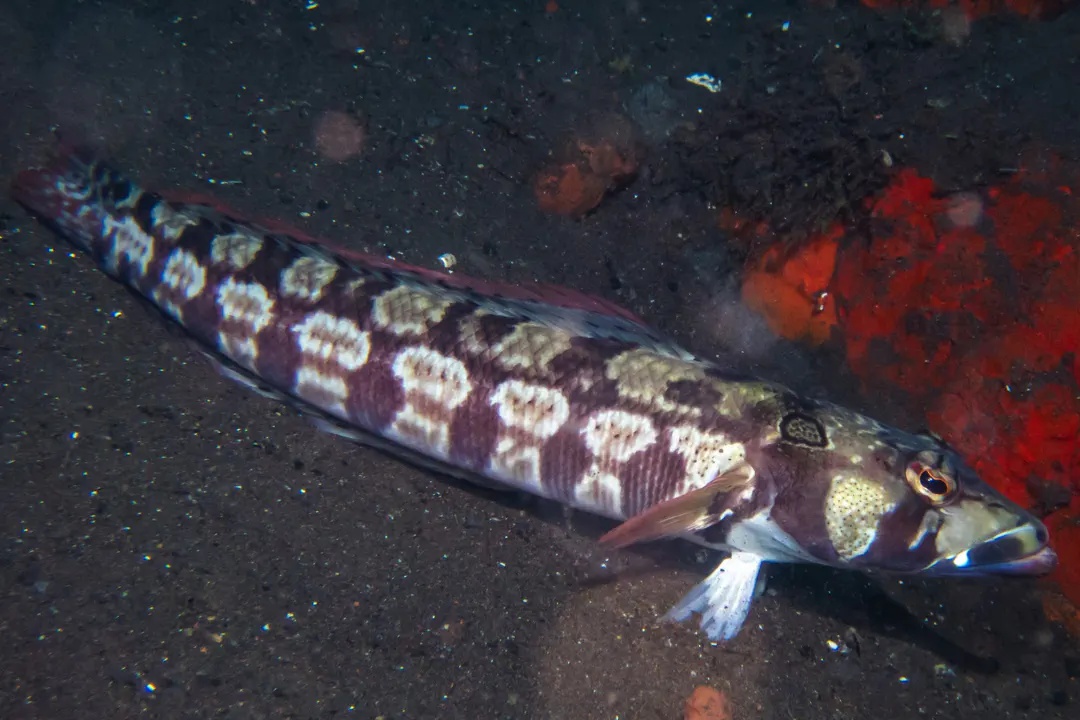
The body is elongated, approximately cylindrical, and the tail is slightly flat; the head is slightly smaller and looks like a pointed cone. The snout is pointed and flat. The eyes are large in the upper side, slightly protruding from the back of the head. The mouth is large and slightly inclined; the upper jaw is slightly shorter than the lower jaw; the jaw teeth are villi-like tooth belts with larger lateral rows, and the front end of the lower jaw has 6 canine teeth; the hoe bone is toothed, and the palatal bone has no teeth. The body is thinly scaled, and the lateral line is simple and complete; the number of lateral line scales is 55-60. The dorsal fin is continuous, with a shallow notch between the hard spines and the soft spine, with hard spines IV, soft spine 20-21; anal fin hard spine I, soft spine 17; pectoral fin soft spine 17-18; caudal fin round or nearly truncate. The back is reddish-brown, the belly is pale white; the head has brown spots or patches; there are many small black spots on the cheeks; males have obvious eye-like blue and black spots on the back of the neck. There are 9 horizontal bands on the side of the body, each with a dark spot slightly below the center of the horizontal band, and is connected with the narrow longitudinal lines from the base of the pectoral fin to the base of the caudal fin. The soft ray of the dorsal fin has three longitudinal rows of black spots. The caudal fin has 2 black longitudinal bands, and there is usually a white area between the longitudinal bands, with many small black spots scattered around.
Indo-West Pacific: India and Sri Lanka to Tonga, Ryukyu Islands and the Great Barrier Reef to the Marshall Islands and Samoa.
It inhabits both clear lagoon and seaward reefs, in areas of open sand and rubble as well as on rocky surfaces between coral heads. Also in current prone channels. May be found solitary or form small groups.
© Emanuele SantarelliCC BY-SA 4.0 · iNaturalist 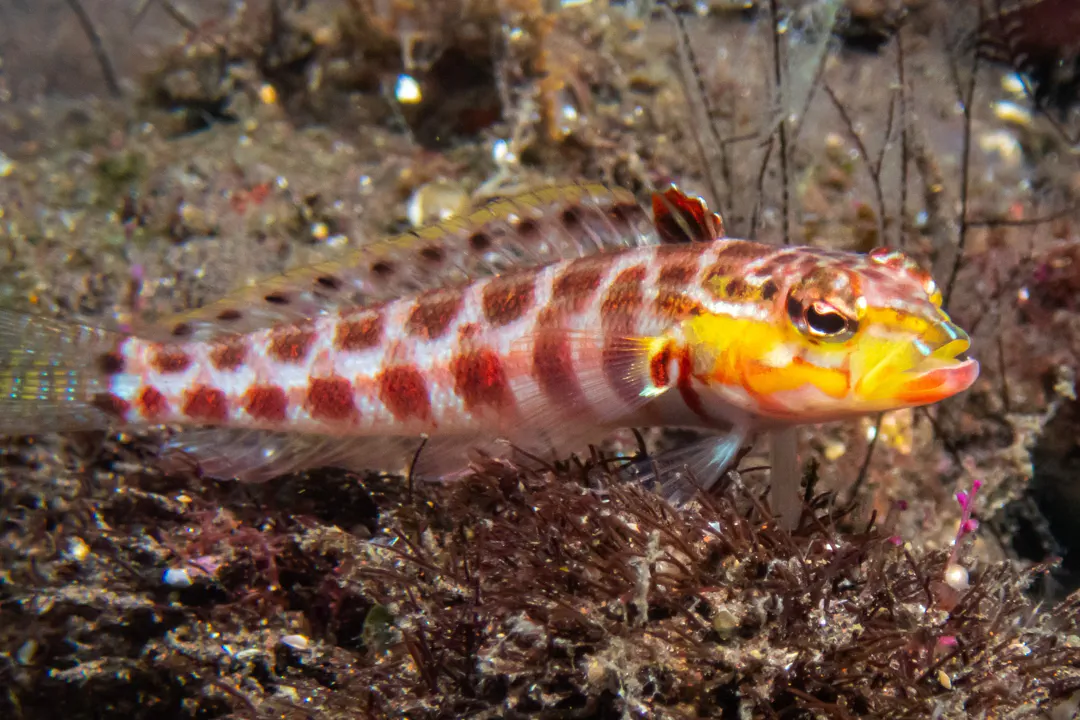 © portioidCC BY 4.0 · iNaturalist
  © portioidCC BY 4.0 · iNaturalist
  © Annika LindqvistCC BY 4.0 · iNaturalist
  © Darren ObbardCC BY 4.0 · iNaturalist
 Latticed Sandperch has no known danger to humans. However, always observe marine life responsibly.
Latticed Sandperch can be found at depths of up to 100 meters.
Download Seabook free for iOS and Android.