 © coenobitaCC BY 4.0
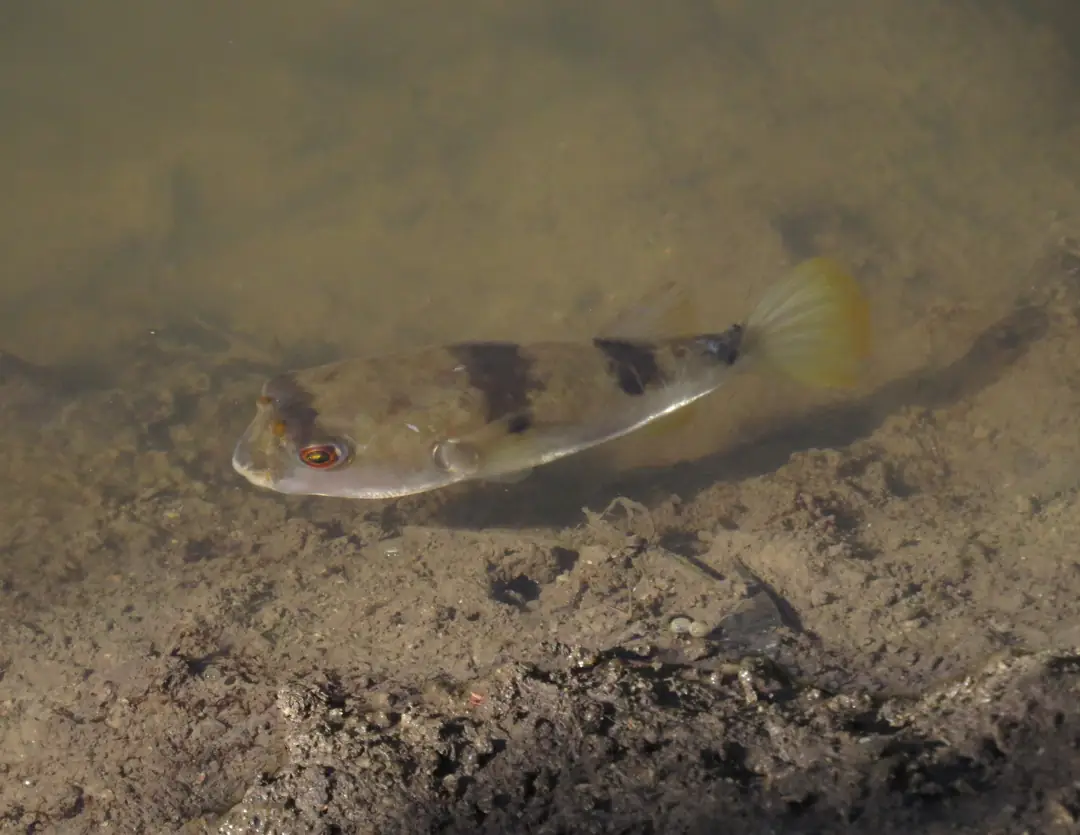
Banded Toadfish
Marilyna pleurosticta
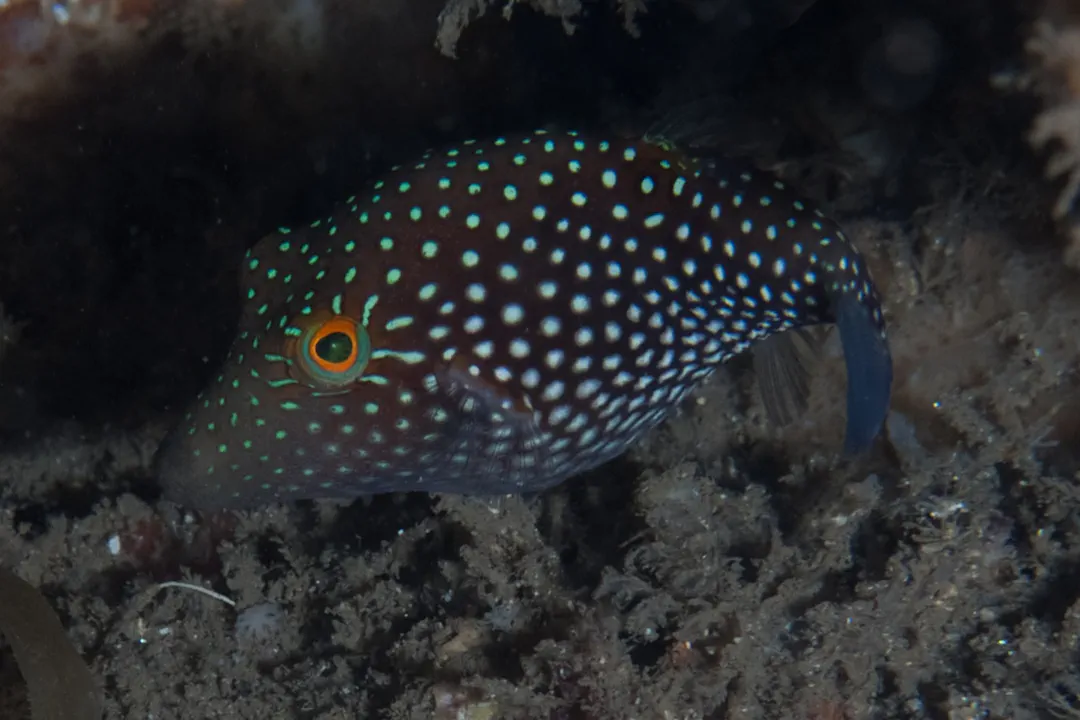
Canthigaster janthinoptera
Canthigaster janthinoptera is a specirs in the pufferfish family (Tetraodontidae).
Many white spots scattered on body. Characterized by brown color with dense covering of pupil-sized blue green to white spots extending onto basal portion of caudal fin; depth of body at origin of anal fin 2.2-2.6 in SL; head length 2.4-2.6 in SL; snout length 1.5-1.6 in head length; bony interorbital width 3.0-3.8 in head length; caudal peduncle depth 1.8-2.3 in head length; slightly rounded caudal fin. Dorsal spines (total): 0; Dorsal soft rays (total): 9-10; Anal spines: 0; Anal soft rays: 9 - 10.
Indo-Pacific: East Africa south to Transkei, South Africa and east to the Line, Marquesan, and Oeno islands, north to southern Japan, south to Lord Howe Island. Replaced by Canthigaster jactator in the Hawaiian Islands and Canthigaster punctatissimus in the tropical eastern Pacific.
Occurs in clear lagoon and seaward reefs, Ref. 48637. Found with sponges at various depths. Prefers sheltered areas in the form of holes in dead and living corals. Solitary or paired. Feeds on sponges, polychaetes, filamentous algae and on smaller quantities of tunicates, crustaceans, echinoderms and corals.
© coenobitaCC BY 4.0  © Georgina JonesCC BY-SA 4.0 · iNaturalist
  Jean-Paul BoerekampsCC0 · iNaturalist
 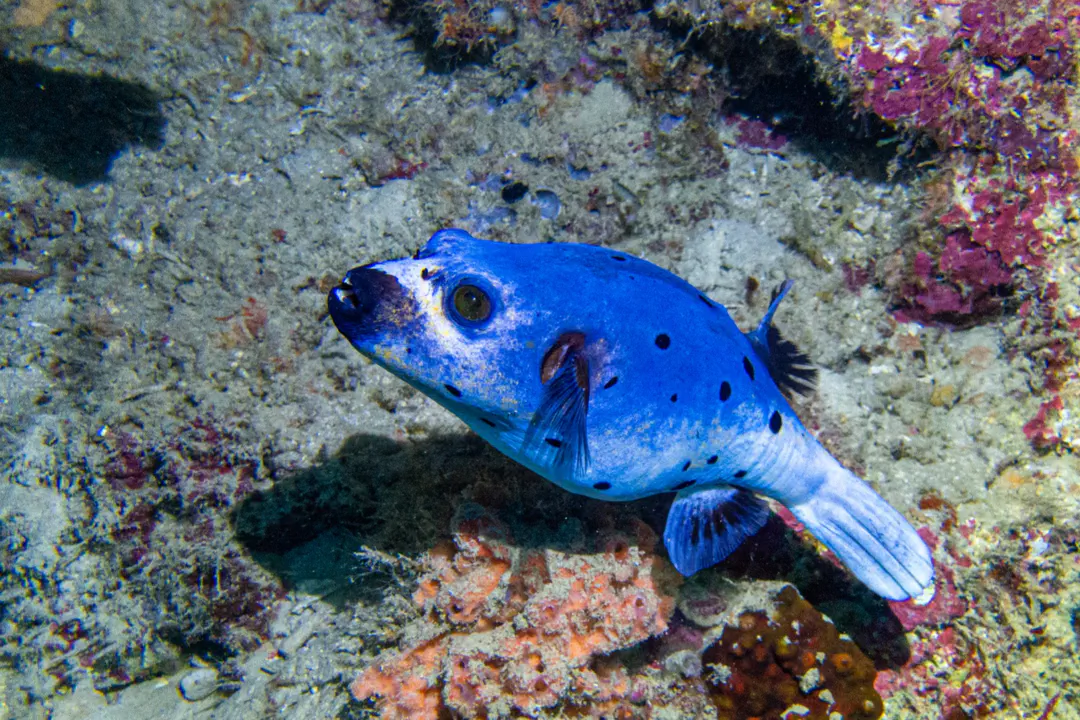 © Dirk FroebelCC BY 4.0 · iNaturalist
 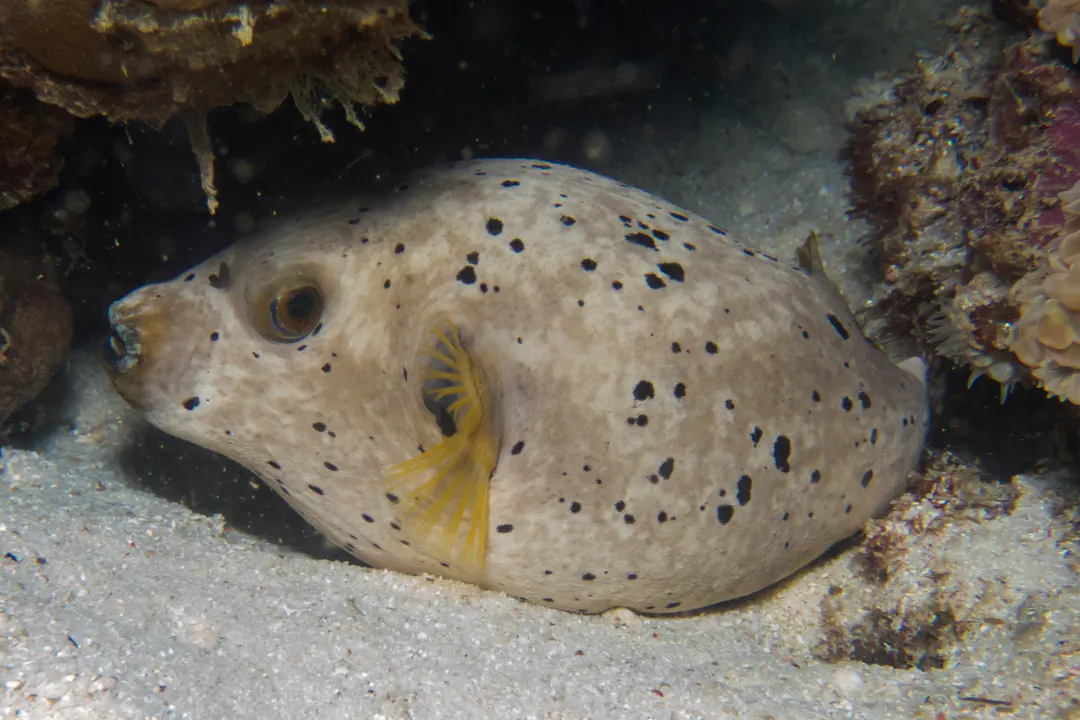 © portioidCC BY 4.0 · iNaturalist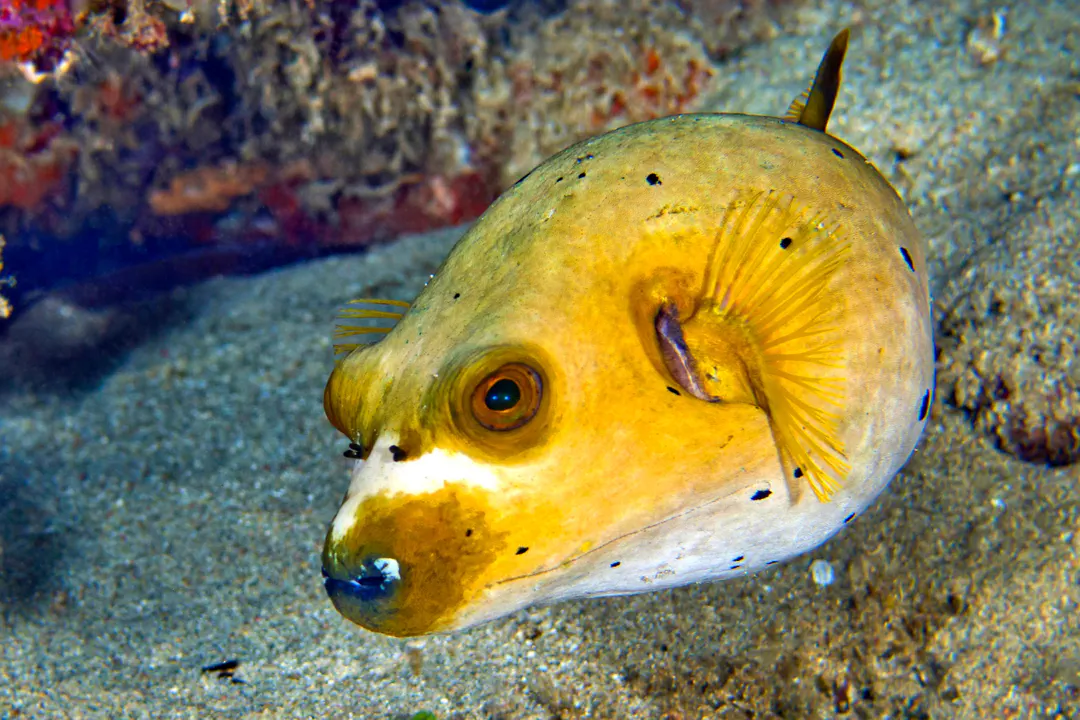
Honeycomb Toby has no known danger to humans. However, always observe marine life responsibly.
Honeycomb Toby can be found at depths of up to 30 meters.
Download Seabook free for iOS and Android.