 © Louis ImbeauCC BY 4.0 · iNaturalist
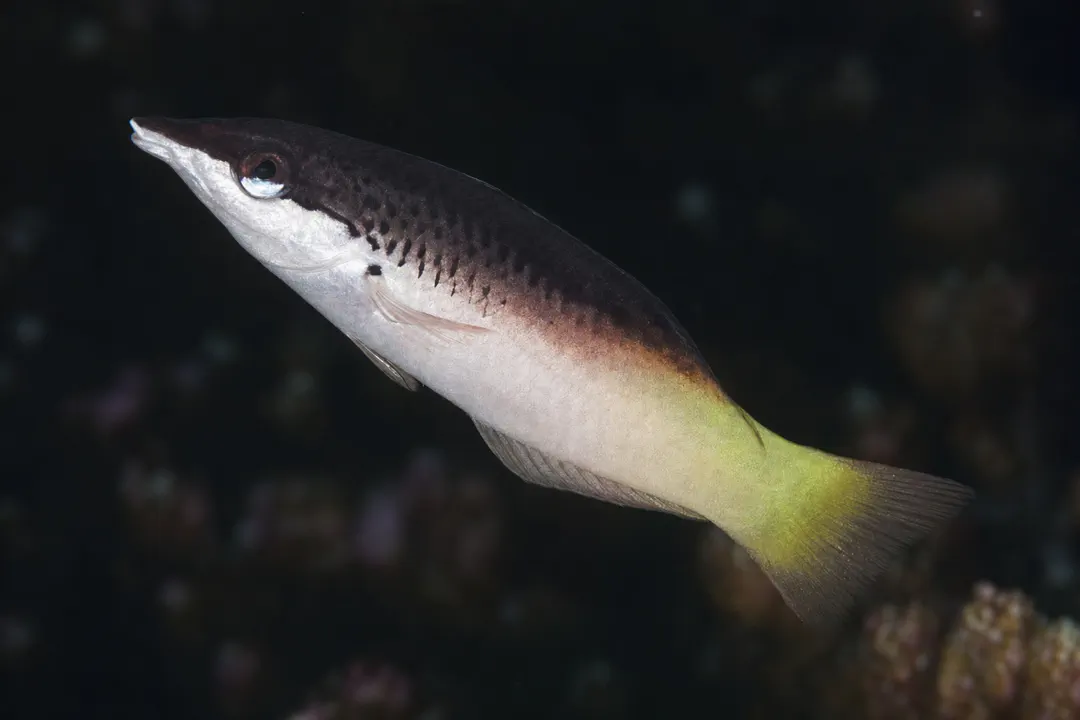
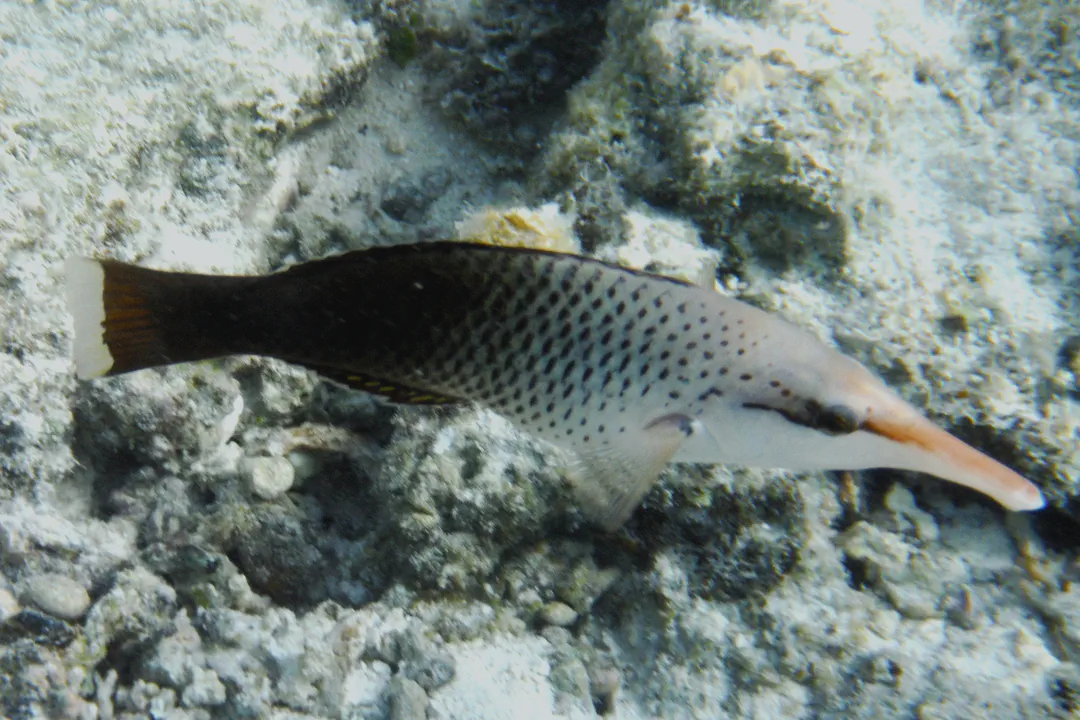
Bird Wrasse (female)
Gomphosus varius
Gomphosus caeruleus
Gomphosus caeruleus, the green birdmouth wrasse, is a species of wrasse belonging to the family Labridae. It can be found in the aquarium trade.
This tropical species of wrasse is native to the Indian Ocean, from East Africa south to Natal, South Africa, and east to the Andaman Sea. It occurs on rocky reefs and coral, especially in coral-rich areas of lagoon and seaward reefs.
Gomphosus caeruleus can reach a length of about 32 centimetres (13 in). Body is oval, rather elongated and laterally compressed. In adult specimens the snout is very long. This species has 8 dorsal spines, 13 dorsal soft rays, 3 anal spines and 11 anal soft ray. The basic coloration is blue with lighter fins in males. In females, however, the snout is brown above and white below, the back is gray and the belly, the anal fin and the caudal fin are yellow. Juveniles pale with dark streak from snout through eye onto body. Differs from similar Gomphosus varius (Birdnose Wrasse) differs by location, and by bright green streak on side in males, lack of yellow tail in females, and green back in juveniles.
It feeds on small invertebrates.
© Louis ImbeauCC BY 4.0 · iNaturalist Green Bird Wrasse (Juvenile) has no known danger to humans. However, always observe marine life responsibly.
Green Bird Wrasse (Juvenile) can be found at depths of up to 35 meters.
Download Seabook free for iOS and Android.