 © coenobitaCC BY 4.0
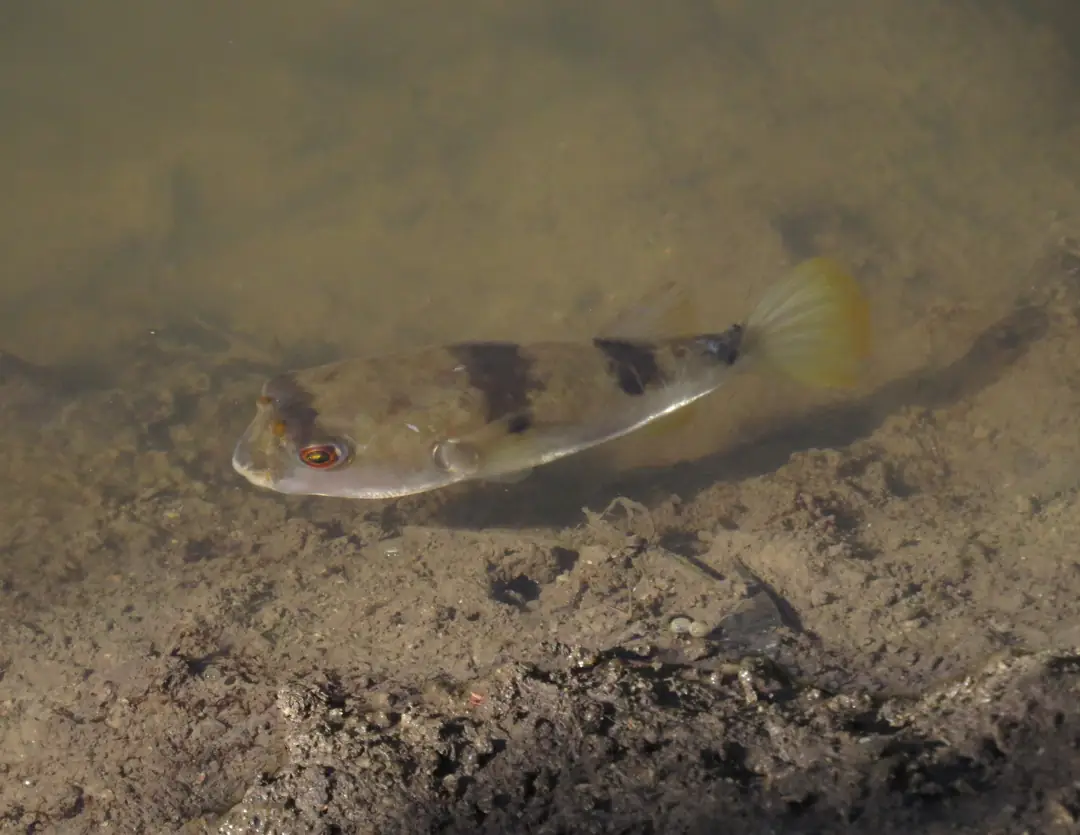
Banded Toadfish
Marilyna pleurosticta
Arothron stellatus
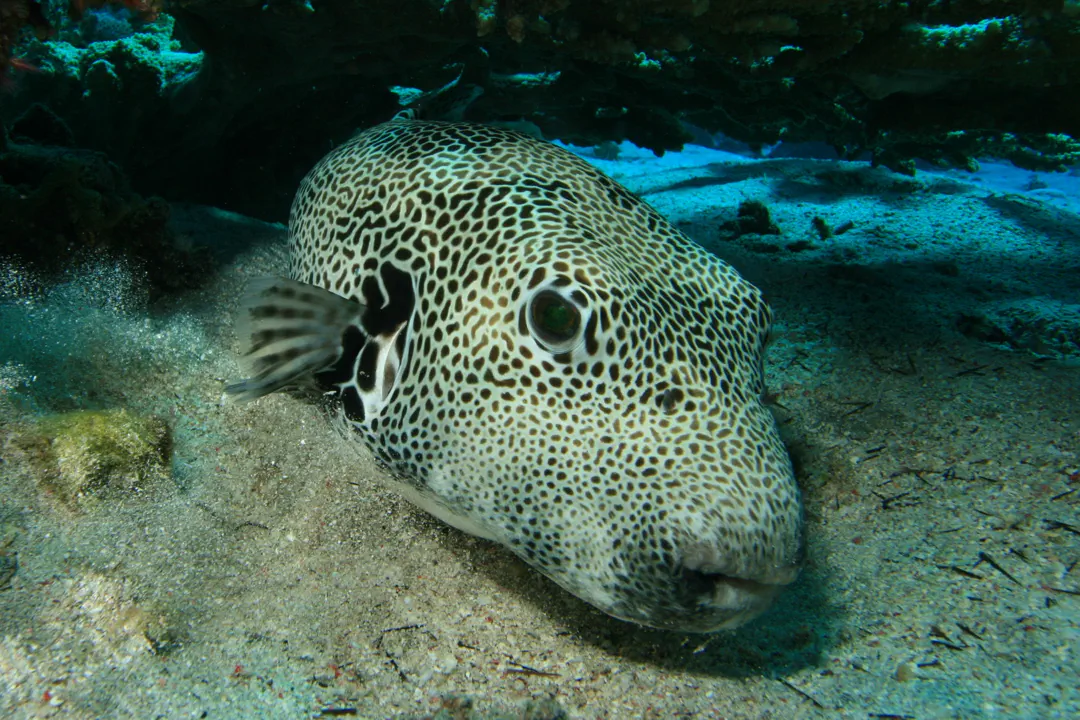
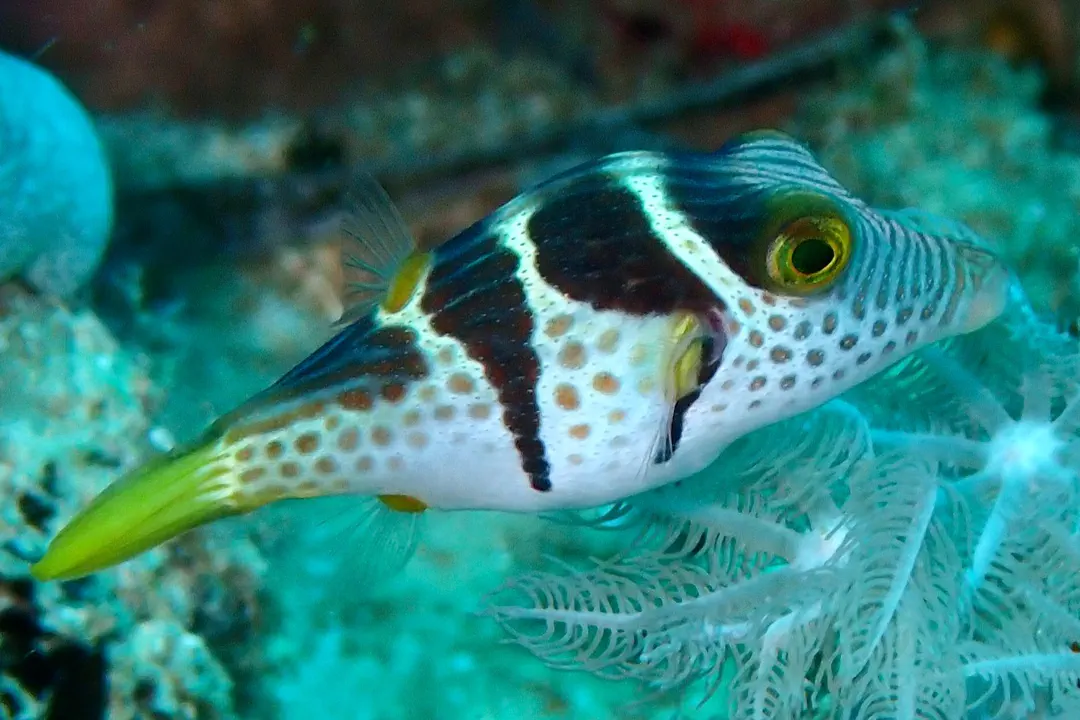
Arothron stellatus, also known as the is a demersal marine fish belonging to the family Tetraodontidae. It is found in shallow water in the Indo-Pacific region.
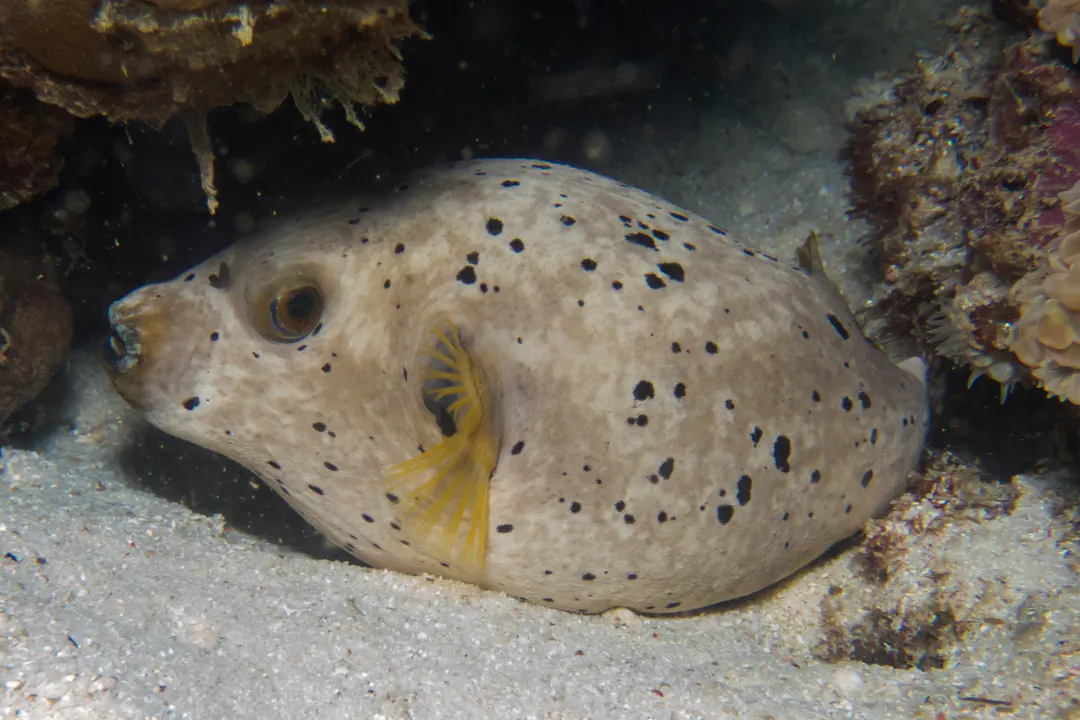
Arothron stellatus is a medium-sized fish which grows up to 120 cm (47 in) in length. Its body is oval shaped, spherical and relatively elongated. The skin is not covered with scales but is prickly. The fish has no pelvic fin and no lateral line. The dorsal fin and the anal fin are small, symmetric, and located at the rear end of the body. The head is large with a short snout that has two pairs of nostrils, and the mouth is terminal with four strong teeth.
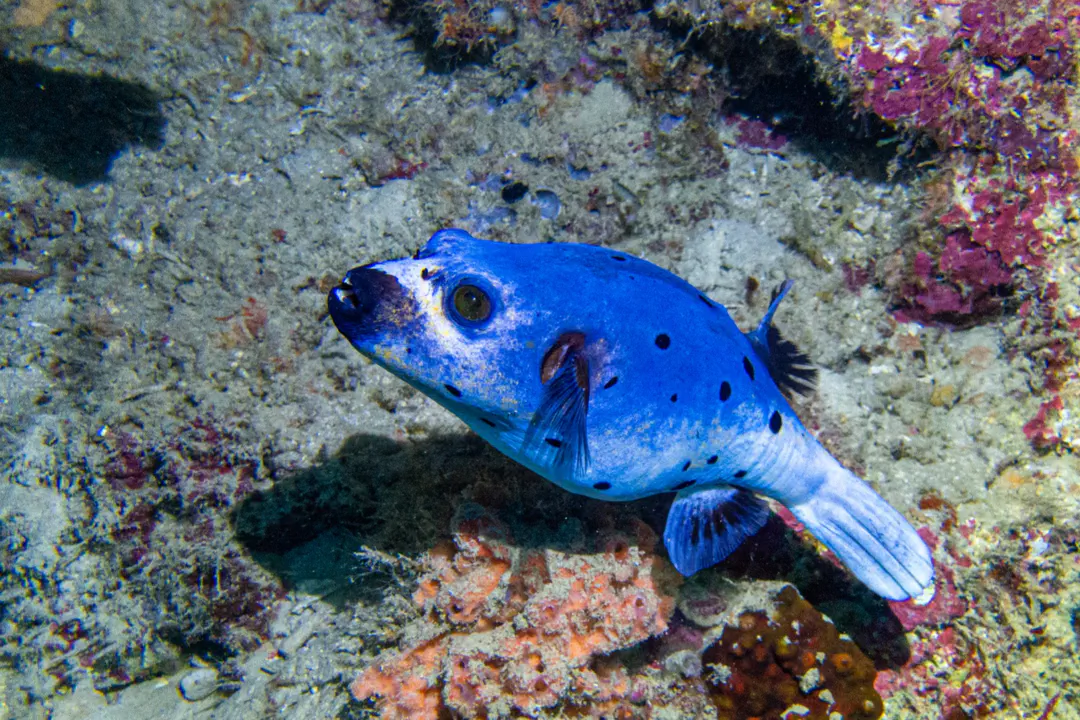
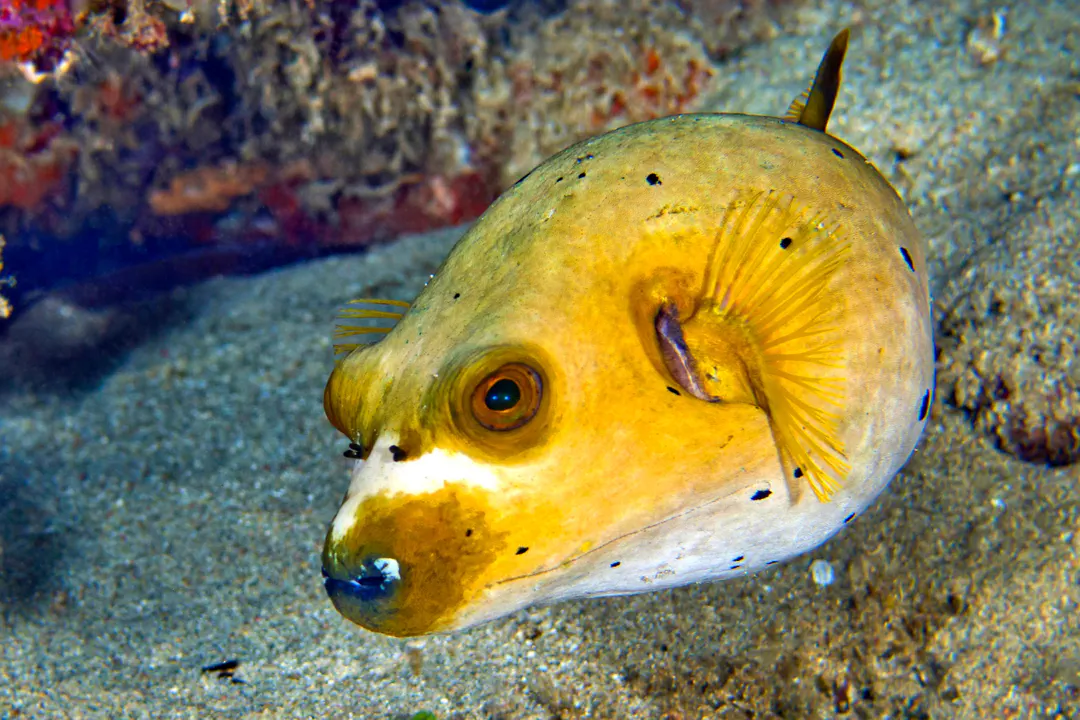
The background coloration goes from white to grey, and the body is harmoniously dotted with black spots. The ventral area is usually clearer. The size of the spots is inversely proportional to the size of the fish; thus, a young individual will have large spots and adults of maximal size will have small spots. The juveniles have a yellowish body background coloration with dark stripes. The young adults still have stripes on the ventral area that will turn to spots later, and also some recollection of yellow on the body.
This species is found in tropical and subtropical waters from the Indian Ocean and Red Sea as far as Polynesia, southern Japan, the western, northern and eastern coasts of Australia and Lord Howe Island. It is a relatively uncommon species and lives close to external reef slopes and sheltered lagoons with clear water, but mainly in close proximity to sandy areas, at depths from the surface down to about 58 m (190 ft).
Arothron stellatus feeds on benthic invertebrates, sponges, algae, the polyps of corals such as Acropora, crustaceans and mollusks.
This pufferfish is diurnal. It is mainly solitary and defends a territory.
Arothron stellatus contains a highly toxic poison, tetrodotoxin, in its ovaries and to a lesser extent its skin and liver, which protects it from voracious predators. It becomes toxic as it eats bacteria that contain the toxin. To ward off potential enemies, they can inflate their bodies by swallowing air or water.
© coenobitaCC BY 4.0 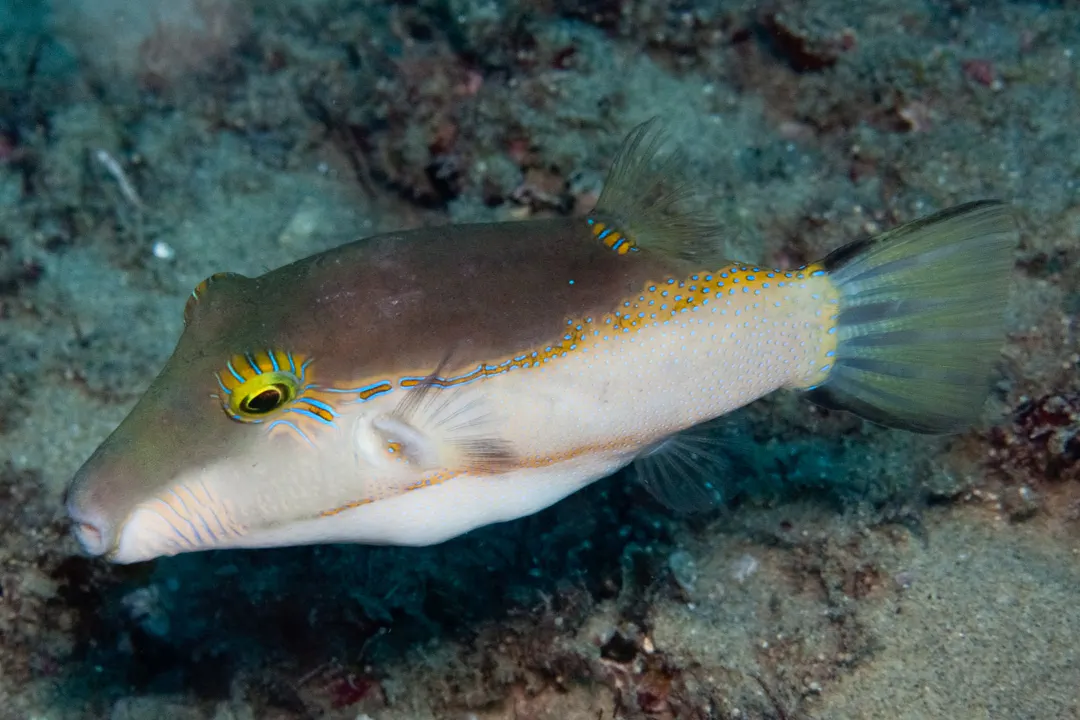 © Georgina JonesCC BY-SA 4.0 · iNaturalist
  Jean-Paul BoerekampsCC0 · iNaturalist
  © Dirk FroebelCC BY 4.0 · iNaturalist
  © portioidCC BY 4.0 · iNaturalist
  © seabook.appAll rights reserved
 Starry Puffer is classified as poisonous. Always exercise caution and keep a safe distance.
Starry Puffer can be found at depths of up to 58 meters.
Download Seabook free for iOS and Android.