 © Lesley ClementsAll rights reserved
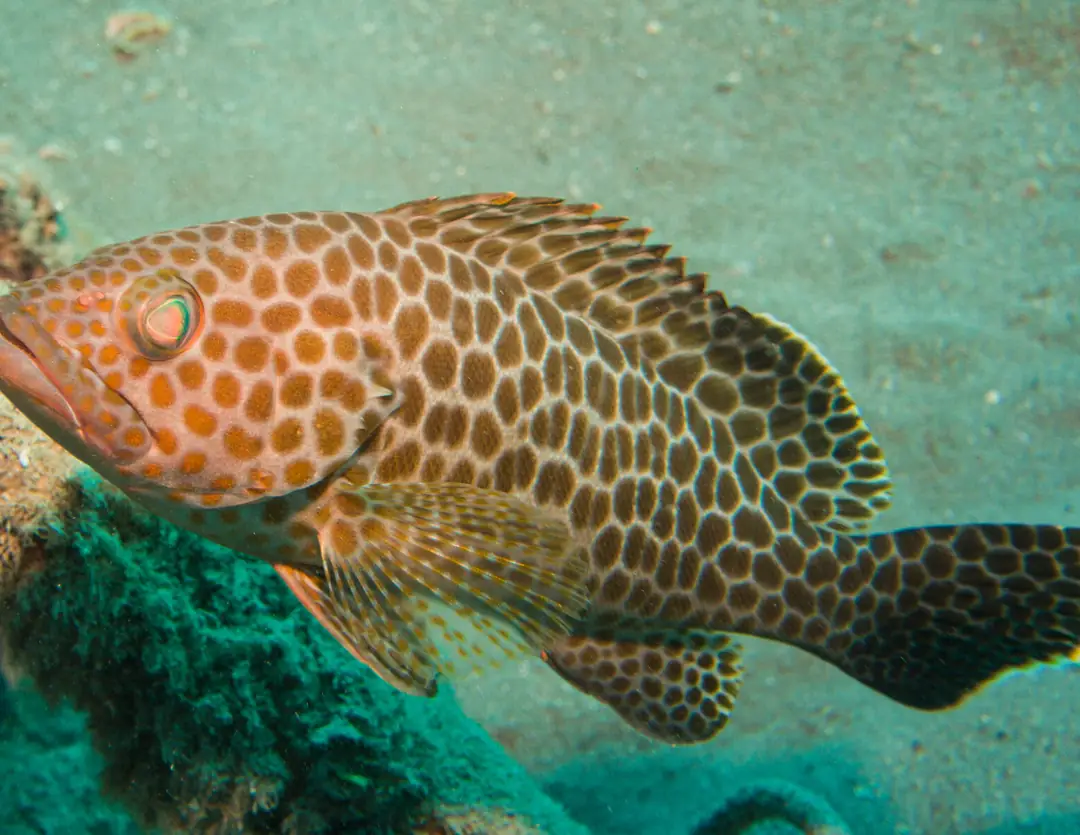
Areolate Rock Cod
Epinephelus areolatus
Plectropomus oligacanthus
Plectropomus oligacanthus is a species of fishes in the Serranidae family.
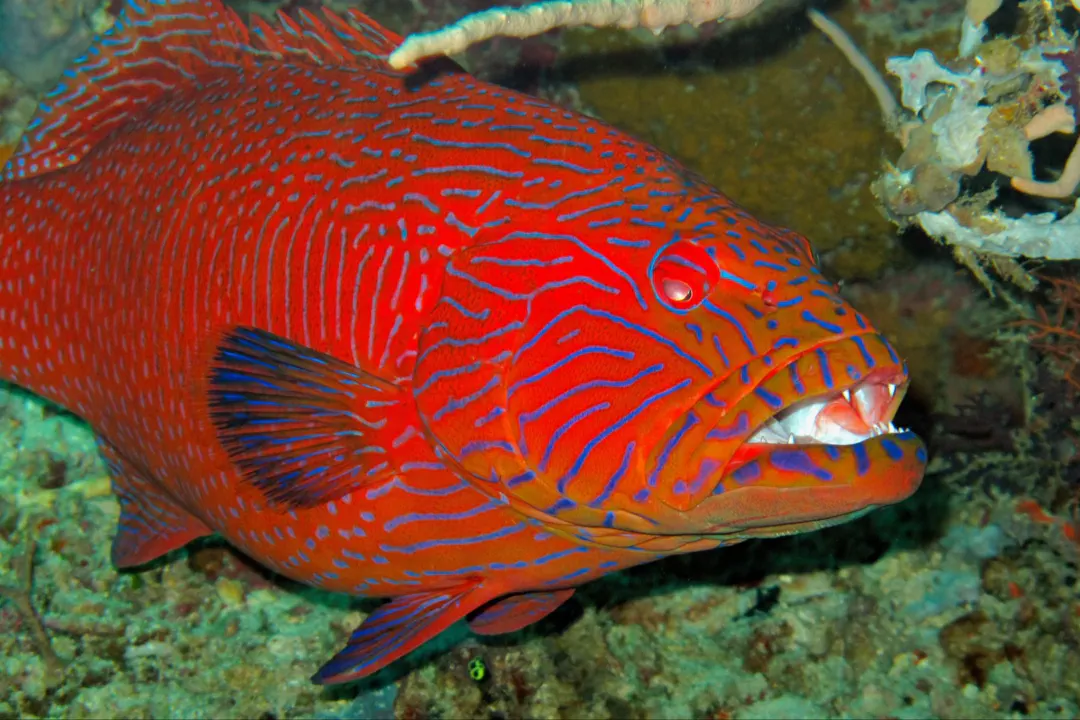
Adults typically reach lengths of 50–70 cm, with some growing up to 90 cm. The body is usually golden-brown or reddish, adorned with bright blue or white spots that create a unique pattern. The belly is lighter, creating a gradient effect. The dorsal and anal fins are covered with small spots, and the rounded tail fin adds to the fish’s elegance.
Indo-West Pacific: Philippines, Indonesia, New Guinea, northeastern Australia (Cape York to northern Great Barrier Reef) Belau, Truk, Caroline Islands, Marshall Islands, and the Solomon Islands.
It prefers warm tropical waters and is found near coral reefs, in lagoons and on the outer slopes of reefs. It is an active predator that feeds on small fish and invertebrates, including crustaceans and cephalopods.
It uses its camouflage and agility to ambush prey. It leads a solitary life, particularly adults, although juveniles may sometimes form small groups. It is diurnal, hunting during the day and retreating to shelters at night.
The Serranidae are a large family of fishes belonging to the order Perciformes. The family contains about 450 species in 64 genera, including the sea basses and the groupers (subfamily Epinephelinae). Although many species are small, in some cases less than 10 cm (3.9 in), the giant grouper (Epinephelus lanceolatus) is one of the largest bony fishes in the world, growing to 2.7 m (8 ft 10 in) in length and 400 kg (880 lb) in weight.
Many serranid species are brightly colored, and many of the larger species are caught commercially for food. They are usually found over reefs, in tropical to subtropical waters along the coasts. Serranids are generally robust in form, with large mouths and small spines on the gill coverings. They typically have several rows of sharp teeth, usually with a pair of particularly large, canine-like teeth projecting from the lower jaw.
All serranids are carnivorous. Although some species, especially in the Anthiinae subfamily, only feed on zooplankton, the majority feed on fish and crustaceans. They are typically ambush predators, hiding in cover on the reef and darting out to grab passing prey. Their bright colours are most likely a form of disruptive camouflage, similar to the stripes of a tiger.
Many species are protogynous hermaphrodites, meaning they start out as females and change sex to male later in life. They produce large quantities of eggs and their larvae are planktonic, generally at the mercy of ocean currents until they are ready to settle into adult populations.
As other fish, serranids harbour parasites, including nematodes, cestodes, digeneans,monogeneans, isopods, and copepods. A study conducted in New Caledonia has shown that coral reef-associated serranids harbour about 10 species of parasites per fish species.
Recent molecular classifications challenge the validity of the genera Cromileptes (sometimes spelled Chromileptes) and Anyperodon. Each of these two genera has a single species, which were included in the same clade as species of Epinephelus in a study based on five different genes.
© Lesley ClementsAll rights reserved  © seabook.appAll rights reserved
  © Ian ShawAll rights reserved
 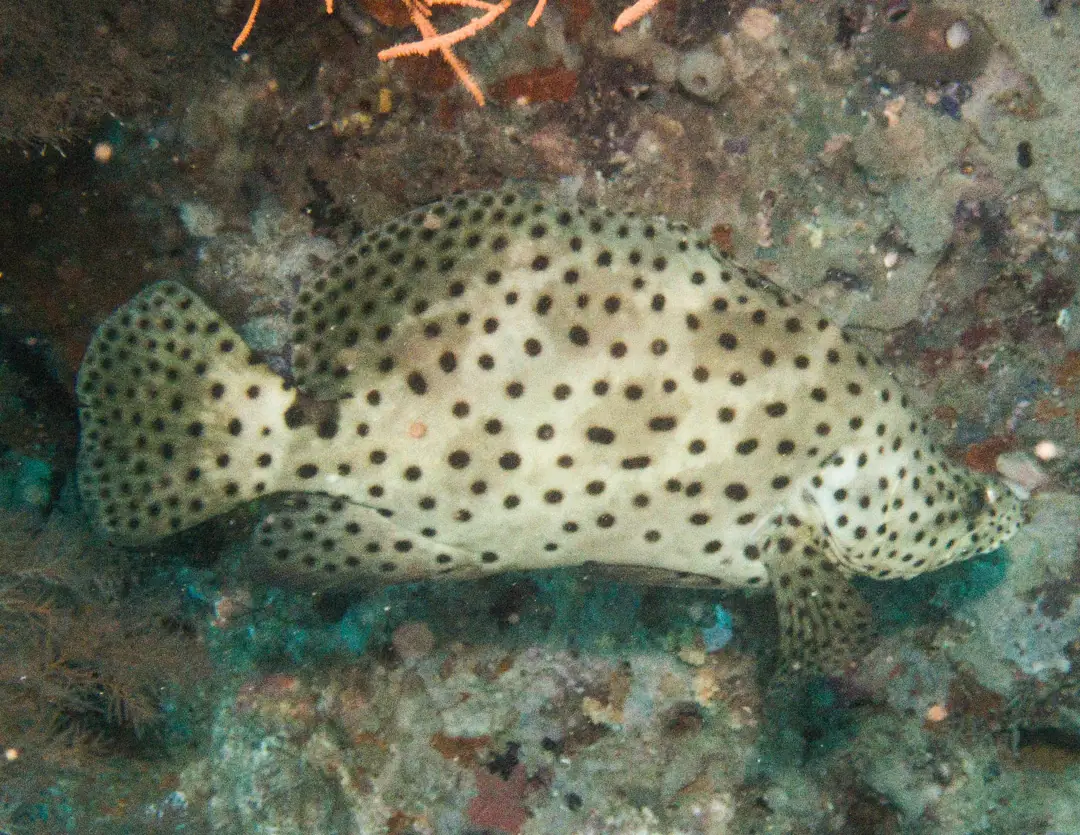 © Lesley ClementsAll rights reserved
 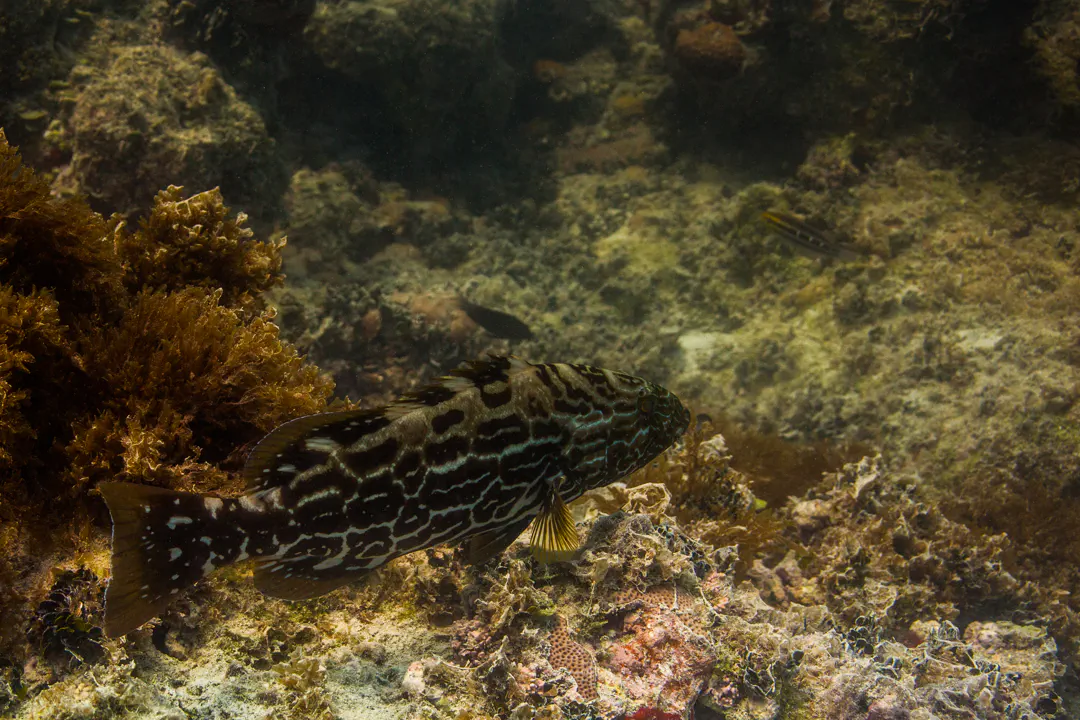 © João D'AndrettaCC BY 4.0 · iNaturalist
 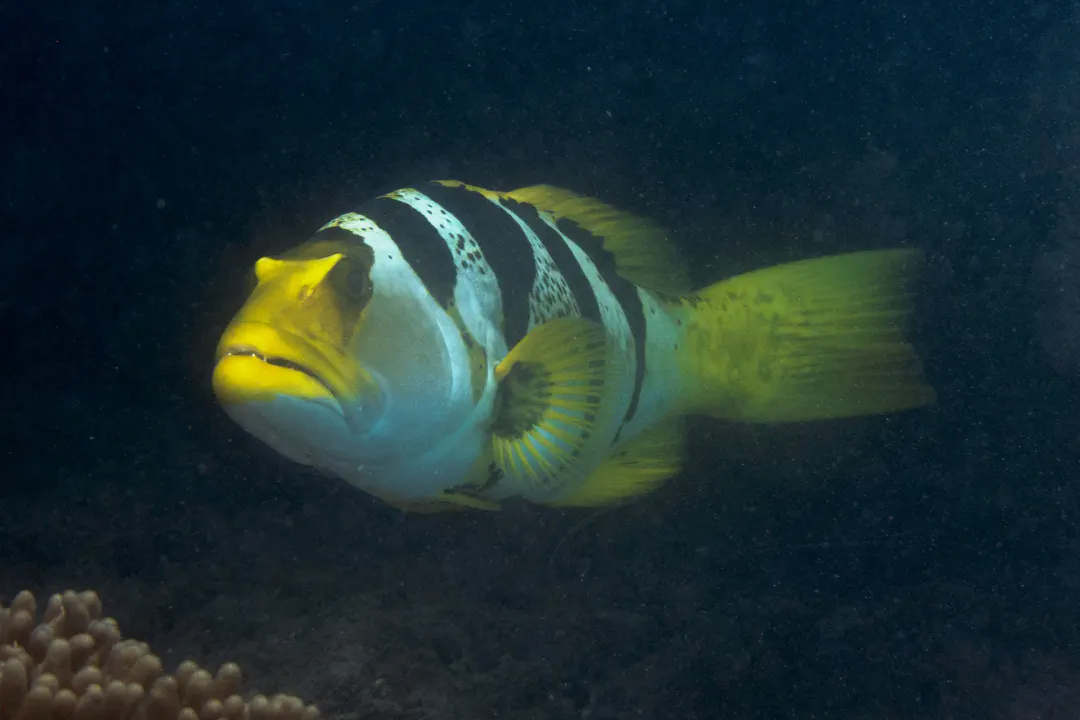 © Ewout KnoesterCC BY-SA 4.0 · iNaturalist
 Highfin Coralgrouper is classified as poisonous. Always exercise caution and keep a safe distance.
Highfin Coralgrouper can be found at depths of up to 147 meters.
Download Seabook free for iOS and Android.