 © Brian GratwickeCC BY 4.0 · iNaturalist
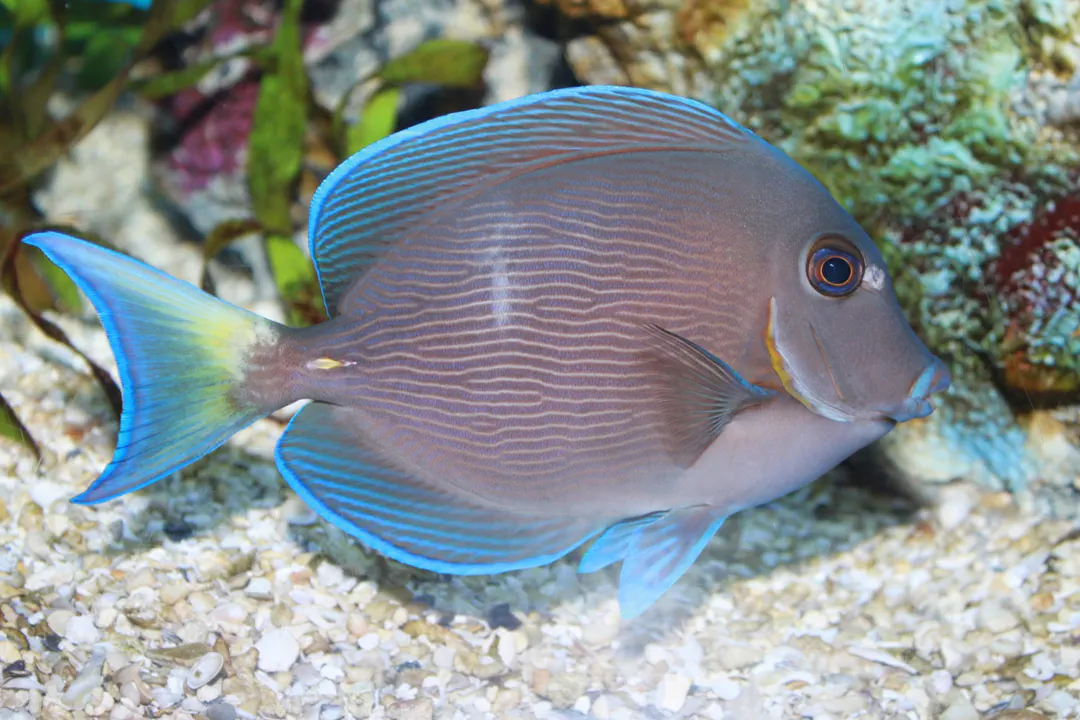
Atlantic Blue Tang
Acanthurus coeruleus
Acanthurus tennentii
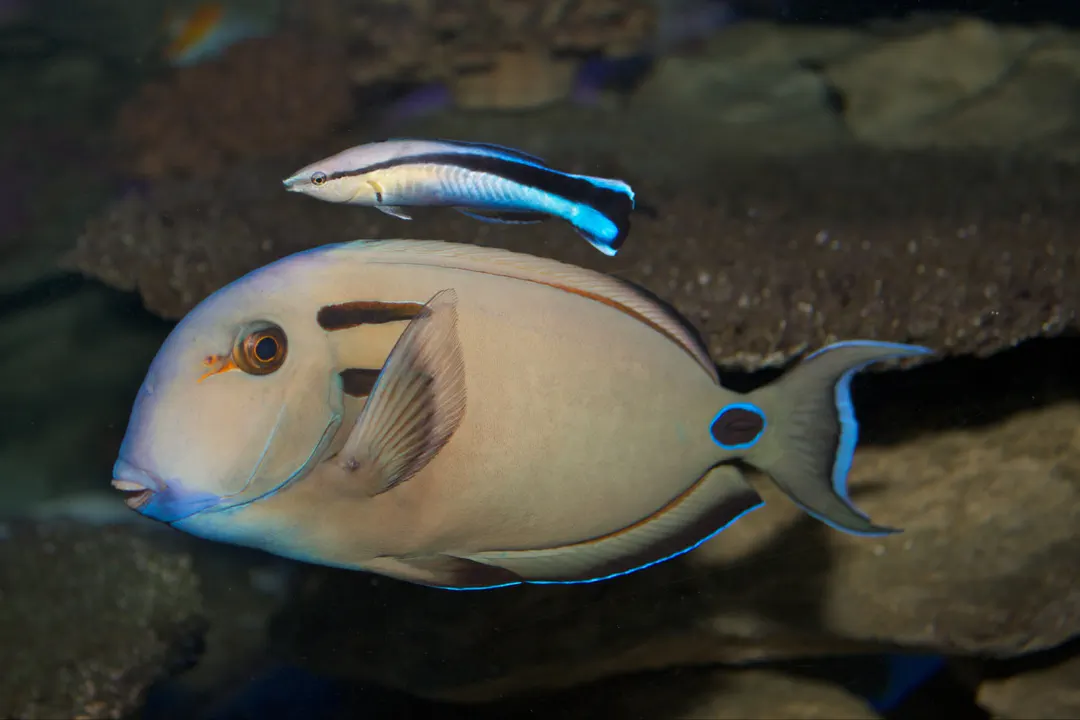
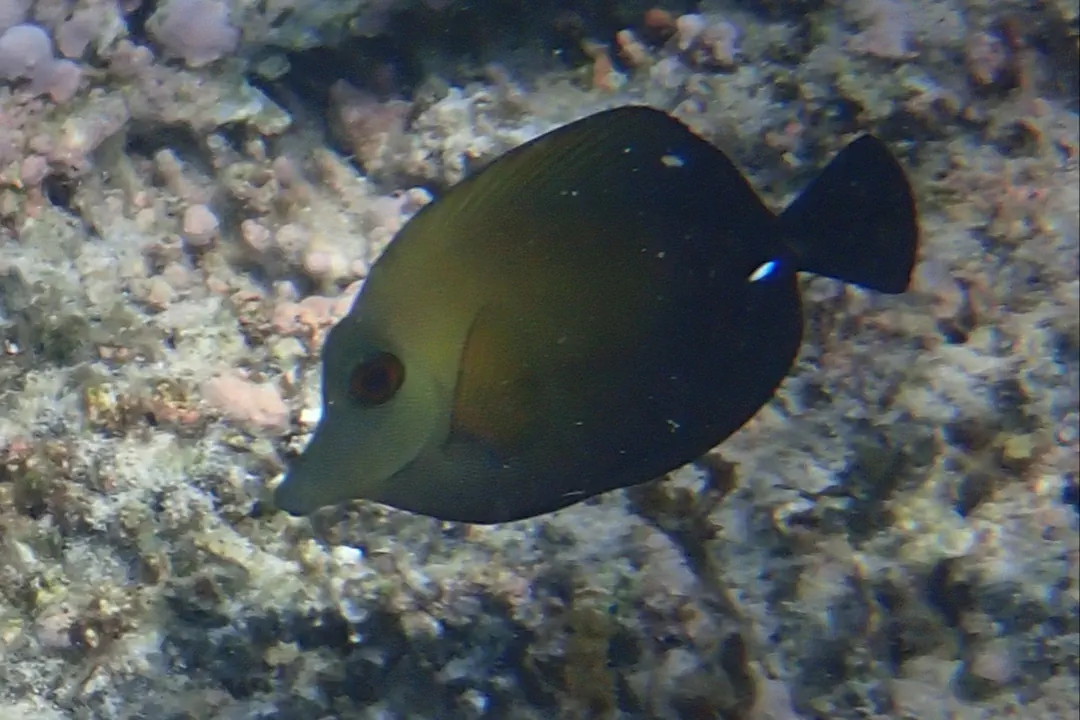
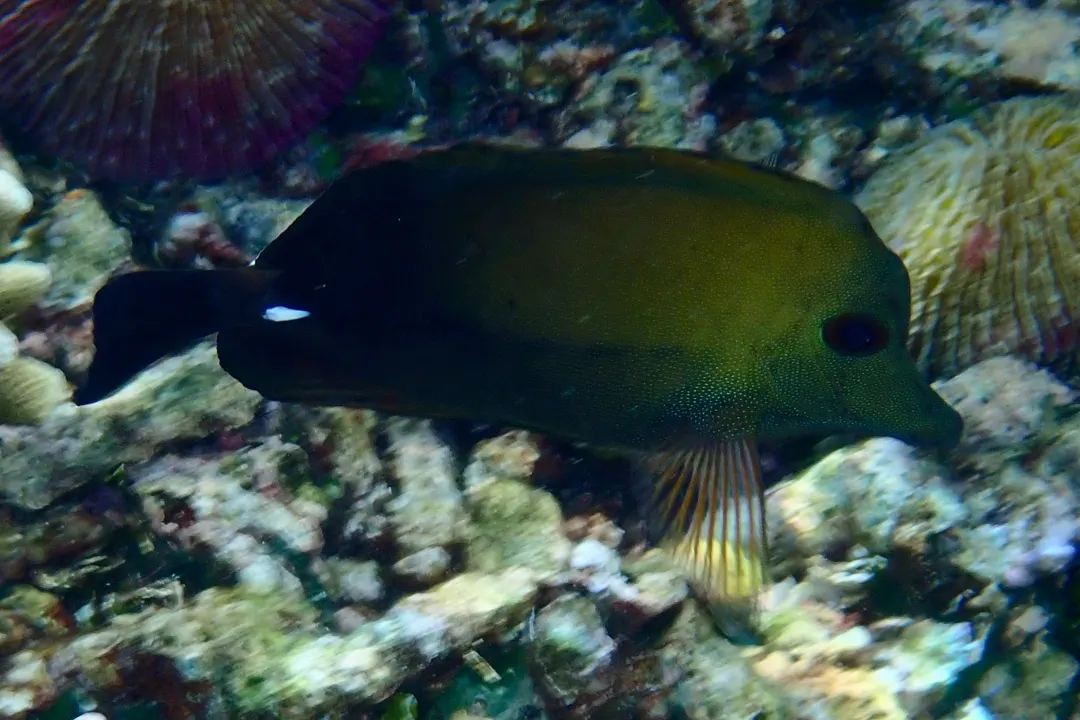
Acanthurus tennentii is a marine reef tang in the fish family Acanthuridae.
The doubleband surgeonfish is a deep-bodied, laterally-compressed oval fish, rather over twice as long as it is deep, with a maximum length of 31 cm (12 in), although a more typical length is 25 cm (10 in). The colour is variable, the sexes being similar except in the breeding season, when the mature male takes on a distinctive appearance. This fish is usually orange-beige, olive-tan or steely grey, but can turn a dark brown shade flushed with red or purple when stressed. A dark line runs along the base of the dorsal fin with a similar line at the base of the anal fin. There are two dark streaks behind the eye, and the scalpel-like scales that project from the caudal peduncle are blackish and surrounded by a large black spot with a bluish border. Both dorsal and anal fins are long, extending as far as the caudal peduncle. The caudal fin is crescent-shaped, the points growing longer as the fish ages. It is rimmed by a band of bluish-white.
This species has a wide distribution across the tropical and subtropical Indo-Pacific region; its range extends from East Africa and Madagascar to southern India, Sri Lanka, Malaysia, Thailand and Indonesia. It occurs on rocks and coral reefs, on the reef slopes and in the channels between reefs, at depths down to about 35 m (115 ft).
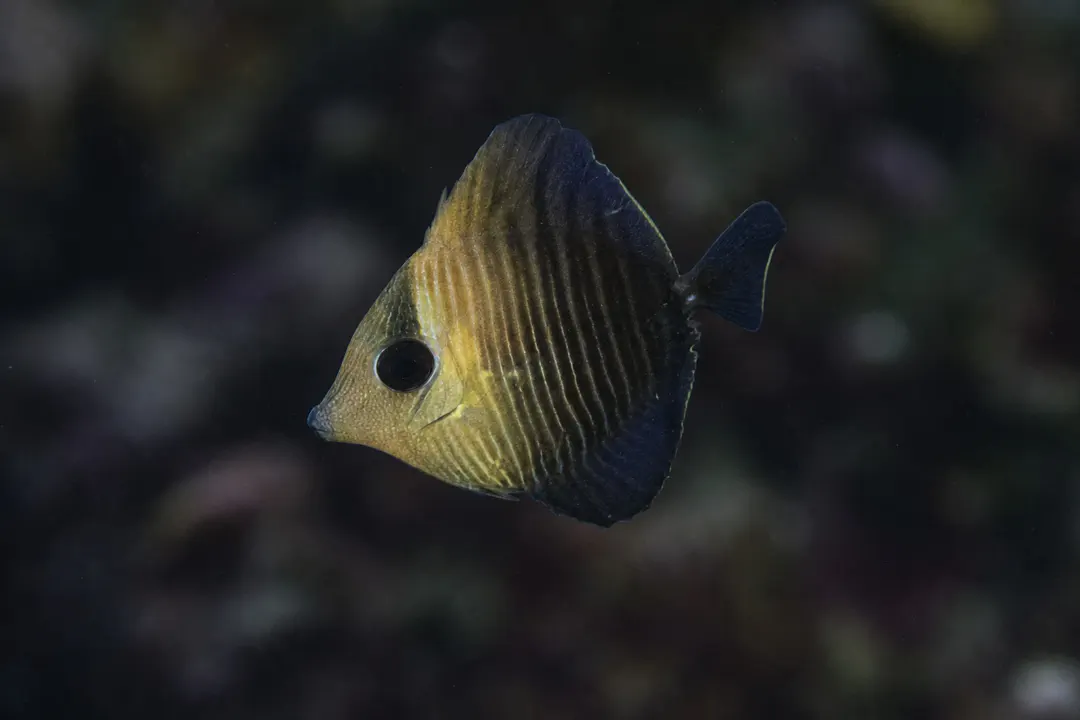
The doubleband surgeonfish feeds on algae growing on the seabed and detritus, as well as the algal film that grows on sand and other substrates. Breeding involves the liberation of sperm and eggs into the sea. The larvae are pelagic, and return to the reef habitat about seven weeks later. The juveniles form mixed species groups with other fish species; at first they may be black, or yellow with a black eye ring, but later they resemble the adult fish, apart from the black markings behind the eye, which at one stage in juvenile development is horseshoe-shaped. This fish feeds in the open during the day, often in small groups with parrotfish and other species.
© Brian GratwickeCC BY 4.0 · iNaturalist 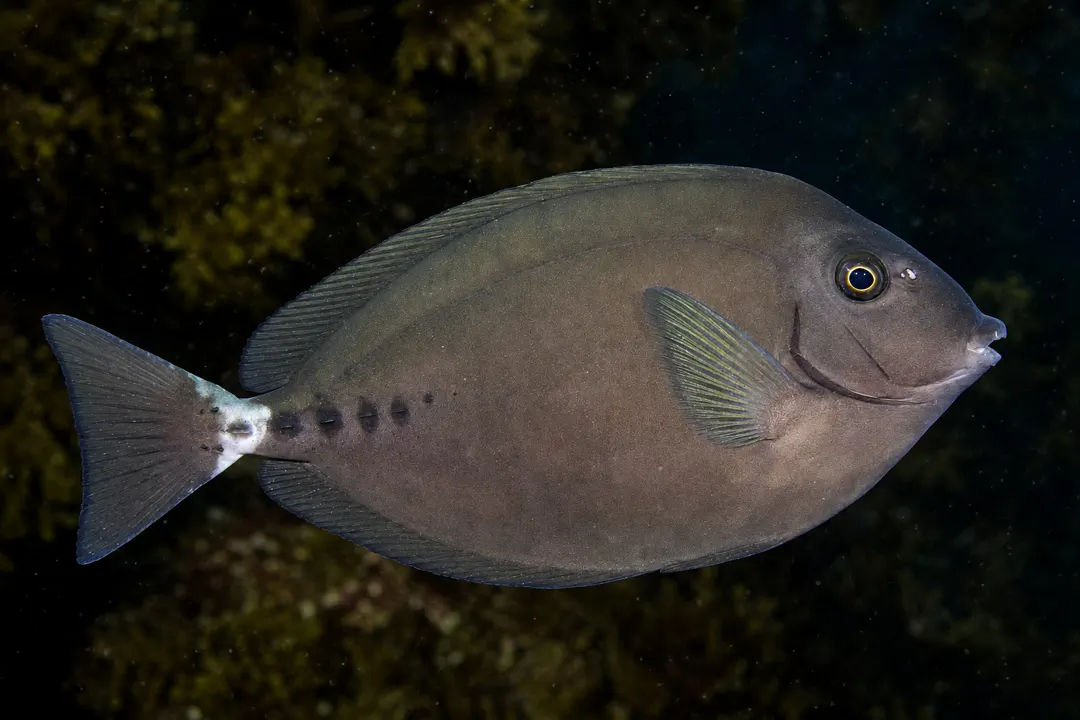 © seabook.appAll rights reserved
  © Dr. Thomas DörnerCC BY-SA 4.0 · iNaturalist
  © Debra BakerCC BY 4.0 · iNaturalist
  © seabook.appAll rights reserved
  Jean-Paul BoerekampsCC0 · iNaturalist
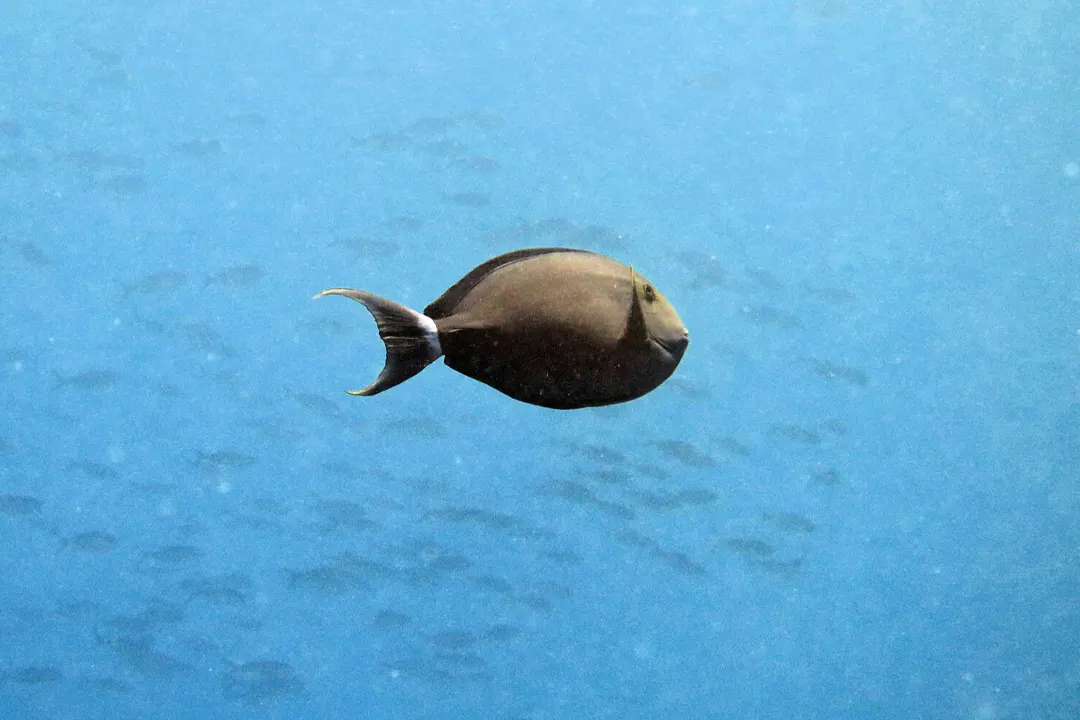
 Lieutenant Surgeonfish is classified as poisonous. Always exercise caution and keep a safe distance.
Lieutenant Surgeonfish can be found at depths of up to 40 meters.
Download Seabook free for iOS and Android.