Alder's Acanthozoon
Acanthozoon alderi
Pseudobiceros splendidus
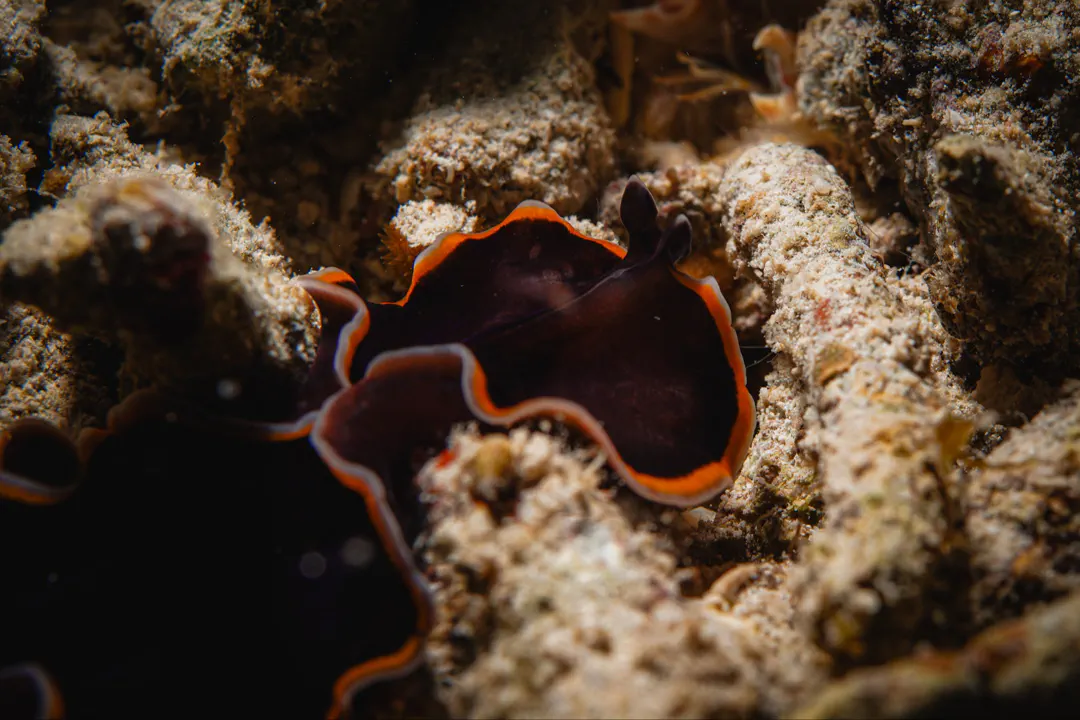
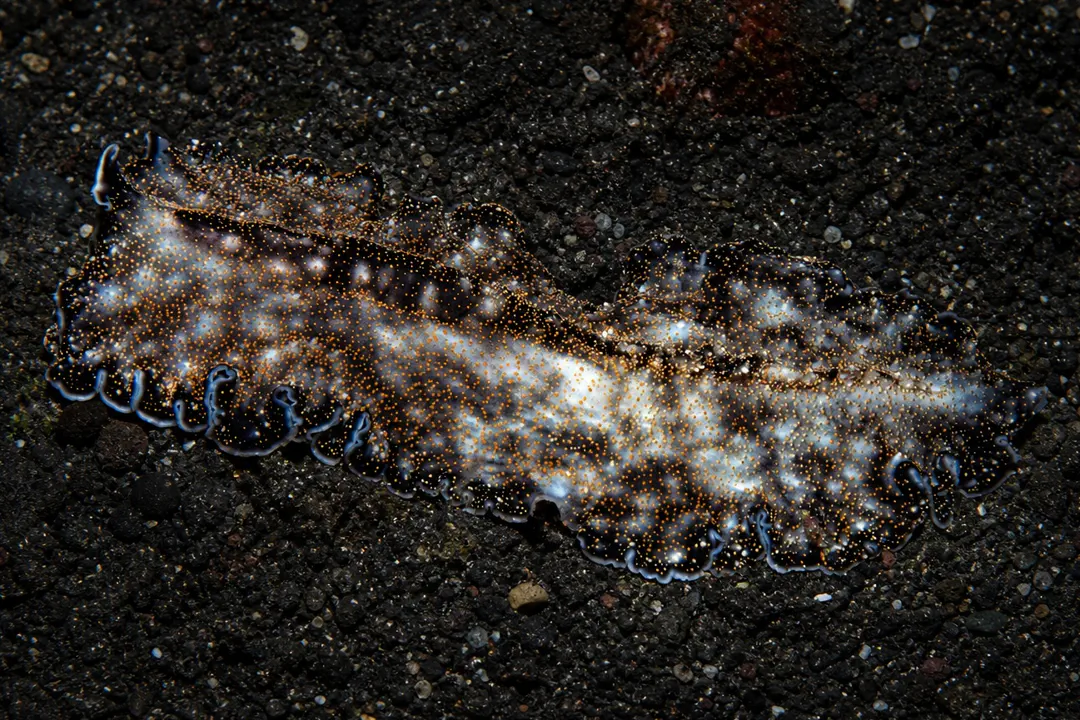
Pseudobiceros splendidus has the elongated body, reaches up to about 70 mm in length, and its general shape is oval, rounded at the ends, and smooth texture. In Mediterranean waters the animal has a very dark black or violet color, while in Atlantic waters it seems that the base color is brown, more or less dark, but always with an orange or yellow band around the body and bordered in color dark on the outside. It has a well-formed dorsal bulge throughout the entire body. The lower part of the body is bluish gray.
In the frontal part it has two well defined tentacles, pointed end and bulging at the base, formed by a fold of the front edge of the body. After them, it has several groups of ocelli - visual organs - arranged in the shape of horseshoe and that allow the animal to be oriented according to the light it perceives; they usually flee from the intense light.
Like the other members of the Cotylea suborder, it has a suction cup located a little before the central part of the body, just behind the female sexual orifice, which allows it to be fixed to the substrate under adverse conditions of the environment, such as tidal currents, storms, etc. .
Like all planarians, this animal is hermaphrodite (male and female at the same time). It has a double male copulation organ located somewhat behind the pharynx and directed forward. The female sexual apparatus has branched uteri.
But their survival strategy is not based solely on reproduction; planarians have a great capacity for regeneration: an animal can reconstitute itself from a small piece.
P. splendidus is an animal that crawls brightly on the sea floor and also has some ability to swim through synchronized corrugations of the body.
It is found at a shallow depth, always on rocks because, like all planarians, it has difficulty moving on soft bottoms. It is considered scarce.
The animal is little studied. It was believed to be endemic (exclusive) of the Mediterranean Sea, but during our literature search we have found numerous citations in the African Atlantic Ocean as well as in Australian waters.
In our waters it can be confused with the naked eye with another planaria of relatively large dimensions, the Pseudoceros velutinus, of which it is distinguished by the orange band around the body, easily visible in P.splendidus and, according to the bibliography, only apparent under binocular magnifying glass in P.velutinus. The latter species also has characteristic white spots between and behind the tentacles, corresponding to the brain ocelli.
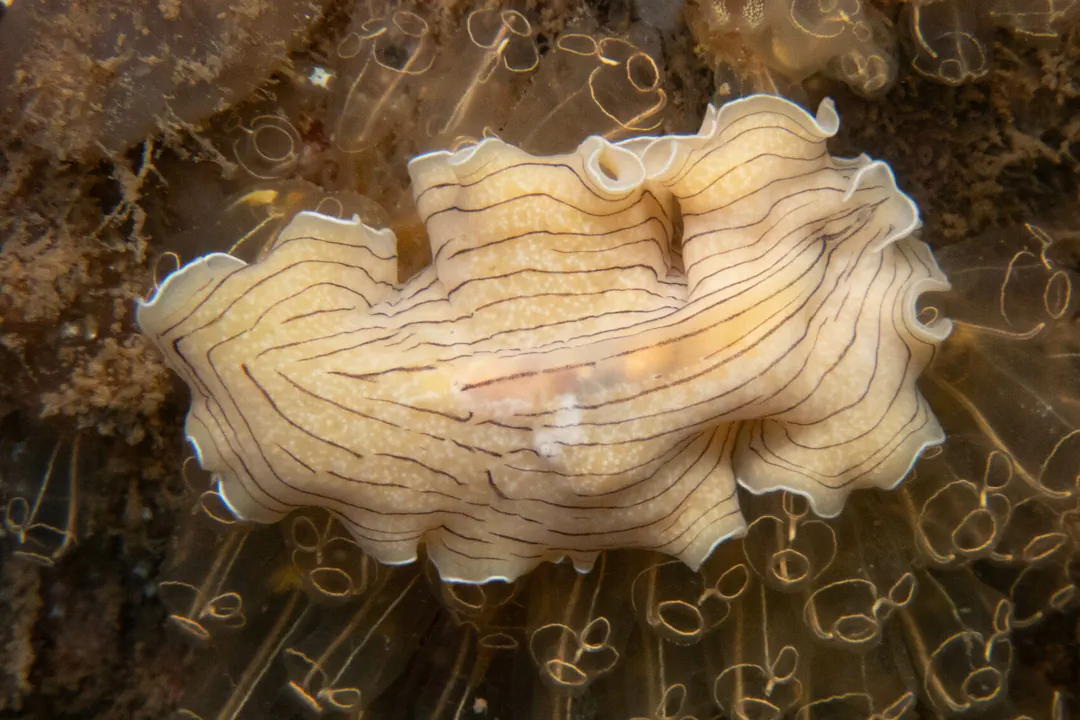
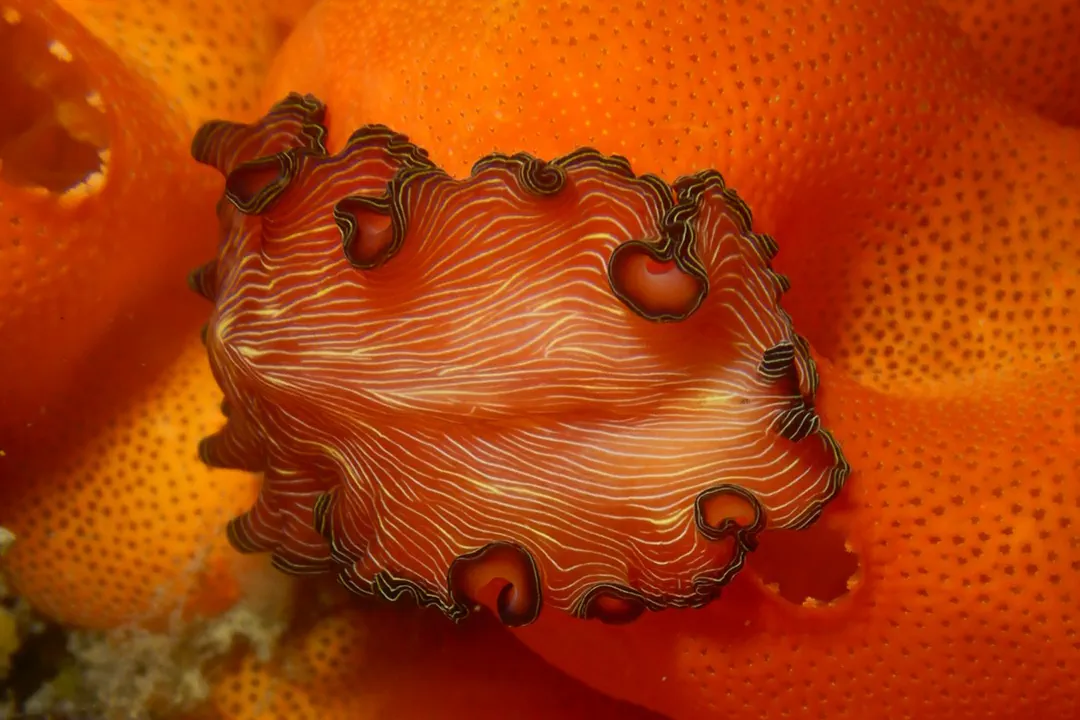 © Ewout KnoesterCC BY-SA 4.0 · iNaturalist
 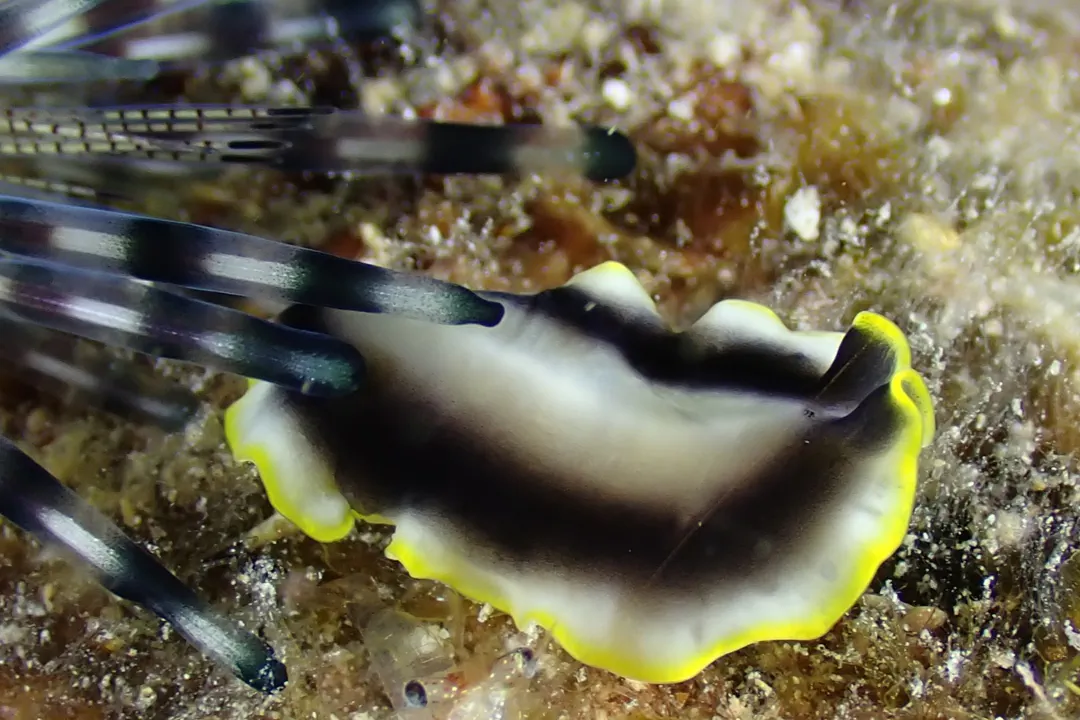 © Robin WhiteCC BY 4.0 · iNaturalist
  © Libby KeatleyCC BY 4.0 · iNaturalist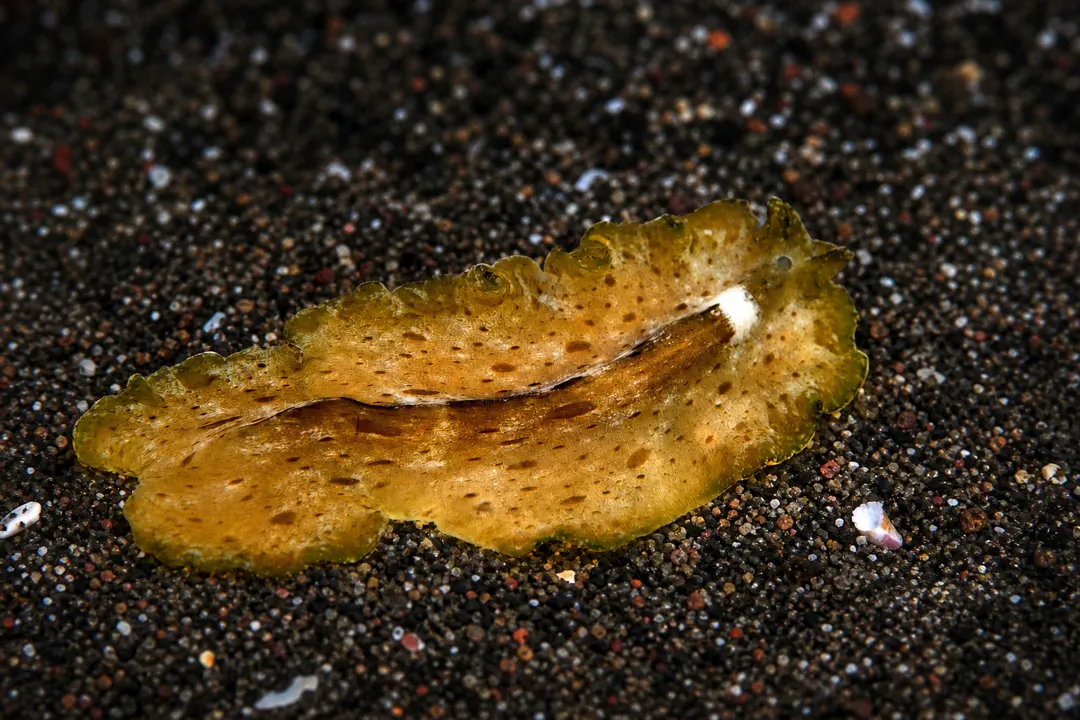
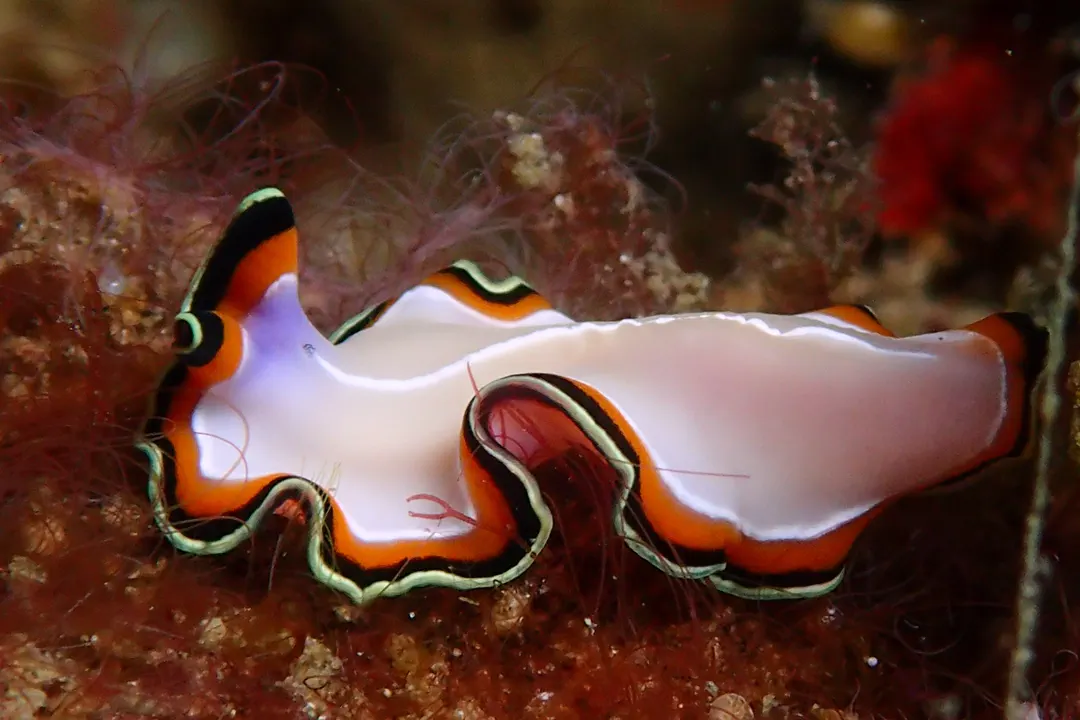 © Dan SchofieldCC BY 4.0 · iNaturalist
 Splendid flatworm has no known danger to humans. However, always observe marine life responsibly.
Download Seabook free for iOS and Android.