 © Ditch TownsendCC BY-SA 4.0 · iNaturalist
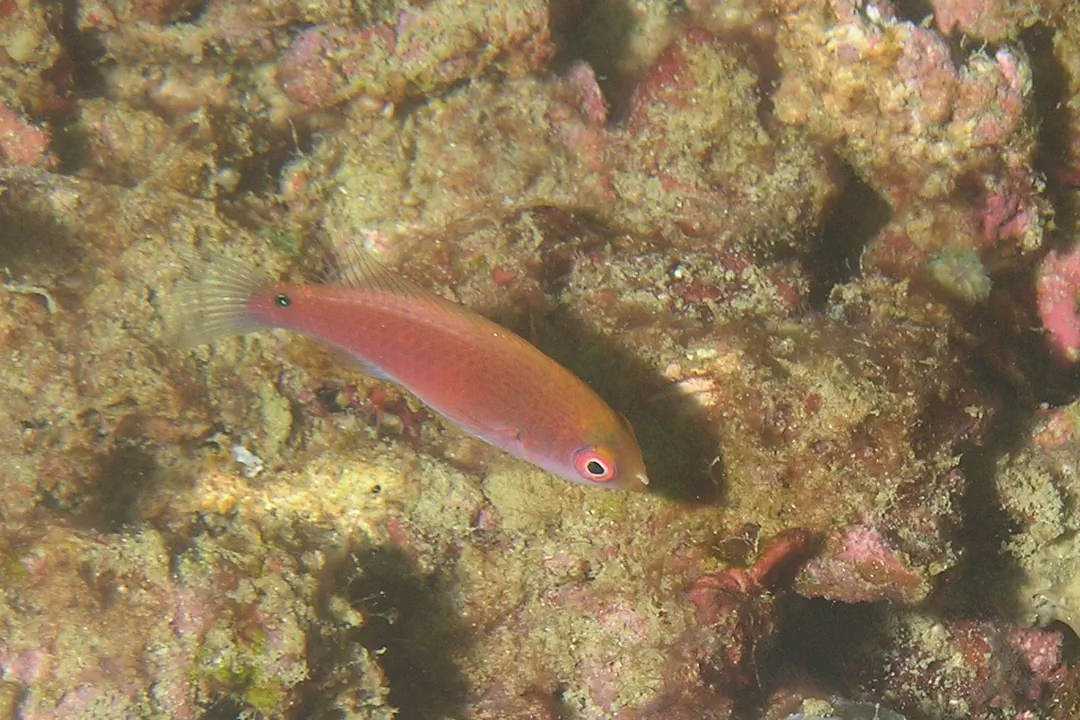
Blueside Wrasse (female)
Cirrhilabrus cyanopleura
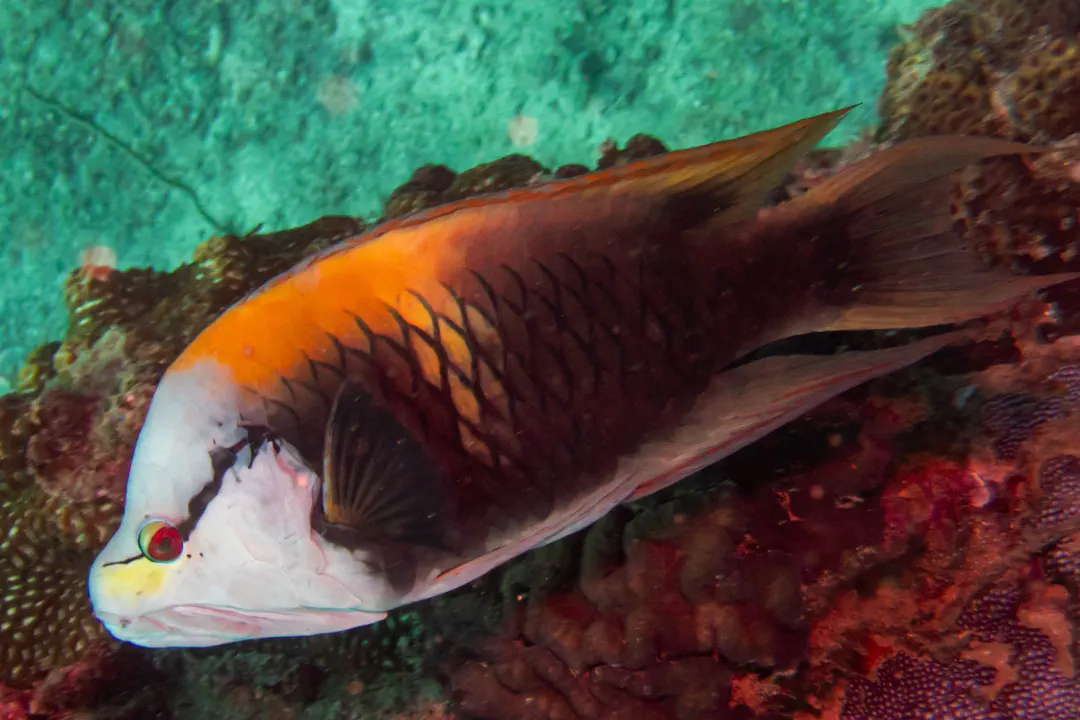
Epibulus insidiator
The slingjaw wrasse, Epibulus insidiator, is a species of wrasse native to the tropical waters of the Indo-Pacific from the Red Sea and the African coast to the Tuamotus and Hawaii, and from the southern waters of Japan to New Caledonia. This species can be found on coral reefs at depths from 1 to 42 m (3.3 to 137.8 ft). The jaws of this species can swing out to form a long tube when opened (up to half the length of the fish's body) which creates suction to allow the fish to ingest the small crustaceans and fishes upon which it preys. It can reach a standard length of 54 cm (21 in). This species is of minor importance to local commercial fisheries and can be found in the aquarium trade.
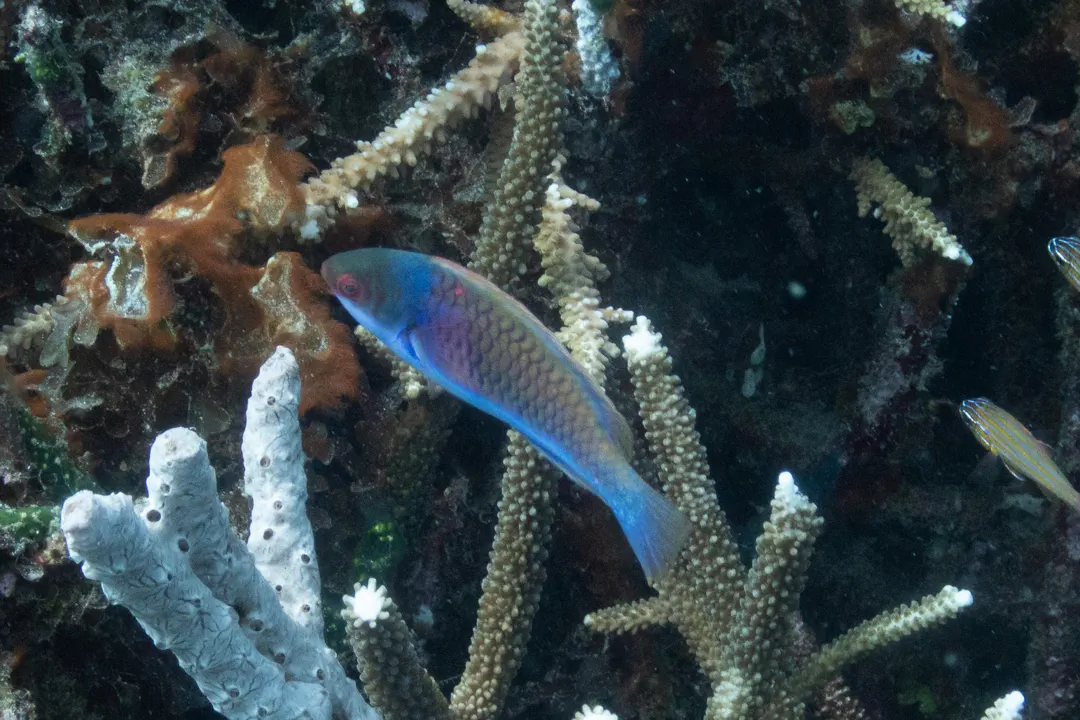
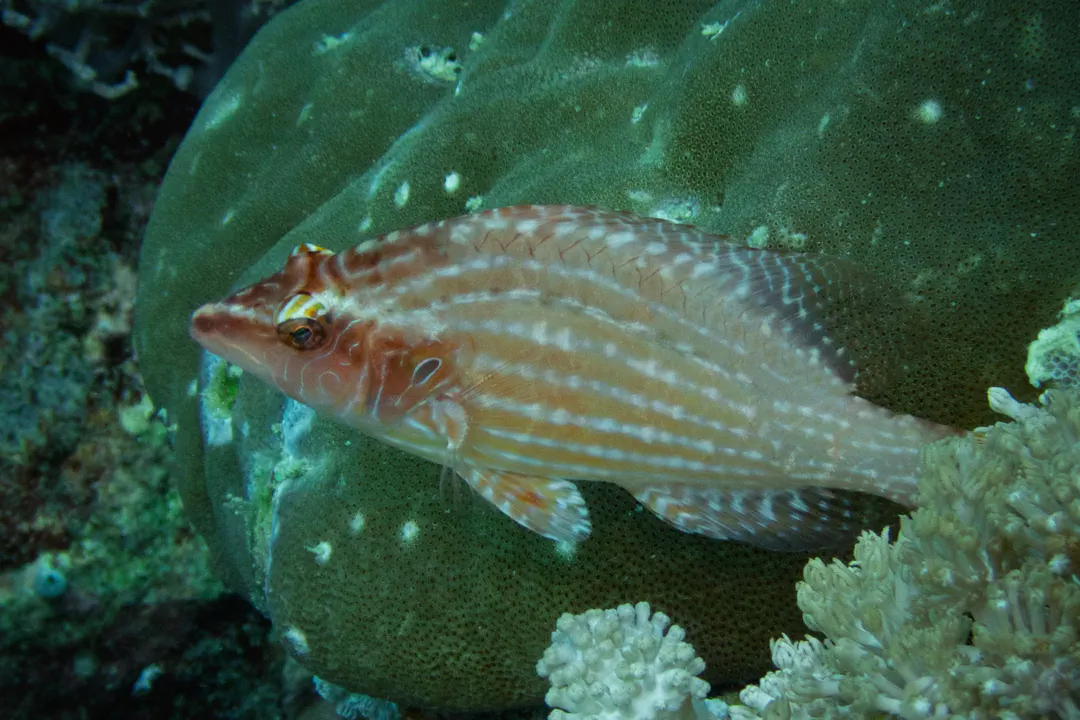
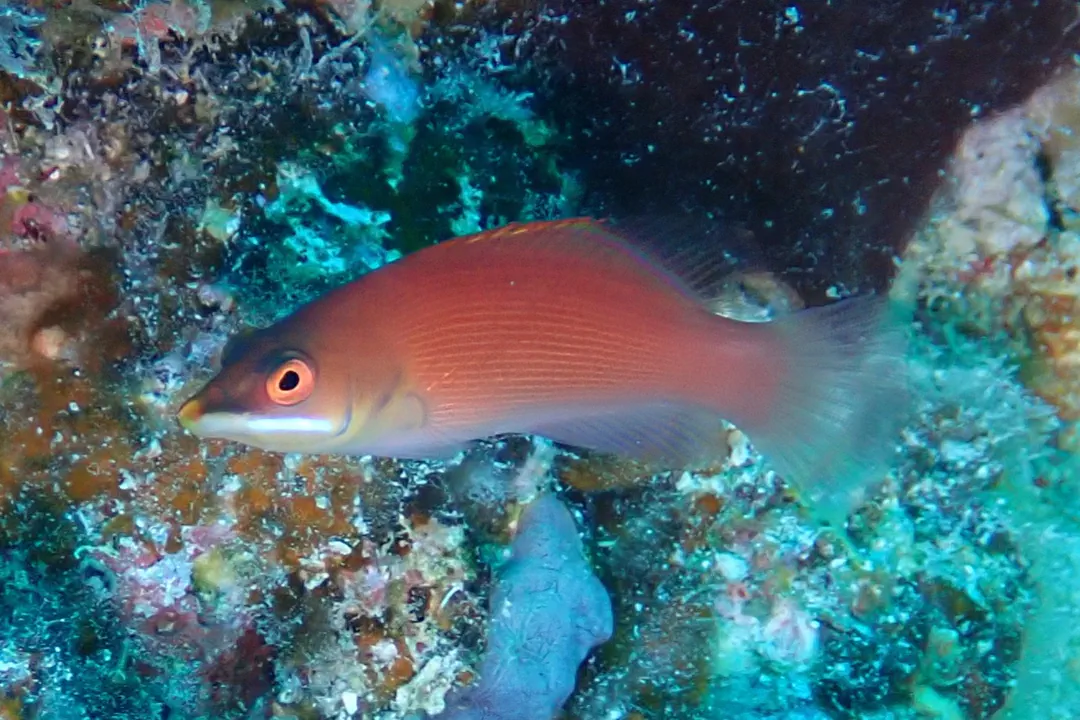
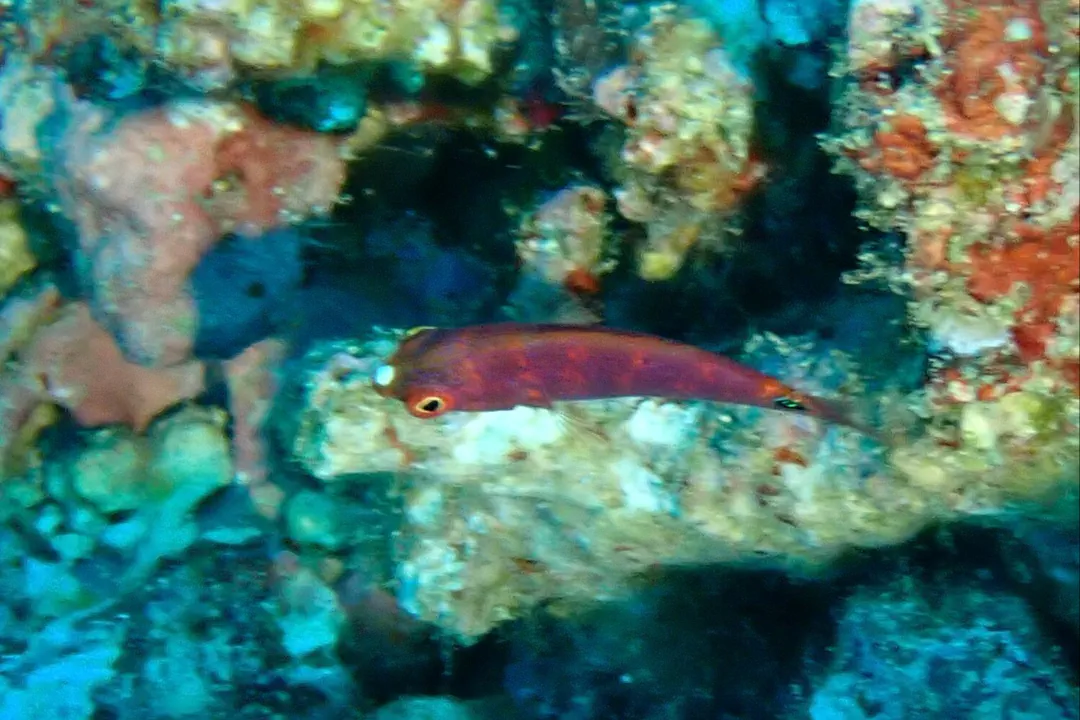
Dorsal spines (total): 9 - 10; Dorsal soft rays (total): 9-11; Anal spines: 3; Anal soft rays: 8 - 9. The mouth of this species is protrusible and unfolds into a tube easily half the body length. The jaws swing forward into a long tube that strong suction to catch prey. When not in use, the entire apparatus is conveniently folded under the head. Small juveniles are brown with thin white bars and closely resemble a species of Wetmorella. Color varies with age and sex, but adult color varies additional, including with an all-yellow xanthic form. Sub adults and females are brown or, not uncommonly, uniformly yellow. Terminal males are dark with a white head and a dark streak extending horizontally through the eye. Male becomes ornamented with orange and yellow over the back. Juveniles dark with fine vertical white lines. Intermediates with yellow blotches, pale tail and sometimes with black pectoral fins.
The sling-jaw wrasse possesses the most extreme jaw protrusion found among fishes. The species can extend its jaws up to 65% the length of its head. The speed and length to which the jaw protrudes allows it to capture small fish and crustaceans. The genus this species belongs to possess one unique ligament (vomero-interopercular) and two enlarged ligaments (interoperculo-mandibular and premaxilla-maxilla), which along with a few changes to the form of cranial bones, allow it to achieve extreme jaw protrusion.
Indo-Pacific: Red Sea to South Africa and the Hawaiian and Tuamoto islands, north to southern Japan, south to New Caledonia.
Inhabit coral-rich areas of lagoon and seaward reefs. Benthopelagic. Generally solitary. Feed on small coral-dwelling crustaceans and fishes. Capable of drift migration along with floating leaves. Adults usually along deep slopes or drop-offs. Sometimes they visit cleaning stations holding their mouth open and out for inspection.
Males have been observed patrolling their mating territory. Protogyny was proposed but not confirmed.
© Ditch TownsendCC BY-SA 4.0 · iNaturalist 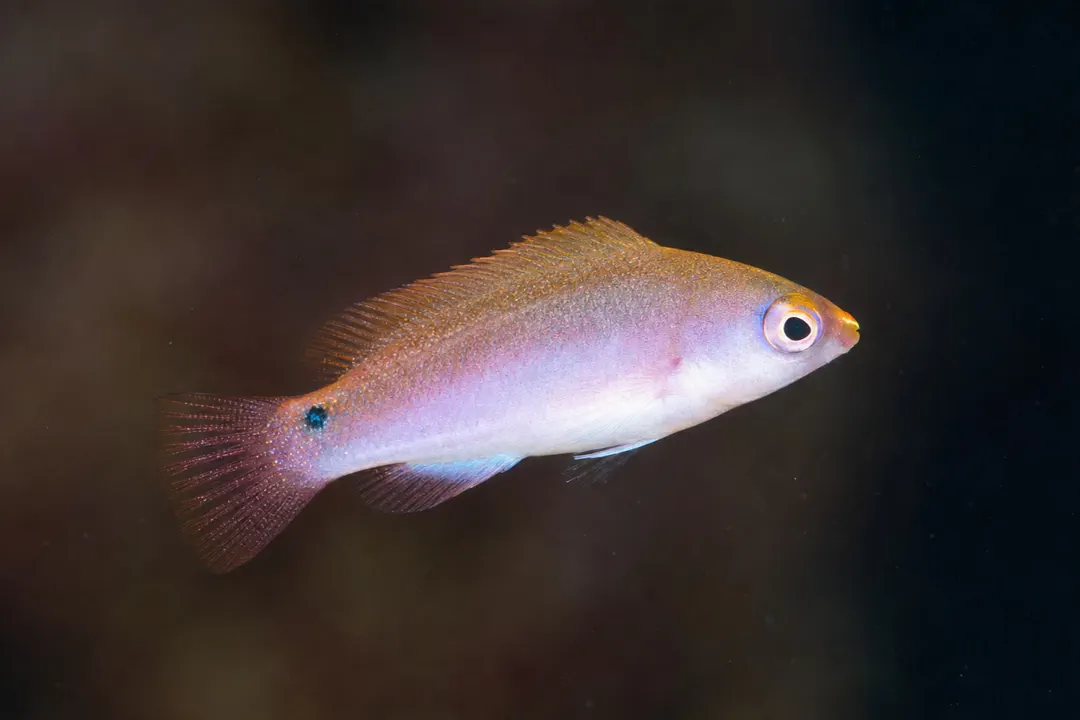 © seabook.appAll rights reserved
  Justin PhilboisCC0 · iNaturalist
  © Pierre PericardCC BY 4.0 · iNaturalist
  © Debra BakerCC BY 4.0 · iNaturalist
  © Debra BakerCC BY 4.0 · iNaturalist
 Slingjaw Wrasse (male) is classified as poisonous. Always exercise caution and keep a safe distance.
Slingjaw Wrasse (male) can be found at depths of up to 50 meters.
Download Seabook free for iOS and Android.