 © Pierre PericardCC BY 4.0 · iNaturalist
Button Coral
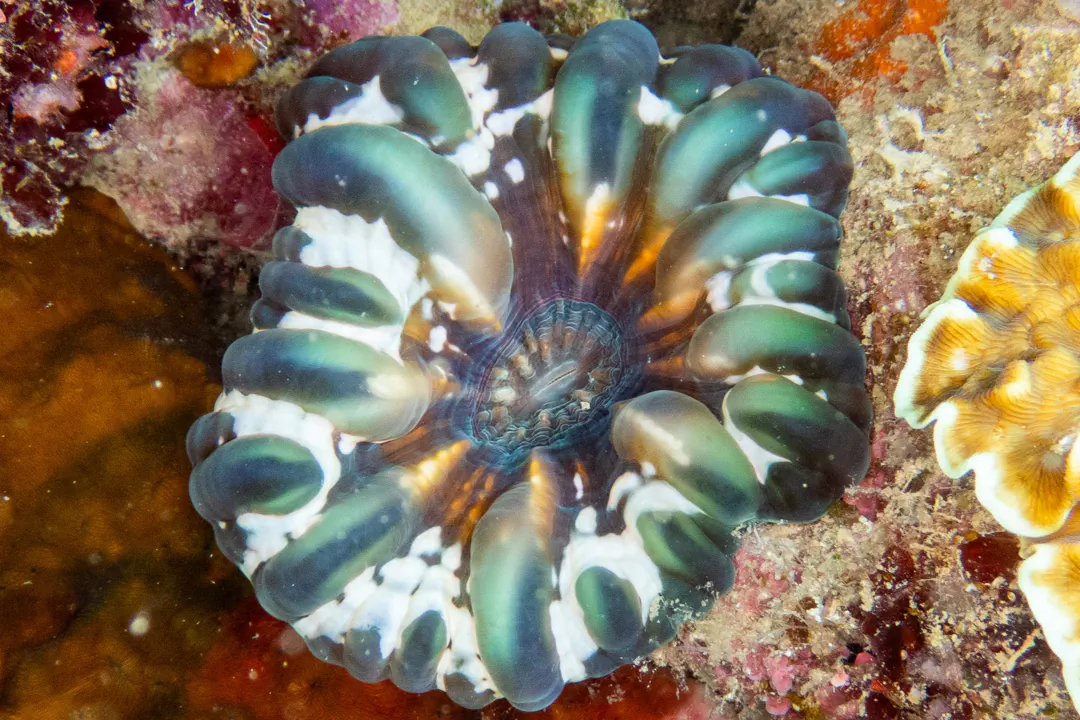
Cynarina lacrymalis
Desmophyllum pertusum
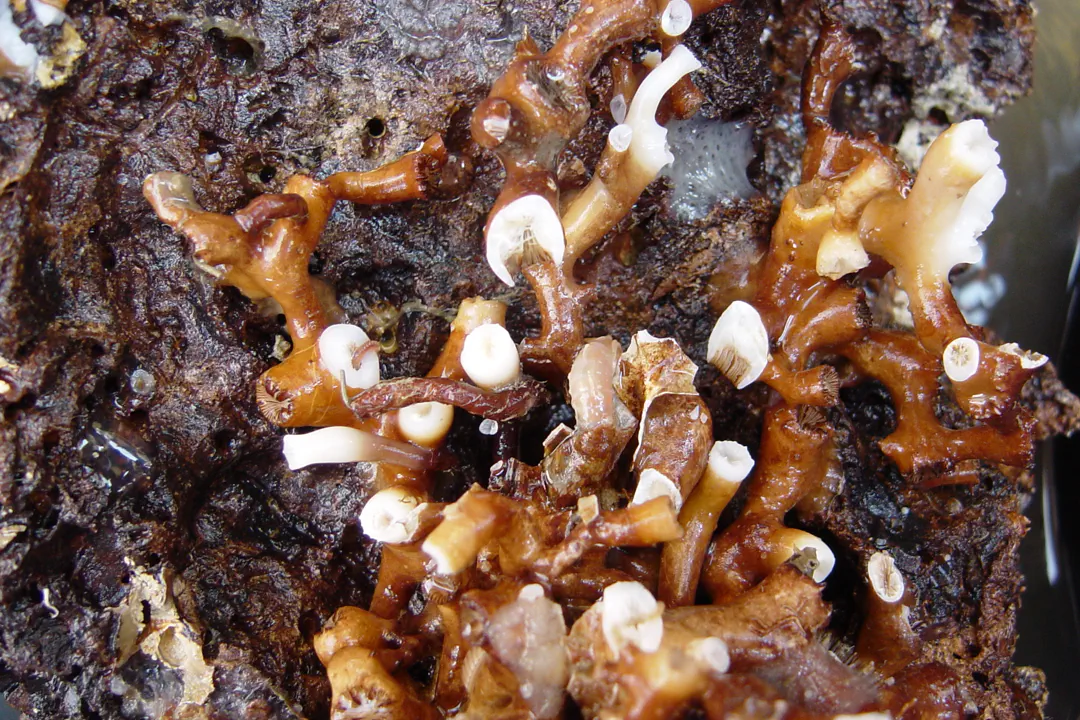
Desmophyllum pertusum, commonly known as Lophelia coral, is a reef-building, cold-water stony coral belonging to the family Caryophylliidae, primarily found in the North Atlantic region.
The species was first described by Carl Linnaeus in 1758 under the name Madrepora pertusa in the 10th edition of Systema Naturae. The original Linnaean account does not provide a modern, unambiguous geographic type locality, which should therefore be treated as unknown or not established from the original description. The genus name Desmophyllum derives from Greek desmos meaning 'bond' or 'bundle' and phyllon meaning 'leaf', referring to the genus’s characteristic septal or lath-like structures. The specific epithet pertusum is Latin for 'perforated' or 'pierced', referring to the coral’s porous appearance. The current accepted name is Desmophyllum pertusum (Linnaeus, 1758), with the parentheses indicating transfer from its original genus. It was long treated as Lophelia pertusa, but molecular evidence led to its reclassification. In 2012, Addamo and colleagues proposed synonymizing Lophelia with the older genus Desmophyllum, and the formal treatment in 2016 made Lophelia a junior synonym under the principle of priority. Other recorded synonyms include Lophohelia prolifera, Lophelia prolifera, Lophelia californica, Lophelia subcostata, Lophohelia affinis, Lophelia tubulosa, and Dendrosmilia nomlandi, among others.
Living colonies of the Deepwater coral are commonly white or orange, with pink and yellowish forms also reported, but colour alone is not diagnostic as both white and orange colonies belong to the same species. The colonies form bushy, branching frameworks that can be attached to the seabed or occur as detached pieces, with some areas exhibiting tightly branching, hemispherical 'cauliflower-like' growth, while others have more open branches. Expanded polyps of the species are translucent and possess numerous fine tentacles, typically up to about 50, along with inconspicuous terminal knobs. The corallites of the Deepwater coral are relatively large, usually measuring about 10–15 mm across and sometimes up to 20 mm, arranged in an irregular, non-hexameral pattern, with a small or absent columella being typical. There are no reliable dark spots, bands, or surface markings for field identification of the species; the principal visible cues include overall colour, branching architecture, polyp expansion, and corallite size. The Deepwater coral can be distinguished from Madrepora oculata by its generally bushy or more regularly branching structure, while Madrepora oculata typically exhibits a more conspicuous zig-zag branch pattern. It can be differentiated from Solenosmilia variabilis, which usually has softer, less angular branching, whereas the Deepwater coral tends to appear more robust and angular. Desmophyllum pertusum is distinguished from Desmophyllum californicum by its larger corallites, which are generally more widely spaced, and a more elongate, open colony form compared to the bushier colonies of D. californicum with smaller corallites measuring about 4–6 mm.
The Deepwater coral forms deep-sea coral reefs and bioherms, including living coral zones overlying accumulations of dead coral framework. Reefs occur especially along continental margins, shelf breaks, fjords, submarine canyons, seamounts, banks, and rocky outcrops. Larvae of the species require a firm attachment surface, typically exposed rock or hard substrata, and can also colonize artificial structures such as shipwrecks and oil platforms. The depth range of the Deepwater coral extends approximately from 39–40 m to 3,600 m, with a commonly cited range of about 50–3,000 m. In Norwegian waters, the species is especially common at depths of 200–400 m on the continental shelf. The Deepwater coral has a broad, nearly global distribution in tropical and temperate waters, including the North and South Atlantic, Indian Ocean, and western Pacific. Major concentrations of the species occur in the North Atlantic, particularly along Norway, and it is also found from the Barents Sea to West Africa, along the western Atlantic from Nova Scotia to the Gulf of Mexico, around the Azores, Madeira, and Canary Islands, and off southeastern Brazil.
In captivity, polyps withdrew and produced mucus even under brief, weak light, indicating strong light sensitivity. The species is colonial rather than solitary; larvae can settle near one another, and young colonies may fuse. Colonies are gonochoric—individual colonies are generally male or female. Reproduction occurs through broadcast spawning and asexual fragmentation, with timing that varies geographically. North Atlantic studies report spawning mainly from mid-winter to early spring, whereas Mediterranean populations show autumn–early-winter spawning. Larvae can remain pelagic and drift with currents for weeks or longer before settlement. A diver’s light, physical contact, sediment disturbance, bubbles, or sampling equipment could cause polyp withdrawal, but a direct 'diver reaction' should not be asserted without controlled observations. The documented response to weak light is polyp retraction and mucus production.
The Deepwater coral is a non-photosynthetic, suspension-feeding organism that consumes a variable mixture of zooplankton, phytoplankton, phytodetritus, and other suspended particulate organic matter. It feeds by extending its tentacles into passing currents, using cnidocytes to immobilize prey and moving captured particles toward the mouth for digestion. The diet of the species is opportunistic and varies with local food availability, with the relative importance of different food sources not being the same in all habitats.
The relationship between the Deepwater coral and people is mainly through fisheries impacts and conservation, not direct use. Bottom-contact fishing gear, especially trawls and dredges, can break colonies and damage the reef habitat, making it a principal threat to many cold-water corals. The Deepwater coral is not a target fishery species, but it may occur as bycatch in nets. No reliable authoritative evidence was found that the Deepwater coral is a regular aquarium-trade species due to its deep-water habitat, slow growth, specialized feeding, and conservation controls. The Deepwater coral is not recognized as a food species, and no reliable evidence supports eating it, as coral skeletons are calcium carbonate and the living tissue is small and not a normal human food. It is not known as a medically dangerous coral or a significant human hazard, although handling can cause cuts or punctures due to its hard and brittle colonies. The first global IUCN assessment classified the Deepwater coral as Vulnerable, reporting population declines exceeding 30% from recent baselines, with bottom-contact fishing as a major threat. Regional assessments can differ, with a Mediterranean conservation guide listing the Deepwater coral as Endangered and under CITES Appendix II. Conservation efforts generally focus on protecting reefs and restricting damaging fishing gear rather than harvesting the coral itself. Warming and ocean acidification are additional risks to the suitable habitat of the Deepwater coral.
© Pierre PericardCC BY 4.0 · iNaturalist  © Ryan McMindsCC BY 4.0 · iNaturalist
 © Stas KuryanAll rights reserved
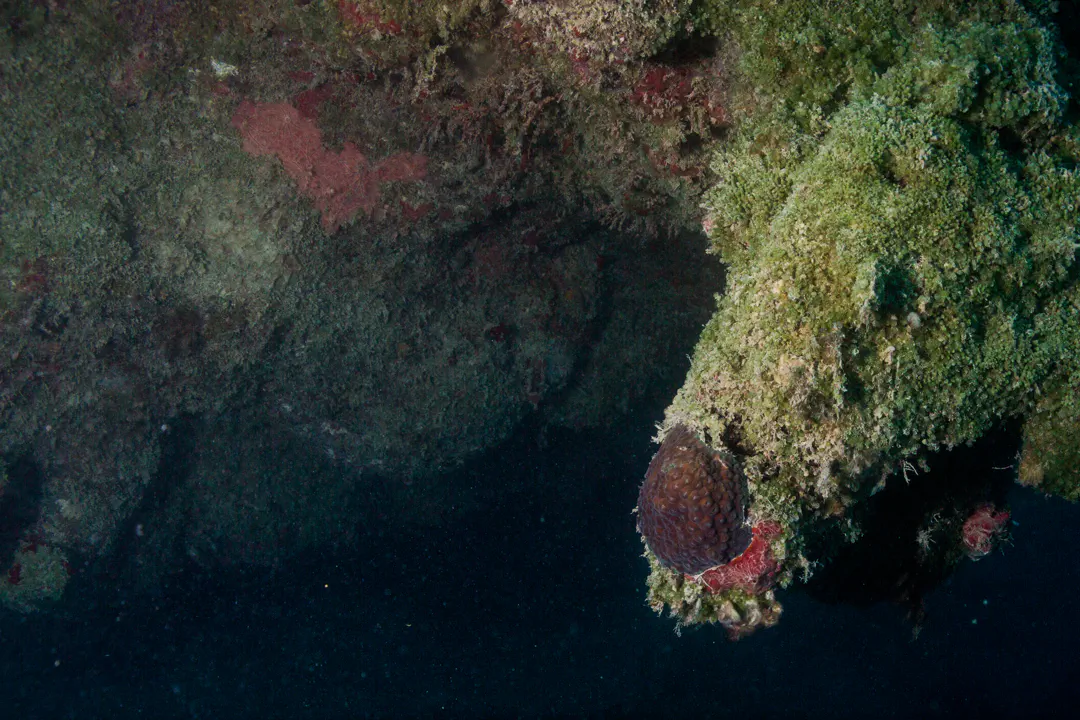 © João D'AndrettaCC BY 4.0 · iNaturalist
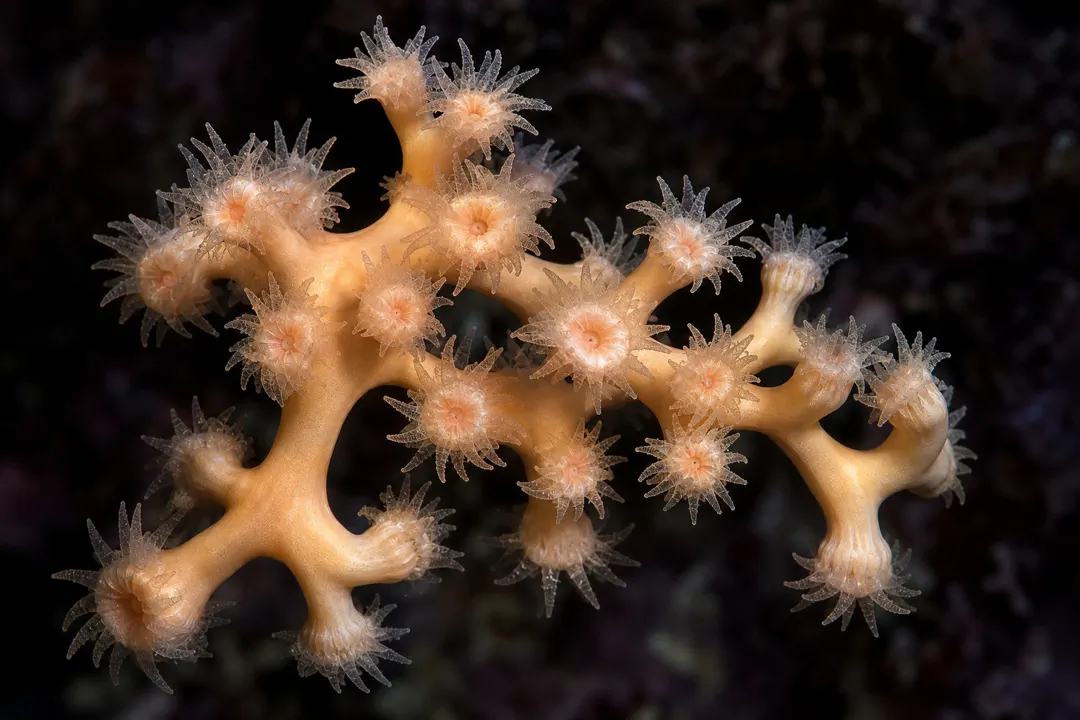 © seabook.appAll rights reserved
Deepwater coral has no known danger to humans. However, always observe marine life responsibly.
Download Seabook free for iOS and Android.