 © Roger RittmasterCC BY 4.0 · iNaturalist
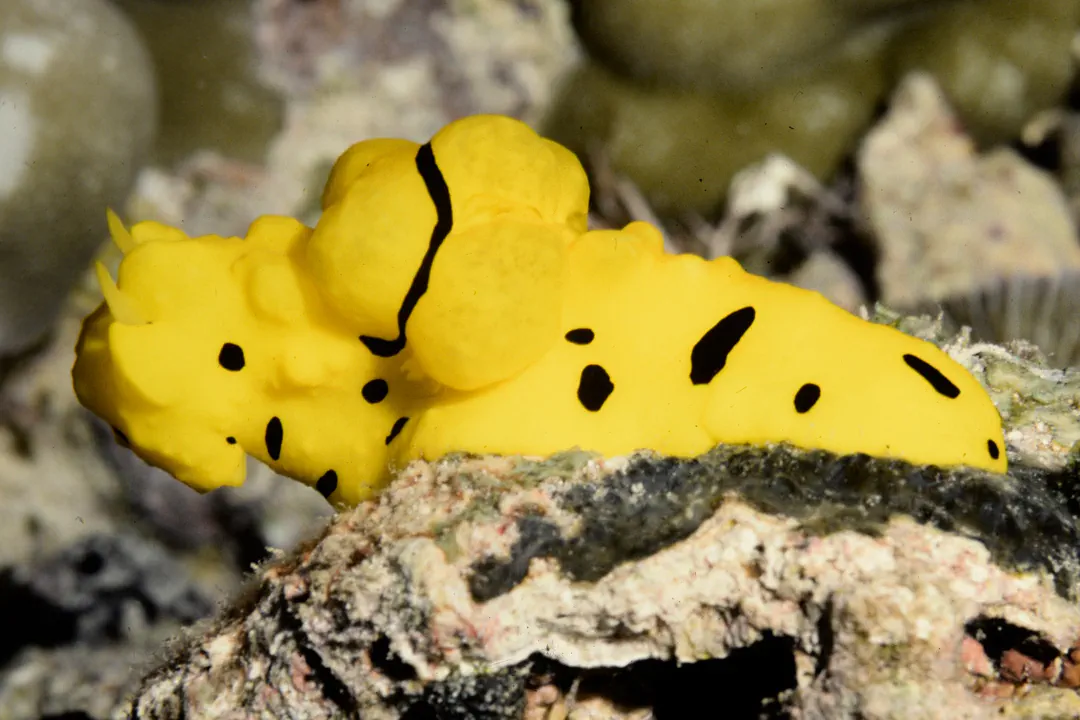
Banana Nudibranch
Notodoris minor
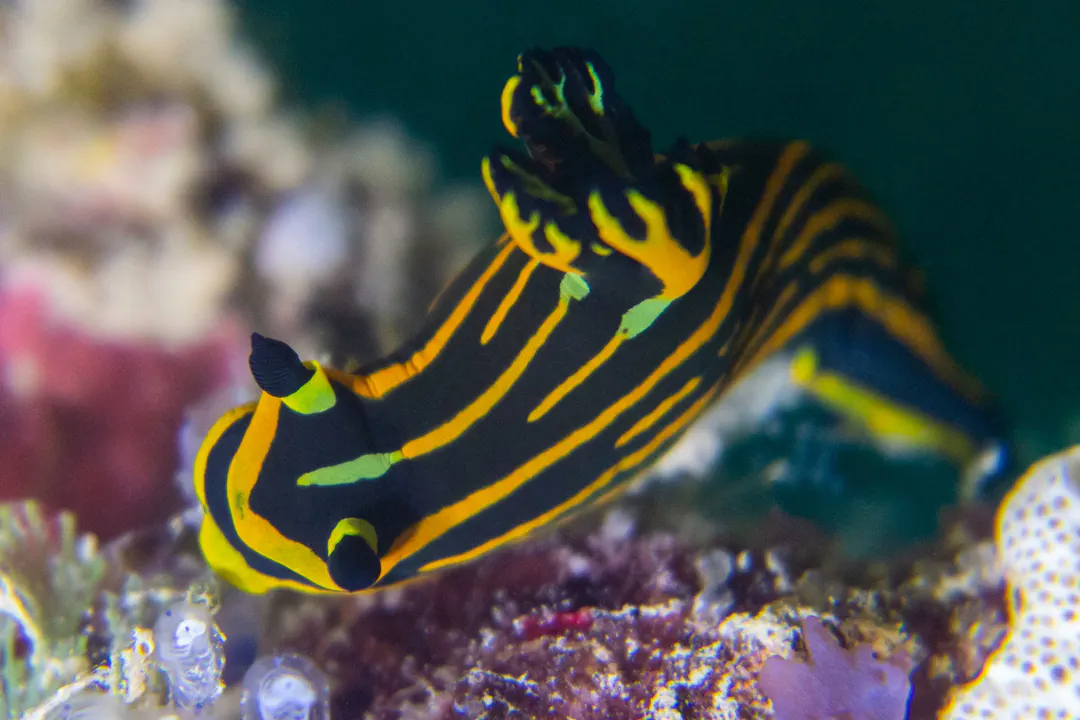
Tambja affinis
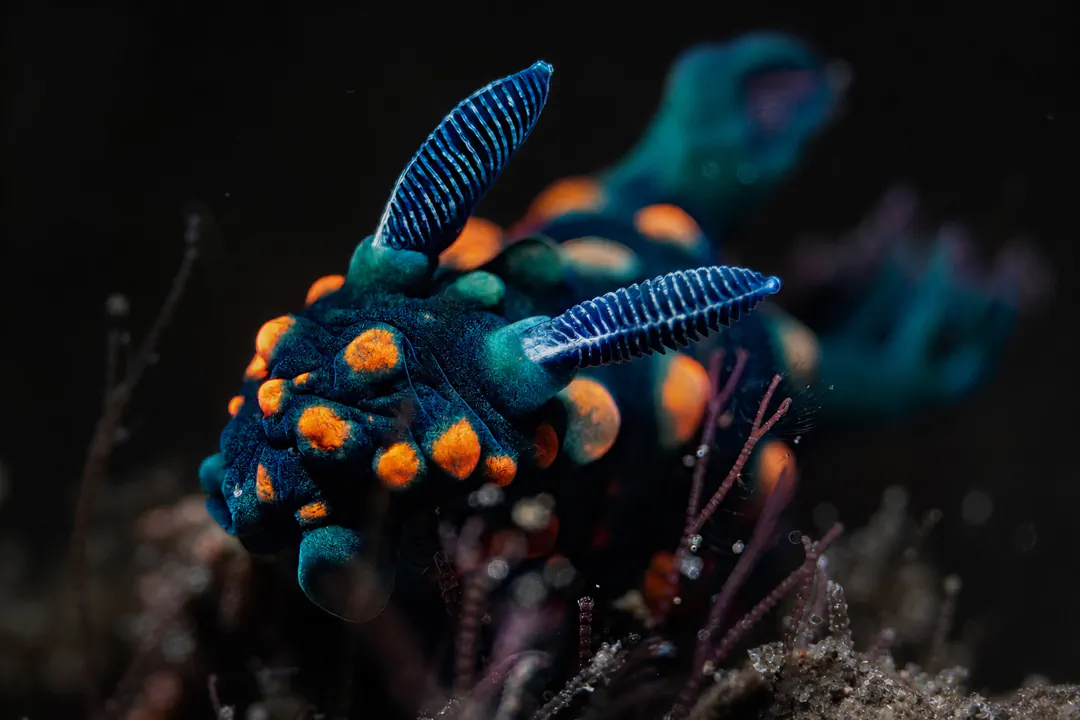
Tambja affinis is a species of sea slug, a dorid nudibranch, a marine gastropod mollusk in the family Polyceridae.
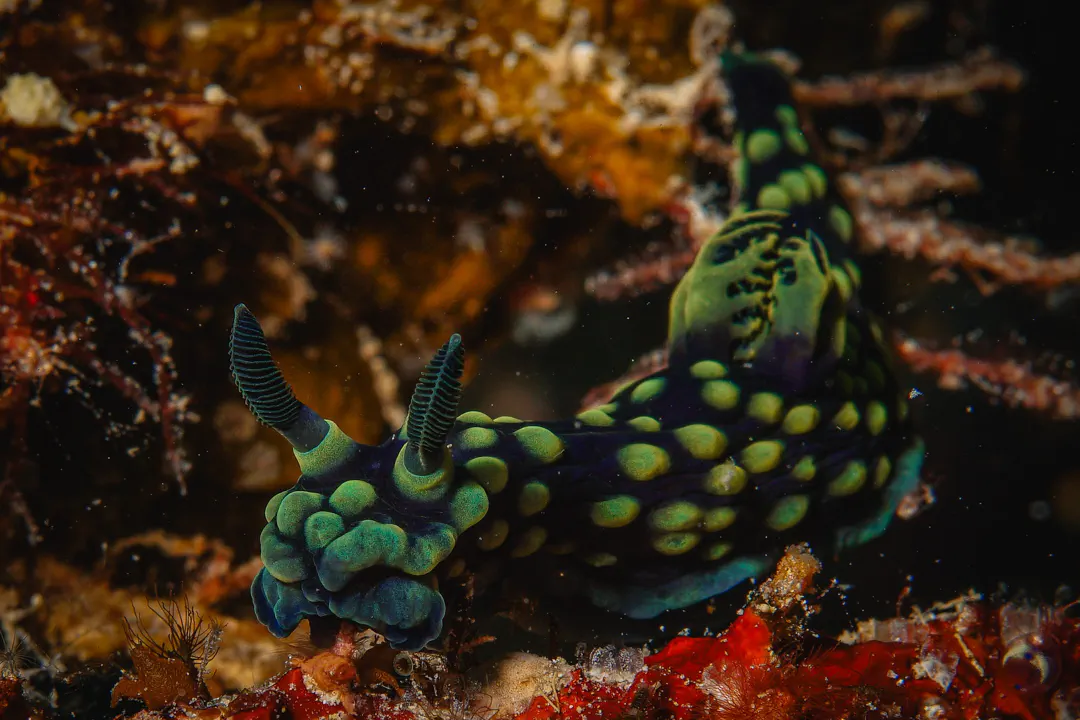
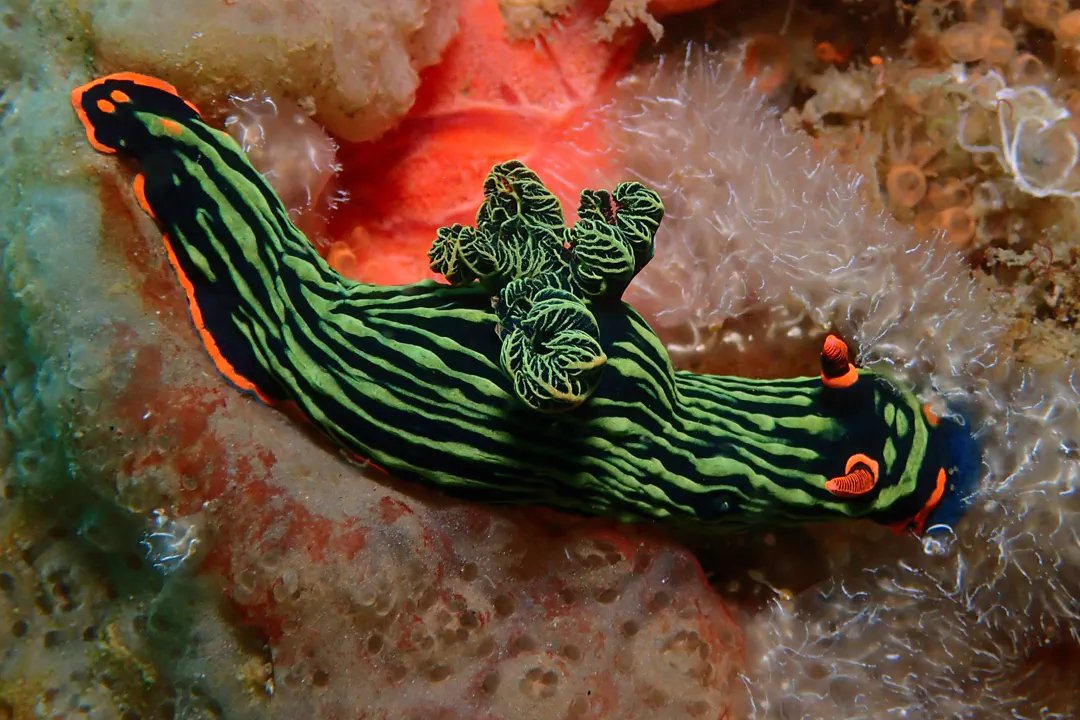
The background color ranges from a translucent indigo blue to a dark bluish black. There are a pattern of wide yellow longitudinal bands which in some parts of the pattern change to a milky bluish-green. In specimens with a lighter background colour, the yellow bands are seen to have a thin dark blue-black bordering line (which is obscured in those with a dark blue-black background). There is a broad yellow band around the mantle edge, outlining the anterior end of the body, which runs along each side of the body to just behind the the gills, where the lines on each side meet in the dorsal midline and run posteriorly as a single median line for a short distance.
From between the rhinophores a median line runs back to the central gill. The anterior end of that line, between the rhinophores, forms a milky blue-green ovate spot, somewhat wider than the rest of the line. On each side of the dorsum, another yellow line runs from about midway between the gills and the rhinophores, back to the outer gill on each side. These two lines, and the median line, have a milky green-blue patch at the anterior base of the gills. The edge of the foot has a yellow band, and a number of longitudinal yellow lines of similar width run along the sides of the body, sometimes for almost the complete length and sometimes for only a part of the distance. The rhinophore clubs are dark bluish purple, but in some specimens with a lighter background colour they are translucent yellowish with a deep purplish tip, and basal region. The whole of the rhinophore sheath, not just the edge, is a milky blue-green. There are three large, somewhat branched, gills. The outside edge is yellow and the pinnae are a dark purplish black. There is a thin milky blue line up the inner rachis.
This species grows to at least 70 mm in length.
This species was originally described from a specimen found at Zanzibar, East Africa. It has been reported from various sites in the Indian Ocean, as far east as Ningaloo Reef, western Australia.
© Roger RittmasterCC BY 4.0 · iNaturalist 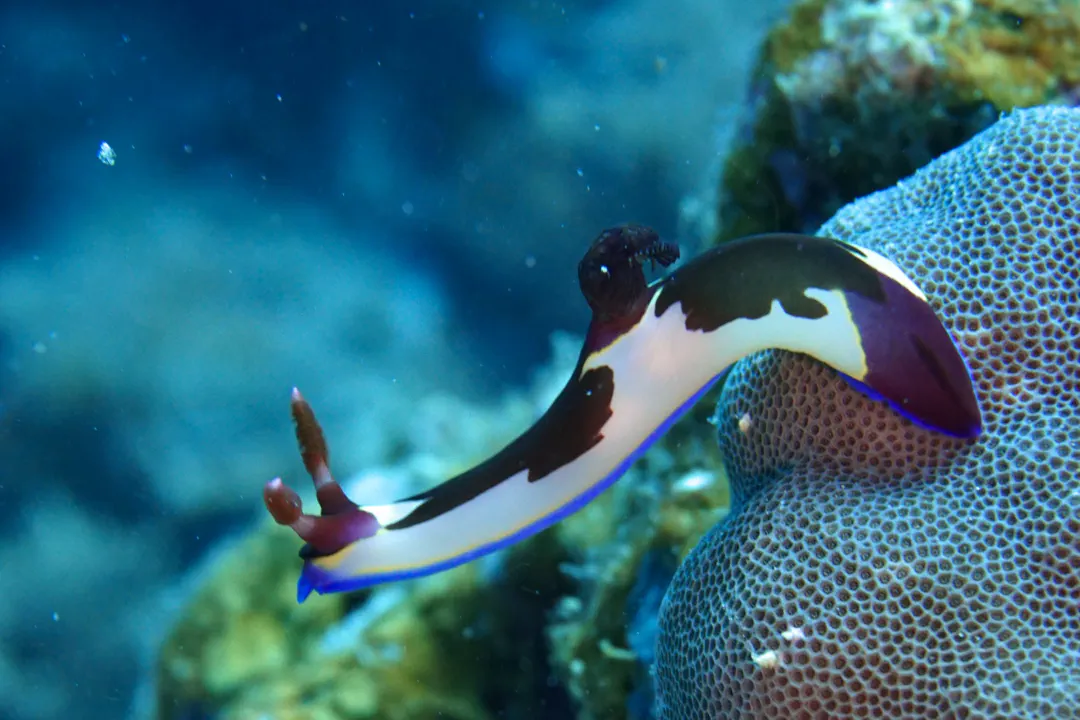 © Stas KuryanAll rights reserved
  © Stas KuryanAll rights reserved
  © seabook.appAll rights reserved
  © Erasmo Macaya HortaCC BY 4.0 · iNaturalist
  © Dan SchofieldCC BY 4.0
 Orange-lined Tambja has no known danger to humans. However, always observe marine life responsibly.
Download Seabook free for iOS and Android.